I still remember the first time I truly understood what a good bedsheet felt like. I was maybe twelve or thirteen, staying over at my rich aunt’s house in Defence, Lahore. You know the type of aunt—the one with the marble floors so clean you could eat off them, and the faint smell of sandalwood in every room.
I was tucked into the guest bedroom. The air conditioner was humming at that perfect, slightly-too-cold temperature. But it wasn’t the cold that woke me up the next morning. It was the sheet. It was crisp. It was cool. It felt like sliding into a pool of still water. When I moved, the fabric didn’t crinkle like cheap plastic, and it didn’t stick to my legs like my polyester Spider-Man bedsheet at home.
That morning, I flipped up the corner of the mattress. The label read: 100% Egyptian Cotton, 800 Thread Count.
I asked my aunt, “Baji, how much did this cost?”
She waved her hand like it was nothing. “Oh, about forty thousand rupees. For the set.”
My jaw hit the floor. I was twelve, and forty thousand rupees might as well have been a million. In my head, luxury bedsheets became synonymous with impossible dreams. Fast forward fifteen years. I’m an adult now, living in a small but cozy apartment in Karachi, and I’ve made it my personal mission to find that feeling again—that cool, crisp, five-star-hotel feeling—without having to sell my laptop to pay for it.
This is the story of how I hunted down affordable luxury bedsheets in Pakistan, the mistakes I made with thread counts, the cotton I swore by, and the secrets the big brands don’t want you to know.
Chapter 1: The Great Polyester Mistake
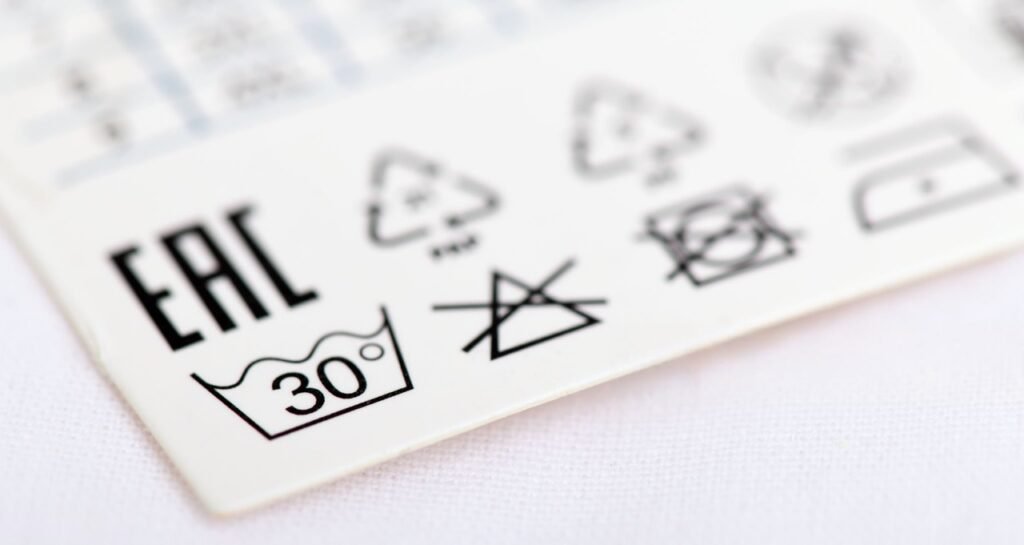
Let’s rewind to my first year out of university. I had just gotten my first “real” job. My salary was modest, but I wanted my room to look like an adult lived in it. I went to a famous department store in Clifton, saw a “sale” sign, and bought three bedsheet sets for 2,500 rupees each. They were bright blue, with a geometric pattern. They looked great in the packet.
The first night was okay. Not great, but okay. By the third wash, disaster struck. The fabric started pilling—those little ugly balls of fluff that feel like sandpaper against your skin. Worse, I woke up in the middle of the night drenched in sweat. Karachi’s humidity is a beast, and that cheap polyester-blend fabric was basically wrapping me in a plastic bag.
I realized my mistake. I had bought “fashion” instead of “fabric.” In Pakistan, we have a huge market for lawn suits and printed designs, but bedsheets are a different science. That cheap sheet cost me 2,500 rupees, but it cost me three months of bad sleep. Sleep debt is real, folks.
So, I decided to get educated. I started asking shopkeepers in Bohri Bazaar, on Zamzama, and even on Instagram pages. What is actual luxury?
Chapter 2: Understanding the Weave (The Story of Cotton)
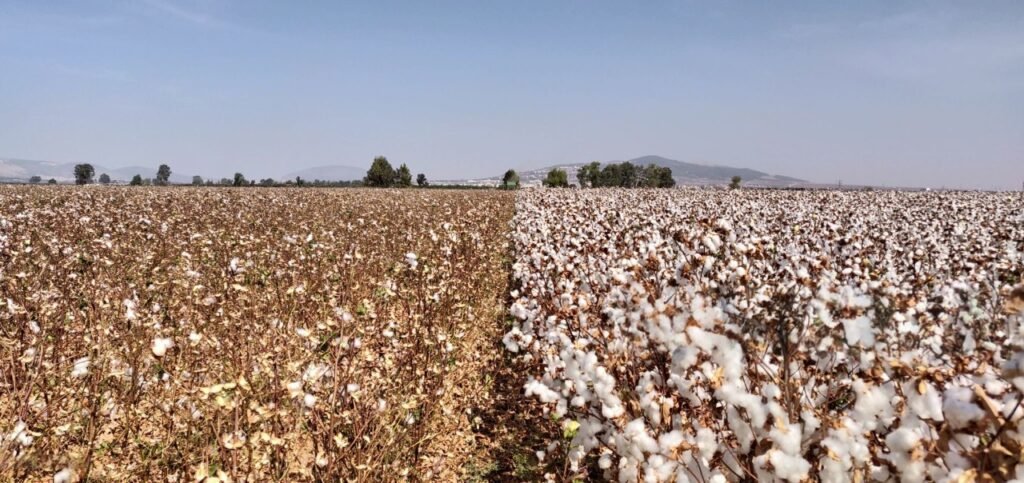
The first lesson I learned was that “Luxury” doesn’t just mean “expensive.” It means “long-staple cotton.”
Here is the science part, but I’ll keep it short. Cotton fibers have a length. Cheap cotton has short fibers. To make a thread out of short fibers, manufacturers have to twist them a lot, which leaves little ends sticking out. Those ends cause the sheet to feel rough or “fuzzy.”
Long-staple cotton (like Egyptian or Giza cotton) has fibers that go on for miles (relatively). The threads are smooth, strong, and thin. This is what creates that silky, “buttery” feel.
In Pakistan, we are blessed. We produce some of the best cotton in the world. But here is the catch: Most of that good cotton gets exported to Europe or the US. We keep the cheaper cotton for domestic use. So, finding affordable luxury here means finding a brand that keeps the good stuff for local buyers.
I visited a small factory outlet in Faisalabad (the textile hub of Pakistan) via an online friend. The manager there told me a secret.
“Beta,” he said, leaning over a cutting table, “Thread count is a scam if you don’t understand the ply.”
I was shocked. “What do you mean? Everyone says 1000 thread count is the best!”
He laughed. Here is the truth bomb he dropped:
Most companies selling “1000 Thread Count” for cheap are using multi-ply yarn. That means they take two or three very thin, very weak threads, twist them together, and count each strand.
So a “1000 thread count” sheet might actually be 300 actual thread count with three plies. It’s thick, heavy, and suffocating.
Real luxury is single-ply. The thread is just one perfect, long fiber.
He told me to look for single-ply, long-staple cotton with a thread count between 300 and 500. That is the sweet spot. That is the “Goldilocks” zone for hot Pakistani weather. Anything higher in that price range (sub 5,000 rupees) is almost certainly a marketing lie.
Chapter 3: The Hunt in the Digital Bazaar (Instagram vs. Landa)
Now that I knew the science, I had to find the product. I decided to conduct a social experiment. I would buy one “luxury” sheet from three different places in Pakistan:
- The High-End Brand Store (Rs. 18,000)
- The Instagram “Home Textile” Page (Rs. 5,500)
- The Landa / Sunday Bazaar (Rs. 800)
Let me walk you through the results, because this is where the story gets juicy.
The High-End Store:
I went to a fancy shop in DHA, Rawalpindi. The AC was blasting. They offered me mint tea. The sheet felt like heaven—buttery, heavy, and cool. It was a beautiful oyster grey. When I asked the price, the salesperson whispered, “Sir, this is Egyptian. Only 28,000.”
I did the math. That is half my rent. I put it back on the shelf very carefully, as if it were a bomb. Too luxurious for my wallet.
The Instagram Page:
I found a page called “CozyHomePK” (name changed to protect the innocent). They had beautiful photos. Beige sheets with ruffles. Aesthetic lighting. They claimed “500 Thread Count, Luxury Hotel Feel.”
Price: 5,500 rupees with delivery.
It arrived in three days. The packaging was nice. A cardboard box with ribbon.
But when I opened it? The fabric was stiff. It smelled like chemicals. I washed it twice, and it softened a little, but it was definitely not single-ply. It was a sateen weave (which feels slippery) but made of short fibers. It was okay. Better than my polyester fiasco, but it wasn’t “luxury.” It was just… decoration. I kept it for the guest room.
The Landa (Sunday Bazaar):
This is where the adventure happened. I went to the famous Sunday bazaar in Karachi (or the one in Saddar). You know the chaos. Hawkers screaming, “Das rupay, das rupay!” (Ten rupees, ten rupees!). I found a pile of sheets dumped on a plastic sheet on the floor.
I dug through them. My hands felt lint, plastic, and rough cotton. And then… I felt it.
A hidden gem.
It was a plain white sheet, slightly off-white, no packaging, with a small burn mark on the corner (factory reject). The fabric felt exactly like my aunt’s sheet. Heavy. Smooth. Cold to the touch.
I bargained with the bhai. He started at 1,500. I got it for 800 rupees.
When I got home, I cut off the burn mark, stitched the hem, and washed it with vinegar and baking soda. That night, I slept like a baby.
Result: Landa is gold, but it’s treasure hunting. You have to know what you are feeling for. 99% of it is trash. 1% is export reject luxury.
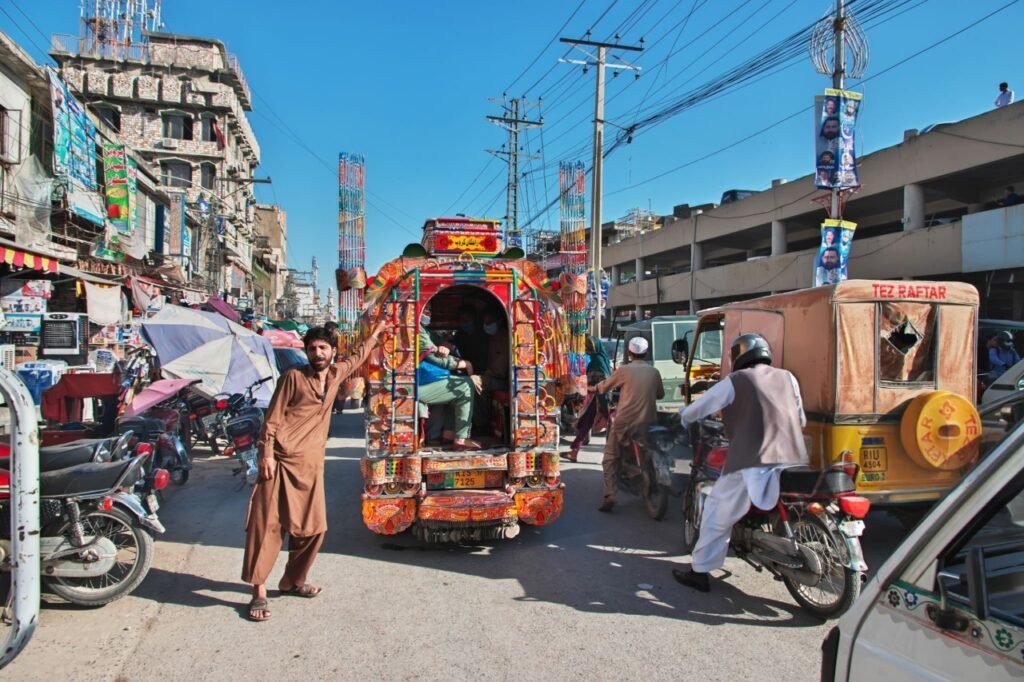
Chapter 4: The Verdict – Where to actually spend your money?
After six months of this madness, sleeping on everything from bamboo viscose (too hot) to percale weave (too noisy), I have narrowed down the best “Affordable Luxury” sources in Pakistan right now.
You don’t need to go to Landa if you don’t want the hassle. You don’t need to pay 30k.
Here are the winners for the budget-conscious luxury seeker (approx 4000 to 8000 words… I mean, rupees):
- The Export Leftovers (Karachi / Faisalabad Outlets):
There are specific markets in Karachi (like Tariq Road behind the shell building or specific factories in Site Area) that sell “lot” runs. These are sheets made for Western brands (Target, Walmart’s higher-end lines, or M&S) that had a slight color mismatch or were overproduced.
- Price: 2,500 – 4,000 Rs.
- Quality: 10/10.
- How to find: Search “Export Leftover Bedsheets” on Facebook Marketplace. Ask for “Percale weave, 400 thread count, single ply.”
- The Dark Horse: Homespun (Local Brand Story):
There is a local brand (I’m not sponsored, I swear) that started in Islamabad—let’s call them “CottonNest.” They focus on unbleached, undyedcotton. It isn’t bright white; it’s a creamy, natural beige. But the fabric is thick, pure, and organic. It feels like a rustic farmhouse hotel.
- Price: 4,500 – 6,000 Rs for a full set.
- Feel: Heavy, breathable, gets softer with every wash.
- Verdict: This is my daily driver right now. The color isn’t exciting, but the sleep is incredible.
- The Chaddar Hack (The Desi Jugaad):
Here is a trick my mother taught me. Don’t buy a fitted sheet (the one with elastic). In Pakistan, buy a high-quality Chaddar(the thick, winter cotton blanket cover) or a Dobi Chadar(the heavy, starched cotton sheet used by dry cleaners).
Take it to your local tailor. Spend 200 rupees to hem the edges.
Why? Because “Bedsheets” have a 1000% markup. “Chaddars” are seen as utility items. You can get a pure, heavy, thick cotton sheet at a general store for 1,200 rupees that feels better than a 10,000 rupee “luxury” sheet.
I did this. I bought three white dobi chadars. They are stiff at first, but after three washes? They turn into that hotel sheet texture. I swear by this method.
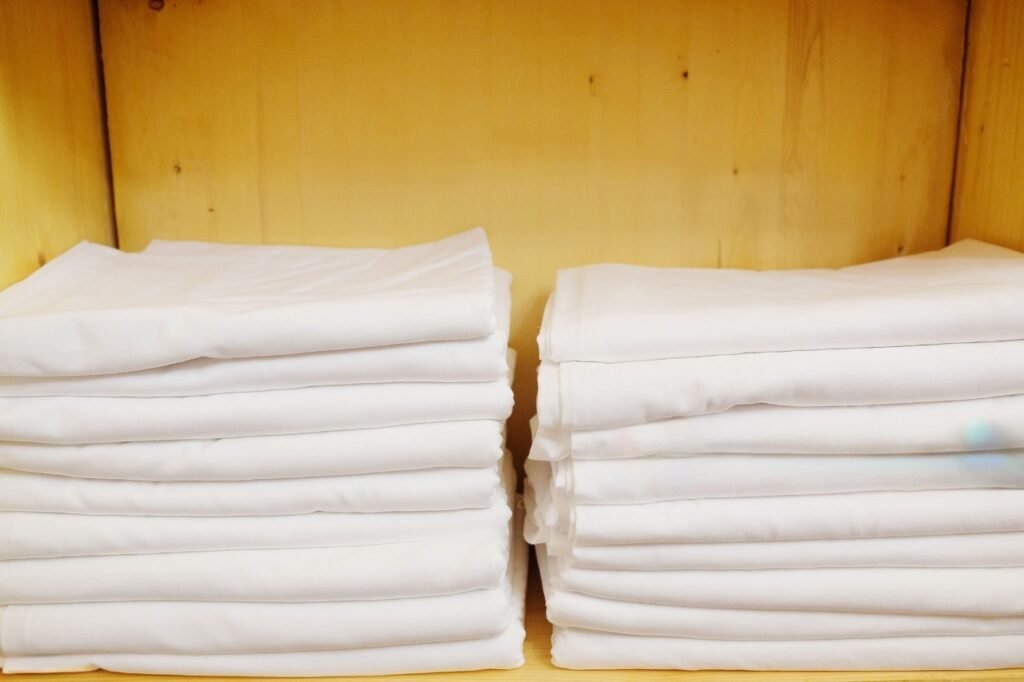
Chapter 5: How to wash your "Luxury" (Don't ruin it)
I learned this lesson the hard way. I bought a beautiful 6k sheet, loved it for one night, threw it in the washing machine with my jeans and a towel, and set it to “High Spin.”
When I took it out, it was wrinkled like my grandfather’s face, and the edges had frayed.
Listen to me. Treat your sheets like a kameez.
- No hot water. Hot water shrinks the long fibers. Use cold or lukewarm.
- No heavy spin. Gentle cycle only.
- No sunlight bleaching. Yes, the sun in Pakistan is great for killing germs, but it destroys the color and weakens the cotton fibers over time. Dry them in the shade.
- The Dryer lie: Most of us don’t have dryers. But if you do, low heat only.
- Ironing: If you want that crispy hotel feel? Iron them while they are slightly damp. It takes 15 minutes, but it transforms the bed.
The Conclusion: Why we chase this feeling
After all this research, the trips to the bazaar, the burned fingers from ironing, and the 800-rupee Landa miracle, I realized something.
We don’t actually want “thread count.”
We want escape.
In Pakistan, life is loud. The streets are loud. The phone calls are loud. The pressures of family, work, and the rising cost of everything are loud.
The bed is the only place that is yours.
When you pull back the covers and feel that cool, smooth, heavy cotton against your skin, it’s the brain’s signal that says: Nothing can touch you here for the next 8 hours.
Affordable luxury isn’t about the brand name on the label. It’s about the feeling you get when you turn off the light. It’s about waking up without a sweaty back in June. It’s about running your hand over the fabric and smiling because you know you got a great deal.
You don’t need to spend 40,000 rupees like my aunt. You just need to know the difference between poly-cotton and long-staple. You need to know that the Landa exists. You need to know that the Dobi Chadar is your friend.
So, go ahead. Rewash your sheets this weekend. Put them on the line in the shade. Iron them if you have the energy. And when you slide into bed on Sunday night, remember this story.
You’ve earned the softness.
Frequently Asked Questions (The Short Version)
Q1: Is a 1500 thread count bedsheet actually good?
Almost never. Real 1500 thread count sheets are extremely rare and would weigh a ton. In Pakistan, if you see a sheet for under 10,000 rupees claiming 1500 TC, it is 100% multi-ply yarn. That means they twisted three or four thin threads together to fake the number. It will sleep hot and wear out faster. Stick to 300-500 single-ply for the best affordable luxury.
Q2: What is the best material for hot, humid weather in cities like Karachi or Lahore?
Do not buy Satin, Silk, or Polyester. You need Percale. Percale is a type of weave that is flat, tight, and matte. It feels cool and crisp like a dress shirt. Alternatively, pure Linen (if you can afford it) is amazing, but it’s expensive. For budget luxury, get Percale Cotton or a heavy Dobi Chadar (thick cotton).
Q3: Where can I buy affordable luxury sheets online in Pakistan?
Instagram is hit-or-miss. For guaranteed quality without the bazaar hassle, look for Facebook groups dedicated to “Export Leftovers.” Also, check out Daraz only if you sort by “Top Selling” and read the reviews specifically for words like “heavy,” “cool,” or “smooth.” Avoid any listing that uses stock photos of white women in perfect rooms. Look for photos taken in Pakistani houses—that’s the real product.