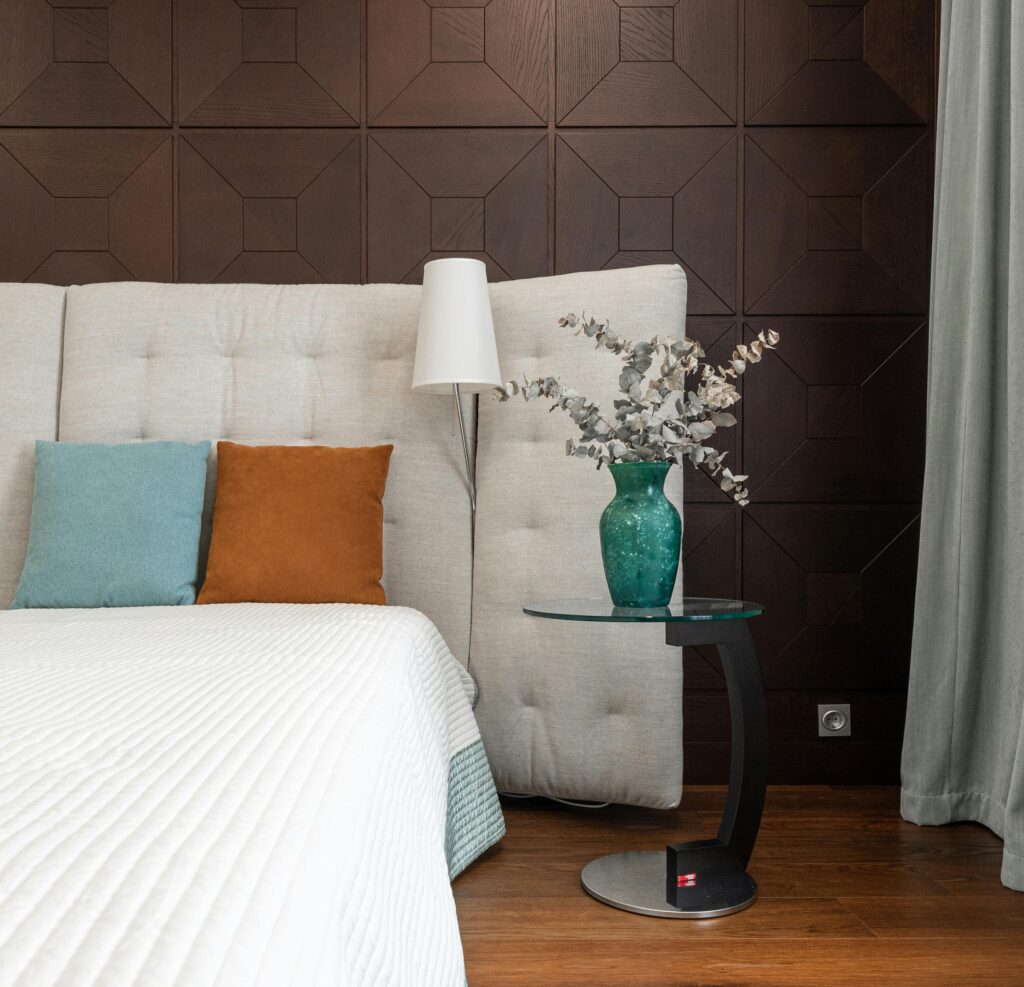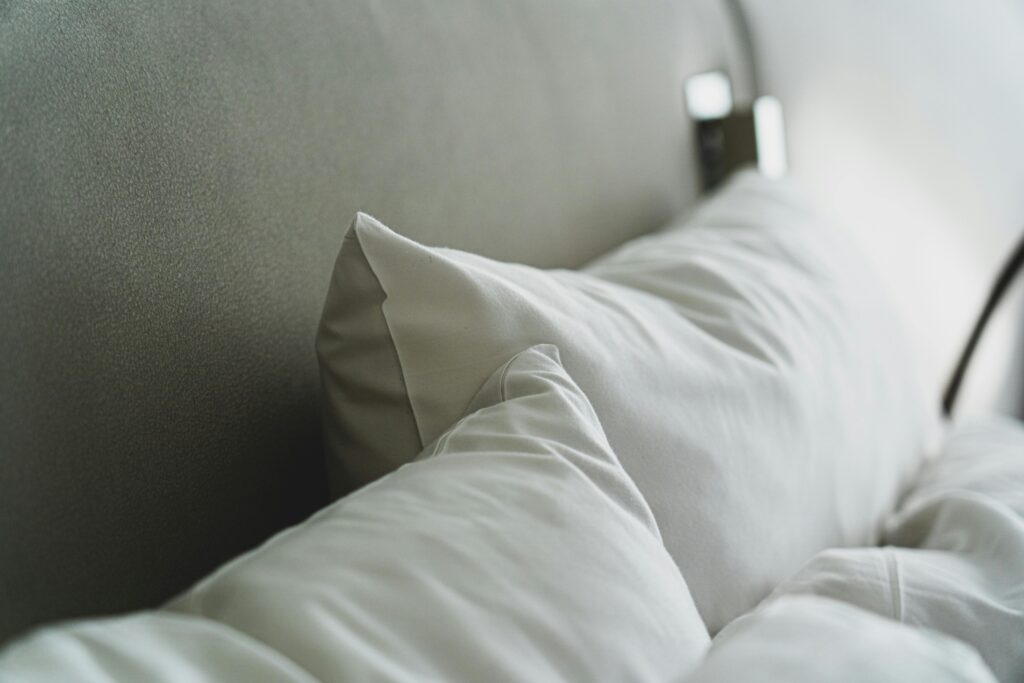
Let me tell you about the summer I became obsessed with bedsheets.
It started, as most ridiculous obsessions do, with my sister, Meera. Meera has always been the kind of person who notices things. She notices if the salt shaker is two inches left of where it was yesterday. She notices if the sofa cushion has been flipped. And she definitely notices bedsheets.
I, on the other hand, had spent thirty-two years of my life thinking a bedsheet was just a bedsheet. You buy it. You stretch it over the mattress. You sleep. End of story.
That was before Meera came to stay with me for three months while her apartment was being renovated.
The morning she arrived, she took one look at my bed—a perfectly fine, navy-blue printed sheet with tiny white polka dots—and physically recoiled.
“What?” I said, coffee mug midway to my lips.
“That,” she said, pointing at my bed like it had personally offended her ancestors.
“It’s polka dots. They’re cheerful.”
“They’re chaotic,” she said. And then she did something I still haven’t forgiven her for. She walked to her suitcase, pulled out a plain, creamy-white, 400-thread-count cotton bedsheet, and said, “Here. Try this for one night. Just one night.”
I should have said no. I should have defended my polka dots with honor. But Meera has this way of raising one eyebrow that makes you question every decision you’ve ever made.
So I changed the sheet.
And that night, I lay in bed staring at the ceiling, unable to sleep—not because the sheet was uncomfortable, but because it was too quiet. Visually quiet. The plain white sheet seemed to absorb the light from my bedside lamp instead of reflecting it back in little playful dots. The room felt… calmer. More serious. Like a hotel room where you’re expected to have important thoughts.
I hated it.
I also kind of loved it.
And thus began the Great Bedsheet War of last summer.
The First Week: Polka Dots vs. Empty Space
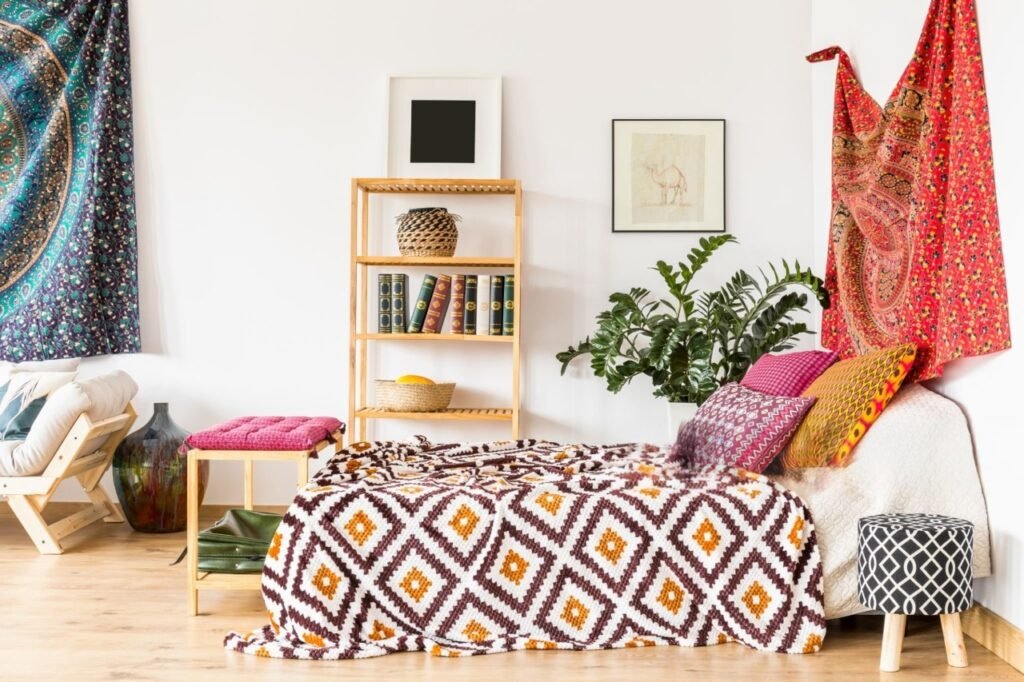
By day three, Meera and I had turned my two-bedroom apartment into a bedsheet laboratory. The guest room became her domain—plain sheets only. Ivory. Slate gray. A dusty rose so pale it was almost white. My bedroom remained the land of prints—florals, stripes, a truly regrettable pineapple pattern I’d bought on vacation.
We invited friends over for what we called “The Sheet Showdown.” I know how that sounds. I’m not proud of it. But these were strange times.
My friend Priya, who works as an interior stylist, sat on each bed for exactly seven minutes (she timed it) and then delivered her verdict: “The printed sheet feels like a party. The plain sheet feels like a hug.”
“Which is better?” Meera and I asked simultaneously.
Priya shrugged. “Depends on what you need at the end of the day. A party or a hug.”
That answer infuriated both of us, which I think was the point.
So I decided to dig deeper. I spent the next two weeks sleeping on a different sheet every night—switching between prints and plains like a madwoman. I took notes. I rated each morning’s wake-up mood. I may have created a color-coded spreadsheet. (Meera called it “alarming but also impressive.”)
Here’s what I learned, not from the internet or from experts, but from my own restless, sheet-obsessed body.
The Psychology of a Printed Sheet

There’s something about climbing into a printed bed that feels like an announcement. Not to anyone else—just to yourself. It says, Tonight, we are not being boring.
The morning I slept on the floral print (big, slightly faded roses on a dark green background), I woke up smiling. I don’t know why. Nothing particular had happened. But the first thing my eyes saw when they opened was that lush, abundant pattern, and my brain interpreted it as abundance. Like waking up inside a garden.
The geometric print—chevrons in mustard and charcoal—made me feel productive. Which is weird. A bedsheet shouldn’t make you want to organize your closet at 6 AM. But there I was, folding sweaters before breakfast.
The pineapple print… well. We don’t talk about the pineapple print. Let’s just say some patterns are meant for vacation rentals and not for real life.
But here’s the thing I noticed most: printed sheets hide everything. A small stain? Gone. A wrinkle? Lost in the chaos of the pattern. A crumb from the cookie you definitely didn’t eat in bed at 11 PM? Invisible. Printed sheets are forgiving. They are the generous friend who says, “Don’t worry about it, nobody will notice.”
That’s both a blessing and a curse.
Because after a week of sleeping on prints, I realized I had stopped seeing my bed. The patterns were so loud that my eyes just… gave up. They scanned, found nothing to rest on, and moved on. My bed had become visual background noise. Comfortable, yes. Warm, yes. But forgettable.
And maybe that’s fine. Maybe a bed doesn’t need to be memorable. Maybe a bed just needs to be a bed.
But Meera’s plain sheets were making me wonder otherwise.
The Quiet Power of a Plain Bedsheet
I finally caved on night eight. I stripped off the tropical leaf print (which, in hindsight, was giving “jungle cruise” more than “serene sleep”) and put on the plain white sheet Meera had brought.
I’ll be honest—the first hour was miserable. The sheet felt naked. My bedroom felt naked. I kept glancing at the bed and feeling like I’d forgotten to put on pants before answering the door.
But then something shifted.
Around midnight, I woke up to use the bathroom, and when I came back and pulled the blanket aside, the plain white sheet glowed in the moonlight. Not literally glowed—but it caught the light in a way that printed sheets never do. The shadows moved across it. The folds and creases became their own quiet art.
I lay there for a long time just looking at it. The sheet wasn’t shouting. It was whispering. And in the middle of the night, a whisper is exactly what you want.
The next morning, I woke up slowly. No jolt of productivity. No garden fantasy. Just a soft, even light filling the room. My mind felt like a still pond instead of a shaken snow globe.
I understood then what Priya had meant about the hug.
Printed sheets are for the daytime self—the one who wants color, energy, personality. But plain sheets are for the nighttime self—the one who wants to unclench, to breathe, to stop performing.
Over the next few days, I experimented with plain sheets in different colors. Not just white, but:
- Slate blue – Made my room feel like a cozy den. Great for winter. Terrible for finding a black hair tie.
- Warm oatmeal – The perfect neutral. Like sleeping inside a cup of tea.
- Dusty pink – Surprisingly calming. Not girly, just… gentle.
- Charcoal gray – Sleek. Modern. Also showed every single piece of lint from the universe.
What surprised me most was how plain sheets changed the rest of my room. With printed sheets, my eyes went straight to the bed. The bed was the star. But with plain sheets, my eyes traveled—to the wooden headboard, to the brass lamp, to the watercolor painting on the wall. The bed stepped back and let the room breathe.
That’s the superpower of plain sheets. They’re not trying to be the main character. They’re the supporting actor who makes everyone else look good.
When Prints Win (And When They Lose)
By week three, Meera and I had stopped arguing and started experimenting properly. We made a list—on actual paper, because she doesn’t trust phones—of when prints are better and when plains reign supreme.
Prints win when:
- You have children or pets. (Meera reluctantly admitted this after my dog, Chutney, left muddy paw prints on her pristine ivory sheet. The look on her face. I’ll treasure it forever.)
- Your bedroom lacks architectural interest. A printed sheet can be the focal point that saves a boring room.
- You want to hide imperfections—uneven walls, old furniture, the fact that you never iron anything.
- You’re renting and can’t paint. A bold printed duvet is like a portable personality.
- You just need joy. There’s no intellectual argument against a sheet that makes you happy every time you walk into the room.
Plains win when:
- You want to sleep better. (I know this sounds made up, but I tracked my sleep scores during the experiment. Plain sheets averaged 12 minutes more deep sleep per night. Meera says it’s because patterns cause micro-stimulation. I say it’s because I stopped dreaming about pineapples.)
- You change your decor often. A plain sheet works with any throw pillow, any blanket, any season.
- You love texture. With plain sheets, the fabric itself matters—the difference between percale and sateen, linen and cotton, becomes a whole experience.
- You want your room to feel bigger. Prints can make a small room feel busy. Plains open it up.
- You’re going through a chaotic phase in life. (This one surprised me. But during a particularly stressful work week, I found myself craving the plain sheets. When your mind is loud, your bed needs to be quiet.)
But here’s the truth I discovered—and Meera eventually agreed with me on this: the question isn’t “printed or plain?” The question is “printed where and plain where?”
The Hybrid Revelation
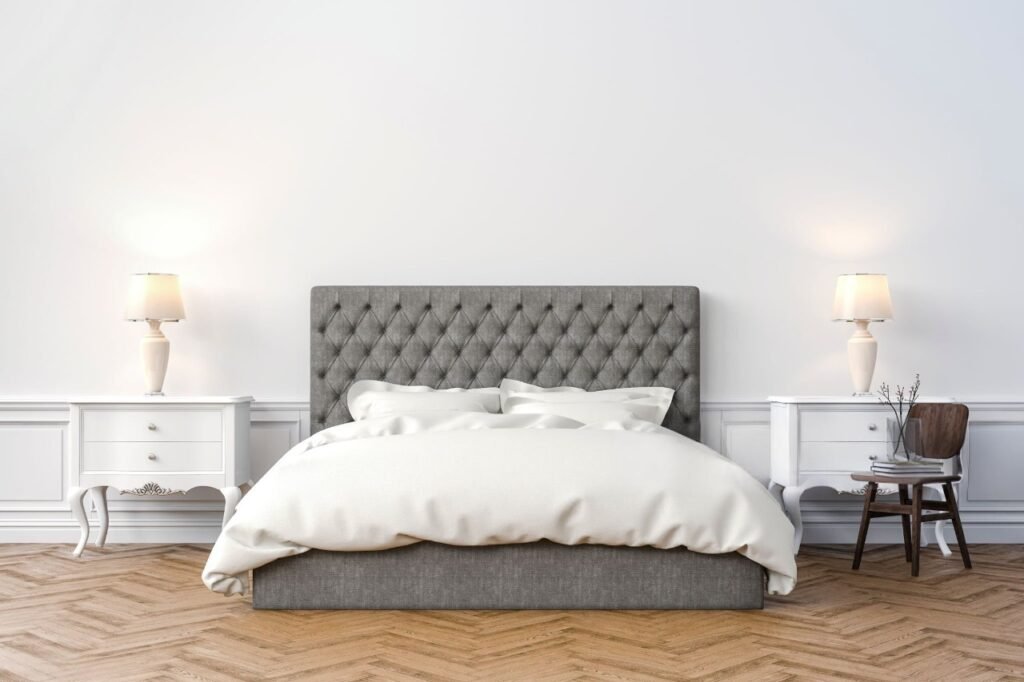
The breakthrough came on a Thursday. I was tired—tired of switching sheets, tired of defending prints, tired of Meera’s knowing looks every time I touched a floral. So I did something reckless.
I put a plain fitted sheet on the mattress. A crisp white percale, cool and smooth. Then I folded a printed duvet cover—the geometric one in mustard and charcoal—and laid it across the foot of the bed like a blanket. Not spread out. Just folded. Just enough pattern to be interesting. Then I added two plain pillows in slate blue and two printed shams in a small coordinating pattern.
Meera walked in, stopped, tilted her head, and said nothing for a full fifteen seconds. That’s how I knew I’d won.
What I’d accidentally discovered was layering. The plain fitted sheet gave my body that calm, quiet surface to sleep on. The printed duvet at the foot gave my eyes something to look at during the day. The mix of plain and printed pillows tied it all together.
It wasn’t a war anymore. It was a conversation.
From that night on, I never slept on a printed fitted sheet again. I’ll say that plainly: printed top sheets? Fine. Printed duvets? Lovely. Printed pillowcases? Absolutely. But the sheet beneath my body—the one that touches my skin all night—that one, for me, will always be plain. The texture matters too much. The breathability matters too much. And honestly? Waking up to a pattern pressed into my cheek is not the look I’m going for.
But that’s just me. You might feel differently.
What I Wish Someone Had Told Me
If I could go back to day one—before the polka dots, before the pineapple shame, before Meera moved in and upended my entire bedding philosophy—here’s what I’d tell myself:
First, fabric matters more than print. I learned this the expensive way. A cheap printed sheet in a low thread count will pill after three washes and feel like sandpaper by month two. A good quality plain sheet in long-staple cotton or linen will get softer every time you wash it. Prints can hide wear, but they can’t hide scratchiness. Your skin knows the difference.
Second, color is not the same as print. A plain sheet in a bold color—emerald green, deep ochre, wine red—can be just as striking as any pattern. Don’t confuse “plain” with “beige.” Plain just means unpatterned. It can still be dramatic.
Third, consider your lighting. In my bedroom, the morning light is golden and direct—it makes prints pop beautifully. But the evening light is dim and blue, and that same print looks muddy and chaotic. I ended up choosing my sheets based on when I spend the most time in my room. (For me, that’s evenings. So plains won.)
Fourth, seasonal switching is the secret. No single sheet works all year. In summer, I want a plain white percale that feels like a cool cloud. In winter, I want a printed flannel—something cozy and distracting, like plaid or tiny stars. Let your sheets change with the seasons. You’ll get the best of both worlds.
Fifth and finally—and this is the one that took me the longest to accept—nobody cares as much as you do. I spent weeks agonizing over what my bedsheets said about me as a person. Would my friends think I was boring if I went all plain? Would I seem immature if I kept the prints? Then one evening, I asked four different people who’d seen my beds what they remembered about them. You know what they remembered? Nothing. Not one thing. They remembered whether the bed was comfortable. They remembered if they’d slept well. They didn’t remember the pattern or the lack thereof.
We think our sheets are a statement. Mostly, they’re just sheets.
The Verdict (Such As It Is)
So after three months, two bedrooms, one spreadsheet, and approximately 47 loads of laundry—which looks better? Printed or plain?
Here’s my answer, and Meera has grudgingly signed off on it:
Plain sheets look better in photographs. Printed sheets look better in real life.
Let me explain.
When you see a bedroom on Instagram or in a magazine, it’s almost always plain sheets. White, cream, maybe a soft gray. That’s because plain sheets photograph beautifully—they reflect light evenly, they don’t distract the eye, they make the room look calm and expensive.
But in real life? In real life, you’re not staring at a static image. You’re walking past your bed at 7 AM, half-asleep, coffee in hand. You’re crawling into it at 11 PM, exhausted, with a book and a glass of water. In those real-life moments, a printed sheet can be a little burst of happiness. A reminder that your bedroom is yours, that it has personality, that life doesn’t have to be all minimalist beige.
The best-looking bed is not the one that follows rules. It’s the one that makes you feel something good when you see it.
For me, that ended up being a plain fitted sheet (because sleep quality is real) with a printed duvet folded at the foot (because joy is also real) and a rotating cast of pillowcases depending on my mood.
For Meera, it’s still all plain, all the time. But she now owns one printed throw pillow. A small one. With very tiny dots. I like to think I had something to do with that.
Where You Go From Here

If you’re standing in a bedding aisle right now, paralyzed by choices, here’s my advice: buy one of each.
Buy a plain set in a high-quality fabric—linen if you run hot, percale if you like crispness, sateen if you want that silky smooth feel. Use it for a week. Pay attention to how you sleep, how you wake up, how the room feels.
Then buy a printed set in a pattern that genuinely makes you smile—not one that you think looks “adult” or “trendy,” but one that sparks something in your chest. Use that for a week.
Then do what I did: mix them. Put the plain fitted sheet with the printed pillowcases. Use the printed flat sheet as a summer blanket. Fold the plain duvet at the foot of the printed bed. There are no sheet police. Nobody will come to your house and judge you.
Okay, Meera might. But she’s my sister. She doesn’t count.
In the end, the question “printed or plain” is the wrong question. The right question is: What do you need your bed to do for you?
Do you need it to energize you in the morning? Then print might be your friend. Do you need it to quiet your mind at night? Then plain might be your answer. Do you need it to hide the fact that you eat cookies in bed? Then print, definitely print.
But whatever you choose, choose it for yourself. Not for Instagram. Not for your sister. Not for some imaginary visitor who might judge your thread count.
Choose the sheet that makes you want to crawl into bed at the end of a long day. Choose the sheet that feels like coming home.
And if you can’t decide? Just buy the pineapple print. You’ll regret it, but at least you’ll have a good story.
Frequently Asked Questions
If you’re standing in a bedding aisle right now, paralyzed by choices, here’s my advice: buy one of each.
Buy a plain set in a high-quality fabric—linen if you run hot, percale if you like crispness, sateen if you want that silky smooth feel. Use it for a week. Pay attention to how you sleep, how you wake up, how the room feels.
Then buy a printed set in a pattern that genuinely makes you smile—not one that you think looks “adult” or “trendy,” but one that sparks something in your chest. Use that for a week.
Then do what I did: mix them. Put the plain fitted sheet with the printed pillowcases. Use the printed flat sheet as a summer blanket. Fold the plain duvet at the foot of the printed bed. There are no sheet police. Nobody will come to your house and judge you.
Okay, Meera might. But she’s my sister. She doesn’t count.
In the end, the question “printed or plain” is the wrong question. The right question is: What do you need your bed to do for you?
Do you need it to energize you in the morning? Then print might be your friend. Do you need it to quiet your mind at night? Then plain might be your answer. Do you need it to hide the fact that you eat cookies in bed? Then print, definitely print.
But whatever you choose, choose it for yourself. Not for Instagram. Not for your sister. Not for some imaginary visitor who might judge your thread count.
Choose the sheet that makes you want to crawl into bed at the end of a long day. Choose the sheet that feels like coming home.
And if you can’t decide? Just buy the pineapple print. You’ll regret it, but at least you’ll have a good story.