It was 3:00 AM, and I was lying in the dark, staring at the ceiling, one hand pressed to my cheek. I could feel it—the familiar heat of a new breakout forming under the surface, a volcanic promise of redness and swelling that would announce itself to the world by morning. I had done everything right. The gentle cleanser. The prescription retinoid. The $60 moisturizer that was supposed to be “the one.” And yet, here I was, 32 years old, still fighting acne like I was back in high school. My skin was angry, inflamed, and utterly exhausted. That night, scrolling through Instagram in a fit of desperation, I stumbled upon a dermatologist’s page. She wasn’t pushing a new serum or a miracle peel. She was talking about a pillowcase.
I wanted to laugh. I wanted to scroll past and forget about it. A pillowcase? After all the money I had spent on skincare, the answer was a pillowcase?
But I didn’t scroll past. I clicked. And what I read changed the way I thought about my skin forever.
The Silent Aggressor: Why Your Cotton Pillowcase Is the Enemy of Clear Skin
Let me ask you something. Have you ever really thought about what happens to your face during those eight hours of sleep? You’re unconscious, right? Unaware? You assume that your nighttime routine—the cleansing, the toning, the layering of serums—is doing its job while you dream.
Here’s what I didn’t realize: while I was blissfully asleep, my cotton pillowcase was waging a tiny war against my skin.
Think about it. Cotton is a natural fiber, but it’s a rough one at the microscopic level. When your face rubs against a cotton pillowcase all night, it creates friction. “Using a silk pillowcase reduces tugging and pulling on the skin that leads to fine lines and wrinkles,” says board-certified dermatologist Dr. Deanne Mraz . But for those of us with acne-prone skin, the damage goes far beyond fine lines. This friction doesn’t just pull at your skin; it irritates it. It aggravates already inflamed pores. It’s like rubbing a piece of sandpaper over a sunburn—you’re just making it angrier .
And then there’s the absorption issue. Cotton is designed to be absorbent. That’s why we use it for towels. But when you’re sleeping on a cotton pillowcase, it’s absorbing everything you just put on your face. “Silk isn’t as absorbent as cotton, so if you’re putting product on your face or hair at night, it leaves the product where it belongs,” explains textile expert Deborah Young . That means your expensive hyaluronic acid? It’s not sinking into your skin; it’s being wicked away by your pillowcase. Your retinol? The cotton is stealing it. And if that weren’t bad enough, that same absorbent fabric is soaking up the oils, sweat, and dead skin cells from your face. And then, night after night, you’re pressing your clean face right back into that grimy, bacteria-laden surface .
I had spent years wondering why my skin was always so red and irritated in the morning, why my breakouts seemed to cluster on the side I slept on. I had blamed my diet, my hormones, my genetics—everything except the soft, white cotton case my head rested on every single night.
The Silken Solution: What Dermatologists Are Actually Saying
So I did what any obsessive skincare junkie does—I dove down the rabbit hole. I read studies (okay, I read articles citing studies), I watched dermatologist videos, and I became obsessed with the science of silk. And this is where it gets interesting. Because it’s not just about softness; it’s about survival.
One of the first things I learned is that not all pillowcases are created equal. You have silk, and then you have satin. And they are not the same thing. “Satin is a type of weave structure rather than a fabric, while silk is a protein fiber,” says Dr. Mona Gohara, a board-certified dermatologist . Satin can be made from polyester or other synthetic materials, and while it’s smooth, it’s often not breathable. “Polyester satin is still low in terms of causing friction. However, it is less breathable compared to silk, which ultimately makes silk more comfortable on the skin,” explains Dr. Toral . I knew I needed the real deal. I needed 100% pure mulberry silk, the kind that comes from the cocoons of silkworms that feed exclusively on mulberry leaves. It’s considered the highest quality silk, and for good reason .
The deeper I went, the more convinced I became. I learned that a 22-momme silk pillowcase is the gold standard, with a tight weave and a buttery softness that feels like a dream . I learned about OEKO-TEX certification, which means the fabric is free from harmful chemicals, another major plus for sensitive skin that reacts to everything . I was building a mental roadmap of exactly what I needed to buy.
A Month of Being a Silk Sleeper: My Personal Experiment
I ordered a silk pillowcase. It arrived in a small, sleek box, and when I pulled it out, it felt like liquid. It was cool to the touch and so impossibly smooth that I was almost afraid to sleep on it. I was worried it would slip off the bed, or that my head would slide off in the night. It felt a little ridiculous, a little indulgent, like something a movie star would own.
But that first night was a revelation.
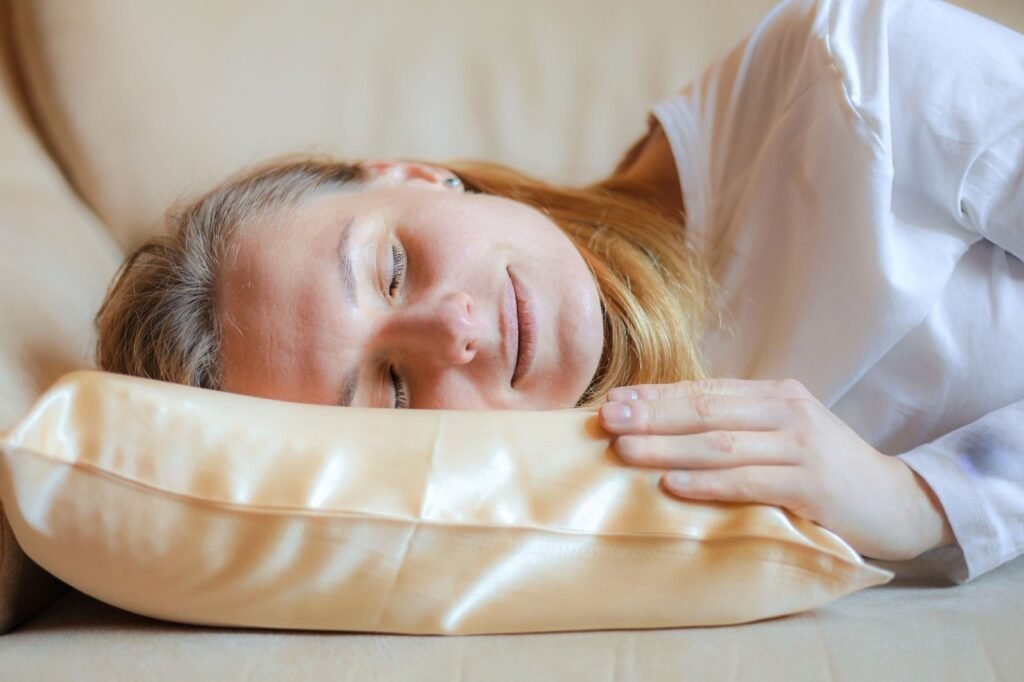
I washed my face, applied my serums, and laid my head down on that cool, silken surface. I had one of the best nights of sleep I’d had in months. There was no restless tossing. I wasn’t waking up sweaty and uncomfortable. I just slept. And when I woke up? I didn’t have the usual deep crease on my cheek that would take an hour to fade. My face wasn’t puffy. It was… calm . I even noticed a difference in my hair. I have fine, easily tangled hair that gets breakage just from looking at it wrong. But after that first night, my hair was smooth and fell into place without a fight .
But this wasn’t a one-night miracle. I knew the acne results wouldn’t be instantaneous. As Dr. Gary Goldenberg of Goldenberg Dermatology emphasizes, the skin results from sleeping on a silk pillowcase take time. “For those with acne or acne-prone skin, it may take a month to see fewer breakouts” . So I kept going. Week after week, I slept on that silk pillowcase. And slowly, subtly, things began to change.
The chronic redness I had on my cheeks, the kind I had just accepted as part of having pale skin, started to fade. The irritation from my prescription retinol wasn’t as severe because my skin was less aggravated at night. And while I still got the occasional breakout, the clusters of pimples that used to pop up on the side I slept on were gone. That was the biggest win for me.
It wasn’t a magic bullet. I didn’t wake up with glass skin on day one. But the reduction in friction, the fact that my skincare was actually staying on my face, and the temperature-regulating properties of the silk meant that I had finally, after years of trying, given my skin a fighting chance to actually heal overnight .
Why It Works: The Real Skin Science
A few weeks into my experiment, I started understanding exactly why my skin was improving. It’s not a myth; it’s practical biology. Dr. Loretta Ciraldo, a board-certified dermatologist, explains that if you use drying skincare like retinoids or AHAs, sleeping on silk helps keep your complexion better hydrated because silk doesn’t absorb moisture the way cotton does . I also found out that silk fibers are naturally antimicrobial and hypoallergenic, meaning they’re resistant to the dust mites and bacteria that love to set up camp in standard bedding .
And this is crucial: acne isn’t caused by poor hygiene. It’s a complex mix of hormones, excess oil, and bacteria. I know that now because my dermatologist tells me that every time I see her. But poor hygiene can exacerbate acne and trigger flare-ups . You don’t have to be a clean freak to realize that sleeping on a clean surface is better for your skin. But the beauty of silk is that it stays cleaner longer. It doesn’t trap the gunk like cotton does. It’s breathable, so you sweat less, which means less bacteria overgrowth. It’s a cleaner environment for your face to recover in .
The Ultimate Guide: The Best Silk Pillowcases for Acne-Prone Skin
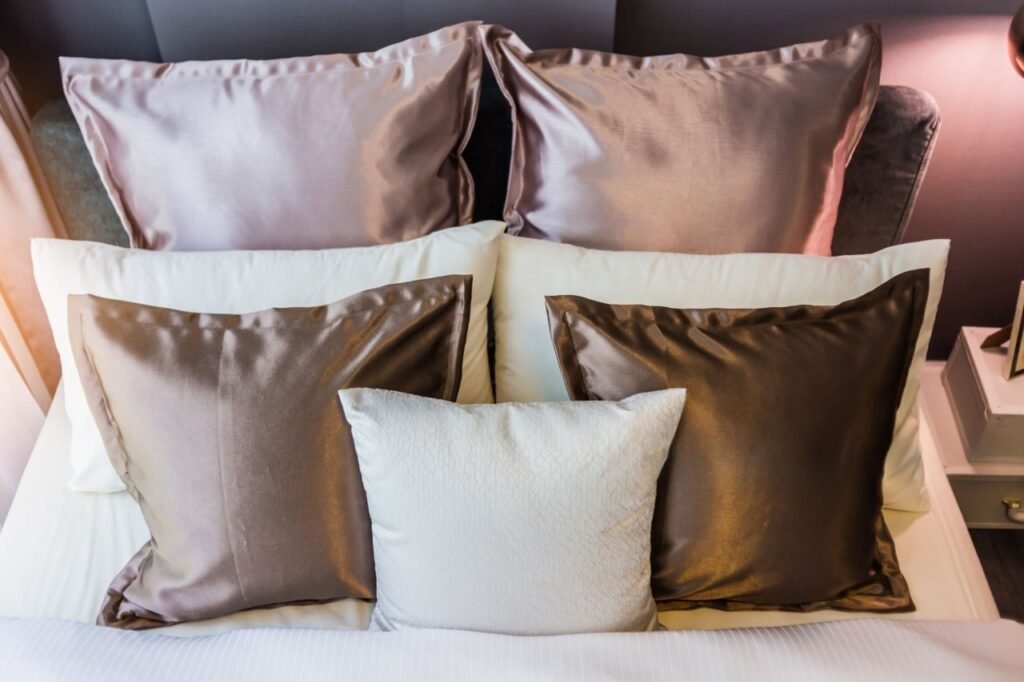
After months of using silk and talking to dermatologists, reading reviews, and scrolling through countless “best of” lists from beauty editors, I’ve narrowed down the best of the best. Because let’s be real—picking the right one can be confusing.
Here are the dermatologist-approved and editor-tested choices that are making a real difference for acne-prone skin:
The Gold Standard: Blissy
If you look up “dermatologist-approved” next to a silk pillowcase, Blissy is almost always the top result. It’s made from 100% pure mulberry silk (22-momme, Grade 6A) and is OEKO-TEX certified. I’ve seen it described as “clinically shown to improve hair and skin in just four weeks,” which tracks with my experience . The Beverly calls it “dermatologist-approved protection satin can’t match,” and I completely agree. The quality is undeniable. It’s breathable, cooling, and the hidden zipper is a nice touch .
The Game-Changer: Sillo
This is the one that surprised me. Sillo has taken the silk pillowcase concept and kicked it up a notch. They take it a step further by weaving their 22 Momme mulberry silk with silver ions. Why does that matter? Because silver has antibacterial properties, and in the world of acne, keeping bacteria at bay is half the battle . It’s skincare and bedding combined. They’re also very transparent about their quality, using no toxic dyes or harsh chemicals, which is a huge plus for anyone with sensitive, acne-prone skin .
The Luxury Statement: Slip
Slip is basically the “it” girl of the silk pillowcase world. It’s a favorite among celebrities and beauty directors at major magazines. I read a review from a beauty editor who said she “only owns silk pillowcases” now . The Women’s Health team tested Slip and other brands extensively, and Slip consistently comes out on top for durability and just how impossibly smooth it is . It’s a premium product with a premium price tag, but it lasts for years if you take care of it.
The Accessible Splurge: SundaySilks
Let’s be real—silk isn’t cheap. But if you’re on a budget, SundaySilks offers a 100% Pure Mulberry Silk Pillowcase for a shockingly affordable price. Reviewers rave that they’ve “been sleeping noticeably better since switching to it” . It proves that you don’t have to spend a fortune to get the benefits of high-quality silk.
The Curated Pick: Belledorm
Another luxury option, Belledorm, is known for its incredible quality and 450-thread count natural silk fabric. Zoe Report recommends it as a top-tier choice for those looking to take their beauty sleep seriously . It’s an investment in your long-term skin health, and it shows in the craftsmanship.
The New Nighttime Non-Negotiable
It’s been a year since I made the switch. My acne isn’t gone. I still have bad skin days, and I still stress over breakouts. But the chronic irritation is gone. The morning puffiness is a thing of the past. And more importantly, I’ve stopped fighting my pillow. I used to wake up feeling like I had been in a boxing match with my bedding—red, sweaty, and covered in crease marks. Now, I wake up and my skin feels like it’s had a proper rest.
Dermatologist Dr. Fayne Frey cautioned that “there is no evidence that sleeping on a silk pillowcase minimizes acne breakouts” and that we shouldn’t expect healthier skin just from making such a purchase . And she’s right to be skeptical. A silk pillowcase isn’t a cure. It’s not going to replace your retinol or your SPF. But what it does do is create the optimal environment for your skin to benefit from all those other things you’re doing.
Dr. Ciraldo notes that you should see a more hydrated complexion in about a week and immediately notice fewer pillowcase wrinkles and smoother hair . For me, it was the combination—less irritation, better product absorption, and a cleaner sleeping surface—that made the real difference. It’s a tool in the toolkit. It’s a small, luxurious change that has a surprisingly large impact.
I’ve been asked if it’s worth the money. Every single time, I say yes. Because skin doesn’t just heal while you’re awake and putting on serums. It heals while you sleep. And if giving it a smoother, cleaner, more comfortable surface to heal on means fewer breakouts and more restful sleep? That’s the easiest investment in my skincare routine I’ve ever made.
So tonight, when you put your head on your pillow, think about what it’s doing to your face. If it’s not silk, you might want to reconsider.
Frequently Asked Questions
Q: Is a silk pillowcase really better than a satin one for acne-prone skin?
Yes, for acne-prone skin, pure silk is generally the better choice. While both have a smooth surface that reduces friction, silk is a natural, breathable fiber, whereas satin is often a synthetic weave made from polyester. Dermatologists note that polyester satin is less breathable than silk and can trap heat and make you sweat, which can create a breeding ground for bacteria and potentially worsen breakouts . For the best results, look for 100% mulberry silk .
Q: How often should I wash my silk pillowcase to keep acne at bay?
To keep your skin clear, it’s recommended to wash your silk pillowcase every three days . Even though silk doesn’t absorb as much oil and bacteria as cotton, it still collects dead skin cells, sweat, and product residue. Washing it frequently ensures you have a clean, fresh surface to sleep on every night, minimizing the risk of bacterial overgrowth that can trigger acne .
Q: Will a silk pillowcase get rid of my acne completely?
No, a silk pillowcase is not a cure for acne. Acne is caused by a combination of excess oil, bacteria, hormonal triggers, and genetics . Dermatologists emphasize that the fabric of your pillowcase is less likely to be a primary contributing factor. However, a silk pillowcase can be a highly effective supportive tool by reducing friction and irritation, helping your skin retain moisture, and providing a cleaner surface that prevents flare-ups . It makes your skincare routine work better, but it won’t replace it.