There is a particular kind of heartbreak that comes with watching hair extensions you spent good money on start to look dull, tangled, and lifeless within just a few weeks. If you have ever run your fingers through your extensions and felt them catch, or noticed that the shine they had on day one has quietly disappeared by day ten, you are not imagining things, and you are definitely not alone. This happens to almost everyone who wears extensions, and in nearly every case, the answer has less to do with the quality of the hair itself and more to do with two habits that people rarely connect: how often the extensions are actually cleaned, and what they rest against every single night while you sleep.
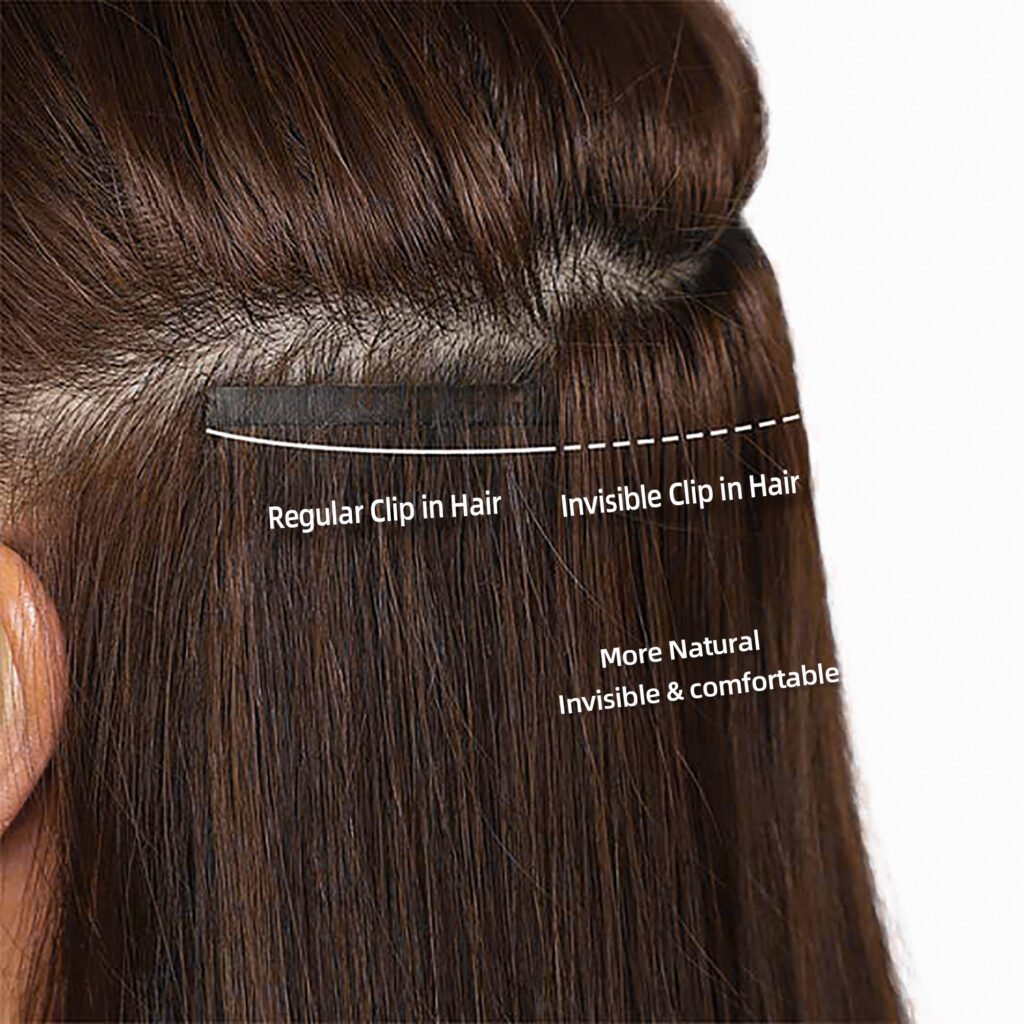
I want to walk you through this the way a friend would, over coffee, rather than the way a product label would. Because the truth is, extensions are not like the hair growing out of your scalp. Your natural hair gets a steady supply of oil from your scalp, moisture from your body, and nutrients from your bloodstream. Extensions get none of that. Once a strand of hair is cut and processed into a weft, a tape-in, a clip-in, or a keratin bond, it is essentially cut off from any natural source of nourishment. Everything that keeps it soft, shiny, and tangle-free from that point forward has to come from you. That is really the whole story in a single sentence, but let’s slow down and actually live inside it for a while, because the details matter enormously.
I remember the first time this really clicked for me, not through a textbook or a tutorial, but through a friend who had just come back from getting tape-ins for her sister’s wedding. She had spent a small fortune on them, treated them like glass for the first week, and then slowly slipped back into old habits: sleeping on the same cotton pillowcase she had used for years, going to bed with damp hair after a late shower, skipping washes because she was “too tired” and figured a few extra days wouldn’t hurt. By the time the wedding actually arrived, six weeks later, the extensions that had looked flawless on day one looked noticeably duller, slightly matted near the crown, and nowhere near as full as they had been at the salon. Nothing dramatic had happened. No single bad day had ruined them. It was the slow accumulation of small, repeated choices, made every single night, that quietly wore them down. That story stuck with me, because it illustrates something important: extension care is not about one big decision, it is about dozens of tiny ones repeated night after night.
Why Extensions Get Dirty Faster Than You'd Expect
Most people assume that because extensions are not attached to a living scalp, they should stay cleaner for longer than natural hair. It is a reasonable guess, but it turns out to be backwards. Extensions actually collect grime from a wider variety of sources, and they have a harder time shedding that grime naturally.
Think about everything that touches your hair in a single day. There is the residue from your shampoo and conditioner, even if you did not apply it directly to the extensions. There is the pollution and dust in the air, especially if you live in a busy city or spend a lot of time outdoors. There is the product buildup from dry shampoo, heat protectant spray, hairspray, or leave-in conditioner. There is the natural oil that travels down from your own scalp along the hair shaft, especially near the roots where the extensions are attached. And then there is the invisible layer that nobody thinks about until someone mentions it: skin cells, sweat, and the oils that transfer from your pillowcase, your scarf, your hood, or even your phone when you hold it against your ear for a long call.
Natural hair has one advantage here that extensions do not: it grows. Even if the ends get a little rough or dull, new hair is constantly emerging from the follicle, refreshing the overall look. Extensions do not have that luxury. The hair you clipped in or had bonded to your head in January is still the exact same hair in March, June, and September, gradually accumulating everything it has been exposed to, with no fresh growth to dilute the damage. That is precisely why cleaning frequency and the surface you sleep on end up mattering so much more for extensions than they do for the hair growing naturally out of your head.
Finding the Right Washing Rhythm
Let’s talk numbers, because “clean them regularly” is not actually useful advice on its own. The honest answer depends on the type of extensions you wear, but there are dependable general ranges that stylists repeat for a reason.
If you wear clip-in extensions, meaning the kind you put in during the day and take out before bed, you are in the easiest position of anyone reading this. Because they are not sitting against your scalp overnight soaking up oil and sweat, and because they are not exposed to the elements every single day, clip-ins typically only need a wash every fifteen to twenty wears, or roughly once a month if you wear them a few times a week. Some people stretch this even further if they are careful about keeping product away from the base of the wefts. The general signal to watch for is simple: when the hair starts feeling slightly waxy at the roots of the weft, or when it no longer holds a curl or wave the way it did when it was fresh, that is your cue.
Tape-in extensions live a different life. Because they stay in for weeks at a time and sit directly against the scalp, they need more frequent attention, generally every two to three washes of your natural hair, which usually works out to about twice a week if you wash your own hair every three or four days. The tricky part with tape-ins is that washing them too aggressively, or scrubbing directly at the tape bonds, can loosen the adhesive early and shorten the life of the whole set. So the goal with tape-ins is frequent but extremely gentle cleansing, almost like you are rinsing rather than scrubbing.
Sew-in wefts and keratin bond extensions sit somewhere in the middle. Because the hair is either braided into cornrows and sewn down, or individually bonded strand by strand, oil and product tend to travel down from the scalp and settle at the base, which can make the roots look greasy even when the rest of the hair looks perfectly fine. Most people with sew-ins or bonds find that washing every one to two weeks strikes the right balance between keeping the scalp comfortable and not disturbing the installation too much.
There is one detail that trips almost everyone up at least once, and it is worth saying clearly: overwashing extensions is just as damaging as underwashing them, sometimes worse. Because extensions cannot replenish natural oils the way your scalp does for your real hair, washing too frequently strips away the small amount of protective coating left on the hair from the manufacturing process, leaving it dry, brittle, and prone to matting. If you find yourself washing your extensions every single day because they “feel dirty,” the problem is usually not actually dirt. It is more likely dryness, which paradoxically makes hair feel rougher and heavier in a way that can be mistaken for grease.
The Washing Ritual Itself
Since we are talking about frequency, it is worth pausing on technique too, because doing it right stretches out the time between washes and makes each wash more effective.
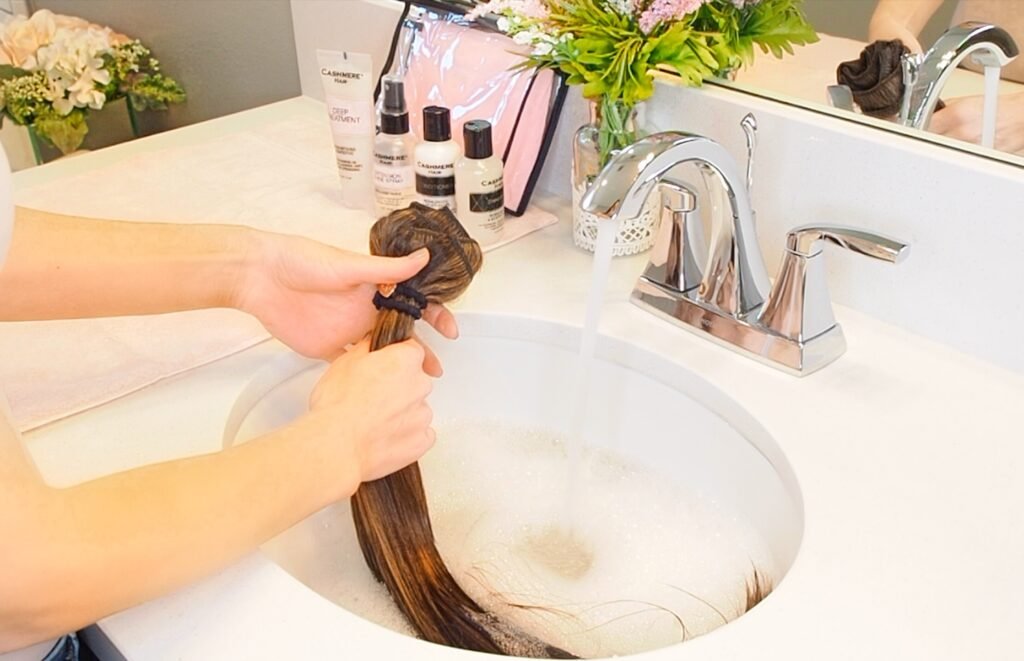
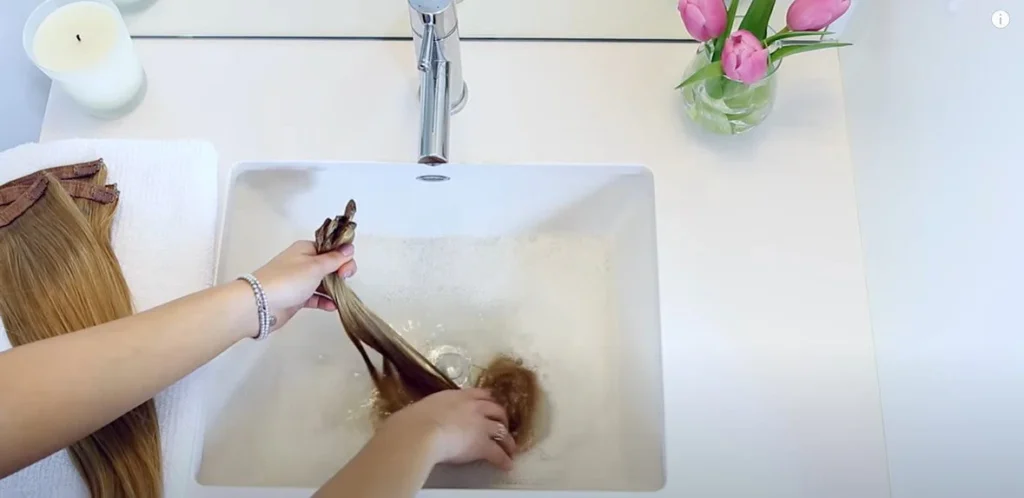
The safest approach for almost every kind of extension is to detangle thoroughly before any water touches the hair. Wet hair, especially wet extension hair, is far weaker and more prone to shedding and breakage than dry hair, so working out knots beforehand saves an enormous amount of unnecessary stress on the strands. From there, a gentle, sulfate-free shampoo applied in a downward motion, rather than scrubbed in circles the way you might wash your scalp, keeps the cuticle of the hair lying flat instead of roughing it up. Conditioner should go on the mid-lengths and ends generously, but stay away from the very top of clip-in wefts or the bonds of tape-ins and keratin extensions, since conditioner residue near the attachment points is one of the most common reasons those attachments loosen early.
Rinsing with cool or lukewarm water rather than hot water also makes a noticeable difference over time. Hot water opens the cuticle layer of the hair and strips moisture faster, which is part of why extensions washed only in hot water tend to feel drier and duller within a few months compared to hair that is rinsed cooler.
Now Let's Talk About Something Almost Nobody Mentions: Your Pillow
Here is the part of the conversation that catches most people completely off guard. You can follow every washing rule perfectly, use the gentlest products, detangle every night, and still end up with extensions that mat, tangle, and lose their shine faster than expected, if you are sleeping on the wrong surface, or on the right surface for too long without changing it.
Think about what actually happens while you sleep. Your head moves against the pillow anywhere from ten to seventy times a night, according to sleep researchers who have studied overnight movement patterns. Every single one of those movements creates friction between your hair and the pillowcase fabric. If that fabric is a rough, absorbent material like standard cotton, it does two damaging things at once: it physically roughs up the cuticle of the hair through friction, and it pulls moisture and natural oils out of the hair and into the fabric, leaving the extensions drier by morning than they were the night before.
This is precisely why silk and satin pillowcases have become such a popular recommendation among hairstylists who work with extensions specifically. It is not a beauty myth or a marketing gimmick. The physical smoothness of silk and satin fibers genuinely reduces friction compared to cotton, which means less tangling, less breakage at the point where extensions attach to your natural hair, and noticeably less moisture pulled out of the strands overnight. Many people who switch report waking up with extensions that still look presentable, sometimes even still holding a loose curl, instead of a matted mess that needs fifteen minutes of detangling before they can even think about styling.
But here is the detail that almost nobody talks about, and it is just as important as the material itself: even a silk or satin pillowcase needs to be changed regularly, because it accumulates exactly the same buildup your extensions do. Every night, your pillowcase absorbs the oil from your scalp and skin, any leave-in products or dry shampoo residue in your hair, sweat, and dead skin cells. Within just a few days, a pillowcase that started out smooth and clean is coated in a fine layer of oil and residue, which means your hair is essentially sleeping in a pool of its own buildup and reapplying it to itself, night after night.
Dermatologists and hair stylists generally recommend changing your pillowcase every two to three days if you have extensions, oilier skin, or use a lot of hair and skincare products before bed, and at most once a week if none of those apply to you. This is more frequent than most people change their pillowcases naturally, and it is one of the simplest, cheapest changes anyone can make that has an outsized effect on how their extensions look and feel over time. Having two or three silk or satin pillowcases in rotation, so a fresh one is always available while another is in the wash, tends to be the easiest way to actually stick to this habit rather than letting it slip.
Braiding, Bonnets, and the Nighttime Routine That Ties It All Together
Changing the pillowcase is half the equation. The other half is what you do with your hair before it ever touches the pillow. Loose extensions left completely undone overnight tend to tangle at the base, near wherever the extension attaches to your natural hair, because that is the point of maximum movement and friction. A loose, low braid, or a soft twist secured with a fabric-covered elastic, keeps the hair contained and dramatically reduces the number of tangles you wake up to, which in turn reduces how much detangling, brushing, and pulling the hair endures the next morning.
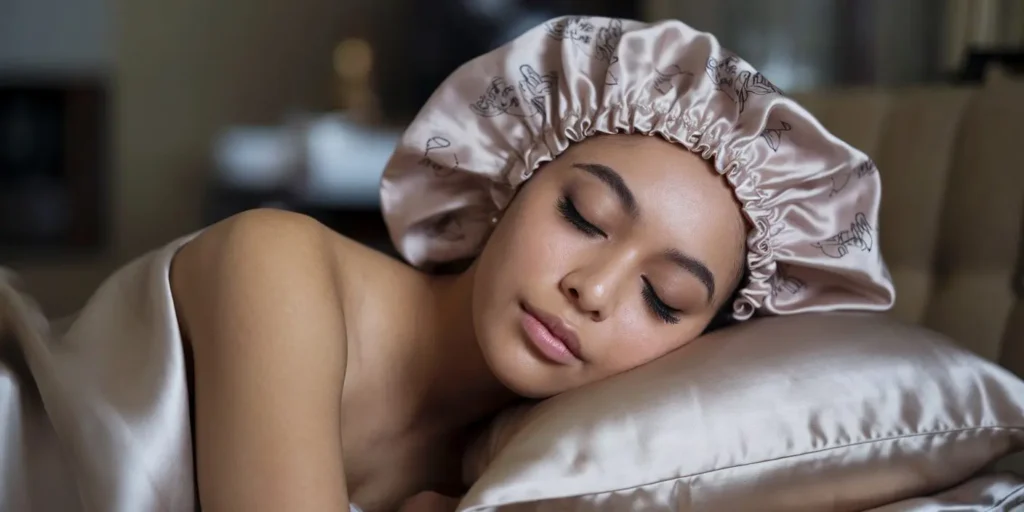
For people who wear their extensions in a way that makes braiding impractical, a silk or satin bonnet or wrap serves a similar purpose to a silk pillowcase, keeping the hair contained against a smooth surface rather than exposed to whatever the pillow happens to be made of. Some people layer both, a loose braid tucked under a silk bonnet, on top of a silk pillowcase, for what stylists sometimes half-jokingly call the full nighttime armor. It sounds excessive until you try it for a week and notice how much less time you spend detangling in the morning.
The Mistakes That Sneak Up on Almost Everyone
There are a handful of habits that seem harmless in the moment but quietly undo weeks of careful washing and good pillowcase discipline, and it is worth naming them plainly because most people fall into at least one without realizing it.
Going to bed with wet or even slightly damp hair is probably the biggest one. It feels convenient, especially after a late-night wash, to just towel-dry and head to sleep rather than sitting under a dryer for twenty minutes. But wet hair is at its weakest structurally, and when it spends eight hours being pressed, twisted, and rubbed against a pillow in that fragile state, the result is far more tangling and breakage than the same hair would experience if it had been fully dry beforehand. If a full blow-dry is not realistic before bed, even a rough dry with a towel followed by a loose braid to keep things contained makes a meaningful difference.
Brushing extensions from the roots down is another quiet culprit. It feels intuitive to start at the top and pull a brush all the way through, but doing this on tangled hair just pushes every knot lower and lower until it compacts into a single, dense mat near the ends. Working from the tips upward in small sections, gradually working knots loose before moving higher, is slower but genuinely prevents this from happening in the first place.
Skipping heat protectant before styling is a mistake that will not show up immediately, but shows up eventually as a kind of straw-like texture that no amount of conditioner seems to fix. Because extensions cannot regenerate the way natural hair does, heat damage is essentially permanent once it happens. A light heat protectant spray before flat ironing or curling is one of the cheapest insurance policies available for extending the life of a set.
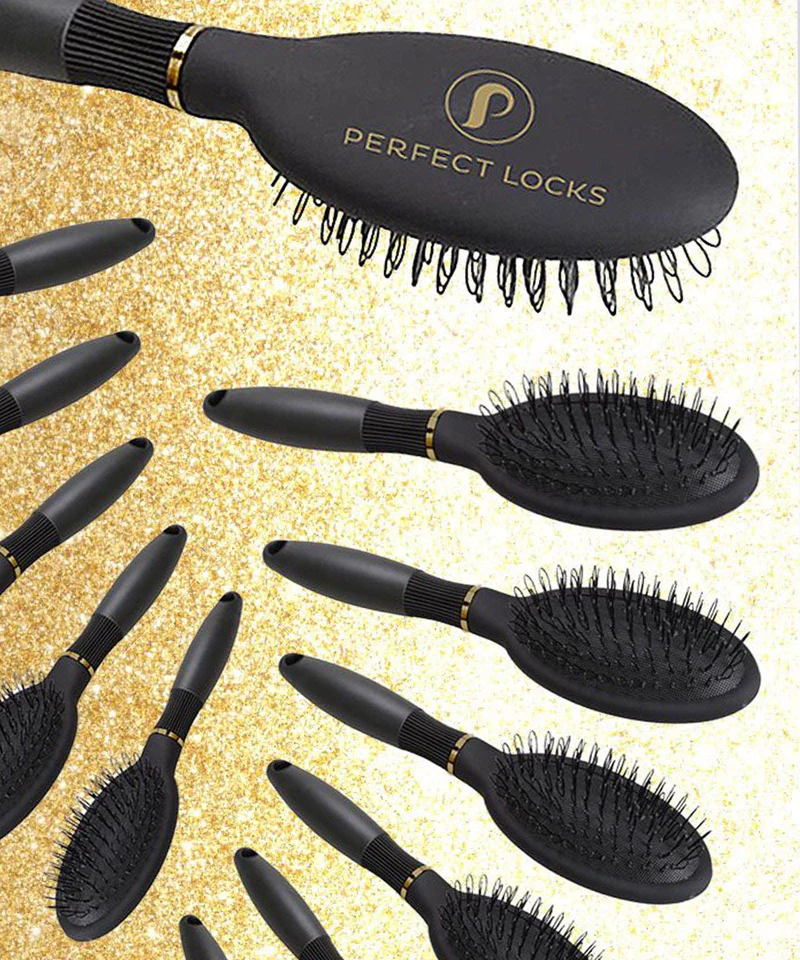
And finally, there is the habit of using the same brush or comb on extensions that gets used on everything else, including on wet natural hair right after a shower, without ever cleaning it. Brushes accumulate the exact same buildup that pillowcases do: oil, product residue, and dead skin, all of which gets redistributed straight back into clean extensions the next time that brush is used. Washing a brush every week or two, the same way a pillowcase gets refreshed, closes one more small gap that people rarely think to check.
Climate, Seasons, and How They Change the Equation
Something that rarely gets mentioned in extension care guides is how much the surrounding climate shifts the ideal washing rhythm. Someone living somewhere hot and humid is going to sweat more at the scalp, and that sweat travels down the hair shaft and settles right at the base of tape-ins, bonds, and sew-ins, which means washing needs to happen slightly more often than the general guidelines suggest, sometimes by several days. On the flip side, someone in a cold, dry climate during winter is fighting a different battle: indoor heating strips moisture out of the air, and that dryness pulls moisture out of both natural hair and extensions simultaneously, meaning washing can often be stretched out longer, but a good leave-in conditioner or hair oil becomes far more essential to keep the strands from turning brittle.
Humidity plays a role with pillowcases too. In a humid bedroom, sweat and oil build up on fabric noticeably faster overnight, which pushes the two-to-three-day pillowcase rotation toward the shorter end of that range. In a dry climate, three days might stretch comfortably to four or five without much difference. The point is not to memorize a rigid rule, but to actually pay attention to how the hair and pillowcase feel and adjust the rhythm accordingly, the same way anyone adjusts how often they shower based on how active or how hot the weather has been.
Knowing When It's Not About Cleaning Anymore
Every set of extensions, no matter how well it is cared for, eventually reaches a point where washing and a good pillowcase are no longer enough, and it helps to recognize that point rather than fighting against it indefinitely. If the hair still tangles heavily immediately after a wash, if it feels rough and straw-like even right after conditioner, or if strands are visibly shedding from the wefts or bonds in noticeably larger amounts than when the set was new, that is usually a sign of natural wear reaching its limit rather than a cleaning problem. Human hair extensions, cared for well, generally last anywhere from several months to a year or more depending on the type, while synthetic extensions tend to have a shorter lifespan simply due to how the fibers are made. Recognizing this natural endpoint, rather than assuming more washing or a better pillowcase will fix hair that has simply reached the end of its usable life, saves a lot of frustration and unnecessary product spending in those final weeks.
Putting a Realistic Schedule Together
If all of this feels like a lot to remember, it genuinely does simplify once it becomes routine, the same way remembering to brush your teeth twice a day eventually stops feeling like a decision and just becomes something you do. A workable rhythm for most extension wearers looks something like this in practice: clip-ins get washed roughly once a month or after about fifteen to twenty wears, tape-ins get a gentle wash about twice a week alongside natural hair washing, and sew-ins or bonds get washed every one to two weeks depending on how oily the scalp tends to get. Alongside all of that, the pillowcase gets swapped for a fresh one every two to three days, hair goes into a loose braid or under a silk bonnet before bed, and a wide-tooth comb or extension-specific brush works through any tangles gently before the hair ever gets wet.
None of this needs to happen perfectly every single day to make a difference. Even shifting from washing extensions daily out of habit to washing them on an actual schedule, and switching a rough cotton pillowcase for a silk or satin one that gets changed every few days, tends to produce a noticeable improvement within two to three weeks. The hair holds its shine longer, tangles less at the roots, and generally behaves the way it did on the day it was first installed or clipped in.
Extensions are an investment, whether that investment is measured in money, in time spent at the salon, or simply in how much better you feel when your hair looks the way you want it to. Treating the washing schedule and the sleeping surface as two halves of the same routine, rather than two unrelated afterthoughts, is really the simplest way to protect that investment for as long as possible.
Going back to that friend with the wedding tape-ins, the story does have a better ending than it might seem at first. After the wedding, she went back to her stylist a little discouraged, expecting to hear that the damage was simply the cost of wearing extensions. Instead, her stylist asked her two questions: what was she sleeping on, and how often was she actually washing the hair versus just rinsing it in the shower without really cleansing it. Neither answer was particularly good, and once she switched to a silk pillowcase rotation and started sticking to an actual twice-a-week wash schedule for the tape-ins, the next set she had installed months later lasted noticeably longer and looked better throughout its whole lifespan, without her changing anything else about her routine. She still talks about it now as one of those small, almost embarrassingly simple fixes that made a bigger difference than any expensive product ever did.
That, more than any specific number of days or washes, is really the lesson worth carrying forward. Extension care rewards consistency far more than it rewards intensity. A gentle wash on a steady schedule will always beat an aggressive scrub done sporadically, and a slightly less expensive silk pillowcase changed every few days will always outperform a luxury one that sits unwashed for weeks at a time. The habits that protect extensions are quiet, unglamorous, and repetitive, which is exactly why they are so easy to overlook and so effective once they actually become routine.
Frequently Asked Questions
How often should clip-in extensions be washed compared to tape-ins
Clip-ins can generally go about fifteen to twenty wears, or roughly once a month, since they come off before bed and avoid overnight buildup. Tape-ins sit against the scalp continuously, so they typically need a gentle wash twice a week to stay comfortable and fresh.
Does the type of pillowcase really make a difference to hair extensions?
Yes, quite a noticeable one. Rough fabrics like cotton create friction and pull moisture out of the hair overnight, while smooth silk or satin reduces tangling and helps the extensions retain moisture and shine for longer.
How often should a pillowcase be changed if you wear hair extensions?
Every two to three days is the general recommendation, since pillowcases absorb oil, sweat, and product residue quickly, all of which transfers straight back into the hair each night if the case isn’t refreshed often enough.