There is a statistic that tends to stop people mid-sentence the first time they hear it, and I remember exactly where I was the first time someone told it to me. A friend who works in allergy research mentioned, almost casually over dinner, that the average mattress after a few years of regular use can be home to somewhere between one and ten million dust mites. Not thousands. Millions. Living, breeding, and dying in the exact spot where most of us spend roughly a third of our entire lives, night after night, completely unaware.
I laughed at first, assuming she was exaggerating for effect the way people sometimes do with scary-sounding facts. She wasn’t. And once you actually sit with that information for a while, it changes something about the way you think about your bedroom, not in a paranoid, can’t-sleep-anymore kind of way, but in a genuinely useful, “I should probably do something about this” kind of way. This article is really an attempt to walk through what those millions of mites actually are, why your mattress specifically is such an ideal home for them, what they’re actually doing to your health while you sleep, and, most importantly, what can realistically be done about it without turning your bedroom into a sterile laboratory.
What a Dust Mite Actually Is
Before going any further, it helps to actually understand what we’re talking about, because the phrase “dust mite” gets thrown around so often in allergy commercials and mattress advertisements that it’s easy to lose track of what the creature actually is.
Dust mites are microscopic arachnids, technically related to spiders and ticks, though they look nothing like either to the naked eye, mostly because they’re simply too small to see without magnification. An adult dust mite measures somewhere around a quarter to a third of a millimeter in length, which means an entire adult mite could comfortably sit on the head of a pin with room to spare. They have eight legs, like all arachnids, along with a translucent, almost ghostly body that lacks eyes entirely, since they navigate their world through touch and chemical cues rather than sight.
Unlike bed bugs, which people often confuse them with, dust mites do not bite. They have no interest in human blood at all. Their entire diet consists of dead skin cells, specifically the tiny flakes of skin that every human being sheds constantly throughout the day and night, an amount that adds up to something in the range of half a gram to a gram and a half per day for an average adult, which sounds small until you realize that’s more than enough to sustain an enormous population of microscopic organisms feeding on it continuously.
This is really the crux of why mattresses specifically become such thriving dust mite habitats. A bed collects more shed human skin than almost any other surface in a home, simply because a person spends more consecutive hours in direct contact with their mattress than with any other single object they own. Combine that steady food supply with warmth from body heat, humidity from breath and perspiration, and the soft, fibrous texture of mattress material that gives mites plenty of places to burrow and hide, and you have essentially built the perfect five-star hotel for an organism that asks for very little beyond exactly those conditions.
Why the Population Grows So Quickly
The scale of a dust mite population inside an unwashed, unprotected mattress isn’t really about any single mite doing anything dramatic. It’s almost entirely a story about reproduction rate and time, the same way a single pair of rabbits left alone in a field eventually becomes dozens, then hundreds, if nothing intervenes.
A female dust mite can lay somewhere between one and three eggs per day throughout her adult life, which typically lasts around ten weeks under ideal conditions. That might not sound like an enormous number on its own, but when you consider that those eggs hatch, mature into adults within roughly a month, and immediately begin reproducing themselves, the population grows in exactly the kind of exponential curve that starts slow and then accelerates dramatically. A mattress that starts with a modest handful of mites, perhaps introduced through normal household dust, secondhand furniture, or simply drifting in through open windows and doors over time, can realistically reach populations in the millions within just a couple of years of regular use, particularly if the mattress is rarely washed, vacuumed, or protected with any kind of barrier.
Humidity plays an outsized role in how fast this growth happens, more than most people would guess. Dust mites don’t drink water the way most creatures do. Instead, they absorb moisture directly from the air through specialized glands, which means they thrive specifically in humid environments and struggle significantly in dry ones. A bedroom that runs consistently above about fifty percent relative humidity, which describes an enormous number of bedrooms, especially in warmer or more humid climates, or in homes without much ventilation, essentially provides dust mites with everything they need to reproduce at their maximum possible rate.
Body heat compounds this further. A sleeping human body radiates a meaningful amount of warmth directly into the mattress surface for six to nine hours at a stretch, every single night, creating a consistently warm microclimate exactly where mites are living and feeding. Between the steady food supply, the warmth, and the humidity, a typical mattress essentially recreates the exact tropical, humid conditions dust mites evolved to thrive in, regardless of what the actual climate outside the bedroom window happens to be.
What Actually Happens to a Mattress Over Time
It’s worth walking through the timeline a little more concretely, because the transformation from a brand-new mattress to a heavily populated one doesn’t happen overnight, and understanding the pace of it helps explain why so many people go years without ever thinking about it.
A brand-new mattress, fresh out of its packaging, is essentially a blank slate, free of any meaningful dust mite population. Within the first few months of regular use, as skin cells begin accumulating in the fabric and stitching, along with whatever ambient dust mites happen to be present in the surrounding environment, a small founding population typically establishes itself, often without any noticeable symptoms or signs at all, since the numbers involved are still relatively modest at this stage.
By the one-year mark, under fairly typical household conditions without any specific dust mite prevention measures in place, that founding population has usually had enough reproductive cycles to grow substantially, often reaching populations numbering in the hundreds of thousands. This is frequently the point where people with any degree of dust mite allergy sensitivity start to notice symptoms creeping in, even if they don’t necessarily connect those symptoms to their mattress specifically.
Somewhere between the two and five year mark, in a mattress that has never been deep cleaned, never been fitted with a protective encasement, and rarely if ever had its bedding washed at appropriately hot temperatures, population estimates climb into the millions, sometimes numbering in the tens of millions across an entire mattress once you account for the full depth of the material, not just the surface layer visible to the eye. Studies conducted by researchers studying indoor allergens have consistently found that a mattress of this age, under typical conditions, can weigh measurably more than its original weight, purely from the accumulated mass of dust mites, their shed exoskeletons, and their waste products embedded throughout the fabric and padding.
What Actually Causes the Health Problems
Here is a detail that surprises a lot of people the first time they learn it: dust mites themselves aren’t really the direct source of the allergic reactions and respiratory irritation associated with them. It’s what they leave behind.
Dust mites produce waste, just like every living creature does, and over the course of their roughly ten-week lifespan, a single dust mite produces a surprising quantity of fecal matter, something in the range of twenty pellets per day. Multiply that by a population numbering in the millions, sustained continuously over years, and the sheer volume of accumulated waste material embedded throughout a mattress becomes genuinely significant. That waste, along with fragments of dead mite bodies and shed exoskeletons that accumulate as mites die and are replaced by new generations, contains proteins that the human immune system, in a meaningful percentage of the population, recognizes as a threat and mounts an allergic response against.
This is why dust mite allergy symptoms tend to follow such a specific, recognizable pattern. Sneezing, a persistently runny or stuffy nose, itchy or watery eyes, and a scratchy throat that seem to be at their absolute worst first thing in the morning and gradually ease as the day goes on, are classic hallmarks of dust mite sensitivity, since the allergen exposure is heaviest during the hours spent in direct, prolonged contact with the mattress and pillow. For people with asthma, dust mite allergens are one of the most commonly identified triggers for nighttime and early-morning flare-ups specifically, a pattern that allergists and pulmonologists encounter regularly enough that dust mite exposure is often one of the very first things investigated when a patient reports asthma symptoms that seem to worsen overnight.

Skin reactions form another category worth mentioning, since dust mite allergens can also trigger or worsen eczema and general skin irritation in sensitive individuals, given how much direct, prolonged skin contact happens with mattress and pillow surfaces throughout the night. For people managing chronic eczema without ever identifying a clear trigger, dust mite exposure through unwashed or unprotected bedding is one of the more commonly overlooked contributing factors that allergists sometimes uncover once other more obvious triggers have been ruled out.
The Story of a Sneeze That Took Two Years to Solve
I want to share a specific story here, because it illustrates just how quietly and gradually this whole situation tends to develop, often without anyone connecting the dots for a surprisingly long time. A coworker of mine spent nearly two years dealing with what she assumed was a persistent, unshakeable cold, one that seemed to flare up specifically in the mornings and improve throughout the day, every single day, for months on end. She tried over-the-counter cold medicine, assumed it was seasonal allergies tied to whatever was blooming outside, and eventually saw a doctor who ran a fairly standard allergy panel.
The panel came back with a strong positive for dust mite sensitivity, something she had genuinely never considered as a possibility, since she associated allergies almost exclusively with pollen, pet dander, or dust in a general, vague sense rather than a specific microscopic organism living inside her actual mattress. Her mattress, as it turned out, was approaching its fifth year of use, had never been fitted with any kind of protective cover, and her sheets, while washed reasonably often, had never been washed at a hot enough water temperature to actually kill dust mites and their eggs rather than simply removing surface dirt.

Within about three weeks of switching to hot-water washing for her sheets, adding a proper allergen-blocking mattress encasement, and vacuuming her mattress thoroughly for the first time she could remember, her “chronic cold” symptoms noticeably improved, and within two months they had essentially disappeared entirely. Nothing about her actual immune system or allergy sensitivity had changed. The only variable that shifted was her level of ongoing exposure to the allergen that had been triggering her reaction the entire time, sitting quietly in her mattress the whole two years she spent assuming she simply caught colds unusually often.
What Actually Works to Reduce a Dust Mite Population
Given everything explained so far, the natural next question is what can actually be done about it, and thankfully, the answer doesn’t require replacing a mattress every year or living in constant anxiety about invisible roommates. A handful of consistent habits make a genuinely dramatic difference.
Washing bedding, meaning sheets, pillowcases, and any blankets in direct contact with the sleeping surface, in hot water, specifically water heated to at least 130 degrees Fahrenheit or around 55 degrees Celsius, kills both live dust mites and their eggs far more effectively than washing in cold or lukewarm water, which mostly just removes visible dirt while leaving the mite population largely intact. Doing this weekly, rather than the once-every-few-weeks habit many people fall into, prevents the population living in bedding specifically from ever reaching the extreme numbers that develop over months of neglect.
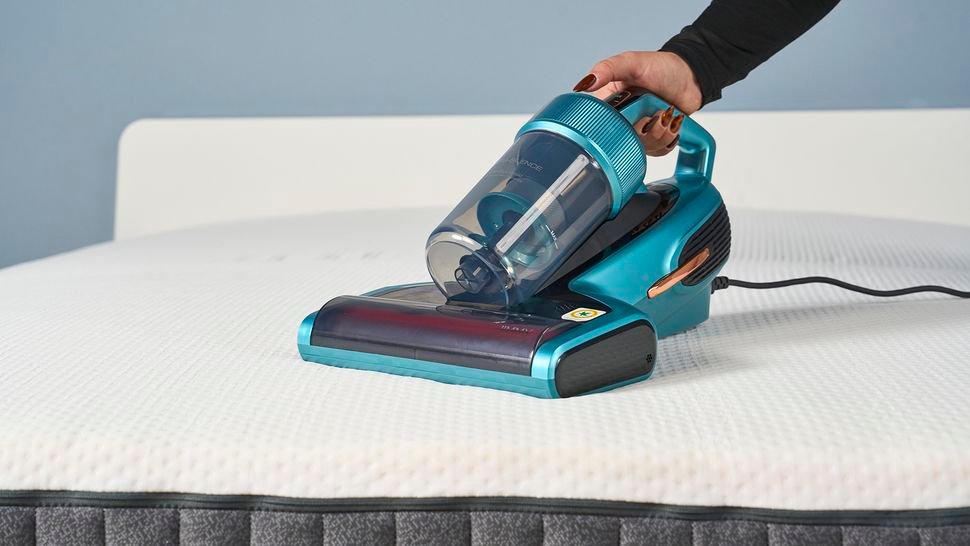
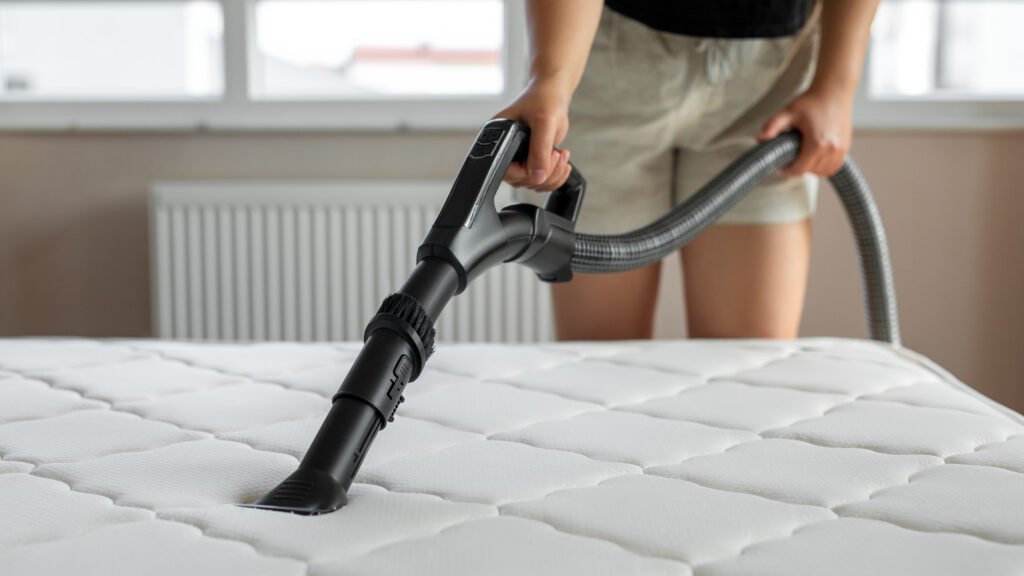
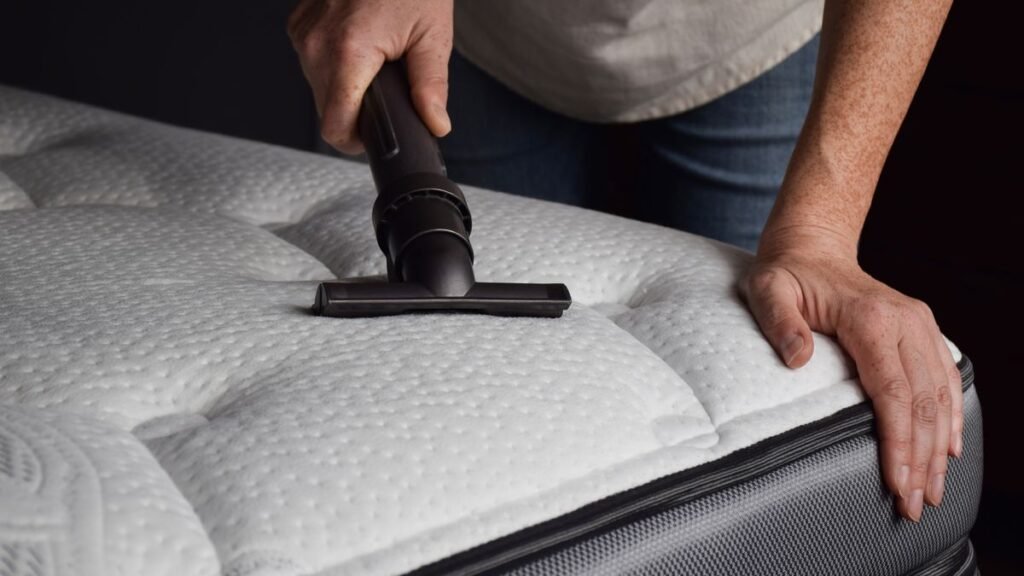
Vacuuming the mattress itself, not just the floor around the bed, using a vacuum equipped with a HEPA filter, makes a meaningful difference by physically removing accumulated dust, shed skin, and a portion of the mite population along with their waste products from the mattress surface and the uppermost layer of fabric. This is worth doing at least monthly, and ideally alongside a change of bedding, since a freshly vacuumed mattress paired with fresh sheets addresses both the surface and the covering at once rather than tackling them separately on different schedules.
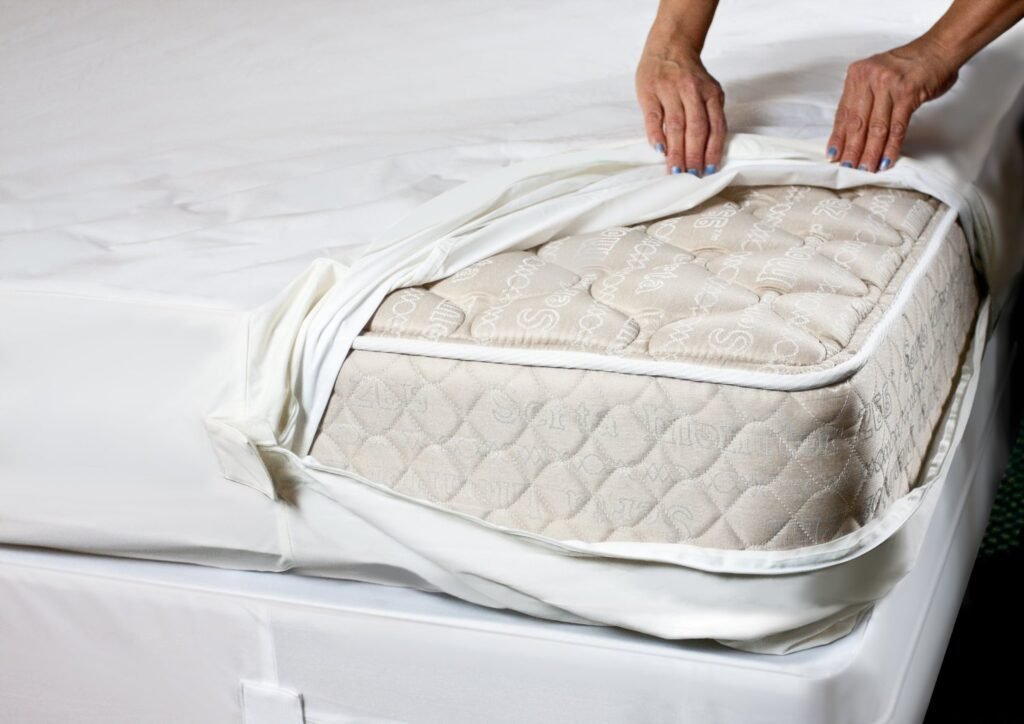
A properly designed, allergen-blocking mattress encasement, distinct from a standard waterproof mattress protector meant mainly for spill protection, creates a genuine physical barrier with a weave tight enough that dust mites and their allergen particles cannot pass through it in either direction. This single addition tends to produce one of the most dramatic improvements of any single change someone can make, since it effectively seals off the deep interior of the mattress, where the largest and most established mite populations tend to live, from ever coming into direct contact with a sleeper again, while still allowing whatever population remains inside to gradually die off without a fresh source of skin cells reaching them.

Managing bedroom humidity, ideally keeping relative humidity below fifty percent through ventilation, a dehumidifier in particularly humid climates, or simply airing out the room regularly, directly limits how effectively dust mites can reproduce, since their entire ability to absorb moisture from the air becomes compromised in a drier environment. This is a slower, more gradual intervention compared to washing bedding or adding an encasement, but it compounds over time and prevents the population from rebuilding as aggressively even after other cleaning efforts.
Sunlight, interestingly, plays a small but genuinely useful role too. Dust mites are highly sensitive to both heat and ultraviolet light, and airing a mattress out in direct sunlight periodically, even just for a few hours when circumstances allow, has been shown to meaningfully reduce surface mite populations, since sustained sunlight exposure is inhospitable to their survival in a way that indoor conditions typically are not.
When Replacement Becomes the More Sensible Option
There does come a point, particularly for mattresses that have gone many years without any of the interventions described above, where cleaning and protective measures start to offer diminishing returns compared to simply replacing the mattress outright. Mattress material itself breaks down structurally over time regardless of dust mite activity, and a mattress that has accumulated a decade or more of unmanaged mite population, combined with the natural sagging and support loss that comes with age, often reaches a point where the more sensible, cost-effective decision is starting fresh with a new mattress, immediately protected with a proper encasement from day one, rather than attempting to deep clean a heavily populated older mattress back to a genuinely low allergen state.
For people managing significant allergy or asthma symptoms specifically tied to dust mite sensitivity, allergists frequently recommend this exact approach, replacing an older, heavily populated mattress and pillow set while immediately establishing better habits with the new one, rather than trying to fully remediate an older mattress that may have years of deeply embedded allergen buildup that surface cleaning alone struggles to fully address.
A Few Myths Worth Clearing Up
Along the way, a handful of misconceptions tend to circulate about dust mites, and it’s worth addressing a few of them directly, since believing the wrong thing can lead to spending time and money on measures that don’t actually accomplish much.
One common myth is that dust mites are primarily a problem in dirty or poorly kept homes, and that regular general cleanliness alone is enough to prevent them. In reality, dust mite populations correlate far more strongly with humidity levels, mattress age, and the presence or absence of specific interventions like hot-water washing and protective encasements than with general household tidiness. A meticulously clean home in a humid climate, without any dust mite-specific precautions in place, can still harbor a substantial mattress population, while a more cluttered home with consistently low humidity and proper bedding habits can actually maintain a comparatively low one. Cleanliness in the general sense and dust mite control are related but genuinely distinct concerns.
Another persistent myth involves cold weather offering meaningful protection. While it’s true that dust mites struggle in genuinely cold, dry outdoor conditions, the inside of an occupied, heated home during winter remains warm and often just as humid as during other seasons, sometimes more so if windows stay closed and ventilation decreases, meaning indoor mite populations don’t reliably decline just because it’s cold outside. The controlled indoor microclimate of a heated bedroom, especially the specific warmth generated by a sleeping body on the mattress itself, largely insulates the mite population from whatever is happening outdoors.
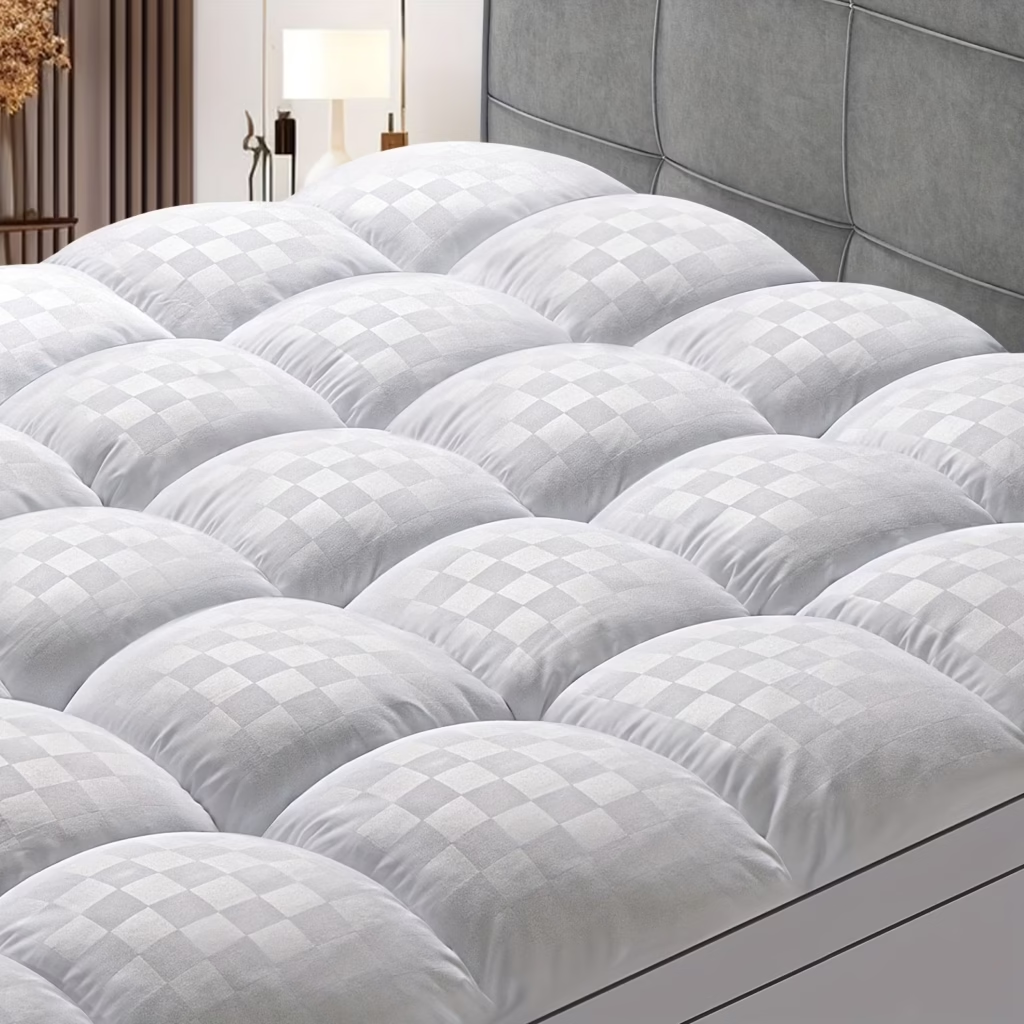
There’s also a common assumption that a mattress that looks and smells clean must not have a significant dust mite population, since people naturally associate visible cleanliness with the absence of a problem. Dust mites and their waste are entirely microscopic and essentially odorless to human senses in typical household concentrations, meaning a mattress can appear and smell completely normal while still hosting a population numbering in the millions. Visual and olfactory inspection, in other words, simply isn’t a reliable way to judge dust mite presence one way or the other.
Does Mattress Type Actually Make a Difference?
A reasonable question that comes up often is whether certain types of mattresses are inherently more or less hospitable to dust mites than others, and the answer turns out to be a genuine yes, though the difference tends to be more modest than marketing materials for certain mattress types sometimes suggest.
Traditional innerspring mattresses, with their open coil structure and typically more breathable fabric covering, tend to allow for somewhat more airflow through the mattress interior compared to solid foam alternatives, which can translate into marginally lower humidity retention deep within the mattress structure. That said, innerspring mattresses also tend to have more fabric layers, quilting, and structural nooks where skin cells and dust can accumulate, which partially offsets the airflow advantage.
Memory foam mattresses, being denser and less inherently breathable, can retain slightly more heat and humidity close to the sleeping surface, which in theory could support mite activity somewhat more readily. In practice, though, the dense, tightly structured nature of memory foam also means it has fewer of the loose fibers and open spaces that mites typically favor for burrowing and egg-laying, which tends to balance out much of that theoretical disadvantage.
Latex mattresses, particularly natural latex, have a reputation for being somewhat more naturally resistant to dust mite colonization, partly due to the material’s inherent structure and partly due to some natural antimicrobial properties associated with latex specifically. This reputation has some legitimate basis, though it’s worth noting that latex mattresses still accumulate skin cells on their surface and covering fabric just like any other mattress type, meaning the same fundamental hygiene practices, washing bedding and using a proper encasement, remain just as necessary regardless of the base material underneath.
The honest takeaway is that mattress material affects the margins of this issue more than the core of it. Whatever type of mattress someone owns, the presence or absence of consistent hot-water washing, regular vacuuming, humidity management, and a proper allergen-blocking encasement will influence the resulting dust mite population far more dramatically than the underlying mattress construction itself.
Bringing It All Together
Coming back to that dinner conversation where this whole topic first caught my attention, the million-mite statistic that seemed almost absurd at first has stuck with me in a genuinely useful way ever since, not as a source of anxiety, but as a simple, practical reminder about a part of home maintenance that’s remarkably easy to overlook precisely because the problem is invisible. Nobody sees dust mites accumulating the way they’d notice a dusty shelf or a dirty countertop, which is exactly why mattresses so often go years without the kind of regular attention that other parts of a home receive without a second thought.
The coworker whose two years of unexplained morning symptoms resolved within weeks of a few straightforward changes is really the story worth remembering here, more than the raw statistics themselves. Millions of dust mites living in an unwashed mattress sounds like something out of a horror story, and in a strange way it is, but it’s also a completely solvable, entirely manageable situation, requiring nothing more exotic than hot water, a good vacuum, a proper mattress encasement, and a little bit of regular attention paid to a part of the bedroom most people never think to check.
Frequently Asked Questions
Can dust mites actually bite or harm skin directly?
No, dust mites don’t bite. They feed exclusively on shed skin cells, and health effects come from allergic reactions to their waste and body fragments, not from any direct bite or sting.
How often should sheets be washed to control dust mites?
Weekly, in water heated to at least 130 degrees Fahrenheit, is generally recommended, since hot water kills both live mites and their eggs far more effectively than cold or warm water alone.
Does a mattress protector alone get rid of dust mites?
A standard waterproof protector helps somewhat, but a proper allergen-blocking encasement with a tightly woven barrier is significantly more effective at actually sealing mites and their allergens away from direct contact.