There is a particular kind of frustration that only shows up right after you wake up. You open your eyes, the room is still a little dark, and before your feet even touch the floor, your nose starts twitching. Then comes the first sneeze. Then the second. By the time you sit up, your eyes are itchy, your nose feels blocked on one side, and you are reaching for a tissue instead of your phone. If this sounds familiar, you are not imagining it, and you are definitely not alone. Millions of people go through this exact routine every single morning, and most of them blame it on the weather, or a cold that “just won’t go away,” or dust in the air outside. Very few of them stop to look at the one thing that is touching their face for seven or eight hours every night — their bedding.
This article is going to walk through, in a very human and story-like way, why that morning sneeze fit and stuffy nose are not random. They are your body’s way of raising a small red flag about what you are sleeping on and sleeping under. We will talk about what actually causes this reaction, why it happens specifically in the morning and not, say, in the afternoon, how to tell it apart from a regular cold, and most importantly, what you can actually do about it so you can wake up feeling normal again.
Imagine a woman named Sarah, thirty-four years old, who works a regular nine-to-five job and has never really considered herself an “allergy person.” No childhood history of hay fever, no known sensitivity to pollen, nothing that would make her think twice about her bedroom. And yet for almost a year, she woke up every single morning sneezing four or five times in a row, her nose blocked on one side, her eyes a little puffy. She assumed it was just how her body reacted to mornings, maybe low humidity, maybe the changing seasons. She tried allergy medicine from the pharmacy, which helped a little but never completely, and she chalked the rest up to bad luck. It wasn’t until she stayed at her sister’s house for a weekend, slept in the guest room, and woke up both mornings completely fine, that she started to question what was really going on. That small, almost accidental experiment is the same one thousands of people unknowingly run every time they travel, and it’s often the first real clue that leads them back to their own bed as the actual source of the problem.
A Morning That Feels Like a Pattern, Not a Coincidence
Think about the last two weeks. If you sneeze two or three times right after waking up almost every single day, that is not a coincidence anymore — that is a pattern. Colds come and go within a week or so, and they usually come with a fever, body aches, or a sore throat. But this morning sneezing thing is different. It shows up like clockwork, it eases up as the day goes on, and by the time you’re at work or out running errands, you feel almost completely fine. Then you go home, sleep in your bed again, and the next morning, the same thing happens all over again.
This daily on-and-off pattern is actually one of the biggest clues that something in your sleeping environment is triggering an allergic reaction. Doctors and allergists call this a strong indicator of what is medically known as allergic rhinitis, and when it is specifically tied to bedding, it usually points back to a few very common culprits: dust mites, pet dander that has settled into your sheets, mold spores in old pillows or mattresses, or even the detergent you use to wash your bedding.
The Tiny Creatures You Cannot See
Here is something most people find a little uncomfortable to hear, but it needs to be said plainly because it explains almost everything. Your mattress, your pillows, and your quilt are home to millions of dust mites. These are microscopic creatures, so small that you cannot see them with the naked eye, and they do not bite or sting, so most people never even think about them. But they feed on the dead skin cells that fall off your body every single night while you sleep, and an average bed can house anywhere from thousands to millions of these mites depending on how old the mattress is and how often it gets cleaned.
The mites themselves are not really the problem. What triggers the sneezing, the itchy eyes, and the stuffy nose is their waste and their decomposing bodies. These particles are incredibly light and easily become airborne the moment you shift in your sleep, fluff your pillow, or pull the blanket up. Since your face is inches away from your pillow for hours at a stretch, you end up breathing this stuff in all night long. Your immune system, in a lot of people, treats these harmless particles like a threat, exactly the way it would treat a virus or bacteria, and it releases histamine to fight them off. That histamine release is what causes the sneezing, the runny or blocked nose, and sometimes watery eyes.
By the time morning comes, your body has had hours of continuous exposure, so the reaction is at its strongest right when you wake up. As the day goes on and you’re away from the bedding, the exposure drops, the histamine settles down, and the symptoms fade. This is exactly why so many people feel like they have a cold every morning that mysteriously disappears by lunchtime — it was never really a cold to begin with.
What makes dust mites such a stubborn problem is that they don’t need much to thrive. They love warmth, they love a little bit of humidity, and they absolutely love the environment a used mattress and pillow naturally create every single night from body heat and sweat. A brand new mattress might have almost none of them, but within just a few months of regular use, colonies begin to establish themselves in the seams, the padding, and the fibers, and from there, the population only grows unless something is actively done to disrupt it. Most people never actively do anything, because there’s nothing visible to prompt them to. You can’t see dust mites, you can’t smell them, and unless someone tells you what’s happening, there’s no obvious reason to suspect your own mattress of causing your symptoms. That’s part of why this particular allergy tends to go undiagnosed for so long — it hides in plain sight, quite literally under the sheets.
There’s also an interesting seasonal pattern that tends to confuse people even further. Dust mite populations typically peak during warmer, more humid months, which means symptoms often get noticeably worse in the summer or during monsoon season in humid climates, and then ease up slightly once the weather turns cooler and drier. A lot of people mistake this seasonal shift for regular seasonal allergies caused by pollen, when in reality, it’s the dust mites in their own bed responding to the exact same weather changes.
Old Pillows Are Worse Than You Think
Let’s talk about pillows specifically for a moment because they deserve their own spotlight in this story. Most people keep the same pillow for years, sometimes without ever washing it, just changing the pillowcase now and then. But research and sleep health experts have pointed out that pillows can roughly double in weight over a couple of years purely from the buildup of dead skin cells, sweat, dust mites, and their droppings. That statistic alone is enough to make anyone want to throw their pillow out the window.
If you’ve had the same pillow for more than two years and you’re waking up sneezing, there’s a very good chance that pillow is a major part of the problem. Feather and down pillows, in particular, tend to trap more dust mites than synthetic ones, though even synthetic pillows are not immune if they are old and rarely cleaned.
Think about how close your pillow actually gets to your nose and mouth every night. It’s not sitting three feet away like your mattress or your blanket edge; it’s pressed right up against your face for the entire time you’re asleep, which means any allergen sitting inside it has the shortest possible distance to travel before you breathe it in. This is exactly why people who otherwise keep a fairly clean bedroom can still wake up sneezing badly — the mattress might be relatively fine, the sheets might be freshly washed, but the pillow, the one item closest to your airways, has quietly been neglected for years. A lot of people don’t even remember when they bought their current pillow, which alone is a fairly reliable sign that it’s overdue for a replacement.

Pets, Blankets, and the Guest You Didn't Invite
If you have a cat or dog that likes to hop onto the bed and curl up next to you, or even just sit on the blanket during the day, that habit can be adding another layer to your morning misery. Pet dander is made up of tiny flecks of skin that pets shed constantly, and it clings to fabric incredibly well. Once it’s embedded in your sheets or comforter, it stays there until you wash it properly, releasing allergens into the air every time the fabric moves.
Even if you don’t own a pet, dander can travel on clothing from friends or family members who do, and it can settle into your bedding without you ever noticing. Combine that with dust mites and you’ve basically created a nightly allergy cocktail that your immune system has to deal with for eight hours straight.
There’s also a slightly counterintuitive detail worth knowing here. A lot of people assume that if they were fine sleeping with their pet for years, they can’t suddenly develop an allergic reaction to them. But sensitivities like this can build up gradually over time with repeated exposure, meaning it’s entirely possible to live comfortably with a pet in your bed for years and then start reacting to their dander later, especially if your immune system is already dealing with a heavier dust mite load at the same time. The two triggers often work together rather than in isolation, which is part of why simply removing the pet from the bed for a couple of weeks, without changing anything else, sometimes only leads to partial improvement rather than complete relief.
Mold Is the Quiet Troublemaker
Mold doesn’t get talked about as much as dust mites when it comes to bedding allergies, but it deserves attention too. If your mattress has ever gotten damp — maybe from sweat, a spilled drink, high humidity in your bedroom, or even a leak — mold spores can start growing inside it without any visible sign on the surface. The same goes for pillows that get slightly damp from hair that wasn’t fully dry, or from being stored in a humid closet before use.
Mold spores are another classic trigger for sneezing, nasal congestion, and sometimes a scratchy throat, and because they thrive in the dark, slightly warm environment inside a mattress, they can multiply for months before anyone notices a musty smell. If your stuffy nose seems to get worse during humid seasons or after your bedroom feels particularly muggy, mold in your bedding might be playing a bigger role than you’d expect.
There was a man, let’s call him Imran, who kept noticing his congestion got noticeably worse during the rainy months every year, almost like clockwork, while his summer and winter mornings were relatively tolerable. He assumed it was just how his sinuses reacted to rain. It wasn’t until he flipped his mattress over one afternoon to rotate it, something he rarely bothered doing, that he noticed a faint discoloration and a musty smell along the underside near a corner that had been resting against a slightly damp wall. That mattress had likely been growing a small colony of mold for months, made worse every rainy season when humidity in the room climbed higher, and it had nothing to do with the rain itself irritating his sinuses directly — the rain was simply feeding the mold that was already sitting a few inches beneath his head every night.
Not Just a Cold: How to Tell the Difference
One of the most common questions people ask is how to know whether this is a bedding allergy or just a string of unlucky colds. The truth is, there are a few very clear differences once you know what to look for.
A cold usually comes with a low fever, general body fatigue, a sore throat, and it builds up over a day or two before symptoms peak. It also runs its course and disappears within about a week, whether or not you change anything about your environment. Bedding-related allergies, on the other hand, do not come with a fever, they do not cause body aches, and they follow you around for weeks or even months without ever fully clearing up, precisely because the trigger is still sitting right there under your head every night.
Another giveaway is the itchiness factor. Allergies almost always come with itchy or watery eyes, an itchy throat, or itchy skin, none of which are typical with a viral cold. And if you travel somewhere else — a hotel, a friend’s house, a family member’s guest room — and suddenly your symptoms disappear for those nights, that is about as strong a confirmation as you can get that your own bedding at home is the trigger.
The color and consistency of what comes out of your nose is another small but telling detail. With a cold, nasal discharge tends to start clear and gradually turn thicker and slightly yellow or green as the immune system fights off the virus over several days. With an allergy, it almost always stays thin, clear, and watery throughout, because there’s no infection involved, just an ongoing irritant reaction. It’s a small thing, but paying attention to it for even a few mornings can help you figure out which category you’re actually dealing with.
Timing across the week is another useful clue people often overlook. If you notice your symptoms are consistently worse on the days right after you’ve washed and dried your sheets using a heated dryer versus air-drying them, or if they seem to flare up specifically after vacuuming or changing bedding, that’s your immune system reacting in real time to disturbed allergens, which is a very different pattern from the slow build and fade of a viral illness.
Why the Symptoms Hit Hardest Right After Waking Up
It’s worth pausing here to really understand the timing of all this, because it’s the piece that convinces most people once they think it through. Throughout the night, your face stays close to the pillow and your body stays wrapped in sheets and blankets for six to nine hours without much of a break. Every time you move, roll over, or adjust your blanket, you disturb the fabric and send a fresh cloud of dust mite debris, dander, or mold spores into the air right next to your nose and mouth.
By the early morning hours, your body has been breathing in this concentrated mix for so long that your immune response is at its peak the moment you open your eyes. That is why the sneezing fit often happens within minutes of waking, sometimes even before you’re fully out of bed. Once you get up, shower, and leave the bedroom, the exposure drops dramatically, your histamine levels settle, and by mid-morning you often feel like nothing was ever wrong. It’s a cycle that resets every single night, which is exactly why it can drag on for years if the underlying cause in the bedding is never addressed.
There’s also a biological rhythm working against you at that exact hour. Cortisol, the hormone that naturally helps keep inflammation and allergic responses in check throughout the day, is typically at its lowest point right around the time most people wake up, before it gradually rises through the morning. With less natural anti-inflammatory support circulating in your body at that moment, your nasal passages are simply more reactive first thing in the morning than they will be a few hours later. So it isn’t just about exposure being highest overnight — your body’s own natural defenses against that exposure happen to be at their weakest at the exact same time, which is a rather unfortunate coincidence that makes the morning sneezing fit feel so much more intense than symptoms later in the day.
The Detergent Angle Nobody Thinks About
Here’s a twist a lot of people don’t expect. Sometimes it isn’t dust mites or pet dander at all — it’s the very detergent or fabric softener used to wash the sheets. Strong fragrances and certain chemical additives in laundry products can irritate the nasal passages of sensitive individuals, causing symptoms that look identical to a dust allergy. If you recently switched laundry detergents, added a new scent booster, or started using dryer sheets around the same time your morning sneezing began, that timing is worth paying attention to. Switching to a fragrance-free, hypoallergenic detergent for a couple of weeks is a simple way to rule this out.
What Actually Helps: Making the Bedroom Boring Again for Allergens
Once you’ve connected the dots and accepted that your bedding is likely behind the sneezing, the good news is that fixing it doesn’t require anything dramatic or expensive. It mostly comes down to consistency.
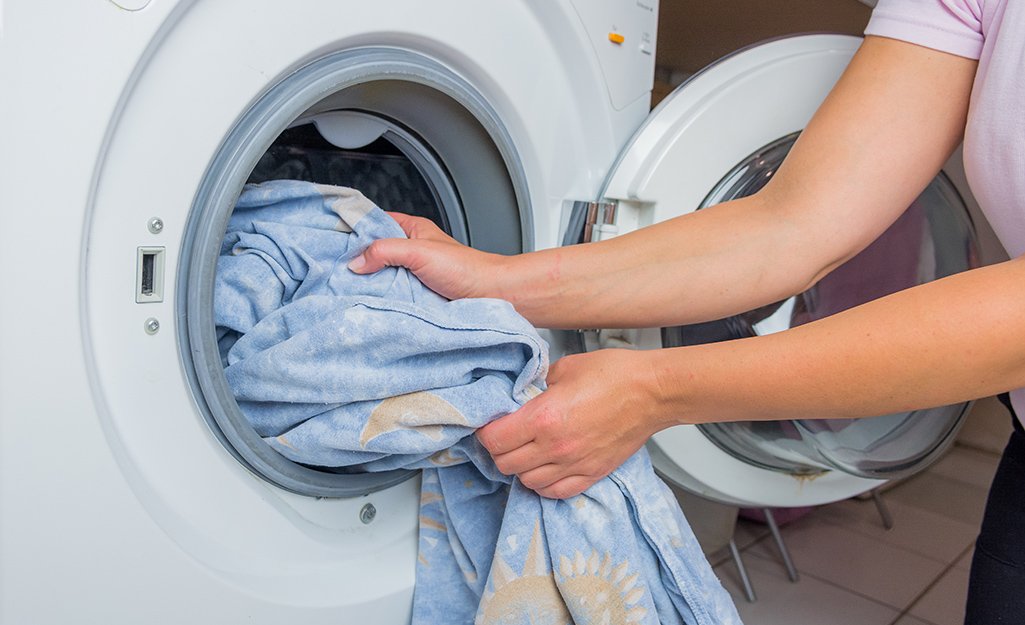
Washing your sheets, pillowcases, and blankets in hot water — ideally above 130°F or about 54°C — once a week is one of the single most effective habits you can build. Hot water actually kills dust mites and washes away the allergens they leave behind, while cold water mostly just moves the dirt around without eliminating the source.
Pillows deserve the same attention, even though people tend to forget about them. Most pillows can be washed every two to three months, and should be replaced entirely every one to two years, regardless of how expensive or comfortable they still feel. If a pillow smells musty, feels lumpy, or is more than a couple of years old, it has likely accumulated enough dust mites and dander to be a genuine problem.
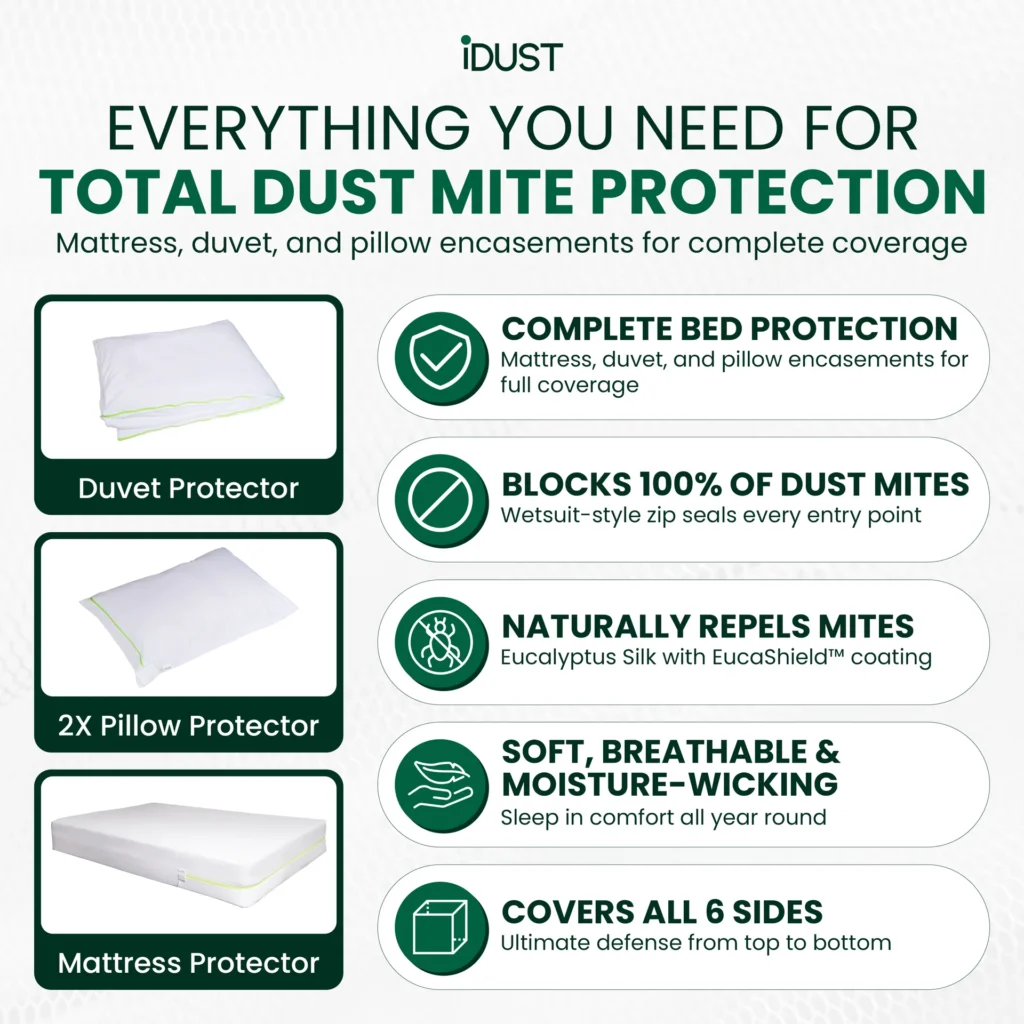
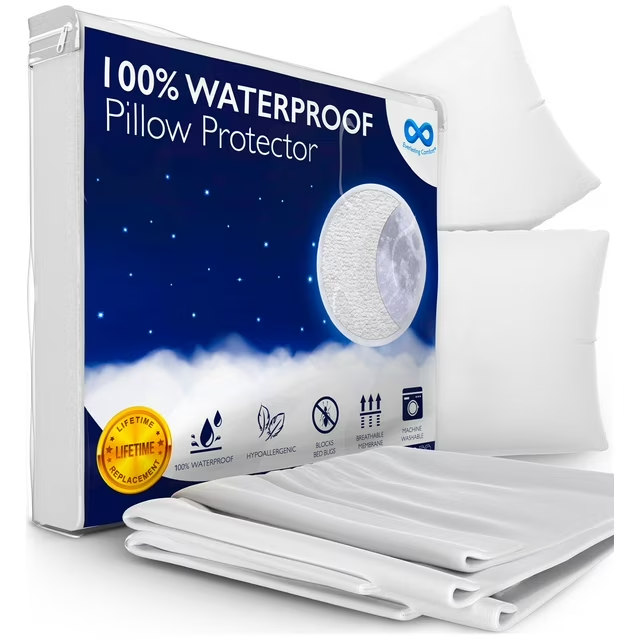
Investing in allergen-proof covers for your mattress and pillows is another simple but powerful step. These covers are tightly woven so dust mites cannot burrow into the mattress or pillow filling, and they can be wiped down or washed separately, which cuts down dramatically on the allergen load you’re exposed to every night.
Vacuuming the mattress itself, at least once a month using a vacuum with a HEPA filter, helps remove the dust mite debris that settles deep into the surface over time, especially in the seams and edges where it tends to build up unnoticed.
Keeping bedroom humidity in check also matters more than people realize. Dust mites and mold both thrive in humid conditions, generally above 50% humidity, so using a dehumidifier or simply keeping the room well ventilated can make a noticeable difference over a few weeks.
Opening the curtains and letting sunlight into the bedroom during the day, when possible, is a small habit that’s often overlooked but genuinely helpful, since dust mites don’t do well in direct light and drier conditions. Similarly, airing out the mattress itself once in a while, by pulling the sheets off completely and letting it breathe for a few hours with a window open, gives moisture a chance to escape rather than staying trapped against the fabric night after night.
It’s also worth rethinking what’s piled on top of the bed during the day. Decorative cushions, thick throws, and stuffed animals might make a bed look nice for photos, but they’re also extra fabric surfaces that collect dust and rarely get washed as often as the actual sheets. Cutting back on the number of soft, rarely-washed items on the bed reduces the overall surface area where allergens can accumulate.
And finally, if you share your bed with a pet, keeping them off the bed, or at least off your pillow, for a trial period of two to three weeks can help you see clearly whether pet dander was a major contributor to your symptoms.
Giving It Time to Actually Work
One thing worth mentioning honestly is that these changes don’t erase symptoms overnight. Dust mite allergens can linger in a mattress or pillow for weeks even after you start washing and vacuuming regularly, simply because they’ve built up over months or years. Most people notice a real, meaningful improvement within two to four weeks of consistently following these habits, provided they stick with the routine rather than doing it once and forgetting about it. Think of it less like taking a pill and more like slowly cleaning out a space that’s been neglected for a long time — it takes a little patience, but the results are usually very noticeable once they arrive.
Going back to Sarah for a moment, once she connected her weekend at her sister’s house to the possibility that her own bed was the problem, she didn’t do anything drastic. She bought a set of allergen-proof covers for her mattress and pillows, switched her laundry detergent to a fragrance-free version, and started washing her sheets every Sunday in hot water instead of whenever she remembered. The first week, she still sneezed a little, though noticeably less than before. By the third week, the morning sneezing fits had essentially stopped, and she found herself waking up without immediately reaching for a tissue for the first time in almost a year. She didn’t need a doctor’s visit or a prescription. She just needed to realize that the sneezing was pointing at something specific the whole time, rather than being a mysterious, unsolvable part of her mornings.
When It's Time to See a Doctor
If you’ve made all these changes — new detergent, weekly hot washes, allergen covers, regular vacuuming — and you’re still sneezing every morning after four to six weeks, it may be worth talking to a doctor or an allergist. They can run a simple skin prick test or blood test to confirm exactly what you’re allergic to, whether it’s dust mites, pet dander, mold, or something else entirely that has nothing to do with your bedding. This is especially important if your symptoms are severe, if you’re also dealing with wheezing or shortness of breath, or if over-the-counter antihistamines aren’t giving you enough relief. There’s no need to just live with it indefinitely when a proper diagnosis can point you toward more targeted treatment, like prescription nasal sprays or allergy immunotherapy, if it turns out to be necessary.
Bringing It All Together
At the end of the day, morning sneezing and a stuffy nose that shows up like clockwork are rarely just bad luck or a cold that refuses to leave. More often than not, they’re your body’s honest reaction to what’s been quietly building up in your mattress, pillows, and sheets — dust mites, pet dander, mold, or even leftover fragrance from laundry products. The fact that the symptoms hit hardest right when you wake up and fade as the day goes on is one of the clearest signals your body can give you, and once you start paying attention to that pattern, the connection becomes hard to ignore.
The fix isn’t complicated. It’s mostly about building small, consistent habits: hot water washes, allergen-proof covers, regular vacuuming, fresher pillows, and a bit of attention to humidity and pet hair. Give it a few weeks, stay consistent, and there’s a very good chance those morning sneezing fits become a thing of the past rather than a daily routine you’ve just learned to live with.
Frequently Asked Questions
1. How do I know if it's a bedding allergy and not just a common cold?
A cold usually comes with a fever, body aches, and clears up within about a week regardless of your environment. A bedding allergy tends to show up daily, mostly right after waking, comes without fever, often includes itchy eyes, and improves noticeably when you sleep somewhere else, like a hotel or a relative’s house.
2. How often should I really wash my pillows and sheets to stop this?
Sheets and pillowcases should ideally be washed weekly in hot water above 130°F (54°C), while pillows themselves should be washed every two to three months and replaced entirely every one to two years for the best results.
3. Can an air purifier help with morning sneezing caused by bedding allergies?
Yes, a HEPA air purifier placed in the bedroom can help reduce airborne dust mite particles and dander, but it works best alongside, not instead of, regular washing, allergen-proof covers, and mattress vacuuming, since a purifier can’t remove what’s already trapped deep in the fabric.