I remember the exact moment I realized I had been buying sheets wrong my entire adult life.
It was a Saturday afternoon in early spring. I was standing in the middle of a high-end bedding store, a place I had wandered into while waiting for my wife to finish an appointment nearby. I had no intention of buying anything. We already had sheets. Plenty of them. Drawers full of sheets, in fact. Cotton sheets, flannel sheets, a set of microfiber sheets my mother-in-law had gifted us that I secretly hated but felt too guilty to donate. We were, by any reasonable measure, overstocked on sheets.
But I was bored, and the store was quiet, and there was something about the way the light fell on the display beds that drew me in. The sheets were arranged by color, floor-to-ceiling, like an art installation. Ivory, slate, blush, sage. I reached out and touched one. It was a percale weave in a soft grey, and the moment my fingers made contact, I understood that everything I thought I knew about sheets was incomplete.
It wasn’t just soft. Plenty of sheets are soft. It was something else. It was cool and crisp and substantial, like the difference between a fast-food burger and a steak. It had weight without being heavy. It had structure without being stiff. I stood there with my hand on this sheet, a complete stranger to the sales associate who was now politely hovering nearby, and I felt a small, strange grief for all the nights I had spent on mediocre bedding without even knowing there was something better.
That afternoon changed something in me. Not overnight—I didn’t walk out of the store with six new sheet sets and a smug sense of superiority. I walked out empty-handed, overwhelmed by choice and a little embarrassed by how strongly I had reacted to a piece of fabric. But the seed was planted. Over the following months, I became something I never expected to be: a person who thinks deeply about bedsheets.
My education began, as many educations do, with a mistake.
A few weeks after that fateful store visit, I decided to treat us to a nice set of sheets. Not the most expensive, but something better than the drawer of mismatched cotton blends we had been cycling through for years. I did what any modern consumer does: I opened my laptop, typed “best bedsheets” into a search engine, and spent an hour reading reviews. I landed on a set that was described as “luxury hotel quality,” with a high thread count and rave reviews. I clicked buy, paid a sum that made me wince slightly, and waited for the package to arrive.
When they came, I washed them according to the instructions and made the bed with the ceremonial reverence of a monk preparing a shrine. That night, I climbed in expecting transcendence.
Instead, I woke up sweating.
The sheets were hot. Not uncomfortably warm at first, but by 2 a.m., I was throwing off the duvet, kicking my legs out from under the covers, and seriously considering sleeping on top of the blankets like a child avoiding a monster under the bed. My wife, who runs colder than I do, was fine. But I was miserable. These expensive, highly rated, “luxury hotel quality” sheets were essentially a heat trap.
I spent the next morning researching why, and that’s when I stumbled into the great thread count myth.
Thread count, I learned, is the number of threads woven into one square inch of fabric. It’s calculated by adding together the number of vertical threads (the warp) and the horizontal threads (the weft). For decades, the bedding industry has pushed the idea that higher thread count equals better sheets. Three hundred is good. Six hundred is better. Twelve hundred is basically sleeping on a cloud woven by angels.
But here’s what I didn’t know: thread count is not the measure of quality it pretends to be. Manufacturers have figured out ways to inflate thread counts by using multi-ply yarns—thin strands twisted together to form a single thread—and then counting each individual strand in the thread count. A sheet labeled “1000 thread count” might actually be a 250-thread-count sheet made with four-ply yarns. It’s not deceptive, technically. But it’s also not the luxurious fabric you think you’re buying.
Worse, a very high thread count often means a denser, heavier fabric that traps heat and reduces breathability. For someone like me, who runs warm, those ultra-high thread count sheets were exactly the wrong choice. I needed something with a lower thread count, a looser weave, more airflow.
The sheet that had captivated me in that store, I realized, had likely been a percale—a crisp, breathable weave that typically falls in the 200 to 400 thread count range. It wasn’t the thread count that made it special. It was the weave.
That discovery sent me down a rabbit hole that lasted the better part of a year. I learned about weaves, fibers, weaves within fibers, finishing processes, manufacturing origins, and the subtle but meaningful difference between Egyptian cotton and Pima cotton and Upland cotton and why anyone would pay extra for any of them.
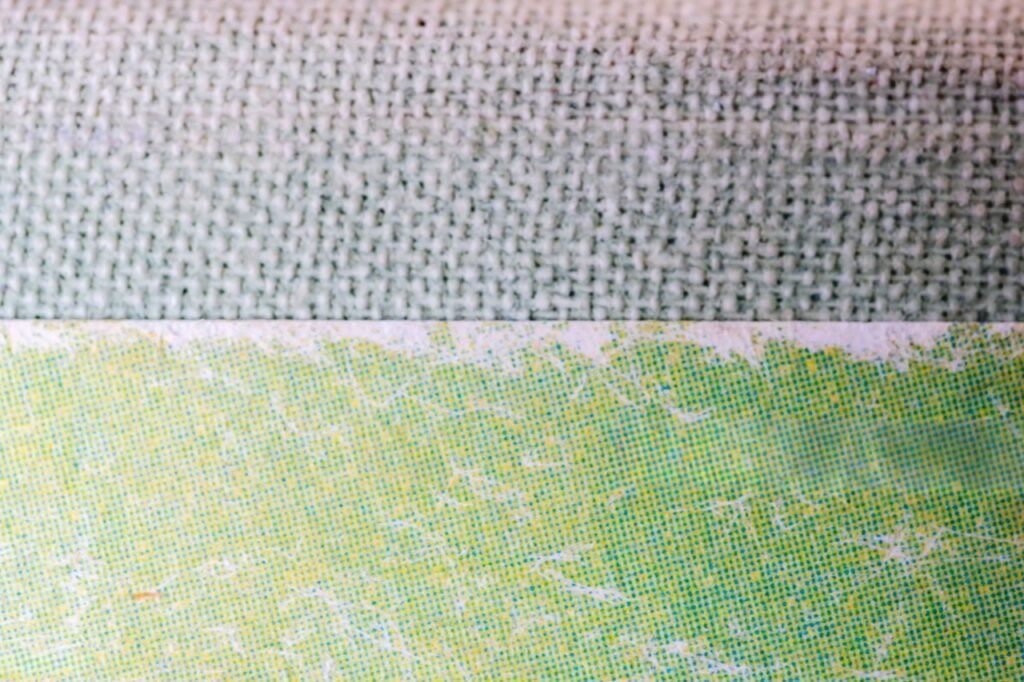
I learned that percale is a plain weave—one thread over, one thread under—that creates a matte finish, a crisp hand-feel, and excellent breathability. It’s the weave of classic, old-school sheets, the kind your grandmother might have called “crisp.” It softens with washing but never loses its structure. It’s the sheet for people who run warm, who want their bed to feel cool and clean, who hate the feeling of slippery fabric.
I learned that sateen is a weave with a different structure—four threads over, one under—that creates a smoother, silkier surface with a subtle sheen. It drapes more softly than percale, feels warmer to the touch, and tends to have a heavier, more luxurious weight. It’s the sheet for people who run cold, who want their bed to feel like a cocoon, who associate bedding with softness above all else.
I learned that there is no right or wrong between these weaves. There is only what works for you. And I had spent years buying sheets without ever considering which weave I preferred, which meant I had accumulated a drawer full of sheets that were, for me, mostly wrong.
The microfiber set my mother-in-law gave me? Polyester. Hot, static-y, and prone to pilling. The flannel set we bought for winter? Lovely for a week, but it matted down after a few washes and lost its softness. The random cotton sets we had accumulated over the years? A mixed bag of weaves and qualities, none chosen with intention, all of them just… there.
I had never been taught how to choose a sheet. No one had ever explained it to me. My parents bought sheets based on what was on sale at the department store. I bought sheets based on what was on sale at the department store. The cycle repeated without examination. A sheet was a sheet, and you replaced it when it got a hole or when the elastic gave out.
That Saturday afternoon in the bedding store was the first time I had ever touched a sheet and thought, This is what a sheet can be.
My next lesson came in the form of fiber.
After the thread count debacle, I set out to find a percale sheet that would keep me cool. I found one from a direct-to-consumer brand that specialized in organic cotton percale. The thread count was modest—around 280—but the reviews were glowing. I bought a set, washed them, and made the bed with the same ceremonial reverence I had used for the sweat-inducing luxury set.
The first night was perfect. Cool, crisp, breathable. I slept through without waking once. I woke up the next morning and actually looked forward to making the bed, which had never happened before. I had found my sheet.
But then I washed them again. And again. And somewhere around the fourth wash, I noticed that the fitted sheet was starting to pill. Small, fuzzy balls of fabric forming on the surface, right where my hips rested. I had had sheets that pilled before, but those were cheap ones, the kind you buy in a dorm supply pack. These were supposed to be high-quality sheets. They weren’t cheap. They shouldn’t be pilling after a month.
I contacted customer service, and they explained something I hadn’t considered: fiber length.
Cotton fibers, they told me, come in different lengths. Long-staple cotton—fibers that are longer than average—produces a stronger, smoother, more durable fabric because there are fewer ends to work their way to the surface and cause pilling. Short-staple cotton, which is cheaper and more common, is more prone to pilling and fraying over time.
Egyptian cotton is famous for its long fibers. So is Pima cotton (sometimes called Supima, which stands for “Superior Pima”). These long-staple cottons are grown in specific regions with specific climates that allow the fibers to develop their length and strength. They produce sheets that are softer, more durable, and less prone to pilling than sheets made from standard Upland cotton, which has shorter fibers.
My beautiful percale sheets, it turned out, were made from organic Upland cotton. The fibers were shorter. The pilling was inevitable. They had felt great at first, but they weren’t built to last.
I returned them and started looking for percale sheets made from long-staple cotton. I found a brand that used Supima cotton and wove it into a percale with a thread count around 300. The sheets cost more than the ones I had returned—significantly more—but I decided to treat it as an investment. If they lasted, the cost per use would be lower than constantly replacing cheaper sheets that fell apart.
Those sheets are still on my bed three years later. They have softened beautifully over time, developed that worn-in comfort that only comes from hundreds of nights, and they have never pilled. Not once.
The fiber lesson extended beyond cotton, too.
I discovered linen during a particularly humid summer. We don’t have air conditioning in our house—we live in a climate where, for most of the year, you don’t need it. But August is brutal, and our bedroom becomes a heat trap. My percale sheets, usually so cool, couldn’t quite keep up with the humidity. I would wake up with my skin sticking to the fabric, that unpleasant tacky feeling that makes you want to peel yourself off the bed.
A friend suggested linen. I had always thought of linen as wrinkly and rough, the kind of fabric that looks good in magazine photos but feels like sandpaper against your skin. But she insisted: good linen softens with every wash. It’s naturally moisture-wicking. It breathes better than cotton. It’s the coolest, most breathable fabric you can put on a bed.
I bought a set of French linen sheets, which is a whole other category I didn’t know existed. French linen, I learned, is typically made from flax grown in France, Belgium, or the Netherlands, regions known for producing particularly high-quality flax. The fibers are long, strong, and naturally moisture-wicking.
The first night, I understood what my friend had been trying to tell me. The sheets weren’t cool in the way percale is cool—that crisp, clean snap of fabric against skin. They were something else. They felt… breathable. Like the fabric itself was allowing my body to regulate its temperature instead of trapping heat against me. I slept cool, I slept dry, and I woke up feeling like I had slept in a way I hadn’t known was possible.
The linen sheets were also, I noticed, incredibly forgiving. They didn’t need to be perfectly tucked and smoothed. In fact, they looked better slightly rumpled, like a bed that had actually been slept in. They had a texture that made the room feel less like a showroom and more like a home.
They were also, I should note, expensive. Linen is not cheap. But I have washed those sheets a hundred times, and they have only gotten softer, more comfortable, more perfect. My percale sheets, beloved as they are, have started to show their age. The linen sheets look like they have another decade in them.
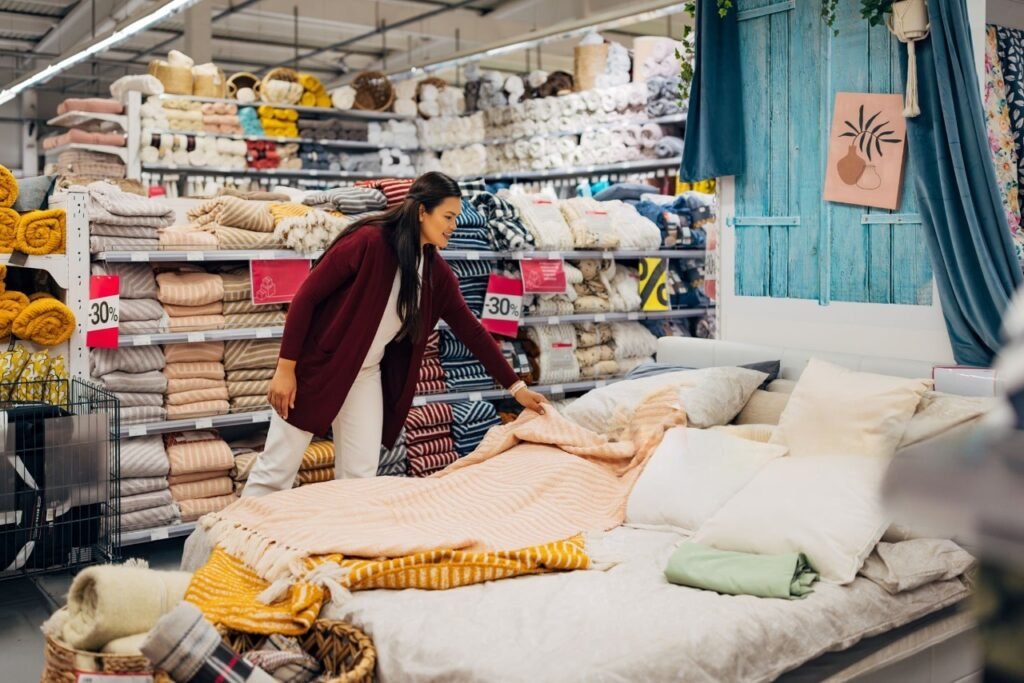
By this point, I was becoming something of a sheet obsessive. I started paying attention to the sheets in hotels, in friends’ houses, in the background of movies. I developed opinions about things I had never thought about before. The finishing process. The country of origin. The difference between combed cotton and carded cotton. The way a sateen weave can make a lower-quality cotton feel luxurious for a few washes before it starts to degrade.
I also started understanding that choosing the perfect sheet isn’t about finding the objectively best sheet—there isn’t one. It’s about finding the sheet that matches your specific needs, your sleeping habits, your climate, your aesthetic preferences, and your budget.
My wife, for example, runs cold. She loves the sateen sheets I bought early in my education, the ones that made me wake up sweating. For her, they are perfect. They feel warm, soft, and luxurious. She would sleep on sateen every night if she could. I, a warm sleeper, need percale or linen to sleep comfortably. This created a household dilemma: how do you choose sheets for two people with opposite temperature preferences?
We solved it, eventually, with layering. We use a percale fitted sheet—that’s my non-negotiable. Then, instead of sharing a single duvet, we each have our own top layer. She has a lightweight sateen blanket that she loves. I have a linen quilt. On cold nights, she adds a wool throw. On warm nights, I kick off everything but the fitted sheet. We share the same bed, but we don’t share the same bedding. It sounds strange, but it works. We sleep better than we ever did trying to compromise on a single set of sheets.

The journey didn’t stop with fiber and weave. I learned about the fitted sheet problem—the same Sheet Pop-Off that plagued my own bed for years—and how the solution is almost always pocket depth and full-perimeter elastic. I learned that flat sheets, which I had always considered essential, are actually optional, and that some people (myself included) prefer to sleep without them. I learned about pillow protectors and mattress pads and the difference between a duvet and a comforter and why anyone would choose one over the other.
I learned that thread count matters, but only up to a point, and that a 300-thread-count percale made from long-staple cotton is almost always better than a 1000-thread-count sateen made from short-staple cotton. I learned that Egyptian cotton is not automatically superior—it depends on where it was grown, how it was processed, and what was done with it after harvest. I learned that Supima cotton, grown in the United States, is often just as good and sometimes better, and that buying American cotton can mean shorter supply chains and more transparency about production.
I learned that the phrase “hotel quality” means almost nothing because different hotels use different sheets, and the sheets in a Four Seasons are not the same as the sheets in a Holiday Inn, and both are “hotel quality” in the sense that they are used in hotels. I learned that the best sheets for you might come from a direct-to-consumer brand that sells only one or two styles, or from a traditional department store, or from a boutique linen shop in a city you’re visiting, or from a seamstress who will make them custom to your mattress.
I think about that Saturday afternoon in the bedding store sometimes. The way my hand lingered on that percale sheet. The way something in me recognized quality without understanding it. I walked out empty-handed that day, but I didn’t stay empty-handed. I started asking questions. I started paying attention. I started treating sheets not as a commodity to be bought on sale and replaced when worn out, but as something worth investing in, something that touches my body for eight hours every night, something that can genuinely improve the quality of my sleep.
And sleep, I have come to believe, is worth investing in.
We spend a third of our lives in bed. A third. If you live to eighty, that’s twenty-six years in bed. Twenty-six years of contact with your sheets. That number stopped me when I calculated it. Twenty-six years. I had been spending that time on whatever sheets happened to be on sale, sheets I hadn’t chosen with any intention, sheets that were, for me, mostly wrong.
Now, I choose with intention. I know what weave I prefer (percale, linen in summer). I know what fiber works for me (long-staple cotton, French linen). I know what to look for in a fitted sheet (full-perimeter elastic, pocket depth that matches my mattress). I know how to care for my sheets (wash in cold, dry on low, rotate between sets to extend their life). I know what questions to ask when I’m shopping, and I know when to walk away from a sheet that looks good but doesn’t meet my standards.
I also know that the perfect sheet doesn’t exist in any absolute sense. What’s perfect for me—crisp percale, cool and breathable—would be wrong for my wife. What’s perfect for a person who lives in a humid climate might be wrong for someone in a dry climate. What’s perfect for someone who shares a bed with a restless partner might be wrong for someone who sleeps alone. The perfect sheet is the one that works for you, your body, your habits, your home.

If you’re reading this and feeling overwhelmed by the choices, I understand. The bedding aisle—whether physical or digital—can be paralyzing. Thread counts, weaves, fibers, origins, finishes, certifications, price points. It’s a lot. I’ve been there. I stood in that store for an hour, touching sheets, too overwhelmed to buy anything.
Here’s what I wish someone had told me when I started:
Start with your body. Do you sleep warm or cold? If you run warm, look at percale and linen. If you run cold, look at sateen and flannel. This single question eliminates half the options immediately.
Then, look at fiber. If you choose cotton, look for long-staple cotton—Egyptian, Pima, Supima. If you choose linen, look for European flax—French, Belgian, Dutch. These fibers cost more, but they last longer, and they will feel better after a hundred washes than a cheaper sheet feels on day one.
Then, look at construction. For fitted sheets, full-perimeter elastic is non-negotiable. Deep pockets if you have a thick mattress. For flat sheets, decide whether you actually use them—many people don’t, and that’s fine.
Then, look at care. Can you wash it at home? Does it need to be ironed (most good sheets don’t)? Will it stand up to your washing habits?
Then, look at price. Divide the cost by the number of nights you expect to use them. A $300 set of sheets that lasts five years costs about sixteen cents per night. A $50 set of sheets that lasts one year costs about fourteen cents per night. The difference is negligible, but the experience of sleeping on the better sheets is not.
Finally, trust your hands. If you can, touch the sheets before you buy them. Feel the fabric. Does it feel good against your skin? Does it make you want to get into bed? If it does, that’s a good sign. Your hands know what your body wants. They knew it that Saturday afternoon when I touched the percale sheet in that store. I just needed to learn to listen to them.
I sleep on those Supima percale sheets tonight. They are three years old, and they have softened into something that feels like an old friend. The fitted sheet stays put—full elastic, deep pocket. The top sheet is folded at the foot of the bed, unused, because I gave up on top sheets years ago and I haven’t missed them. My wife has her sateen blanket folded on her side. I have my linen quilt folded on mine. We meet in the middle, sometimes, when one of us is cold and the other is warm, and we borrow each other’s blankets for a few minutes before settling back into our own.
It’s not a system I would have designed on purpose. It emerged from years of trial and error, of buying the wrong sheets and learning why they were wrong, of paying attention to what my body wanted instead of what the marketing told me I should want.
The perfect sheet, I have learned, is not a product you can buy off a shelf. It’s a process. It’s a set of choices that align with who you are, how you sleep, where you live. It’s paying attention. It’s being willing to invest in something that matters. It’s understanding that a third of your life is a long time to spend on something that isn’t quite right.
That Saturday afternoon in the bedding store, I touched a sheet and something woke up in me. I started paying attention. I started asking questions. I started treating my sleep as something worth getting right.
And now, when I climb into bed at night, I know that I have.
If you’re standing in a bedding store right now, overwhelmed by the options, or scrolling through pages of sheets online, unsure what to buy, here is what I want you to know: it’s okay to start simple. Pick a weave that matches your temperature preference. Choose a long-staple cotton or a good linen if you can afford it. Make sure the fitted sheet has full elastic. That’s enough. That will get you a sheet that is better than most.
And then, pay attention. Notice how it feels. Notice if you’re comfortable or if you’re waking up hot or cold. Notice if the sheet stays on or if it pops off. Let that information guide your next purchase. The perfect sheet is not a one-time discovery. It’s a relationship. It evolves as you evolve, as your body changes, as your climate changes, as your preferences refine.
I started my sheet journey in that store, touching a percale sheet I didn’t buy. I learned through mistakes—the sweaty luxury set, the pilling organic cotton, the fitted sheets that wouldn’t stay put. I learned through research and through conversations and through the simple act of paying attention to what worked and what didn’t.
Now, when people ask me how to choose the perfect bedsheet, I don’t give them a brand name or a thread count. I tell them about that Saturday afternoon. I tell them to pay attention to what their hands tell them. I tell them to start with their body temperature, their budget, their habits. I tell them that the perfect sheet is the one that makes them look forward to getting into bed.
And then, if they’re still standing there, unsure, I tell them to buy the percale. Because percale, for most people, is a good place to start. It’s crisp, it’s cool, it’s forgiving. It’s the sheet that woke me up to what a sheet could be.
I bought those sheets eventually, by the way. Not that day, but later. I went back to that store and bought the percale sheets I had touched. They are on my bed right now, underneath the Supima set, waiting for summer. They are crisp and cool and exactly what I need on warm nights.
They remind me, every time I make the bed, that the perfect sheet is out there. You just have to know what to look for. And then, you have to be willing to reach out and touch it.
FAQs
1. Do I really need a top sheet?
I used to think yes, without question. That’s how I was raised. Then I spent a week without one and realized I slept just fine. My wife was skeptical at first, but now she doesn’t miss it either. The duvet cover gets washed regularly, so cleanliness isn’t an issue. On warm nights, we just use the fitted sheet alone. Top sheets are a personal preference, not a requirement. Try it both ways and see what works for you.
2. How do I stop my fitted sheet from popping off?
I fought this battle for years. The answer came down to one thing: pocket depth. My mattress was fourteen inches deep. My sheet was made for twelve. Those two inches meant the elastic was stretched to its limit, so any movement popped it loose. Now I buy sheets with a pocket depth that exceeds my mattress depth. I also look for full-perimeter elastic—a continuous band that grips evenly. Measure your mattress. Match the depth. Your 3 a.m. self will thank you.
3. Is higher thread count better?
Not necessarily. I fell for this myth and ended up with sheets that made me sweat. High thread count often means denser fabric that traps heat. Manufacturers also inflate numbers by using multi-ply yarns, so that “1000 thread count” might really be a 250-thread sheet. Instead, focus on weave and fiber. Percale is crisp and cool. Sateen is smooth and warm. Long-staple cotton—Egyptian, Pima, Supima—lasts longer and feels better. The best sheets I own have thread counts between 200 and 400. Ignore the big number on the front. Read what’s on the back.