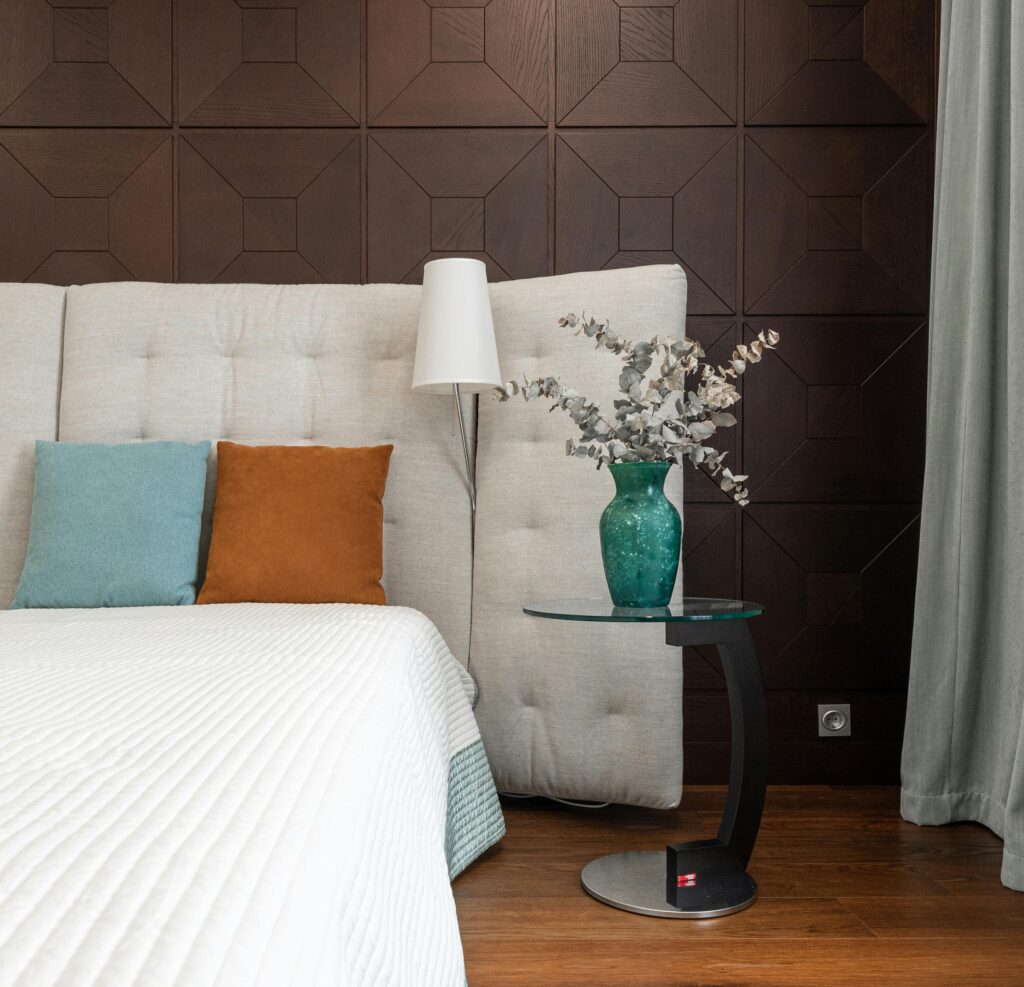
The first one arrives in a paper bag, the kind with twisted rope handles that make you feel like you’ve bought something very important. It is a velvet square the color of dried blood, and it costs forty-seven dollars. You place it on the corner of the reading chair, which is itself a chair you bought because an influencer said it was the only chair a sophisticated person could sit in without feeling shame. The pillow sits there, asserting itself. It does not match anything. This is the point. You stand in the doorway of the living room with a mug of tea and you admire it. You think: I am the kind of person who buys a single, expensive, imperfectly dyed velvet pillow for no reason other than that it pleases me.
This is how it starts. This is always how it starts.
The second pillow comes three weeks later. You tell yourself it is a companion for the first pillow, which you have started to worry looks lonely. The second pillow is ochre, which is a word you never used until you owned a dried-blood pillow and needed something to go with it. Ochre is the color of sun-baked Italian earth, or maybe just the color of cheap mustard, but you do not think about the mustard. You place the ochre pillow diagonally in front of the velvet pillow, and for a moment, the arrangement feels intentional. Curated. You take a photograph and upload it to an app where strangers award you hearts.
By the end of the first year, there are seven pillows on the sofa. This is a three-seater sofa. The pillows are arranged in what you believe to be a deliberate, slightly asymmetrical formation, like rocks in a Japanese garden. The truth, which you will not admit to yourself, is that the pillows are reproducing in the night, spawning in the dark like fungi. You have a lumbar pillow in a geometric print that you bought because the saleswoman said it would “anchor the space.” You have a round pillow covered in sheared mink that feels like a dead pet but in a luxurious way. You have a long, sausage-shaped pillow in knitted wool that your mother-in-law complimented, which is why you keep it even though you secretly hate how it flops over, tired and defeated, like it has given up on life.
You do not sit on the sofa anymore. This is not a conscious decision. It is simply that there is nowhere to sit. The sofa has become a display case, a museum exhibit of your good taste. When you watch television, you sit on the floor with your back against the coffee table, which is itself a piece you spent six months agonizing over. The floor is fine. The floor is honest. The floor does not require fluffing.
The pillows, you have learned, require fluffing. This is a word that has entered your vocabulary like an unwelcome houseguest. Fluffing. You stand over the sofa each morning, punching and shaping the pillows, restoring them to their plump, pristine state. It is a ritual, like making coffee or feeding the cat, except the cat has started to avoid the living room entirely. He prefers the laundry room, where there are no textiles demanding to be looked at.
Your husband—if you have one, if this is a story about a husband—does not understand. He does not understand why he cannot simply sit down when he comes home from work. He does not understand why he must first perform an archaeological dig, carefully extracting the television remote from beneath three layers of decorative linen. He does not understand why there is a pillow on the floor that says NAMASTE in gold script, a gift from your sister-in-law that you cannot throw away because she might visit and notice its absence.
“Why do we have so many pillows?” he asks one Tuesday evening, holding two of them—the mustard and the mink—in his arms like he is preparing to smother them.
You do not have an answer. Or rather, you have many answers, none of which you can say out loud. You have these pillows because they make the room feel complete. You have these pillows because you saw a photograph in a magazine of a sofa with seventeen pillows and it looked like a cloud, like a dream, like something you could sink into and never be found. You have these pillows because you are afraid of empty spaces. You have these pillows because your mother had a sofa that was never sat on, a beige velour monolith that faced the television like a worshipper, and you swore you would never become her, and yet here you are, arranging pillows like altar pieces.
You say: “They make me happy.”
He says: “They make my back hurt.”
A compromise is reached. Three pillows are relocated to the guest room, where they sit on the bed like dignitaries awaiting a ceremony. The sofa is now merely overstuffed rather than uninhabitable. You can sit on it if you sit very carefully, slightly forward, perching on the edge like a bird on a wire. This is not comfortable, but it is something. It is progress.
The guest room pillows do not remain in the guest room. They migrate, slowly, inevitably, like sea turtles returning to their birthplace. You find the geometric lumbar pillow back on the sofa one morning, tucked between the armrest and the cushion. You do not remember putting it there. Perhaps it walked. Perhaps you are sleep-pillowing, an affliction you read about once in a magazine, a disorder where people rearrange furniture in their sleep. You decide not to mention it to your husband.
By the end of the second year, the count has reached fourteen. You know this because you have started counting. Fourteen is a number you think about often, in the shower, while brushing your teeth, in the moments before sleep when your mind drifts to unexamined corners. Fourteen pillows on a sofa that comfortably seats three people. Fourteen pillows on a piece of furniture that cost two thousand dollars and is now functionally invisible, buried beneath an avalanche of textiles.
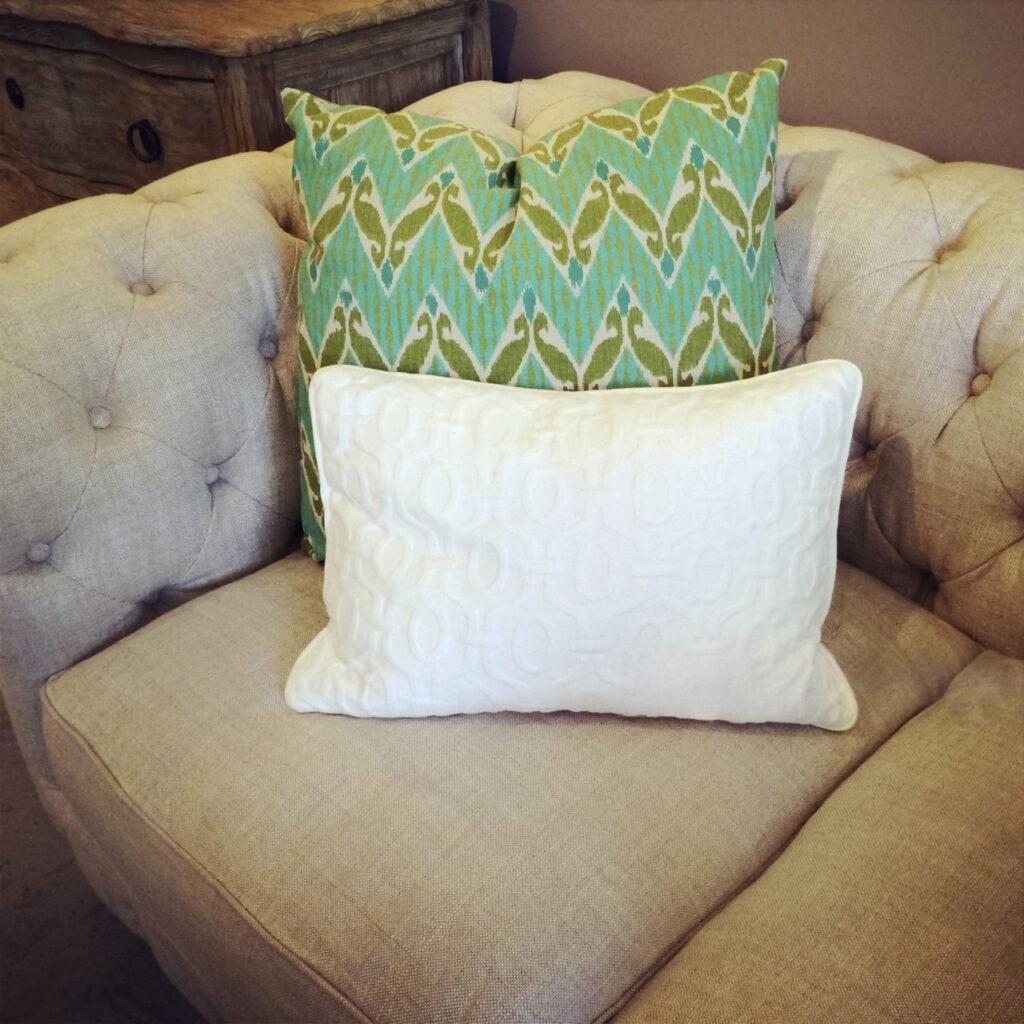
The pillows have begun to acquire personalities. There is the Scandi wool pillow, which is minimalist and aloof, the kind of pillow that would judge you for eating chips on the sofa. There is the embroidered Indian pillow with mirror work, which is festive and slightly chaotic, always slipping off the edge of the sofa like it’s trying to escape. There is the ancient, deflated velvet pillow, the original one, which has lost its shape and now resembles a pancake more than a pillow. You cannot get rid of it. It is the founding member, the alpha pillow, the one that started it all. To discard it would be to admit that the entire collection was a mistake.
Your friend comes over. She is a friend from work, someone you respect, someone whose opinions you value. She sits on the sofa, or rather, she attempts to sit on the sofa. She lifts a pillow, sets it aside. She lifts another pillow, sets it on top of the first. She is creating a small tower of pillows on the floor beside her. She is polite about it. She does not say what she is thinking.
But you know what she is thinking. You are thinking it too. You are looking at your living room through her eyes, and what you see is not a curated collection of artisanal textiles. What you see is a hoard. What you see is the physical manifestation of every insecurity you have ever had about your home, your taste, your worth as an adult human being.
After she leaves, you stand in the living room and you look at the sofa. Fourteen pillows stare back at you. They do not blink.
You try to remove one. You pick up the mustard pillow, the ochre one, the one that started the slide from singular statement to suffocating excess. You carry it to the closet. You place it on the top shelf, next to the vacuum cleaner attachments. You close the door.
The mustard pillow haunts you. You think about it in the closet, alone in the dark, pressed against a dusting brush. You think about how it matched nothing but complemented everything. You think about the forty-seven dollars you spent on the first pillow, and the forty-two dollars you spent on this one, and how money is just numbers in a bank account until you convert it into objects, and then those objects become responsibilities, burdens, tiny prisoners in your own home.
You retrieve the mustard pillow before dinner. You place it back on the sofa. You fluff it. You apologize to it, silently, in your head. You are aware that this is insane. You do not stop.
The threshold, when you finally cross it, is not dramatic. There is no intervention, no tearful confrontation, no moment of clarity in which you see the error of your ways. The threshold is simply this: you buy a pillow sham. Not a pillow, but a sham. It is a decorative cover meant to encase a pillow that does not yet exist. You buy it because it is on sale, because it is the color of sea glass, because you have a vision of a summer coastal theme that you could execute if you also purchased three other pillows and possibly a throw blanket in a complementary stripe.
You bring the sham home. You hold it in your hands. It is empty, limp, a skin without a body. You realize that you are now buying clothing for furniture that you do not even own. You realize that you have become a person who purchases pillow shams as aspirational objects, like a woman buying a wedding dress before she has met the groom.
This is when you begin to understand that the pillows are not the problem. The pillows are a symptom. The problem is the emptiness they are trying to fill.
You think about your grandmother’s house. She had two pillows on her sofa, both covered in plastic. The plastic crackled when you sat down, made a sound like small firecrackers, like the furniture was protesting your presence. The pillows were never fluffed because they did not need fluffing; they were rigid, immovable, as permanent as the walls. You sat on them anyway, crackling and sliding, because the alternative was the floor. Your grandmother did not care about pillows. She cared about the wood-paneled station wagon in the driveway, the freezer full of venison your uncle had shot, the electric bill that arrived each month in a window envelope. Pillows were for sitting on, not for looking at. The plastic was to keep them clean. That was the whole philosophy.
Your mother rejected the plastic. She rejected the entire idea that furniture should be preserved for some future occasion that never arrived. She bought a floral sofa, then a striped one, then a leather one that your father said smelled like a car. She arranged and rearranged, chasing an ideal she could never quite articulate. She bought pillows, too, but she bought them at discount stores, three for twenty dollars, and they were always slightly wrong—too shiny, too synthetic, the wrong shade of beige. They piled up in corners, slipped behind cushions, migrated under the coffee table where they collected dust bunnies. Your mother was fighting a war against entropy, and the pillows were her weary soldiers.
You are your mother’s daughter. You are your grandmother’s granddaughter. You are a woman standing in a room full of pillows, trying to find the right number, trying to find the balance between preservation and enjoyment, between aspiration and acceptance, between the sofa as an object and the sofa as a place to sit.
The pillows keep coming. You cannot stop them. They arrive in the mail, in boxes that smell of warehouse and possibility. They appear in your shopping cart when you are buying groceries, slipped in between the kale and the almond milk like stowaways. Your friends have learned that you are a pillow person, and they feed your addiction, presenting you with birthday gifts wrapped in tissue paper, each one a new shape, a new texture, a new color to integrate into the ever-growing collection.

Seventeen. Twenty-two. Twenty-eight.
You stop counting. The number becomes abstract, like the national debt or the number of stars in the sky. It is too large to comprehend, so you simply stop trying.
The tipping point arrives in the form of a visitor. Not a friend, not a relative, but a professional. An interior designer. You have hired her because you have finally admitted to yourself that you do not know what you are doing. You have all these beautiful objects, these pillows and throws and carefully selected accessories, and yet the room feels wrong. Cluttered. Anxious. The designer walks in, and her eyes go immediately to the sofa. She does not speak. She does not need to speak. Her silence is a judgment.
“How many pillows do you think a sofa needs?” you ask. Your voice is small. You are embarrassed to be asking this question, a grown woman with a mortgage and a retirement account, asking about pillow quantities like a child asking how many cookies she is allowed to eat.
The designer considers the question. She is a kind woman, or at least professional enough to simulate kindness. She does not laugh. She does not point. She says: “A sofa needs three to five pillows to look finished. Any more than that, and you’re not decorating. You’re collecting.”
Collecting. The word lands like a diagnosis. You are a collector. You collect pillows the way some people collect stamps or coins or vintage lunchboxes. But stamps fit in albums, and coins fit in boxes, and vintage lunchboxes can be displayed on shelves. Your collection is taking over the furniture. Your collection is eating the sofa.
The designer helps you edit. This is the word she uses, edit, as if the pillows are sentences in a manuscript, some of them redundant, some of them beautiful but ultimately unnecessary. You sit on the floor—the floor, where you always end up—and you watch her work. She lifts pillows, considers them, sets them aside. She creates piles: Keep, Donate, Maybe. The Maybe pile is the largest. You keep retrieving pillows from the Maybe pile and moving them to the Keep pile. The designer pretends not to notice.
When she leaves, the sofa has five pillows. Five. A reasonable number. An intentional number. The sofa is visible again, its charcoal upholstery emerging from beneath the textiles like land after a flood. You sit on it. You sit on it properly, your back against the cushions, your feet on the floor. You do not need to perch. You do not need to shift pillows. You simply sit, like a normal person, in your own living room.
It feels wrong. It feels exposed. The sofa looks naked, vulnerable, like a person who has removed their coat in an unfamiliar house. You keep glancing at it, expecting to see more pillows, and then remembering that the pillows are gone. Twenty-three of them, bagged up and waiting in the hallway for the donation pickup. Twenty-three pillows that will go to other homes, other sofas, other people who are searching for the perfect arrangement.
You do not sleep well that night. You dream of pillows, thousands of them, falling from the sky like snow. You wake up reaching for your phone, ready to cancel the donation pickup, ready to rescue your children from the charity truck. But you do not. You lie in bed, watching the ceiling, and you let the pillows go.
The weeks pass. The five pillows remain on the sofa. You fluff them daily, a habit you cannot break. You find yourself scanning rooms for pillow opportunities, cataloging empty corners that could accommodate a small lumbar accent. You visit the websites of home goods stores and fill virtual shopping carts with pillows you do not need, then close the browser without checking out. It is a form of exposure therapy, you tell yourself. You are weaning yourself off decorative textiles, one abstained purchase at a time.

Your husband—if you have one, if this is still a story about a husband—notices the change. He does not comment on it directly. He is not a fool. But you catch him looking at the sofa with something like wonder, something like relief. He sits down without performing the ritual pillow removal. He reclines. He puts his feet on the coffee table, the coffee table you agonized over, and you do not say anything because you are too busy noticing that he is comfortable in his own home for the first time in years.
This is what the pillows were preventing. Not just sitting, but ease. Not just comfort, but the permission to be comfortable. You spent so much time arranging the pillows into the perfect formation that you forgot they were supposed to be moved. You forgot that decoration is not preservation, that a home is not a museum, that the point of having beautiful things is to live with them, not to worship them.
The guest room pillows remain. You do not count them. You do not organize them. You do not arrange them into artful configurations on the bed. They sit in a heap on the guest room chair, waiting for visitors who rarely come. The cat has claimed them. He curls up in the center of the pile, his gray fur blending with the gray wool, and he sleeps for hours. This is the highest purpose a pillow can serve, you think: to hold a sleeping animal. To provide warmth and softness and a sense of safety. Everything else is just marketing.
You buy a pillow in the spring. It is a small one, round, the color of a robin’s egg. You see it in the window of a local shop, and you walk past it three times before you finally go inside. The saleswoman asks if you need help. You say no. You pick up the pillow and hold it. It is soft, almost weightless. It costs thirty-two dollars.
You think about the five pillows on your sofa. You think about the empty space beside the armrest, a space that has been waiting, patient and persistent, for something to fill it. You think about the word curated and the word collecting and the word enough.
You buy the pillow.
You bring it home. You place it on the sofa, in the empty space beside the armrest. It nestles in, comfortable and unassuming, as if it has always been there. The other pillows seem to welcome it, shifting slightly to make room. The arrangement is still reasonable. Six pillows on a three-seater sofa. Six pillows, each one chosen with intention, each one bringing something different to the whole. The dried-blood velvet, slightly deflated but still dignified. The ochre mustard, which you have learned to love despite its humble associations. The knitted wool, which you no longer hate because your mother-in-law has been dead for two years and you have finally forgiven her for all the small criticisms. The geometric lumbar, anchoring the space. The embroidered Indian pillow, festive and chaotic. And now the robin’s egg blue, a color you have always loved but never admitted, because it seemed too simple, too obvious, not sophisticated enough for a person who buys dried-blood velvet.
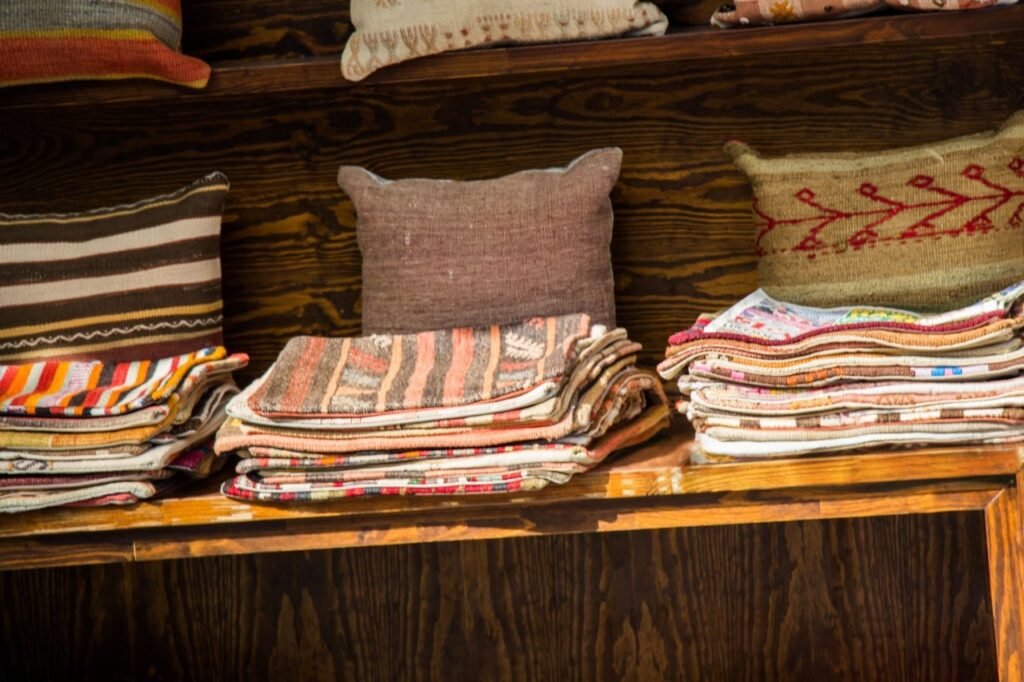
You sit on the sofa. You do not remove any pillows. You simply sit, your hip pressing against the robin’s egg, your elbow brushing the ochre mustard. The pillows shift beneath you, accommodating your weight, performing their original function. You think about your grandmother’s plastic-covered sofa, preserved for a future that never arrived. You think about your mother’s discount pillows, always slightly wrong, always trying. You think about all the sofas you have sat on and all the pillows you have fluffed and all the empty spaces you have tried to fill with beautiful objects.
The pillows are not the point. They never were. The point is the sitting, the living, the ordinary act of being at home in your own home. The point is the cat on the guest room bed, the husband with his feet on the coffee table, the friend who builds a tower of pillows on the floor and doesn’t say what she’s thinking. The point is that you can buy a robin’s egg blue pillow and place it on your sofa and sit beside it, and none of this requires justification or apology or a carefully worded Instagram caption.
You do not know how many pillows is too many. You suspect there is no universal number, no mathematical formula that can determine the exact threshold between curated and cluttered. The number shifts, depending on the size of the sofa and the architecture of the room and the temperament of the people who live there. The number is different for everyone. The number is different for you now than it was a year ago, or two years ago, or five years ago, when you bought that first velvet pillow and stood in the doorway admiring it, believing that you had finally figured out how to be the person you wanted to be.
The robin’s egg pillow is still on the sofa. The other five are still there too. Sometimes you move them around, experimenting with different arrangements. Sometimes you take one to the bedroom and read with it propped behind your back. Sometimes you put one on the floor for the cat, who ignores it because he is a cat and that is what cats do. The pillows accumulate dust and dog hair and the faint smell of the takeout you ate while watching a movie. They are not pristine. They are not perfect. They are not waiting for some future occasion that never arrives.
They are pillows. They are for sitting on, for leaning against, for holding when you are sad or tired or just need something soft to squeeze. They are objects, not symbols. They are things you own, not things that own you.
You will probably buy more pillows. This is not a failure of self-control or a relapse into collecting. This is simply the nature of living in a house, in a world, in a body that craves softness and color and the occasional small luxury. You will buy a pillow because it reminds you of the ocean, or because it feels like velvet should feel, or because it is Tuesday and you deserve something beautiful. You will bring it home and place it on the sofa and sit beside it, and you will not worry about whether it matches or anchors or curates. You will just sit.
The sofa holds six pillows now. Tomorrow it might hold five, or seven, or four. The number is not fixed. The number is not the point. The point is that you are sitting on the sofa, in your own living room, in your own home, and you are not thinking about pillows at all. You are thinking about the movie you are watching, the tea growing cold on the coffee table, the cat who has finally deigned to join you, leaping onto the cushion beside you and circling three times before settling into a tight, purring curl.
He does not care about the pillows. He does not care about the velvet or the wool or the robin’s egg blue. He cares about warmth and softness and the steady rhythm of your breathing. He is a creature of simple needs, and he has found what he was looking for.
You reach down and scratch behind his ears. His purr deepens. The movie plays on. The pillows do not move.
FAQs
1. I just counted my pillows and I have seventeen. Should I be worried?
You’re not alone. Seventeen is not a crisis; it’s an inflection point. The question isn’t whether you have too many pillows. The question is whether you can sit on your sofa without first performing an archaeological excavation. If the answer is no, it might be time to edit. But here’s the thing: you don’t have to do it all at once. Start with one. Move it to the guest room. See how it feels. The sofa will not collapse. The pillow police will not come knocking. Seventeen became seventeen one pillow at a time, and one pillow at a time, seventeen can become something else. There is no shame in seventeen. There is only the question of whether seventeen is serving you, or whether you are serving seventeen.
2. My partner says we have too many pillows. I think we have the exact right amount. How do we resolve this?
This is not a pillow disagreement. This is a love languages situation. Your partner is not complaining about textiles; they are complaining about not being able to sit down after a long day. You are not defending decorative objects; you are defending your right to make your home beautiful. Neither of you is wrong. The solution is not to declare a winner. The solution is to sit on the floor together—yes, the floor—and look at the sofa as a team. Ask: What do we need this room to be? Not what should it look like, but what should it feel like. Then move three pillows to the guest room. Not all of them. Just three. See what happens. Compromise is not defeat. Compromise is how you keep sleeping in the same bed.
3. I bought a pillow sham before I bought the pillow. What is wrong with me?
Nothing is wrong with you. You are an optimist. You are someone who believes in future possibilities, in the pillow that has not yet arrived, in the sofa that does not yet exist. The sham is not a mistake; it is a declaration of intent. You are not buying fabric; you are buying potential. The question is whether you will follow through, or whether the sham will sit in a drawer, waiting, like a wedding dress for a groom who never shows up. Either outcome is acceptable. Some people collect stamps. You collect pillow shams. The world is wide enough for both.