The first time my daughter climbed out of her crib, I was standing in the kitchen making coffee, and I heard a thud that stopped my heart.
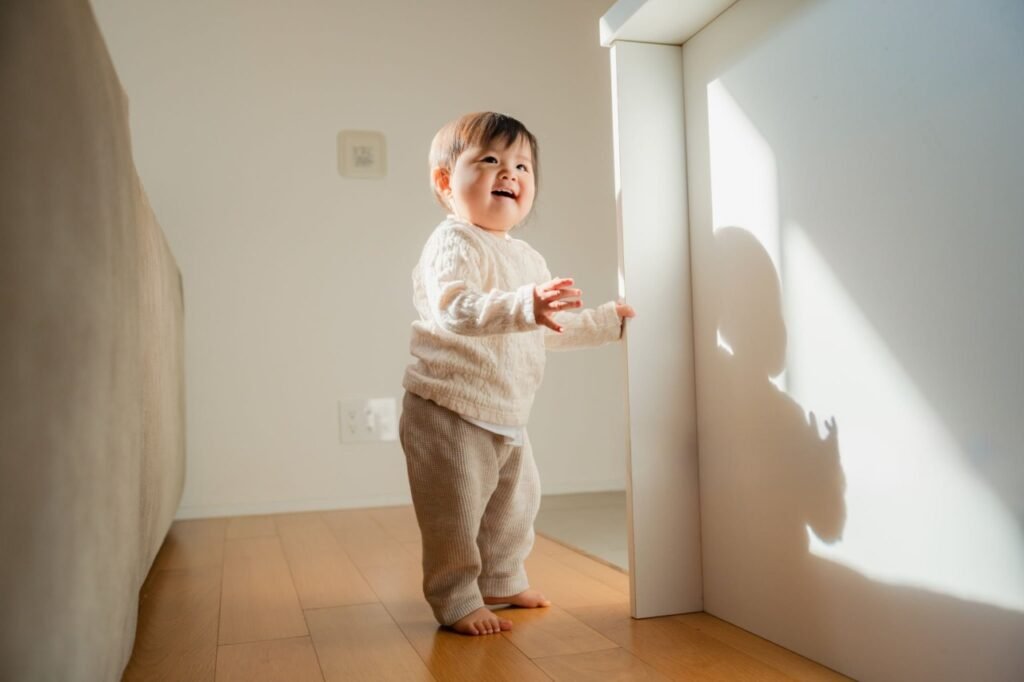
It wasn’t a loud thud. It was the kind of soft, deliberate sound a small body makes when it lowers itself carefully from a height it was never meant to escape. I ran down the hallway, coffee forgotten, and found her standing in the doorway of her nursery, beaming at me like she had just discovered a new continent.
She was fourteen months old. Her crib mattress was on the lowest setting. We had done everything right, or so we thought. But she had figured out how to swing one leg over the rail, hook her foot, and lower herself down. She had done it without crying, without hesitation, without any regard for the sleep safety guidelines I had memorized during pregnancy and recited to anyone who would listen.
I scooped her up, checked her for injuries, found none, and then sat on the floor of her nursery with my back against the wall, trying to figure out what came next.
The obvious answer was a toddler bed. A transitional crib that converts, or a small low-to-the-ground frame with guardrails. That’s what every parenting book and website recommended. We went to a baby store that weekend and looked at options. They were fine. They were safe. They were also, I couldn’t help noticing, essentially small cages with slightly lower walls.
I’m not judging cribs. Cribs serve a purpose, and for many families, they’re the right choice. But standing in that store, looking at yet another enclosure designed to contain my daughter, I felt a wave of exhaustion. We had spent her entire infancy containing her—in a bassinet, in a crib, in pack-and-plays, in car seats, in high chairs. Containment was the project of babyhood, and I understood why. Babies need to be kept safe. But my daughter was no longer a baby who stayed where you put her. She was a toddler who climbed, explored, and treated every boundary as a personal challenge.
That’s when a friend mentioned the Montessori floor bed.
I had heard the term before, in the vague way you hear about parenting philosophies you haven’t researched. Montessori. Something about child-led learning. Something about wooden toys and independence. I knew it was a thing, but I didn’t know what it meant for a bed.
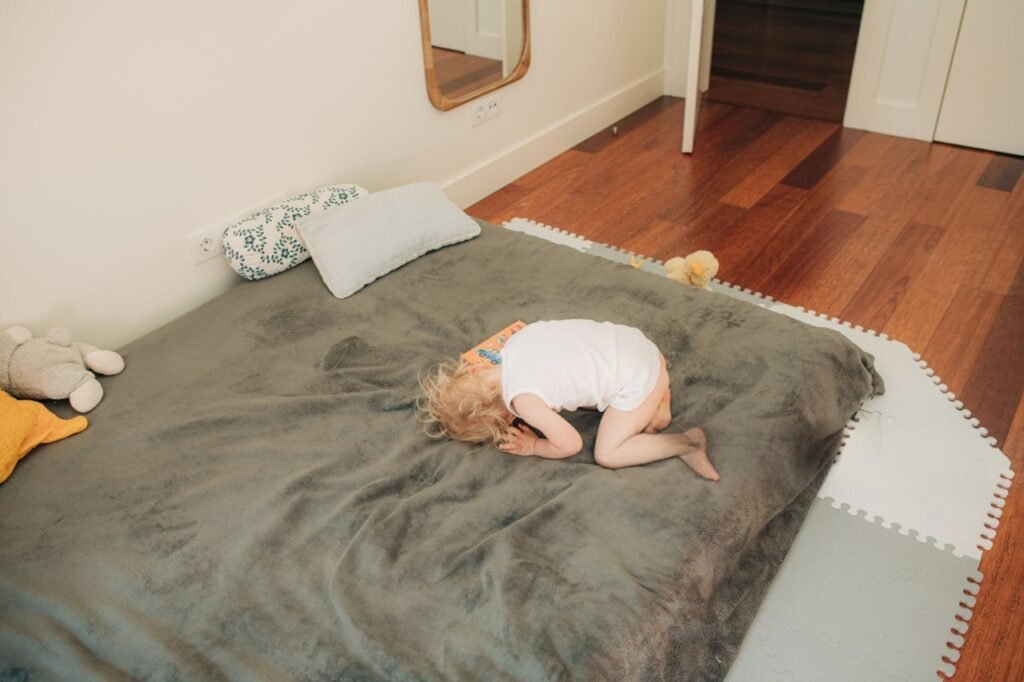
My friend explained it simply: a floor bed is exactly what it sounds like. A mattress on the floor. No crib rails, no enclosure, no bars. The child can get in and out independently, and the room is child-proofed so that when they wake up, they can safely explore or come find you.
I remember laughing when she first described it. “A mattress on the floor,” I said. “That’s the solution? We just put her on the floor?”
But the more I thought about it, the more the logic settled into me. The crib wasn’t working because it was designed to keep her in, and she was determined to get out. A floor bed removed the conflict entirely. There was nothing to climb out of. There was no escape to be made. She could get up when she woke, play with her toys, look at books, and come find me when she was ready. It wasn’t about giving her less structure. It was about giving her a different kind of structure—one built on trust instead of containment.
We decided to try it.
The transition was not smooth. I want to be honest about that because the internet is full of stories where someone tries a Montessori floor bed and their toddler immediately transforms into a peaceful, self-sufficient angel who quietly reads books upon waking and never once attempts to redecorate the room with diaper cream.
That was not our experience.
The first week was chaos. The first night, we put her on the mattress—a firm crib mattress we had bought for the floor, since regular adult mattresses are too soft for toddlers—and she immediately got up and walked out of the room. Not in distress. Not crying. Just walked out, like she was checking to see if the rules had changed. I stood in the hallway, watching her toddle toward the living room, and realized I had not thought through what happens when a toddler wakes up at 2 a.m. and decides to throw a party.
We spent that week refining our approach. We child-proofed her room with the intensity of people preparing for a hostage situation. Furniture anchored to walls. Outlet covers installed. Cords removed. Books and toys arranged on low shelves. A baby gate at her door so she could see out but couldn’t roam the house unsupervised. We put a potty in the corner, even though she wasn’t fully trained yet, because I had read that floor bed kids sometimes wake up and use the potty on their own, and I wanted to encourage that kind of independent thinking.
The second week was better. She figured out that the room was hers, that she could get in and out of bed freely, that the gate meant she couldn’t go further but that inside her room, she had autonomy. She started waking up and playing with her stuffed animals instead of immediately crying for us. Sometimes she would come to the gate and call for us. Sometimes she would go back to bed on her own.
By the third week, she was sleeping through the night again. Not every night—toddlers are not known for consistency—but more nights than not. She had stopped trying to escape because there was nothing to escape from. The bed was not a barrier. It was a place she chose to be.
But the bedding. Oh, the bedding.
I had assumed that a floor bed would use the same bedding as a crib. A fitted crib sheet, maybe a lightweight blanket, a sleep sack if it was cold. Simple. Familiar. I had been buying crib sheets for over a year. I knew the drill.
What I did not anticipate was that a floor bed, by virtue of being on the floor, would interact with a toddler differently than a crib did.
The first problem was that the fitted crib sheets kept coming off. Not dramatically, like the sheet pop-offs I had wrestled with in my own bed. These were subtler. I would put my daughter down for a nap, and when I checked on her an hour later, the sheet would be bunched up in the center of the mattress, leaving the foam exposed on the corners. She wasn’t doing it intentionally. She was just moving in her sleep, rolling and shifting, and the shallow pocket of the crib sheet couldn’t hold against the friction of a restless toddler on a floor-level mattress.
I tried deep-pocket crib sheets, the kind designed for thicker crib mattresses. They helped, but they still worked their way loose over time. I tried sheet suspenders—those elastic straps with clips that go under the mattress—but they were designed for adult beds and were awkward on a small crib mattress. I tried tucking the excess fabric under the mattress more aggressively, but on a floor bed, there’s no space between the mattress and the floor for tucking. The mattress sits flush. There’s nowhere for fabric to go.
I was spending more time fixing sheets than my daughter was spending in bed. It felt ridiculous. I was a grown adult losing a battle with a tiny mattress and a 20-pound human.
The second problem was blankets.
In a crib, you put a toddler in a sleep sack, and that’s the end of the story. They can’t kick it off because it zips up the back. They stay warm, you stay sane, everyone wins.
But a floor bed is supposed to foster independence. Part of that independence is learning to manage your own comfort—to pull a blanket up when you’re cold, to push it off when you’re warm. A sleep sack, for all its practical virtues, doesn’t teach that. It’s a containment device, like the crib itself. It solves the problem for you instead of letting your child learn to solve it herself.
I wanted my daughter to learn to use a blanket. I believed in the philosophy behind the floor bed, and part of that philosophy was trusting her to manage small things for herself.
But toddlers do not naturally understand blankets.
She would kick them off in her sleep and wake up cold. She would pull them over her head and then panic because she couldn’t find the edge. She would wrap them around her legs and then cry because she couldn’t walk to the gate. She would use them as capes, as tents, as picnic blankets for her stuffed animals. They were toys, not tools. The concept of a blanket as something that keeps you warm while you sleep was not computing.
I spent a lot of nights creeping into her room, finding her uncovered and shivering, draping the blanket back over her, and creeping out again. Sometimes I did this three or four times a night. It was exhausting, but I was committed to the process. I kept telling myself that she would learn. That this was like any other skill, something that required repetition and patience and a parent willing to let her fail a little.
The breakthrough came from an unexpected place: the world of lightweight, breathable toddler blankets.
I discovered that the problem wasn’t the blanket itself but the scale. Adult blankets are too heavy. Crib blankets are too small. But there exists a middle ground—toddler-sized quilts and lightweight cotton blankets designed specifically for children transitioning from sleep sacks to blankets. They are smaller than adult throws but larger than crib blankets. They are light enough that a toddler can easily push them off or pull them up. They are breathable enough that if a child does pull them over her face, it’s not a suffocation risk.
I bought one in a simple cotton weave, soft and slightly textured. That first night, I showed it to my daughter. I laid it on the mattress and let her touch it. I draped it over her and said, “This is your blanket. When you’re cold, you pull it up like this.” I demonstrated. She pulled it up, then pushed it off, then pulled it up again. It was a game, but that was fine. Games were how she learned.
That night, she woke up once. I heard her on the monitor, a small fussing sound. I waited instead of rushing in. Thirty seconds later, the fussing stopped. I looked at the video monitor and saw her reach for the blanket, pull it up to her chin, and roll over. She went back to sleep.
I sat in the dark of my own bedroom, watching her on the tiny screen, and felt something shift. She had done it. She had solved her own problem. It was a small thing, but it was hers.
The next challenge was pillows.
Pillows are a fraught topic in the world of infant and toddler sleep. The safe sleep guidelines say no pillows for babies under one year, and many parents keep them out until two or three. We had followed those guidelines strictly. My daughter had slept on a bare mattress with a fitted sheet and a sleep sack for her entire first year.
But as she grew, I noticed her trying to use her stuffed animals as pillows. She would wedge a stuffed bunny under her head during naps, using its soft body to elevate her neck. She was telling me what she needed. I just had to listen.
I found a toddler pillow—small, flat, firm, designed for children transitioning from crib to bed. It was about the size of a large book, with a removable cotton cover. I put it on her mattress one afternoon and watched her discover it. She laid her head on it immediately, her whole body relaxing into the mattress like she had been waiting for this her entire life.
The pillow, like the blanket, became hers. She chose to use it. She sometimes pushed it aside and slept without it. That was fine. The point was that she had the option. The point was that her bed was a place where her needs and preferences were respected, where she had agency over her own comfort.

I started to think differently about bedding after that. Not as something I imposed on my daughter, but as something I offered to her. She was the one sleeping in the bed. She was the one who knew when she was warm or cold, comfortable or not. My job was to give her tools she could use, not to control every variable.
This shift in thinking extended beyond blankets and pillows. I started paying attention to how she interacted with her bed during the day.
In a crib, the bed is just for sleeping. You put the child in, they sleep, you take them out. There’s no relationship between the child and the bed beyond that transactional one.
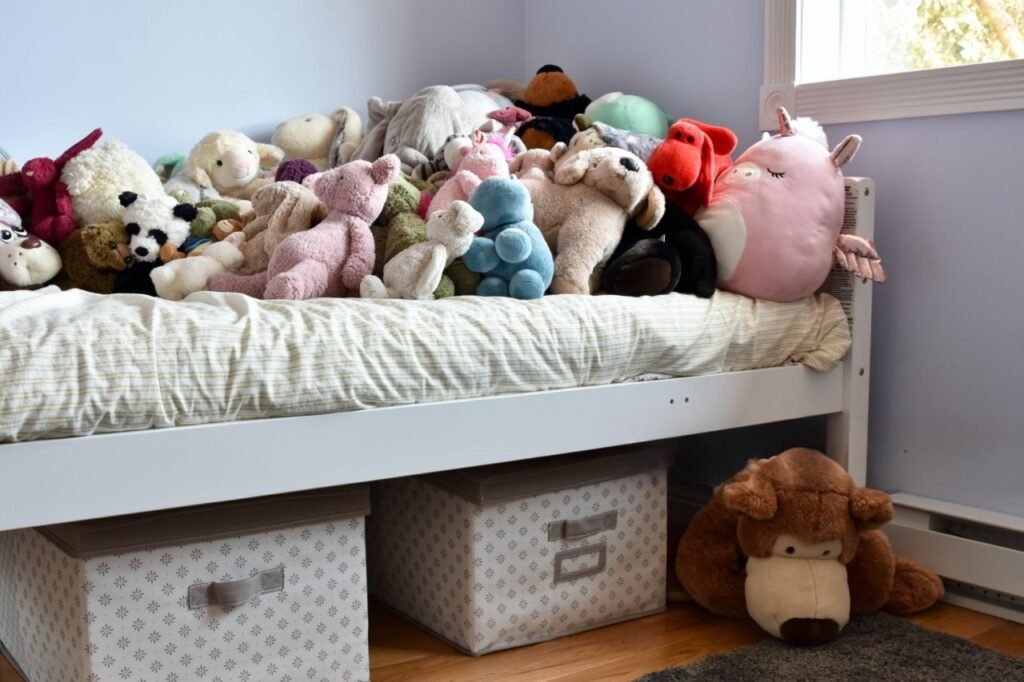
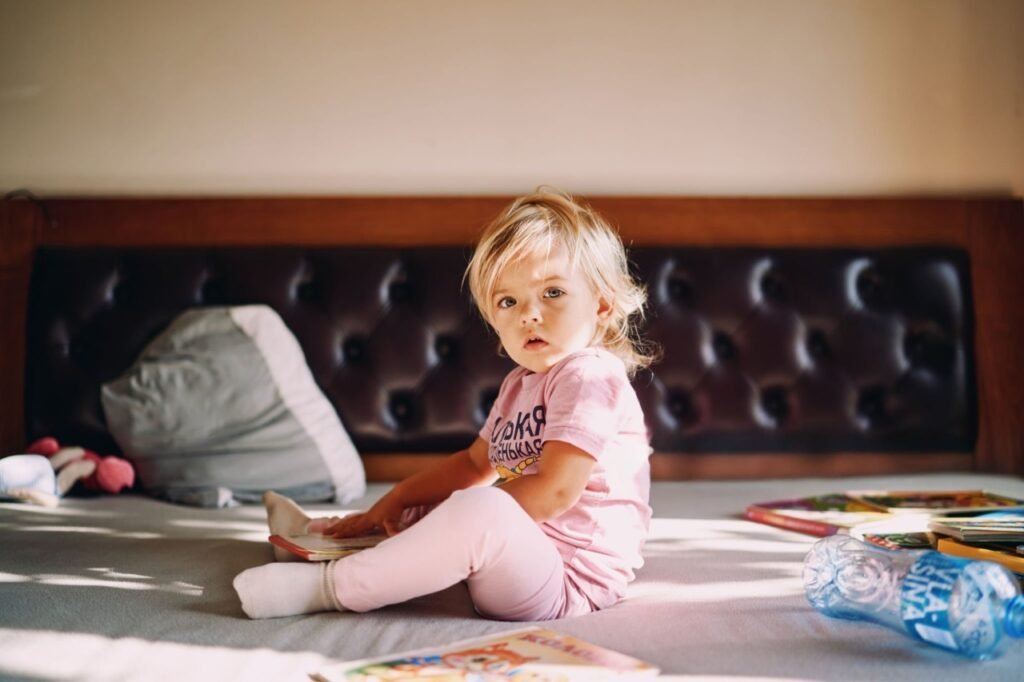
In a floor bed, the bed is part of the room. It’s a place she can sit on to read books, a place she can pile her stuffed animals on, a place she can jump on (we discouraged this, but toddlers are toddlers), a place she can retreat to when she’s overwhelmed. It’s hers in a way her crib never was.
I noticed that she started putting herself to bed for naps. She would be playing, and then she would wander over to her mattress, lie down, and close her eyes. No crying, no resistance. She was tired, so she went to sleep. That had never happened in the crib. In the crib, sleep was something we enforced. In the floor bed, it was something she chose.
The bedding, I realized, was part of that choice. She liked her blanket. She liked her pillow. She liked the fitted sheet that stayed put, the one I had eventually found after trying half a dozen brands—a deep-pocket crib sheet with full elastic, designed for thick mattresses, that actually gripped the edges of her mattress even without a crib frame to hold it in place. She had preferences, and she expressed them. She would reject certain blankets by pushing them off the mattress entirely. She would pull specific stuffed animals onto the bed with her. She was curating her own sleep space, and I was just there to facilitate.
There were setbacks, of course. Parenting is nothing but setbacks dressed up as progress.
One night, she discovered she could take her pillowcase off. Not just take it off—she could turn it inside out and wear it as a hat. I came in to check on her and found her sitting on the mattress at 11 p.m., pillowcase on her head, humming to herself like she was at a tea party. I removed the pillowcase, put it back on the pillow, and tucked her in. The next night, she did it again. For a week, we played this game. I learned to put the pillowcase on with the opening facing away from her, which made it harder to remove. She learned to flip the pillow. It was a standoff.
Eventually, the novelty wore off. She stopped removing the pillowcase. I had been worried that the floor bed was encouraging this kind of mischief, but I realized it was the opposite. In a crib, she would have been frustrated, trapped, unable to act on her curiosity. In a floor bed, she explored the pillowcase until it stopped being interesting, and then she moved on. The exploration was contained. The curiosity was satisfied. There was no rebellion because there was nothing to rebel against.
The other challenge was the midnight wandering.
Even with a gate at her door, she would sometimes wake up, go to the gate, and call for us. We would go in, tuck her back in, and leave. Sometimes this happened multiple times a night. It was exhausting, and I questioned whether the floor bed was worth it. Wouldn’t a crib have kept her contained? Wouldn’t that have meant more sleep for us?
But I noticed something. When we went in to tuck her back in, she wasn’t distressed. She wasn’t crying. She was just checking to see if we were there. We would lay her down, cover her with her blanket, and she would close her eyes. Sometimes she would reach out and hold my hand for a moment before letting go. She was learning that she was safe, that we were nearby, that she could go back to sleep without fear.
A crib enforces separation. A floor bed, with its open door and visible gate, allowed for connection. She could see us if she needed to. She could call for us. And gradually, over months, she needed to do that less. She learned that we were there even when she couldn’t see us. She learned to trust.
When I talk to other parents about the floor bed, the question I get most often is about the bedding. What sheets do you use? What blankets? How do you keep them warm? How do you keep them from taking the pillowcase off and wearing it as a hat?
I’ve learned to give specific answers because the specifics matter.
For fitted sheets, look for deep-pocket crib sheets with full-perimeter elastic. Standard crib sheets have elastic only at the corners, which works fine when the mattress is in a crib frame with solid sides holding it in place. But on a floor bed, with no frame to stabilize it, you need the extra grip. The elastic should run all the way around the opening, creating a continuous band that hugs the mattress evenly. We found a brand that makes organic cotton sheets with this design, and we bought four of them. We rotate them through washes, and they’ve held up for over a year.
For blankets, choose lightweight, breathable materials in a toddler-friendly size. Cotton muslin, lightweight cotton quilts, or wool blends that regulate temperature. Avoid heavy comforters or duvets that a toddler can’t easily push off. The blanket should be something they can manipulate independently. If they can’t move it, they can’t learn to manage their own comfort. We use a lightweight cotton quilt in warm weather and a slightly thicker wool-blend blanket in cold weather. Both are small enough that she can handle them easily.
For pillows, start with a toddler pillow. It’s smaller and flatter than a standard pillow, which is safer for young children and more comfortable for their smaller proportions. Look for a pillow with a removable, washable cover. Your child will drool on it. They will spill things on it. They will, possibly, wear the cover as a hat. Make it easy on yourself and buy something you can throw in the washing machine.
For the mattress, use a firm crib mattress. Do not use an adult mattress, which is too soft and poses a suffocation risk for young children. A crib mattress is designed to be firm, breathable, and the right size for toddler bedding. Place it directly on the floor, or in a very low frame that sits flush with the ground. If you use a frame, make sure there’s no gap where a child could get trapped.
For the room, child-proof everything. Anchor furniture to the walls. Cover outlets. Remove cords and blinds with strings. Put a gate at the door if your child isn’t ready for full house access. The floor bed only works if the room is a safe environment for unsupervised exploration. Your child will wake up and wander. Make sure they’re wandering somewhere safe.
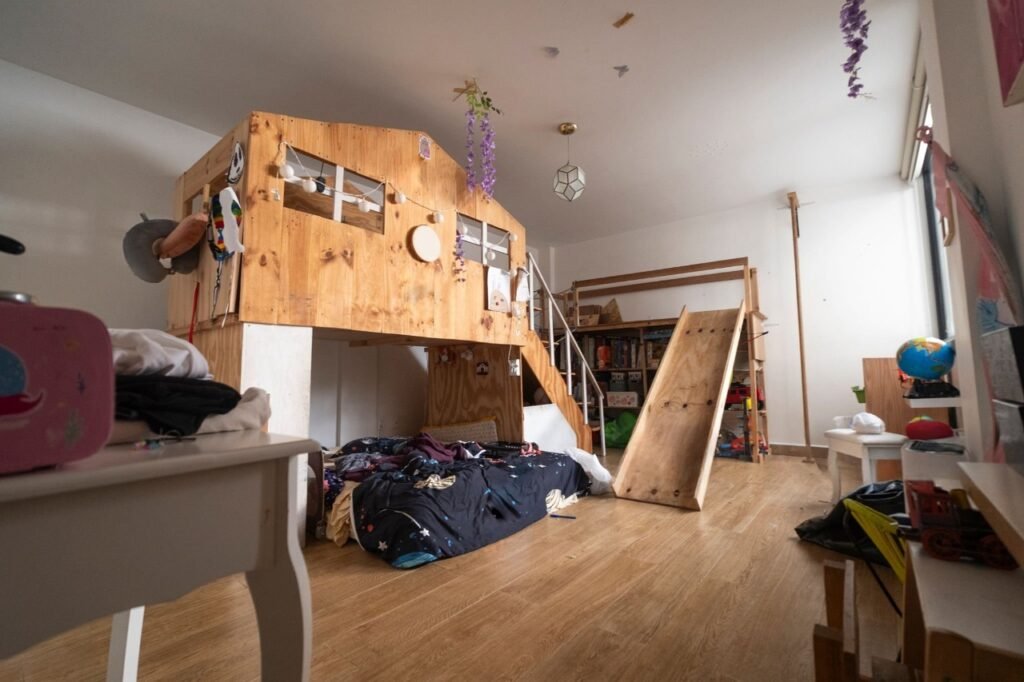
Looking back, I think the floor bed changed more than just how my daughter sleeps. It changed how I parent.
I was a parent who believed in control. I had read all the books, followed all the guidelines, created schedules and routines and systems designed to keep everything running smoothly. The crib was part of that system. It was a tool of control, a way to keep my daughter where I wanted her when I wanted her there.
The floor bed forced me to let go.
I couldn’t control when she woke up because she could just get up. I couldn’t control how she slept because she would adjust her own blankets. I couldn’t control what she did in her room because she was in there alone, making choices I couldn’t see. I had to trust her. I had to trust that she would sleep when she was tired, that she would use her blanket when she was cold, that she would stay safe in a room I had prepared for her.
It was terrifying at first. But over time, I saw that she was trustworthy. She did sleep when she was tired. She did use her blanket. She did stay safe. She was capable of more than I had given her credit for, and the only reason I hadn’t seen it was that I had never given her the chance.
The floor bed gave her that chance. And the bedding—the fitted sheets that stayed put, the blanket she could manage herself, the pillow she chose to use—was the infrastructure that made it possible.
My daughter is two and a half now. She still sleeps on her floor bed. Some nights she sleeps through without a peep. Some nights she wakes up, plays with her stuffed animals for a while, and puts herself back to bed. Some nights she calls for me, and I go in, and I tuck her in, and she holds my hand for a moment before letting go.
I don’t miss the crib. I don’t miss the containment, the battles, the feeling that I was imposing sleep on a child who needed to discover it for herself. The floor bed has been better for her, and it has been better for me.
If you’re considering a floor bed for your own child, I won’t tell you it’s easy. The transition takes work. The bedding takes research. The child-proofing takes time. You will have nights when you question your choices, when you miss the simplicity of a crib, when you wish you could just put your child in a box and know they would stay there until morning.
But I will tell you this: watching your toddler wake up from a nap, stretch, look around her room, and decide to pick up a book instead of crying for you is a moment that stays with you. It’s a moment that tells you something about who your child is becoming. She is becoming someone who trusts herself. She is becoming someone who knows what she needs. She is becoming someone who can be alone without being lonely.
A crib teaches containment. A floor bed teaches trust.
And the bedding, in the end, is just the thing that makes it comfortable. The real work is letting go.
I still think about that first night in the crib, the one she escaped from. I think about the thud I heard from the kitchen, the way my heart stopped, the way she stood in the doorway with that look of pure triumph on her face. She had figured something out. She had solved a problem. She had taken control of her own circumstances in the only way a fourteen-month-old can.
The floor bed was my answer to that moment. Not a bigger cage, but a different kind of space. A space where she didn’t need to escape because there was nothing to escape from. A space where her autonomy was not a problem to be solved but a reality to be supported.
Sometimes I sit in her room after she falls asleep. I sit on the floor next to her mattress and watch her breathe. Her blanket is pulled up to her chin, her small hand resting on the pillow next to her. She looks peaceful in a way she never looked in the crib. Not contained. Not trapped. Just resting, in a space that belongs to her, on a bed that she chose to lie down in.
I get up quietly, careful not to wake her. I walk to the door and look back. The room is dark, the mattress low to the ground, the bedding simple and soft. It doesn’t look like much. It’s just a mattress on the floor with a sheet and a blanket and a small pillow.
But it’s hers. And in the quiet of the night, that feels like everything.