Discover why are linen sheets So expensive? – from the labor-intensive flax harvest to artisanal weaving techniques. Learn how quality linen becomes softer for decades.
Lena traced her fingertips along the rumpled edge of the linen duvet cover, marveling at how something so simple could feel so luxurious. The sales associate had called it “lived-in elegance,” but the price tag screamed something else entirely. Four hundred dollars. For sheets.
She exhaled sharply through her nose. That was half a week’s pay.
Across the aisle, a woman roughly her mother’s age was folding a set of 800-thread-count Egyptian cotton sheets with the precision of someone who’d worked retail for decades. “They’re lovely, aren’t they?” the woman said without looking up. “My daughter bought a set last summer. Won’t shut up about how they’re the only thing that keeps her cool at night.”
Lena hesitated. “Are they really worth it?”
The woman finally met her eyes, her hands stilling on the fabric. “Honey, that depends. You ever sleep on a hotel bed that feels like heaven? That’s cheap linen. The good stuff?” She nodded toward the display. “That’s like sleeping inside a cloud that gets softer every time you wash it.”
The Flax Paradox
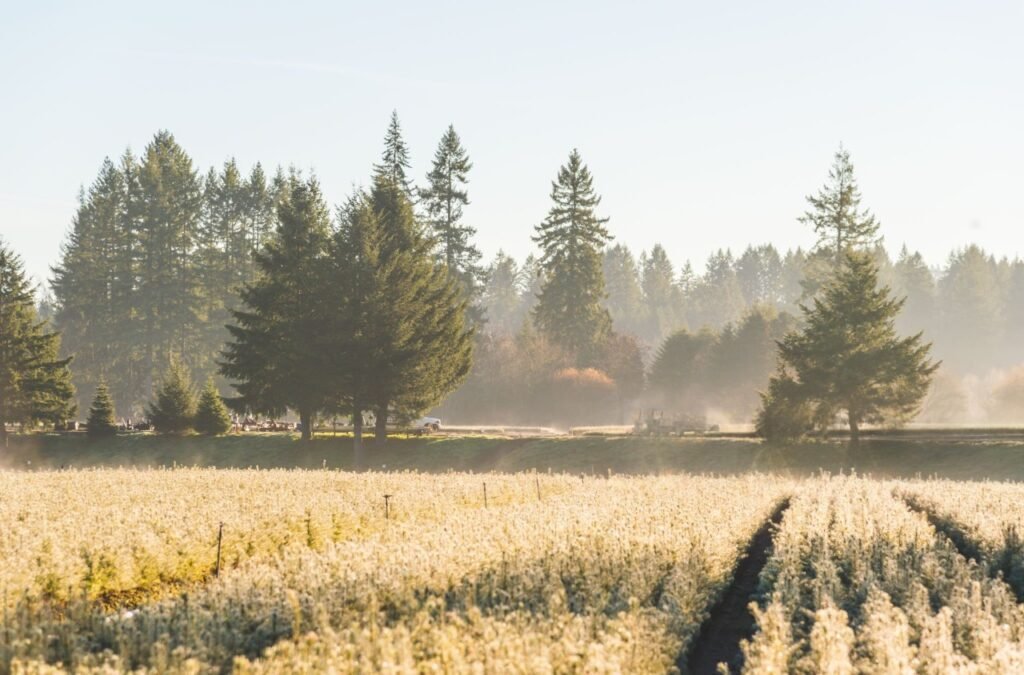
Lena didn’t know it yet, but the linen sheets she was eyeing were born from a quiet agricultural mutiny.
Flax plants are the divas of the fiber world—picky, temperamental, and utterly unwilling to compromise. While cotton sprawls across sunbaked fields from Texas to India, flax demands a very specific misery: the damp, chilly climates of Northern France, Belgium, and the Netherlands. It thrives where the air smells like rain and the soil is just poor enough to keep it humble.
Farmers in these regions have spent centuries coaxing flax into something useful, passing down knowledge like family secrets. There’s an old Flemish saying: “Flax grows best where the farmer’s shadow falls at dawn.” Translation? It needs attention before the rest of the world is even awake.
The Harvest: A Battle of Wills
Come late summer, when the flax stems blush gold and the blue flowers have faded, the real work begins. Modern agriculture? Forget it. Tractors and combine harvesters are useless here.
Instead, teams of workers walk the fields, bending at the waist to grip each plant at its base. With a practiced twist-and-pull motion, they uproot the stalks whole. It’s methodical, exhausting labor—the kind that leaves backs aching and fingernails permanently stained. They do it this way because the longest, strongest fibers hide inside the stalk’s full length. Break the stem, and you’ve ruined its potential.
This ritual hasn’t changed since the days when Phoenician traders hauled linen sails across the Mediterranean. The only difference? Today’s workers wear rubber boots instead of sandals, and their paychecks come with social security deductions.
Why Machines Fail
You’d think someone would’ve invented a flax harvester by now. They’ve tried. But flax stalks are sneaky—they grow in tangled clumps, their roots gripping the earth like stubborn children refusing to leave a playground. Mechanical harvesters either yank up clods of dirt (which ruins the fibers) or leave half the crop behind.
So for now, human hands remain the only reliable option. In Portugal, where some of the world’s finest linen is still woven, old farmers will tell you: “O linho não se colhe, se convence.” (“Flax isn’t harvested—it’s persuaded.”)
The Price of Stubbornness
This obstinacy has consequences. A single acre of flax yields about half the fiber of an acre of cotton. Add in the labor costs (try finding teenagers eager to spend summers yanking up plants), and you start to understand why linen commands its price.
There’s poetry in it, really. The same plant that refuses to bend to modern convenience ends up in the beds of people who refuse to settle for scratchy, short-lived sheets. A fitting rebellion on both sides.
Lena wouldn’t learn all this until later, when she’d visit a flax farm on a whim during a rainy Belgian holiday. Standing in that field, mud seeping into her sneakers, she’d finally get it.
“Oh,” she’d say, watching a farmer patiently untangle a stubborn stalk. “So that’s why they cost so much.”
The farmer would just laugh and hand her a bundle to try pulling herself. Five minutes later, red-faced and breathing hard, she’d become a linen believer for life.
The Waiting Game
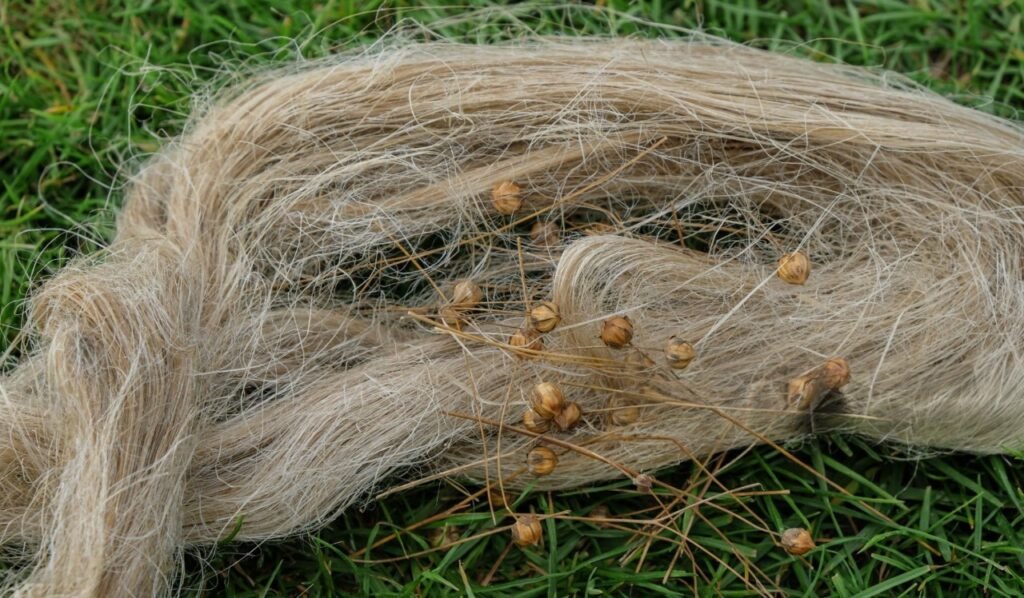
The harvested flax doesn’t go straight to the mill. First, it must rot.
Not the uncontrolled, forgotten-in-the-back-of-the-fridge kind of rot, but something closer to alchemy—a slow, deliberate breakdown where nature does the precise work machines cannot. They call it retting, from the same Old English root as “rotten,” which tells you everything you need to know about the process.
Dew Retting: A Month-Long Gamble
In the golden fields of Normandy and Flanders, the bundled flax stalks are laid out in careful rows, like soldiers at rest. Then, the farmers walk away.
For four to six weeks, the stalks lie exposed to the elements. Morning dew seeps into the fibers, activating bacteria that feast on the pectins—the sticky, glue-like substances binding the fibers together. Too little moisture, and the pectins won’t break down enough, leaving the fibers stiff and unyielding. Too much rain, and the stalks turn to mush, their strength dissolving into the soil.
There is no manual. No perfect formula. Just generations of farmers who have learned to read the stalks like a baker checks sourdough—by touch, by smell, by the way the fibers sound when snapped between calloused fingers.
The Art of Patience
Retting is the textile equivalent of slow fermentation. You can’t rush it. You can’t automate it. And you definitely can’t predict it.
A sudden heatwave? The stalks dry out before the fibers fully separate. A week of unrelenting downpour? The entire crop might turn to compost. Farmers monitor the fields like nervous parents, adjusting the stalks’ positions, flipping them when one side gets too damp, whispering curses at uncooperative weather forecasts.
In Lithuania, where some of the world’s finest linen is still produced, old-timers say retting is like raising a child: “You can guide it, but you can’t control it.”
The Modern Shortcut (And Why It Fails)
Some producers try to cheat time by dunking the stalks in heated water tanks or chemical baths. It’s faster—done in days instead of weeks—but the fibers pay the price. They emerge weaker, stripped of their natural luster, destined to pill and fray long before their dew-retted counterparts.
True linen connoisseurs can spot the difference immediately. Cheap linen feels flat, almost synthetic. The good stuff? It has a depth to it—a life—that only comes from weeks of lying in open fields, absorbing the damp breath of autumn mornings.
The Farmer’s Whiskey Wisdom
That Belgian farmer wasn’t exaggerating when he compared linen to sourdough. Both demand patience, both rely on unseen microbial magic, and both punish those who cut corners.
As he poured another finger of whiskey (home-distilled, of course—”store-bought lacks character”), he shrugged. “People want everything fast now. But linen? Linen teaches you to wait.”
By the time the retting is done, the stalks have transformed. The once-tough outer husks crumble away, revealing silken inner fibers that will eventually become sheets softer with every wash.
But that’s another story. For now, the stalks wait.
And so do we.
The Fiber Dance: Where Linen Earns Its Keep

The retted flax stalks finally make it to the mill, but they’re still just straw at this point – rough, tangled, and about as soft as a bundle of toothpicks. What happens next is where the magic (and the backaches) really begin.
1. Scutching: Beating the Hell Out of Flax
Imagine taking a dried-out Christmas tree and trying to separate the needles from the branches using nothing but a wooden paddle. That’s essentially scutching.
Workers feed the brittle stalks through rotating wooden blades that look like something from a medieval torture device. The rhythmic thwack-thwack-thwack echoes through the mill as the blades smash away the outer boon – that useless, woody casing that’s been protecting the precious fibers inside.
“It’s like cracking walnuts,” explains Marie-Claire, a third-generation scutcher at a Belgian mill. “Too gentle and you don’t get to the good part. Too hard and you damage what’s inside.” Her forearms are corded with muscle that would make a gym rat jealous.
2. Hackling: The World's Worst Hairbrush
Now comes the combing, but not the gentle kind your grandmother used before church. Hackling involves dragging the fibers through progressively finer beds of iron spikes that could double as porcupine quills.
The first pass through the “rough” hackle (with nails spaced about a finger-width apart) removes the last bits of debris. By the time the fibers reach the “fine” hackle (nails closer together than teeth in a zipper), they’re being separated into strands as thin as a baby’s hair.
“You know it’s good flax when it sings,” says old man Lefèvre, who’s been hackling since the Kennedy administration. He demonstrates – the fibers make a faint ping as they pass through the spikes. “Bad flax just screams.”
3. Spinning: Where Patience Meets Physics
Here’s where most modern mills cheat. Proper linen spinning requires:
- Humidity levels that would make a sauna seem dry
- Spinners who can adjust tension by instinct (linen doesn’t stretch like cotton)
- A pace slow enough to watch grass grow
The fibers are dampened constantly as they’re twisted – too dry and they snap, too wet and the yarn becomes lumpy. Expert spinners develop a sixth sense for the exact moment to add more twist, their hands moving in a rhythm perfected over decades.
“See this?” A Ukrainian spinner named Oksana holds up a single thread. “One kilometer of this took me eight hours to spin. The machine down the hall? It makes ten kilometers in one hour.” She spits on the floor. “And it shows.”
Why Cheap Linen Fails
The bargain versions skip steps:
- Machine scutching that pulverizes the long fibers
- Chemical baths instead of proper hackling
- High-speed spinning that creates weak spots
The result? Sheets that start out deceptively soft but develop bald patches after a year, like a cheap toupee in a hurricane.
The Weaver's Secret
In a Portuguese weaving studio, master weaver Eduardo runs his hand over a finished bolt of linen. “Good linen,” he says, “should feel like it’s already lived a hundred lives before it even touches your skin.”
He’s not wrong. That $400 sheet set contains:
- 90 days of field time
- 60 skilled hands
- 300 years of accumulated knowledge
And every scratchy first night? That’s just the linen deciding if you’re worthy. It softens when it’s ready.
The Human Cost: What Your Linen Really Pays For
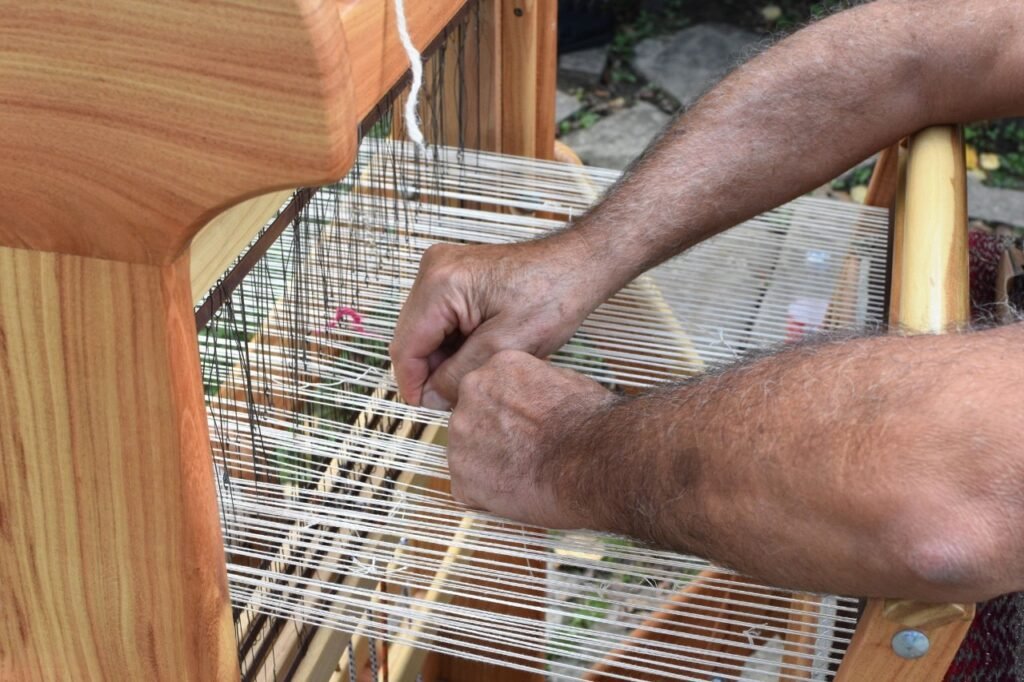
That $400 price tag isn’t just buying fabric—it’s buying time. Human time. The kind that can’t be outsourced to factories or replaced by robots.
The Looms That Refuse to Die
In a dim Porto workshop that smells of flax oil and wood polish, 62-year-old Carlos guides a shuttle through his 1897 Jacquard loom. The machine groans like an old man standing up after a long nap.
“Modern looms?” He barks a laugh that turns into a cough. “They eat linen for breakfast and shit out broken threads by lunch.”
The problem is linen’s temperamental nature. Unlike cotton that bends to a machine’s will, linen fibers—strong but inflexible—snap under the high-speed assault of automated looms. So the best mills still use these antiques, where the rhythm is set by human hands and the tension adjusted by instinct honed over decades.
Carlos shows me his hands—fingers permanently curved like question marks from 45 years of guiding threads. “Each meter of fabric remembers the hands that made it,” he says, rubbing his swollen knuckles.
The Seamstresses Who See Double
In Kaunas, Lithuania, 54-year-old Irena has been hand-stitching linen hems since she was sixteen. Her workshop looks frozen in time—wooden irons heated on a stove, scissors older than most of her clients.
“Machine stitching?” She holds up a factory-hemmed linen napkin. “See how the thread sits on top? After twenty washes—poof!—it’s a hairy mess.” Her own stitches are nearly invisible, each one locked into the fabric’s weave with a technique called “invisible joining” that takes seven minutes per hem.
Irena’s last apprentice quit after three months. “Young people want to click buttons, not learn how to make a stitch disappear,” she sighs, adjusting her magnifying lamp.
The Disappearing Artisans
The numbers tell a grim story:
- The average age of master linen weavers in Europe: 61
- Number of traditional flax farms in Belgium since 1980: ↓ 87%
- Years until these skills disappear entirely: Estimates say 15-20
In Brittany, I met 68-year-old Yannick, possibly the last person in France who still does traditional flax dyeing using seaweed and iron-rich mud. His vats bubble like a witch’s cauldron.
“My son?” He stirs a pot of inky liquid. “He designs phone apps in Paris. Calls this ‘grandpa’s hobby.'” The bitterness in his voice could tan hides.
What You're Really Paying For
That premium price breaks down to:
- €18goes to Carlos’ anti-inflammatory medication
- €23covers Irena’s bifocal lenses
- €55preserves techniques that predate the steam engine
- The rest?A bet that these skills won’t vanish before your sheets wear out
The Irony of "Sustainable" Fashion
Lena—now the proud owner of those $400 sheets—recently asked me: “Isn’t it unethical to pay so much for bedding when people are struggling?”
I introduced her to Carlos’ granddaughter, a finance major who crunched the numbers:
“If fast fashion paid living wages, your $20 shirt would cost $200. But your $400 sheets? They’re already paying properly. The difference is they don’t lie about it.”
Next time you balk at linen’s price, remember: You’re not being ripped off. You’re part of an increasingly rare transaction where the true cost isn’t hidden—it’s honored.
And when Carlos finally retires? That loom will likely become a “vintage decor piece” in some Berlin loft. The threads will snap. The knowledge will fade.
But your sheets? If you bought the real deal, they’ll outlive us all.
The Math That Makes Sense
Let’s break it down like my frugal grandmother would:
- $50 cotton sheets – last 2-3 years before pilling or tearing
- $400 linen sheets – last 15-20 years (my aunt still uses her 1998 set)
Wash them weekly, and those linen sheets cost about $0.25 per use by year five. The cotton sheets? Nearly double that.
The Verdict
Back in the store, Lena finally understood what the saleswoman meant. She pulled out her phone and did something she’d never done before—she bought the sheets without waiting for a sale.
Three months later, she’d send me a text at 2 AM: “Worth every penny. It’s like sleeping in a gently warmed crepe.”
And that, my friends, is how you turn a skeptic into a linen evangelist.
FAQs
1. Why are linen sheets so expensive compared to cotton?
Linen sheets are expensive due to the meticulous process of growing and harvesting flax by hand, slow natural retting, and artisanal weaving techniques that preserve durability and breathability.
2. Are linen sheets worth the high cost?
Yes, premium linen sheets are worth it because they last 15-20 years, soften with each wash, and regulate temperature better than cotton, making them a long-term investment in comfort.
3. What makes linen sheets so expensive if they look wrinkled?
The wrinkles are natural, but the cost comes from sustainable flax farming, skilled craftsmanship, and time-intensive production—factors that ensure long-lasting quality, not just appearance.