The first true morning of spring didn’t arrive with a calendar notification. It arrived as a sliver of sunlight, persistent and golden, that managed to find its way through the crack in my heavy, navy-blue curtains. It landed directly on my face, a gentle, warm insistence that yesterday’s grey winter gloom was finally over. I squinted, throwing an arm over my eyes, but the damage was done. I was awake, and for the first time in months, I didn’t feel a sense of dreary reluctance.
As I lay there, I let my gaze wander around my bedroom. And for the first time, I truly saw it. The room that had been my cozy, hibernating cave for the winter now felt like a stranger. The dark curtains, the deep burgundy accent wall, the layered wool throws on the bed, the cluttered nightstand stacked with books and a half-empty glass of water from two nights ago—it all felt heavy. Oppressive. It was a room built for burrowing, not for breathing. That single, brave beam of light illuminated not just the dust motes dancing in the air, but a profound truth: my surroundings were out of sync with the world outside my window.
A resolve, as fresh and clean as the spring air trying to push through the glass, settled in me. I was going to change it. I wasn’t planning a full-scale, budget-blowing renovation. This was going to be a quieter revolution. A metamorphosis. I was going to transform this sleepy, winter-weary space into a bright, airy sanctuary that welcomed the new season, a room that felt as light and hopeful as the morning itself.
This is the story of that transformation. It wasn’t just about paint and fabric; it was a lesson in light, a practice in simplicity, and a rediscovery of the space I began and ended every day in.

The Blank Canvas: A Ruthless Clearing
My first instinct was to go to the paint store, to buy new linens, to add things. But a wiser voice, perhaps the one that had been hibernating alongside me, suggested I start by subtracting. The ancient Chinese philosophy of Feng Shui talks about clearing clutter to allow energy, or chi, to flow freely. While I wasn’t aiming for spiritual perfection, the principle made visceral sense. How could light and air move through a space choked with… stuff?
So, I began with a ruthless spring clearing. I armed myself with three large cardboard boxes and a grim determination. One box was for “Keep,” one for “Donate,” and one, the smallest but most satisfying, was for “Trash.”
I started with the easiest target: the surfaces. The nightstand was liberated from its prison of old receipts, a stack of magazines I’d never read, several dead pens, and that sad, forgotten glass. With a clean cloth and a spritz of lemon-scented cleaner, the warm wood of the tabletop emerged, gleaming in the sunlight. It was a tiny victory, but it felt monumental.
Next, I turned to the dresser. On top sat a tangle of jewelry, a few stray hair ties, a collection of perfume bottles that had long since lost their scent, and a framed photo from a decade ago, faded by the sun. I sorted, organized, and discarded. I kept only the perfumes I truly loved, placing them on a small ceramic tray. The photo was replaced with a recent, joyful one of my family. Already, the room felt lighter, as if it had taken a deep, cleansing breath.
Then came the closet. This was the belly of the beast. I opened the doors and faced the bulging, overstuffed reality of my wardrobe. I employed the hanger trick—turning all my hangers backwards. The rule was, anything still backwards in six months would be donated. But for today, I was more brutal. I pulled out every item that felt heavy, literally and emotionally. The thick, cable-knit sweaters that smelled faintly of woodsmoke. The corduroy pants that had seen better days. The dresses I kept for a “someday” that never came. I folded them neatly, filled the “Donate” box until it strained at its seams, and felt a physical weight lift from my shoulders. The closet, now only half-full, seemed to sigh in relief. There was space. Actual, visible space between my blouses and jackets. It was a revelation.
This process of clearing wasn’t just logistical; it was emotional. With every item I let go of, I felt I was making room for something new—not a new thing, but a new feeling. A feeling of possibility.
The Alchemy of Light: Painting and Prisms
With the clutter banished, the room felt larger, but it was still visually heavy. The main culprit was that burgundy accent wall behind my bed. In the autumn, it had felt rich and cocooning. Now, it felt like it was sucking all the light out of the room. It had to go.
I stood in the paint aisle for a solid half-hour, surrounded by a galaxy of whites. It was overwhelming. There was “Chantilly Lace,” “Simply White,” “White Dove,” “Alabaster.” Who knew there were so many? I’d always assumed white was, well, white. A kind, older employee noticed my bewildered expression and came to my rescue. She explained that whites have undertones—warm, cool, or neutral. A cool white with blue or grey undertones could feel stark and clinical, while a warm white with yellow or pink undertones could feel creamy and inviting.
I wanted my room to feel like the inside of a seashell—warm, bright, and softly reflective. I settled on a shade called “Alabaster,” a warm, creamy white that promised to be bright without being sterile. I bought a gallon, along with a fresh roller, tray, and painter’s tape.
The next weekend was dedicated to the transformation. I moved the bed away from the wall, covered the floor with a drop cloth, and began the meticulous process of taping the trim. Then, I opened the can. The smell of fresh paint, that pungent scent of potential, filled the air. I dipped my brush and made the first stroke, a bold slash of bright cream over the deep burgundy. It was like watching the sun rise in fast-forward. With every roll of the roller, the room seemed to expand and brighten. The dark wall vanished, and with it, the room’s gloomy anchor was cut loose.
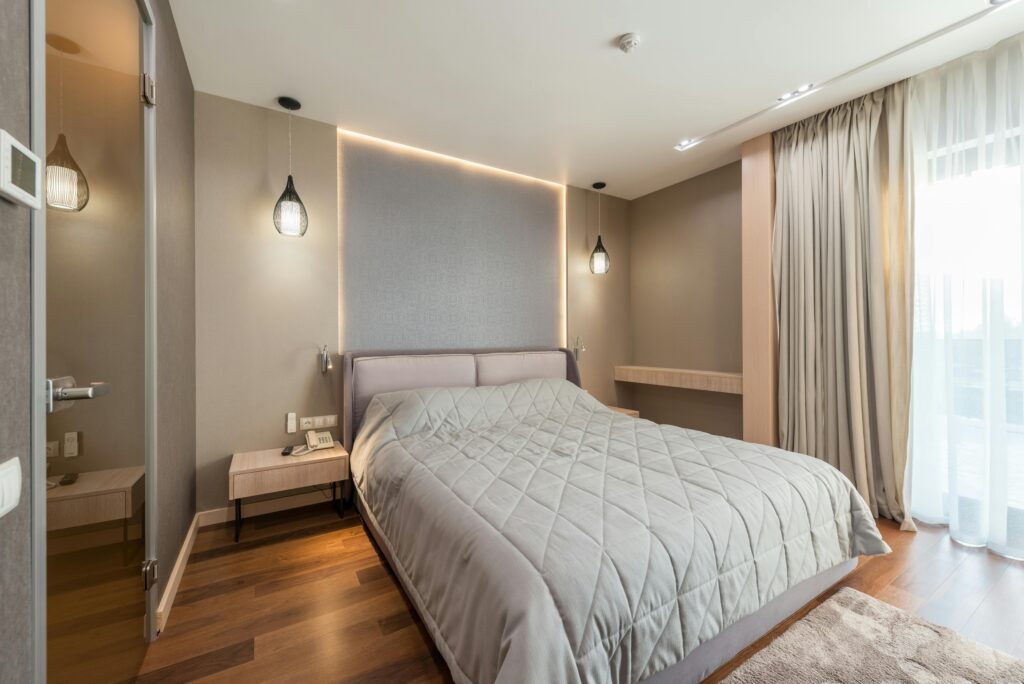
By the time I finished the second coat, the effect was breathtaking. The room was no longer just a room; it was a canvas of light. The morning sun didn’t just peek in; it flooded the space, bouncing off the white walls and filling every corner. It was the single most impactful change I had made.

But I wanted to play with light, not just paint it on the walls. On a whim, I stopped at a little curiosity shop and found a small, crystal sun-catcher. I hung it in my window, right in the path of the sun. That afternoon, as the light streamed in, it hit the crystals and exploded, casting a dozen tiny, dancing rainbows across the newly white walls and the pale wood of my floor. It was magical. It was a daily, silent firework display that never failed to make me smile. This little prism became the soul of the room, a perfect metaphor for what I was trying to achieve—taking the simple, abundant light of spring and breaking it into something even more joyful.
A Bed to Float On: The Heart of the Sanctuary
The bed is, undoubtedly, the throne of the bedroom. My winter bed had been a fortress of warmth—a deep, charcoal grey duvet cover, a heavyweight woven throw, and a pile of pillows in various shades of charcoal and slate. It was comfortable, but it looked like a storm cloud had settled in the middle of the room.
It was time for a change. I stripped the bed, bundling the dark linens away for next winter, and stood back to look at the bare mattress. It was a blank slate. I knew I wanted white, or something very close to it, but the thought of pristine, hotel-style white felt intimidating. What about spills? What about the cat? Then I remembered a piece of advice from a stylish friend: “The beauty of white linens is that they are meant to look lived-in. They’re about softness, not sterility.”
I didn’t go for a single, flat white. I wanted texture and depth. I started with the foundation—the sheets. I invested in a set of high-thread-count cotton sateen sheets in a color called “Oyster.” They were soft, with a subtle sheen that caught the light. They felt luxurious against my skin, a world away from the flannel sheets of winter.
Next, the duvet. I chose a simple white cotton duvet cover, but with a subtle, textured weave—a herringbone pattern that was almost invisible unless you were up close. This was my base layer. Then, I introduced the “air.” I found a beautiful, lightweight, chunky-knit throw in a pale, oatmealy beige. It was full of holes and texture, and when draped over the foot of the bed, it added a sense of cozy weight without any visual heaviness.
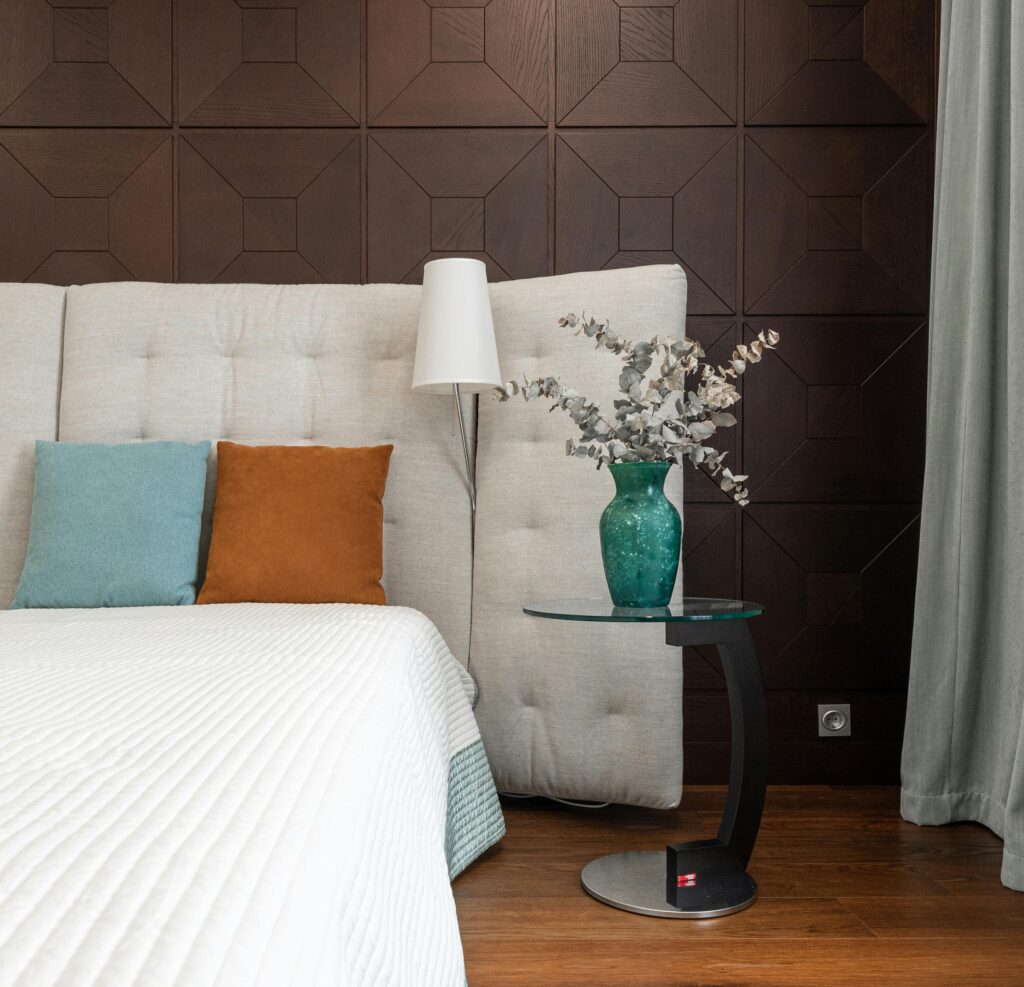
The pillows were where I could play with a whisper of color. I kept my standard sleeping pillows in simple white shams, but for the accent pillows, I ventured into the palest of palettes. I found one in a soft, faded seafoam green, like the first tender shoots of grass, and another in a blush pink, the color of the inside of a shell. They weren’t loud; they were a gentle sigh of color.
The final touch was a simple, linen-covered bolster pillow in a natural, unbleached tone. When I finished making the bed, it didn’t look like a showroom display; it looked like an invitation. It was a layered, textured, incredibly soft landscape. Lying down on it felt like resting on a cloud. It was the physical embodiment of airiness—comfortable, breathable, and light.

Breathing Room: Furniture and Flow
With the walls bright and the bed transformed, my attention turned to the other furniture. My dark wood nightstands and the large, imposing armoire suddenly felt clunky and out of place. Replacing them wasn’t in the budget, but I remembered another trick: the power of perception.
I decided to “lighten” them visually. I cleared everything off the nightstands except for a single, essential item—a small, ceramic lamp with a simple white linen shade. On the other one, I placed a single sprig of eucalyptus in a thin, clear glass vase. By minimizing what was on them, the furniture pieces themselves seemed to recede, becoming less dominant in the space.
I also looked at the floor space. I had a large, dark rug that covered most of the hardwood. I rolled it up and stored it away, revealing the beautiful, honey-toned oak floors beneath. The reflection of light off the pale wood made the entire room feel brighter and more open instantly. The sound of my footsteps changed from a soft thud to a gentle click, adding to the airy, uncluttered acoustics of the room.
I rearranged the remaining furniture to create a better flow. I moved the bed to a different wall, one where the morning light would fall across it more gently. I angled the armchair I loved to read in towards the window, creating a little “reading nook” that capitalized on the natural light. It was no longer just a room with furniture in it; it was a room with defined, purposeful spaces that felt open and connected.
The Scent and Soul of the Season
A bright and airy room isn’t just a visual experience; it’s a full-sensory one. The smell of a room is its invisible soul. The winter had been filled with the scents of cinnamon and clove from candles. They were warm and spicy, but now they felt dated.
I wanted my room to smell like a walk through a garden after a spring rain. I cleared out the old candles and went searching for new scents. I found a diffuser with essential oils of bergamot, geranium, and a hint of fresh mint. It was clean, bright, and slightly floral without being overpowering. The gentle fragrance that now permeated the room was uplifting. It was the scent of clean laundry drying in the sun, of dewy mornings, of new beginnings.
I also brought the outside in, literally. On my weekly grocery trip, I picked up a bunch of simple, white tulips. I placed them in a slender, clear glass vase on my dresser. Their elegant, green stems and pure white petals were a living sculpture. They followed the light throughout the day, their heads slowly turning towards the sun. They were a reminder of the beautiful, transient nature of the season. They weren’t permanent, and that was what made them special. I decided then that I would always have a small, fresh bouquet in my room, a rotating exhibit of nature’s simple beauty.

The Final Morning: A Sanctuary Realized
The transformation was complete. It had taken me a few weekends, a bit of physical effort, and not a huge amount of money. But the room I woke up in this morning was not the same room I had started in.
That persistent sliver of sunlight found its way in again, but this time, it wasn’t an intruder. It was a welcome guest. It washed over the white walls, making them glow. It hit the crystal sun-catcher and scattered a confetti of tiny rainbows across the floor. It illuminated the soft, textured layers of my bed, making the seafoam green pillow look almost translucent. The air in the room was fresh, carrying the faint, clean scent of geranium and mint.
I lay there for a long time, just breathing it in. The room felt spacious, calm, and incredibly peaceful. It was a true sanctuary. It wasn’t just “decorated”; it was alive with the spirit of spring. It was a space that encouraged deep breaths, quiet contemplation, and a sense of optimistic calm.

Creating this bright and airy bedroom taught me that our surroundings are not passive. They are in a constant, quiet dialogue with our inner selves. The heavy, cluttered room had reflected my winter mindset—a desire to hide, to conserve, to be still. This new, light-filled space reflected a different part of me: the part that was ready to open up, to breathe deeply, to grow.
The world outside is bursting with renewal, and now, finally, the room I retreat to is too. It’s more than just a place to sleep; it’s a daily reminder that after every winter, no matter how long or dark, there is always a spring. And sometimes, all you need to do is clear a little space, let in the light, and it will find its way in.