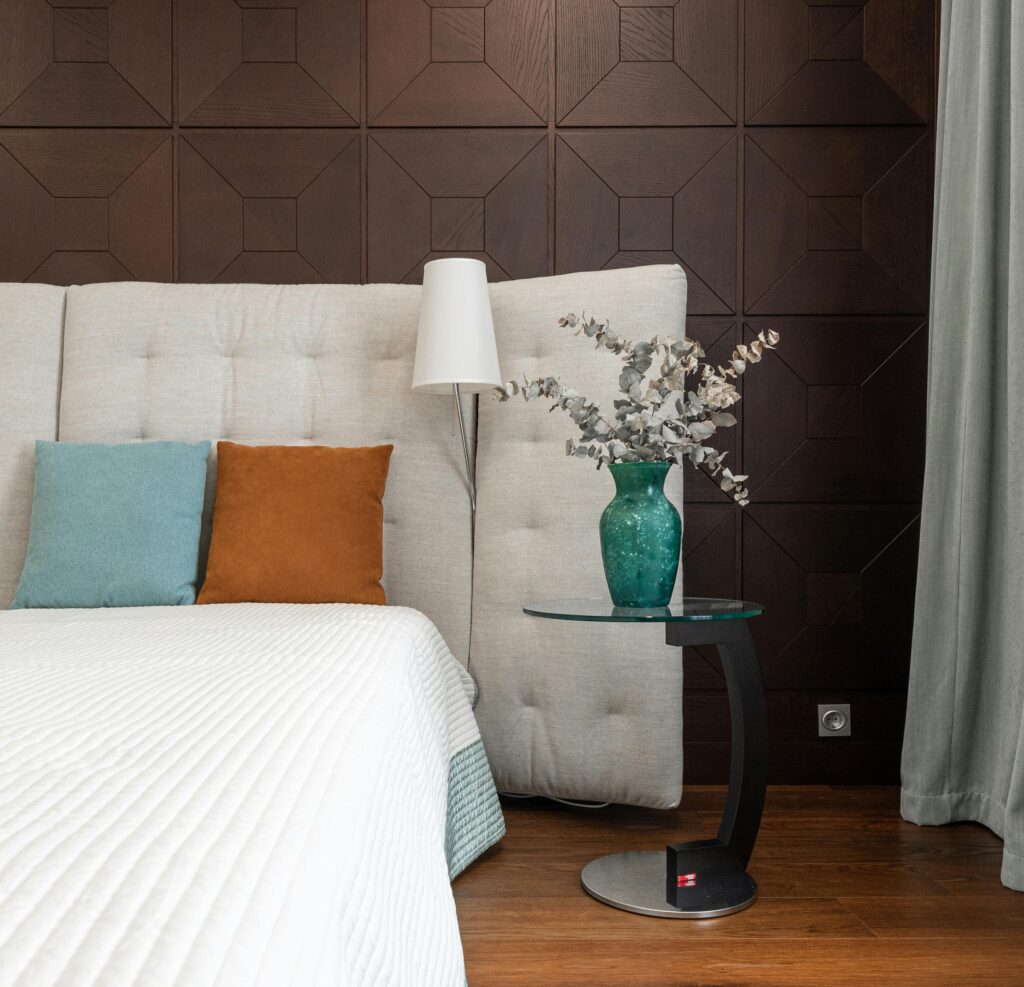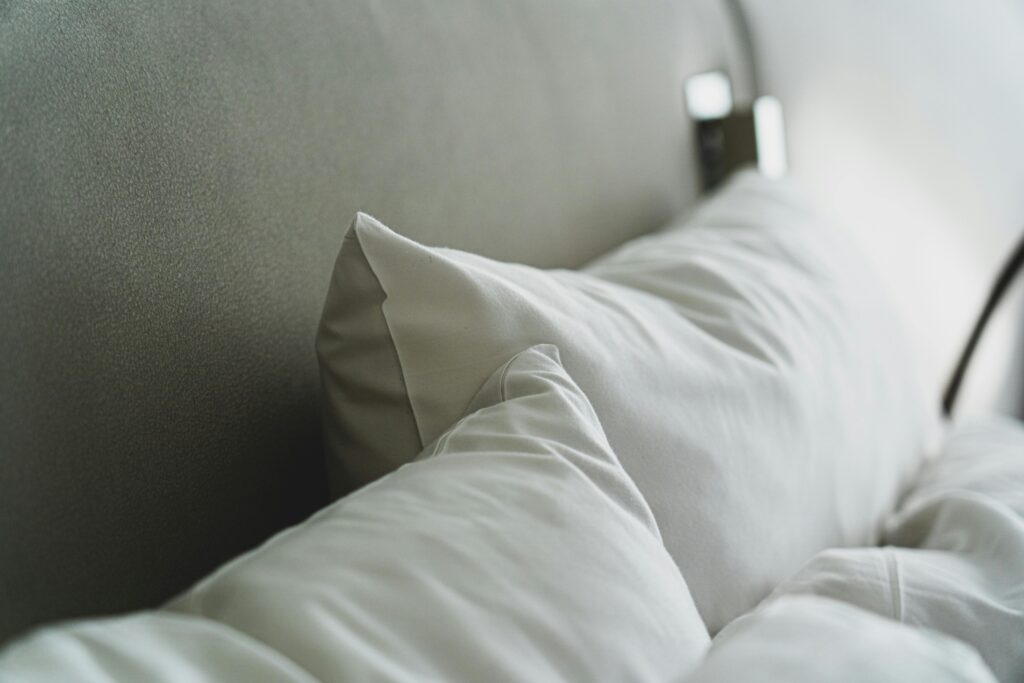
I want you to picture this. It’s about 11:45 on a Tuesday night. Not late enough to be reckless, but late enough that you’re properly tired. The kind of tired where your bones feel heavy, and your brain has finally stopped its endless loop of anxious to-do lists. You’ve just brushed your teeth, washed your face, and slipped into your favorite pair of worn-out pajama shorts. You walk into your bedroom, and you see it. The bed.
But here is the moment that defines everything. As you pull back the corner of the duvet, what does your hand feel?
Does it feel like a crisp, cool, almost mineral-like smoothness that makes you want to slide in and not move for ten hours? Or does it feel a little… static-y? A little slippery? Maybe just a whisper of that weird, plasticky crinkle as it unfolds?
I didn’t use to think about this. For the first twenty-five years of my life, a bedsheet was just a bedsheet. It was the thing that stopped my mattress from getting sweat stains. I bought whatever was on sale at the big-box store, usually a pack that came in a plastic zipper bag. You know the ones. They always had a weird chemical smell when you opened them, and the fitted sheet never quite stayed on the corner of the mattress. By morning, it would be bunched up under my lower back like a crumpled newspaper.
Then, about three years ago, I had what I can only describe as the Great Bedding Awakening. I was housesitting for a friend who had a very high-stress, high-paying job in finance. She wasn’t home much, but when she was, she clearly needed to sleep like a hibernating bear. The first night I slept in her guest room—which was technically just a normal room, but it had this insane, heavy, cream-colored sheet set on the bed.
I remember lying there in the dark, completely still. I wasn’t tired anymore. I was just… comfortable. The sheet was cool against my legs. It had a weight to it, but it wasn’t hot. It felt substantial, like a well-worn Oxford shirt. I fell asleep in about four minutes.
When I woke up, I flipped the pillow over. The cool side was still cool. I looked at the tag. It said: *100% Long-Staple Cotton, 400 Thread Count.*
That was the beginning of the end for my relationship with polyester.
Lorem ipsum dolor sit amet, consectetur adipiscing elit. Ut elit tellus, luctus nec ullamcorper mattis, pulvinar dapibus leo.
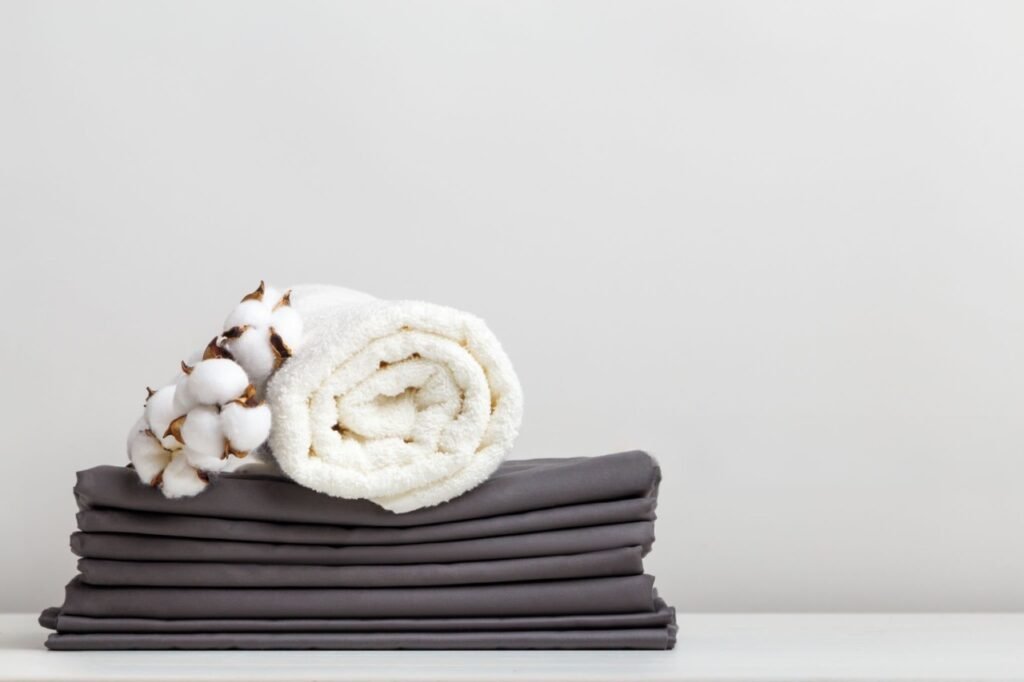
But here is where the story gets complicated. Because the very next month, I went camping with my brother. He is the opposite of me. He is a pragmatist. He reads reviews for dish soap. He thinks “thread count” is a conspiracy by Big Bedding to make us spend more money. He handed me a sleeping bag liner. I touched it. It was polyester. It was that silky, shiny, almost athletic-feeling polyester that you see in cheap Halloween costumes or 1990s windbreakers.
I sneered. “Ew,” I said. “Plastic.”
He looked at me like I had just insulted his child. “It dries in twenty minutes,” he said. “It doesn’t wrinkle. And when you spill your beer on it at two in the morning, you can wipe it off with a napkin.”
I spent that weekend in a damp tent in the Shenandoah Valley. It rained for eighteen hours straight. My friend’s fancy cotton sheets would have turned into a wet, heavy, moldy sponge. But that cheap polyester liner? It was dry by the time I brushed my teeth. It didn’t smell. It didn’t cling to my sweaty skin.
And I realized, lying there on an air mattress, listening to the rain, that I had been asking the wrong question my entire adult life. The question isn’t “Which is better, cotton or polyester?”
The question is “Which is better for you, right now, in this specific moment of your life?”
Because these two fabrics are not rivals. They are completely different species. Let me introduce you to them properly.
The Cotton Character: The Honest, Thirsty Friend
Let me tell you about the first time I really understood cotton. I was in my late twenties, living in a fourth-floor walk-up in a city that shall remain nameless to protect the guilty (it was Baltimore in August). The humidity was so thick you could almost drink it. My apartment had no central air, just one of those window units that sounded like a helicopter taking off and only cooled a three-foot radius around the couch.
I had cheap microfiber sheets—which is just a fancy word for finely woven polyester. Every night was a nightmare. I would go to bed, and within an hour, I would wake up feeling like I was wrapped in a warm tortilla. The sheets didn’t breathe. They trapped every single calorie of heat my body produced and reflected it back at me. I would kick them off, but then I’d be sticky against the mattress protector. It was a lose-lose.
Out of desperation, I went to a home goods store and bought a single fitted sheet. It wasn’t even expensive. It was just a basic cotton percale from a brand that rhymes with “Barget.” It was on clearance because the color was a hideous pale lavender, which I normally hate.
That night, I peeled off the microfiber horror show and put on the lavender cotton sheet. I didn’t have high hopes. I climbed in.
It was like diving into a lake.
Not a cold lake, but that perfect, early-morning lake where the top is cool but the bottom is just right. The cotton felt crisp. It felt dry. I could feel the air moving through the weave of the fabric against my skin. For the first time in two months, I slept through the night without waking up in a puddle of my own regret.
That is the magic of cotton. Cotton is hydrophilic. That’s a fancy science word that means “water-loving.” The fibers of a cotton plant are hollow, like tiny little straws. When you sweat, those straws pull the moisture away from your body and spread it out across the surface of the sheet, where it can evaporate into the air. Cotton breathes because it has to. It’s alive—or, it was, once.
But there is a shadow side to this honest, thirsty friend. Cotton is also a liar. Well, not a liar, but a drama queen.
Remember my friend’s fancy 400 thread count sheet? That was great. But a few years later, I got seduced by marketing. I bought a set of “1000 thread count Egyptian cotton” sheets online for a suspiciously low price. They arrived in a heavy box. They felt silky to the touch. I thought I had won the lottery.
I washed them. I put them on the bed. I climbed in.
It was like climbing into a straitjacket. They were so densely woven—because a high thread count just means more threads per square inch, squished together—that they didn’t breathe at all. They felt slick and heavy, like a tablecloth at a wedding. I woke up at three in the morning absolutely drenched. My hair was wet. I threw those sheets in the back of my closet and never looked at them again.
Here is the truth about cotton that the sheet companies don’t want you to know: It’s not just about being cotton. It’s about the type of cotton and the weave.
You have your short-staple cotton, which is what most cheap sheets are made of. The fibers are short, so they have to be twisted together like yarn, which leaves little nubs and bumps. They feel rough. They pill after five washes. They are the fast fashion of the bedding world.
Then you have your long-staple cotton (like Pima, Supima, or Egyptian). The fibers are long and smooth, which means they can be spun into a finer, stronger thread. That thread can be woven into two main personalities.
Percale: This is the cool, crisp, matte finish. It feels like a really nice men’s dress shirt. It wrinkles like crazy, and I love it for that. It looks lived-in. It feels honest. If you sleep hot, percale is your soulmate.
Sateen: This is the silky, smooth, slightly shiny one. It drapes over your body like a liquid. It feels luxurious and soft. But it traps a little more heat because of the way the weave floats the threads on top. It’s for people who want the feeling of luxury without necessarily the heat of flannel.
Cotton demands things from you. It demands that you wash it in cold water. It demands that you don’t use fabric softener (which coats the fibers and ruins their absorbency). It demands that you take it out of the dryer while it’s still slightly damp so it doesn’t wrinkle into a crumpled ball of rage. It is a high-maintenance friend. But a loyal one.
The Polyester Character: The Indestructible, Low-Drama Cousin
Now let me tell you about the other side. Because I am not a snob. Or, I try not to be.
A few years after the Great Bedding Awakening, I had a baby. And if you have ever had a baby, you know that sleep becomes a theoretical concept. You also know that babies are essentially adorable little leak factories. They spit up. They drool. Their diapers have catastrophic failures at 4 AM.
I had my beautiful, expensive, crisp cotton sheets on my bed. One night, the baby was sleeping next to me in a bassinet. I heard a noise. It was the sound of a volcano erupting from the south end of a six-pound human. I picked her up. In the dim light of the Hatch nightlight, I saw that the damage was biblical. It had gone through her onesie, through her swaddle, and onto my shoulder. Then, when I leaned over in panic, it dripped onto my pillowcase.
My 400 thread count, long-staple cotton pillowcase.
I washed that pillowcase seven times. I used stain remover. I used baking soda. I used the tears of my ancestors. That yellow stain never fully came out. The cotton fibers had absorbed the liquid like a sponge—which is their job—but they also held onto the pigment. The pillowcase was ruined.
My sister, who has three children and zero patience for aesthetics, laughed at me. She handed me a set of her kids’ crib sheets. I touched them. Polyester. Bright blue, with little rocket ships on them.
“They’re disgusting,” she said cheerfully. “But they work.”
And she was right. Polyester is a polyester. It is a synthetic polymer, which is a fancy way of saying “plastic.” Plastic does not absorb water. It is hydrophobic. Water sits on top of it. If you spill red wine on a polyester sheet, you can literally blot it up with a paper towel and it will look brand new. If your baby has a blowout, you can rinse it under the tap and the poop just slides right off.
I resisted for a month. I slept on my sad, stained cotton pillowcase and pretended I didn’t care. Then, one night, I was so exhausted that I grabbed the rocket ship sheet and put it on my own bed out of sheer laziness.
I climbed in.
It was weird. It was slippery. My pillow slid around like a hockey puck. The sheet made that little crinkle sound when I moved, like a raincoat. But it was… fine. It wasn’t the cool, crisp lake of cotton. It was more like a slightly warm, slightly static-y swimming pool. But I didn’t sweat. The baby spit up on it the next morning, and I wiped it off with a baby wipe. No stain. No washing machine. Just wipe and go.
Polyester is the friend who never calls you but always shows up to help you move. It is indestructible. It doesn’t wrinkle. You can ball it up in a corner for a week, throw it on the bed, and it looks perfectly smooth. You can wash it in hot water, bleach it, dry it on high heat, and it comes out looking exactly the same as the day you bought it.
But there is a price. Oh, is there a price.
The first problem is the heat. Remember how cotton breathes because it’s a hollow plant fiber? Polyester is a solid plastic filament. It doesn’t breathe. It traps your body heat right next to your skin. If you are a hot sleeper, sleeping on polyester is like sleeping inside a Ziploc bag. You will wake up clammy. Not wet, exactly, but that sticky, uncomfortable, I-need-a-shower kind of clammy.
The second problem is the static. Oh, the static. In the winter, when the air is dry, polyester sheets become a science experiment. You will crackle when you move. Your hair will stand on end. You will go to pet your cat and accidentally zap it in the nose. It’s not a huge deal, but it’s annoying in a death-by-a-thousand-paper-cuts kind of way.
The third problem is the feel. High-quality polyester—what they call “microfiber”—can be made to feel very soft. It can be brushed to feel like suede or peach fuzz. But it will never have that crisp, dry, organic snap of cotton. It always feels a little bit… oily? Slick? Like there’s a film on it. Because technically, there is.
The Middle Ground: Where They Actually Live Together
Here is where I have landed after three years of this obsession. Because life is not a binary choice. You don’t have to pledge your allegiance to Team Cotton or Team Polyester forever. You can be a traitor. You can switch sides depending on the season, the situation, and your mood.
Let me walk you through my actual linen closet right now. Yes, I have a linen closet. I’m that person now.
For Summer: Cotton Percale, always.
If the temperature outside is over 70 degrees Fahrenheit, I am sleeping on cotton percale. I have a set that is 100% organic cotton, a 300 thread count (which is the sweet spot—low enough to breathe, high enough to feel smooth). They are striped in a faded blue and white. They wrinkle so badly that they look like a topographic map of the Himalayas. I don’t care. The first time I get into bed in June, and that cool, dry fabric touches my skin, I actually sigh out loud. It is a physical relief. It is the difference between sleeping and just closing your eyes for eight hours.
For Winter: Flannel (which is still cotton, but brushed).
Flannel is cotton that has been brushed on one or both sides to raise the fibers, creating a fuzzy, soft surface. It traps a layer of warm air against your skin. In January, when my radiator is hissing and the wind is rattling the windows, flannel sheets are like a hug from a friendly bear. They are cotton, so they still breathe enough that you don’t overheat, but they feel so cozy you want to call in sick to work just to stay in them.
For the Guest Room: Polyester (don't tell anyone).
Here is my secret shame. I have a very pretty polyester sheet set in my guest room. It’s a high-quality microfiber that has been brushed to feel almost like suede. It’s a lovely sage green color. It doesn’t wrinkle. It always looks perfect. And here is the thing about guests: they spill things. They drink red wine in bed. They have makeup that transfers. They sweat in unfamiliar environments. I am not putting my precious cotton sheets in the line of fire. The polyester sheets are for the guest room because they are bulletproof. I can wash them on sanitize cycle. I can dry them on high. They come out perfect every time. My guests have never complained. Most of them can’t tell the difference until I tell them.
For Camping or Dorm Rooms: Polyester, no question.
If you are sleeping on a surface that might get damp, or you are sharing a laundry machine with 200 other people (hello, college), or you need to pack light and wash in a sink, polyester is your only answer. It dries in the time it takes to watch a sitcom. It weighs nothing. It doesn’t mildew. My brother was right. I hate to admit it, but he was right.
For Hot Sleepers with Night Sweats: Cotton, specifically percale.
If you wake up in the middle of the night with your shirt plastered to your back, do not buy polyester. Do not buy high-thread-count sateen. Do not buy “cooling” polyester blends that promise the moon. Buy cheap, crisp, low-thread-count cotton percale. It is the most breathable fabric on the market. It is not soft in the way you think soft should be—it’s not fuzzy or silky. It’s crisp. It’s dry. It’s what you need.
For People with Allergies or Eczema: Cotton.
Polyester is a plastic. Plastics can off-gas volatile organic compounds (VOCs), especially when they are new. That “new sheet smell” from a polyester pack? That’s chemicals. If you have sensitive skin, asthma, or allergies, you want unbleached, undyed, 100% cotton. It is hypoallergenic. It doesn’t trap dust mites as easily as fuzzy polyester can (though all sheets trap dust mites, let’s be real). Cotton breathes, which means your skin stays drier, which means less irritation.
The Thread Count Lie
I have to talk about this because it almost ruined me. For years, I thought “higher thread count = better sheets.” I was a fool. A mark. A sheep being led to the slaughter of the home goods industry.
Here is how the scam works. Thread count is simply the number of threads woven into one square inch of fabric, both vertically and horizontally. So a 200 thread count sheet has 100 vertical threads and 100 horizontal threads. A 400 has 200 and 200. Simple, right?
But manufacturers are clever. They started using “multi-ply” threads. Instead of using one long, strong cotton fiber, they would take two or three very thin, short fibers and twist them together to make one “thread.” Then they count each of those tiny plies as a separate thread. So a sheet that is actually a 200 thread count becomes an “800 thread count” on the package because they used four-ply yarns. It’s a lie. It’s math magic for profit.
Then, to make it worse, they cram so many threads into that square inch that the fabric becomes dense and airtight. You are paying more money for a sheet that sleeps hotter and feels stiffer. A 300 to 400 thread count in a single-ply long-staple cotton is the holy grail. Anything over 600 is usually a gimmick or a disaster.
The only way to know? Touch it. Ignore the number. Close your eyes. Feel it. Does it feel stiff and slick? Put it back. Does it feel crisp and airy? That’s the one
The Environmental Elephant in the Room
I can’t write this without talking about the planet, because it matters to me, and it probably matters to you, or at least it should.
Cotton is natural. It grows in the ground. At the end of its life, a cotton sheet will biodegrade in a landfill in a few months. It returns to the earth. That is beautiful. But conventional cotton is also a thirsty, chemical-intensive crop. It uses about 2,700 liters of water to make one cotton t-shirt. It uses pesticides that poison rivers and harm farmers. Organic cotton is better—it uses less water and no toxic chemicals—but it’s more expensive and still requires a lot of land.
Polyester is recycled plastic bottles. That sounds good, right? We’re saving the ocean! Except that every time you wash a polyester sheet, thousands of microscopic plastic fibers break off and go down the drain, into the wastewater treatment plant, and eventually into the ocean, where fish eat them, and then we eat the fish. Polyester also never biodegrades. That sheet you buy today will still exist in a landfill in the year 2500, in perfect condition, wrapped around some future archaeologist’s shovel.
There is no perfect answer. I try to buy organic cotton when I can afford it. I try to keep my polyester sheets for as long as humanly possible—decades, if I can—so I’m not creating more plastic waste. I wash them in a Guppyfriend bag to catch the microfibers. It’s not perfect, but it’s something.
The Final Verdict (From Someone Who Has Lived Both Lives)
So, after all these words, what do I actually sleep on tonight?
It depends on the night. But most nights, I sleep on cotton. I am a hot sleeper. I run warm. I live in a place with humid summers and dry winters. The cotton percale is my baseline. It is the home I return to.
But on the nights when I am exhausted, when I don’t want to iron, when I just threw a load of laundry in at 10 PM and need sheets that don’t wrinkle? I pull out the polyester microfiber. It’s not as good. It’s not as noble. But it’s fine. It does the job.
And that, I think, is the real answer. The question “cotton vs polyester” is like asking “coffee vs tea” or “dogs vs cats.” It depends on who you are, where you live, how much money you have, how much you sweat, and whether you have a baby or a dog or a clumsy partner who drinks red wine in bed.
If you want the best possible sleep, the most luxurious, the most breathable, the most natural feeling in the world? Save your money. Buy the best 100% long-staple cotton percale sheets you can afford. Wash them correctly. Treat them nicely. They will last you ten years, and every single night will feel like a small gift.
If you want the most practical, the most durable, the most stain-resistant, the most wrinkle-free, the cheapest option? Buy polyester. Or, more specifically, buy high-quality microfiber. Don’t buy the cheapest garbage that feels like a tarp. Buy the soft, brushed kind. You’ll be fine. You’ll sleep. You might not have a spiritual awakening, but you’ll sleep.
And if you want my real, honest, pulled-from-the-trenches advice? Buy both. Keep a cotton set for when you need to feel like a human being who has their life together. Keep a polyester set for the weeks when you are sick, or grieving, or exhausted, or raising a newborn, or just so tired that you cannot possibly face an iron.
The best sheet is the one that gets you into bed. The best sheet is the one that holds you while you rest. And at the end of the day, after all the thread counts and fabric blends and arguments about breathability, that’s all that really matters.
Now, if you’ll excuse me, it’s 11:45 on a Tuesday night. I’ve just brushed my teeth. I’ve washed my face. And I’m going to go crawl into my slightly wrinkled, slightly faded, utterly perfect cotton percale sheets.
Goodnight. Sleep well. Whatever you’re sleeping on.
FAQs
1. Can I mix cotton and polyester sheets on the same bed?
Absolutely. There’s no bedding police. I’ve done it plenty of times. You might have a cotton fitted sheet (for breathability against your body) and a polyester flat sheet (for wrinkle-free looks on top). Or a cotton pillowcase for your face (better for skin) and polyester for your partner who doesn’t care. Just know that polyester is more slippery, so your top layers might slide around more. But honestly? If it works for you, it works. Don’t let anyone tell you otherwise.
2. Which one is better for people who sweat a lot at night?
Cotton, hands down. Specifically, low-thread-count cotton percale (think 200–300 thread count). Polyester traps heat and moisture against your skin because it doesn’t breathe. It’s like wearing a plastic bag to bed. Cotton wicks that moisture away and lets it evaporate. If you wake up drenched, switch to cotton. You’ll notice a difference the very first night. Some people also swear by linen (which is made from flax, not cotton), but that’s a whole other article.
3. How do I stop my polyester sheets from getting static?
Oh, I feel this question in my bones. Static is the curse of polyester, especially in winter. Here are three tricks that actually work: (1) Add half a cup of white vinegar to your washing machine’s rinse cycle – it acts as a natural fabric softener without coating the fibers. (2) Run a metal hanger over the sheets after you make the bed – the metal discharges the static. (3) Use a humidifier in your bedroom. Dry air makes static worse. And whatever you do, don’t use dryer sheets – they just coat the polyester with wax, which makes it feel greasy and ruins its stain resistance over time.