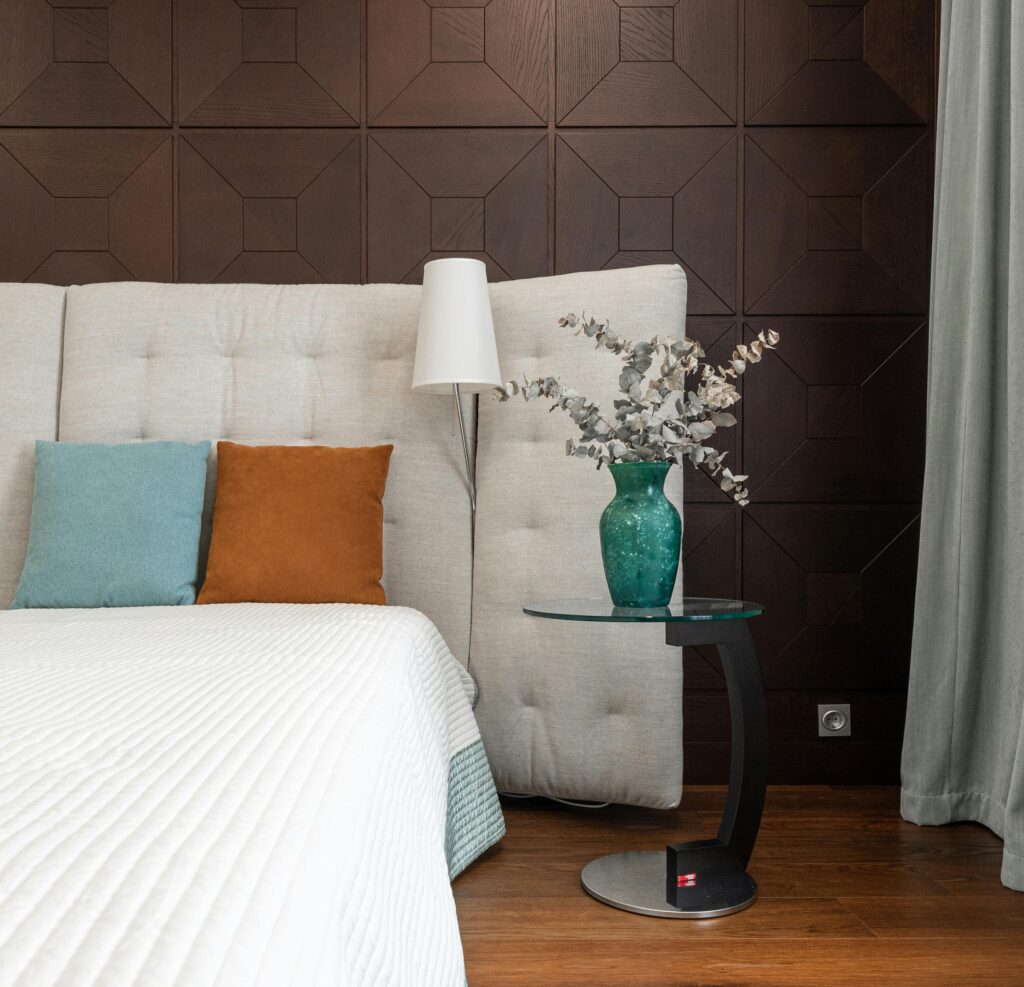
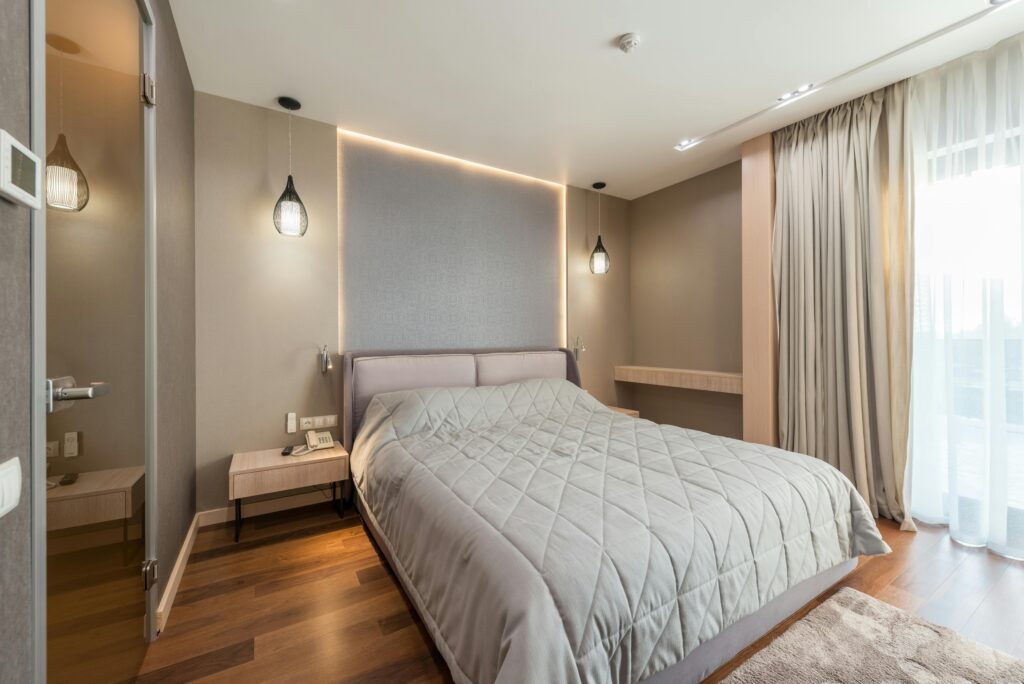
It was 2 AM, and I was lying diagonally across my king-sized mattress like a starfish clinging to driftwood. My feet were hanging off one side. My husband had somehow migrated to the other zip code of the bed. And the sheets? They had surrendered entirely. The fitted corner had popped off sometime around midnight, and now I was sleeping on a bare mattress protector that felt like a paper towel.*
That was the night I decided: I need to get serious about bedsheets.
Not just any sheets. King size sheets.
If you have a king bed, you already know the struggle. It’s not just “bigger twin.” It’s a whole different beast. You can’t just walk into any store, grab the first package that says “King,” and hope for the best. Trust me, I learned that the expensive way.
So let me make this article the one I wish I had read three years ago. The one that doesn’t just list thread counts and Egyptian cotton myths. The one that tells you a story—what works, what fails, and what makes you wake up feeling like you’re in a five-star hotel rather than a failed camping trip.
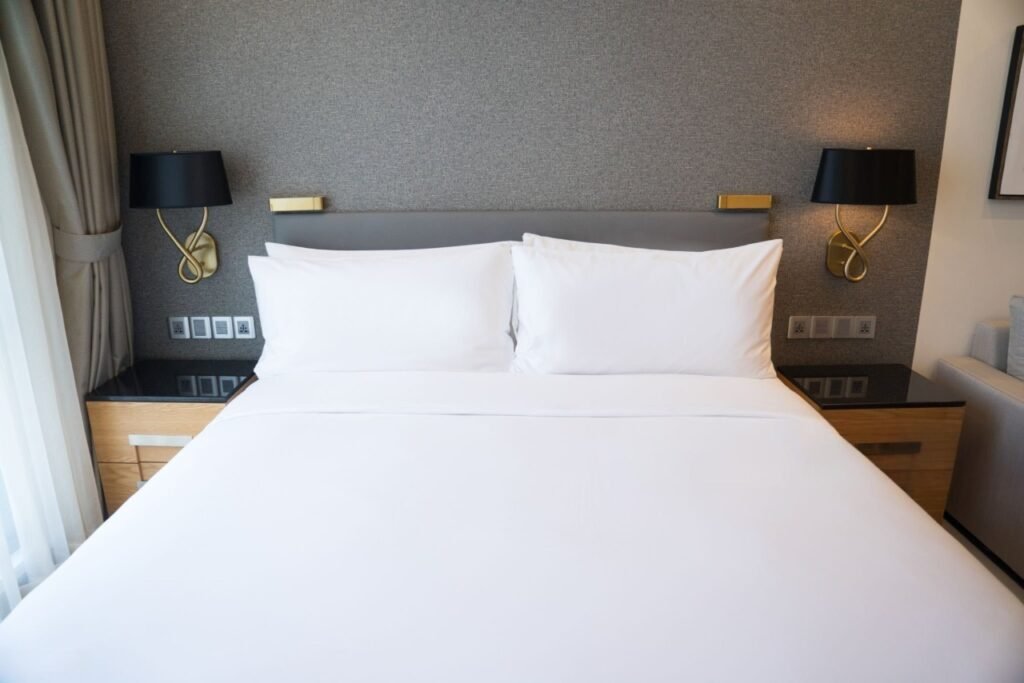
The Great Sheet Escape (And Why King Size is Different)
Here’s something nobody tells you when you upgrade from a Queen to a King: a King mattress is not just wider. It’s heavier. It’s deeper (most are 12 to 16 inches thick now). And the sheets have to hold onto a surface area that’s roughly the size of two twin XL mattresses pushed together.
That means double the tension. Double the movement. Double the chance that your fitted sheet will pop off at 3 AM while you’re dreaming about flying.
I remember my first King sheet set. It was a bargain. $39.99. “Luxury microfiber,” the package screamed. For the first two nights, I was smug. *See? You don’t need to spend $200.*
By night four, the microfiber had started pilling. By night seven, it felt like I was sleeping on a sweat-suit. And by night ten, the elastic had given up. I woke up wrapped in a ball of fabric like a human burrito.
That’s when I met Carol, my neighbor who used to work at a high-end linen store for fifteen years. I knocked on her door one Saturday morning, holding my sad, pilled bedsheet like a wounded animal.
“Honey,” she said, laughing. “You bought a sheet, not a sheet. You bought a promise printed on a polybag.”
She invited me in for coffee and gave me the education I’m about to give you.
The Cotton vs. Everything Else Showdown
Carol laid out three swatches on her kitchen table. “Feel these,” she said. “Eyes closed.”
The first was soft. Almost too soft. Slippery. Like butter on a hot pan. Microfiber, she said. “That’s plastic. Woven polyester. It doesn’t breathe. You’ll sweat.”
The second was crisp. Cool. It had texture—not rough, but alive. Percale cotton, she said. “That’s the old money of sheets. Cracker-dry feel. Gets softer every wash.”
The third was silky, dense, and heavy. Sateen, she explained. “That’s the velvet rope section. Warm. Smooth. Good for winter or people who run cold.”
I kept going back to the second one. The percale. It felt like a crisp fall morning.
“That’s your answer,” Carol said. “But for King size? You need more than just fabric type. You need grip.”
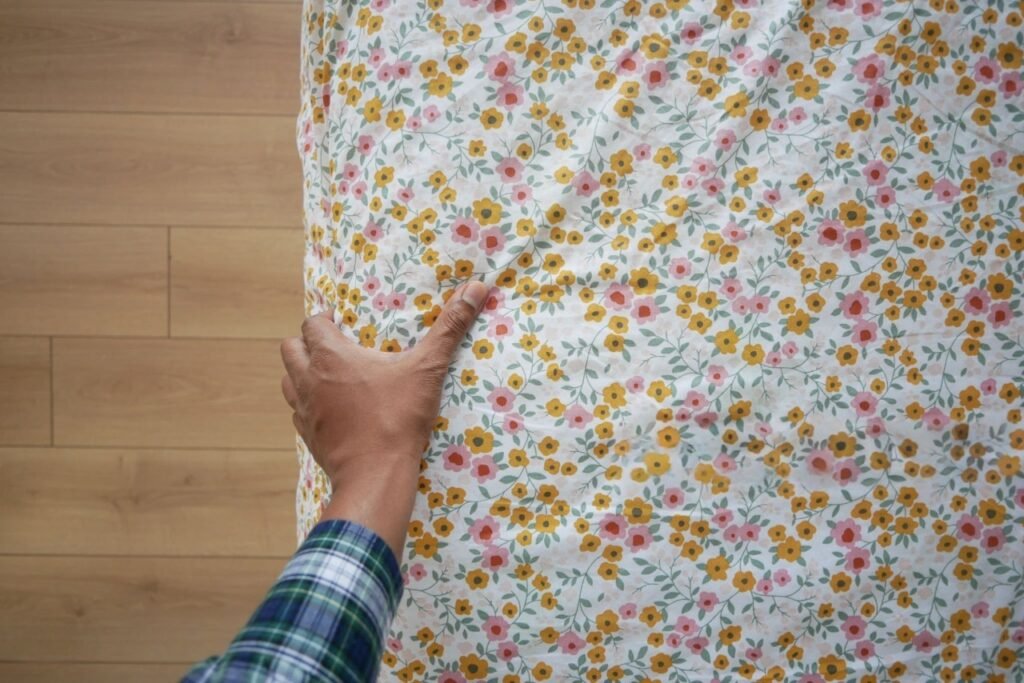
The Deep Pocket Nightmare (And Why 15 Inches is the Magic Number)
Let me tell you about the first “deep pocket” sheets I bought after Carol’s lesson.
The package said: Fits mattresses up to 18 inches deep.
My mattress is 14 inches.
I thought I had won. I brought them home, washed them (always wash new sheets before using—Carol’s rule #1), and put them on.
They fit. Sort of.
But the corners were loose. Not falling-off loose, but wavy. You know that look? Like the sheet is wearing a too-big hat. Within three nights, the elastic had pulled away from the corner on my side. Why? Because King mattresses are heavy. Every time you sit on the edge, you stretch the fabric. Every time you roll over, you tug the corners.
What you actually need—and I cannot stress this enough—is a fitted sheet with all-around elastic. Not just the corners. The entire perimeter. And the pocket depth should be exactly your mattress depth plus 2 inches. So for a 14-inch mattress? Get 16-inch pockets.
But here’s the secret sauce that Carol gave me: Look for sheets that say “extra deep” or “hotel deep” and then ignore the number. Instead, look at the elastic. If you see elastic only on the four corners, walk away. If you see elastic that goes all the way around the edge like a giant rubber band sewn into the hem? Buy it.
I found a set from a brand called Mellanni (yes, the one with thousands of Amazon reviews). Their King fitted sheet has that full elastic. My mattress hasn’t eaten a corner since.
The Thread Count Lie
Oh, this one makes me angry.
For years, we’ve been told: higher thread count = better sheet.
That’s a marketing trick. Let me explain.
Thread count is simply the number of threads woven into one square inch, horizontally and vertically combined. In theory, more threads = tighter weave = smoother fabric. But here’s where it gets shady.
Some companies cheat. They take thin, multi-ply threads (one thread made of two or three smaller twisted strands) and count each ply individually. So a 500-thread-count sheet might actually be 250 real threads counted twice. That sheet will feel rough. Heavy. And it will fall apart faster.
Carol taught me the rule of thumb:
- 200–300 thread count (percale): Perfect. Crisp. Breathes like a dream.
- 300–500 thread count (sateen): Smooth. Good balance of soft and durable.
- 600–800 thread count: Only buy from trusted brands. Anything above 800 in a cheap brand? It’s a lie. The fabric would be too dense to even bend.
For King beds especially, lower thread count percale is actually better. Why? Because King sheets are huge. They need air circulation. A dense, high-thread-count sheet on a King bed can trap heat like a tent. You’ll wake up swimming.
My favorite set right now is a 280-thread-count organic cotton percale from Brooklinen. It’s not cheap ($150 for a King set on sale), but two years later, it looks and feels better than day one.
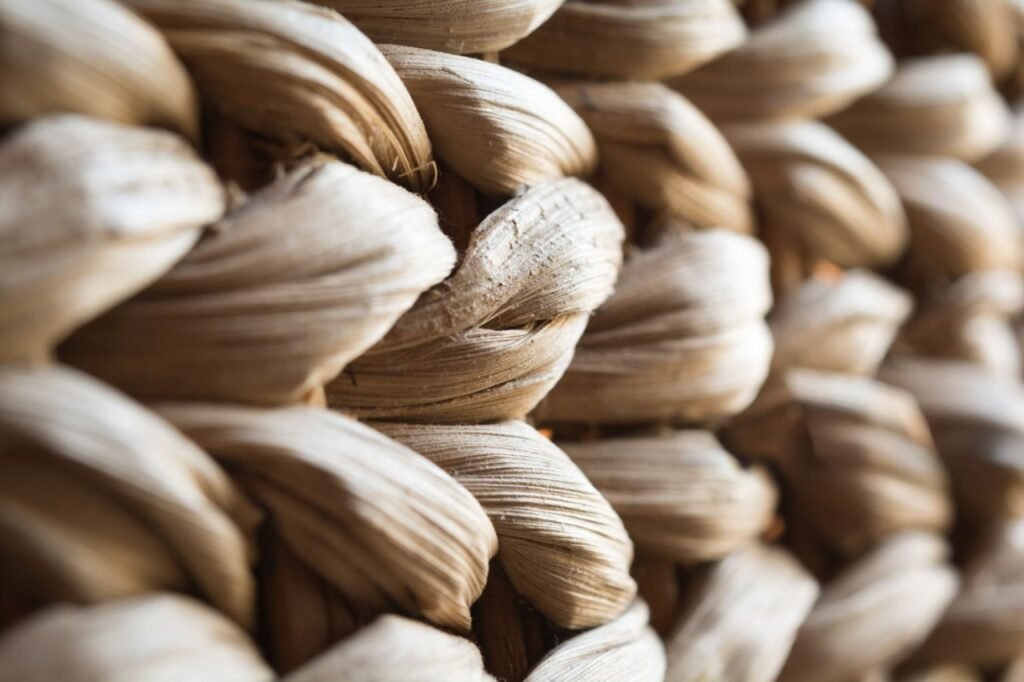
The Material World: Cotton, Linen, Bamboo, and the Imposters
Let me walk you through what I’ve actually slept on. Real nights. Real sweat. Real laundry days.
Egyptian Cotton: The legend. Long fibers (staples) mean fewer weak points, so the sheet lasts decades. But real Egyptian cotton is expensive ($300+ for a King). And most “Egyptian cotton” sold online is fake. Look for a certification or buy from a brand that traces their supply chain. If it’s $59 on Amazon? It’s not Egyptian. It’s regular cotton with a pyramid on the package.
Supima Cotton: This is American-grown extra-long staple cotton. Almost as good as real Egyptian, but easier to verify. My second-best set is Supima sateen from LL Bean. It’s warm, heavy, and feels like a hug. Not for summer.
Linen: The rebel. Linen is made from flax. It’s wrinkly, textured, and absolutely glorious for hot sleepers. I bought a King linen sheet set from MagicLinen two summers ago. The first night, I thought I made a mistake. It felt rough. By night five, it had softened. By month two, it was like sleeping on a cloud that also happens to wick away sweat instantly. Downside? Linen is expensive. And it wrinkles like a crumpled map. But on a King bed? The wrinkles just look artistic. Like you’re a writer in a coastal cottage.
Bamboo (Viscose/Rayon): This is controversial. Bamboo sheets feel incredibly soft. Silky. Almost too silky. But here’s the truth: most “bamboo” sheets are actually bamboo pulp dissolved in chemicals and spun into rayon. They’re not eco-friendly despite the marketing. And they can pill faster than cotton. I had a bamboo set for six months. Loved the feel. Hated the pilling. It started looking old fast.
Microfiber: Just don’t. For a King bed? Microfiber is a sweat trap. It’s polyester. It doesn’t breathe. You will wake up hot, even in winter. The only advantage? It’s cheap. But you’ll replace it three times as often as cotton. False economy.
Real Talk: My King Sheet Testing Process
I’m not a professional reviewer. I’m just a person who has bought (and returned) eleven sets of King sheets in four years. Here’s what I actually did:
Test 1: The Tuck and Shake
I put each fitted sheet on my 14-inch mattress. Then I shook it. If the corner popped off with a mild shake? Fail. Only three sets passed: the Brooklinen percale, the Mellanni microfiber (surprisingly good elastic, even though I hate the fabric), and a random set from Target’s Threshold brand.
Test 2: The Hot Sleeper Night
I sleep hot. My husband sleeps cold. Yes, we’re that couple. For a King bed, this is actually easier than smaller beds because you have more real estate to not touch each other. But the sheet matters. Percale kept me cool and him warm enough because he just added a blanket. Sateen made me sweat. Linen was the coolest but felt rough to him at first.
Test 3: The Wash and Dry Marathon
I washed each set ten times (over months, not in one weekend, because I’m not a monster). Microfiber pilled by wash 3. Cheap sateen (under $80) started thinning by wash 6. The good percale looked better at wash 10 than wash 1. Linen got softer every time.
Test 4: The Dog Test
We have a 60-pound lab mix who thinks the bed is his personal kingdom. He digs. He nests. He sheds. Microfiber? Hair magnet. Linen? Hair sort of slides off, but the digging caused two small pulls over a year. Percale? Hair shakes right off, and no damage yet.

The Top 5 King Size Bedsheets That Survived My Bedroom
After all that testing, here are the ones I’d actually buy again. Not sponsored. Not affiliate links. Just real.
- Brooklinen Luxe Core (Percale) – King, $159 on sale
Crisp. Cool. Deep pockets (17 inches). The elastic is full-perimeter. They’ve lasted two years and still feel new. Only downside: they wrinkle easily, but that’s percale. - LL Bean 280-Thread-Count Pima Cotton Percale – King, $149
These feel similar to Brooklinen but slightly thicker. More substantial. The fitted sheet has “smart elastic” with extra grippy strips. My in-laws have had their set for eight years. Eight! - Mellanni King Size Sheet Set – $49
I hate that I’m including this, because it’s microfiber. But for the price? The elastic is incredible. The deep pockets (18 inches) fit my mattress with room to spare. If you’re on a tight budget or need a guest room set, get this. Just know it won’t last five years. - MagicLinen King Linen Sheet Set – $289
The investment piece. Linen is not for everyone—it’s textured, wrinkly, and expensive. But if you sleep hot or love that rumpled European look, this is heaven. The fitted sheet is generous. The flat sheet is enormous (great for tucking). Two years in, it’s my summer favorite. - Target Threshold Performance Sheet Set – $70
The dark horse. Threshold’s “Performance” line has a cotton-poly blend (60/40) that somehow breathes better than pure poly. The elastic is only on the corners but it’s very deep (18 inches) and tight. My guest room has these. Zero complaints.
How to Not Ruin Your King Sheets (Because Size = More Laundry)
Here’s where I made expensive mistakes.
Mistake #1: Hot water washing.
King sheets are huge. They take up half the washing machine. If you use hot water, the fibers contract and weaken faster. Cold or warm only. And never—NEVER—use fabric softener. It coats the fibers and makes them less breathable. Use white vinegar in the rinse cycle instead. I learned that from Carol. It works.
Mistake #2: High heat drying.
Again, King sheets are big. They tangle into a wet knot in the dryer. If you blast them on high heat, the elastic degrades. Low heat. And pull them out when they’re 90% dry. Let them air finish. Your fitted sheet’s elastic will thank you.
Mistake #3: Not rotating.
You should have at least two King sheet sets. Rotate them weekly. Why? Because even the best elastic needs rest. If you keep the same fitted sheet on for weeks, it stretches permanently. Swap sets every Sunday. I have three sets now: one on the bed, one in the wash, one in the closet.
The Flat Sheet Debate (For King Beds Only)
Let me say something controversial.
I don’t use a flat sheet on my King bed.
I know. I know. Carol would be disappointed. But here’s my reasoning: King beds are enormous. The flat sheet is also enormous. Tucking it in at the bottom means my husband and I are both fighting the same tucked-in foot prison. He likes his feet free. I like mine covered. A flat sheet can’t please both of us.
So instead, I use a duvet cover (washed weekly) and a top blanket. No flat sheet. The fitted sheet is the star. The duvet is the blanket. Nothing in between.
If you do use a flat sheet (many people swear by them), make sure it’s at least 110 inches wide and 115 inches long. A standard King flat sheet is often too short for deep mattresses plus two people. Look for “oversized King” or “California King” if you and your partner are tall or wrestle for covers.
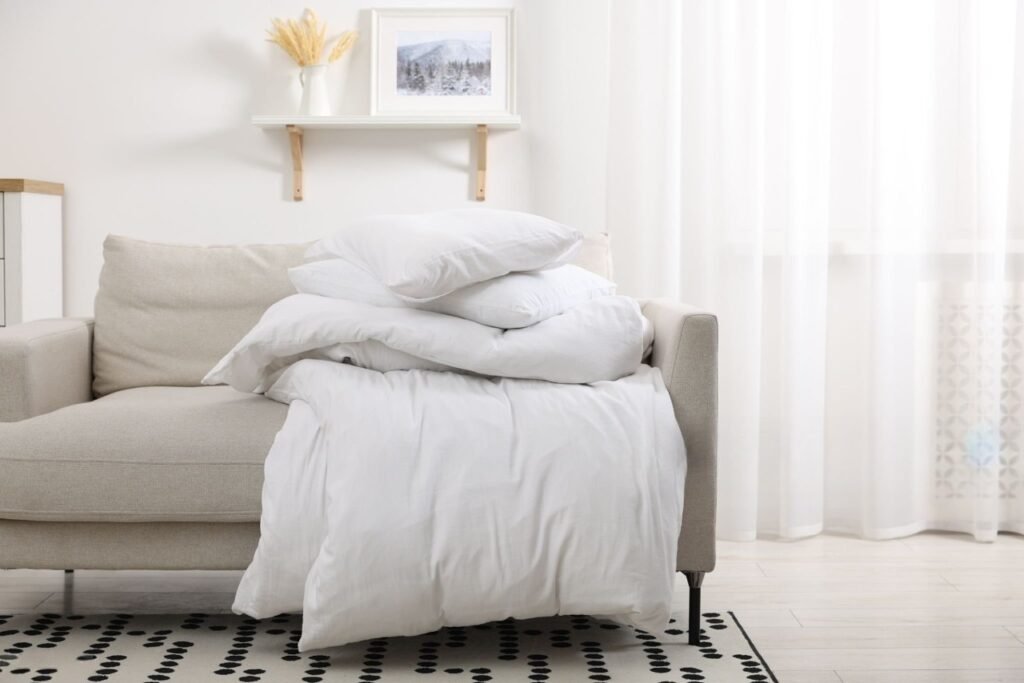
California King vs. Standard King: Don’t Get This Wrong
Real quick: a Standard King is 76 inches wide by 80 inches long. A California King is 72 inches wide by 84 inches long (narrower but longer).
These are not interchangeable.
If you buy California King sheets for a Standard King, they’ll be too long and too narrow. The corners won’t fit. You’ll be angry.
Always double-check your mattress size before ordering. I almost made this mistake once. The box said “King.” I assumed. My husband caught it. Marriage saved.
Three Short FAQs (Because Real People Have Real Questions)
1. How often should I wash King size bedsheets?
Once a week minimum. A King bed has more surface area, which means more dead skin cells, dust mites, and sweat. If you sleep with pets or eat in bed (no judgment), twice a week. I wash mine every Sunday. It takes two loads because a King fitted sheet and duvet cover barely fit in my machine.
2. Why do my King sheets keep coming off at the corners even though they say “deep pocket”?
Two reasons. First, check if the elastic goes all the way around or just at the corners. Only full-perimeter elastic really grips. Second, your mattress might have a pillow-top or topper that makes the actual depth larger than you think. Measure from the bottom of the mattress to the top of the topper. Then add 2 inches. Buy that pocket depth. Also, sheet straps (those elastic suspender things you clip to corners) are a $7 fix that works wonders.
3. Are expensive King sheets worth it?
For the fitted sheet? Yes, up to a point. A $150–$200 King fitted sheet made of long-staple cotton with full elastic will last 5–10 years. A $50 set will last 1–2 years. Over a decade, the expensive one saves you money. But you don’t need $500 sheets. The sweet spot is $120–$180 for a King set. Above $300, you’re paying for a brand name or packaging, not better sleep.
The Final Night
I wrote this article on a Sunday afternoon while my King sheets were in the wash. A light rain was falling outside. My lab mix was asleep on his dog bed (not on the mattress—he lost that privilege after the digging incident). And I realized something.
A King bed is a luxury. Not because it’s big, but because it gives you space. Space to stretch. Space to cool down. Space to starfish without hitting another human.
But that luxury only works if the sheets cooperate.
So let me make this article the one that saves you from the 2 AM burrito wrap, the sweaty microfiber nightmare, and the corner that pops off when you least expect it.
Buy percale if you sleep hot. Buy full-elastic fitted sheets. Ignore thread count hype. Wash cold, dry low, and rotate two sets.
And for the love of sleep, don’t buy the $39.99 microfiber set. Your future self—the one who wakes up rested, cool, and wrapped in fabric that actually stays put—will thank you.
Now go make your bed. You deserve it.