I remember the exact morning it all clicked into place. I was standing in front of my bathroom mirror, that harsh overhead light doing me absolutely no favours, staring at a face that looked… confused. It was dry but still breaking out. Dull despite the exfoliating acids I’d been so meticulously applying. Sensitive, irritated, maybe a little inflamed, even though I was doing everything “right.” I had the 10-step Korean skincare routine down to an art form. I double-cleansed. I layered hydrating essences with the precision of a master chef layering a filo pastry. I owned at least three types of sunscreen. I was, by all accounts, a skincare devotee. Yet, my skin was in open rebellion. It was the kind of skin frustration that makes you want to throw all your expensive serums out the window and just give up. The culprit, I would soon discover, wasn’t in my bathroom cabinet at all. It was in my bedroom. And it was the very thing I laid my head on every single night.
It wasn’t until a friend, one of those effortlessly glowing women who seems to have it all figured out, let me in on a secret. It wasn’t a new serum from a cult French pharmacy. It wasn’t a $200 facial. No, her secret was a simple change in her bedding.
“It’s the pillowcase,” she said with a knowing shrug.
I laughed. A pillowcase? Really? How could a piece of fabric possibly undo all the good work of my expensive skincare? It sounded like the sort of wellness myth you’d see on a Pinterest board, pretty but ultimately pointless. She told me to humour her, to try a silk pillowcase. I was skeptical, but my curiosity, fuelled by my frustration, won out. And that was the beginning of a quiet, ongoing transformation that I’m still trying to wrap my head around. It’s a transformation that goes way beyond a simple “beauty hack” and feels more like I finally realised I’d been sleeping on the job, literally.
This is the story of how I discovered that my nightly skincare routine wasn’t just being ignored by my pillowcase, it was being actively sabotaged. And if your skin is as confused as mine was, I’m willing to bet yours is, too.
The Problem Isn't Your Products, It's Where You Rest Your Face
It’s easy to believe that good skin starts and ends with what you put on it. The multi-billion-pound skincare industry banks on this. Every time we see a new “miracle” ingredient, we buy it, hoping this will be the one that finally solves our problems. We obsess over the pH of our cleansers, the molecular weight of our hyaluronic acid, and the percentage of retinol in our night cream. And while all of that is important, we’re missing a critical piece of the puzzle.
The problem is, we are spending eight hours a night rubbing our faces against a fabric that is basically a sponge for our natural oils, sweat, dead skin cells, and—perhaps most importantly—all of that expensive skincare we just applied.
Let’s paint a picture. You go through your elaborate night-time ritual. You gently pat in your luxurious, peptide-infused night cream. You lovingly apply your retinol serum. You feel like a goddess of self-care. Then, you lay your head down on your pillowcase. But that pristine, expensive cream isn’t staying on your face. It’s being slowly but surely wicked away by the thirsty fibres of your cotton pillowcase. It’s like pouring a glass of water into sand. Your skin is getting the leftovers, while your pillowcase is getting the good stuff.
This isn’t just a theory. It’s a physical reality that is supported by experts. “Even though silk pillowcases are said to cause fewer wrinkles, as long as you have a clean pillowcase, it doesn’t really matter whether you’re sleeping on silk or cotton,” says Dr Gizem Seymenoglu, a London-based medical aesthetician . The issue isn’t just the material, but the fact that your pillowcase absorbs everything. “It absorbs sweat, oil, skincare residue, even the occasional drool puddle, and then the next night, the same happens again” . You’re literally sleeping in the remnants of last night’s face. And if you think you’re safe because you turn your pillow over, you’re just delaying the inevitable.
What if I told you that your cotton pillowcase could be actively working against you? Dermatologist Dr Vichitra Sharma explains that “Cotton pillowcases tend to be more absorbent, meaning they may pull moisture from the skin and hair, potentially contributing to dryness” . It’s a simple but devastating equation: the very fabric designed to be soft and comfortable is a thief in the night, robbing your skin of the hydration you’ve just painstakingly provided.
An Anecdotal Case of the Wrinkle that Didn’t Fade
I’ve always been a side sleeper. It’s how I get comfortable. It’s how I fall asleep. But it’s also how I wake up with deep, crease-like lines etched into my cheek, lines that take an hour or more to fade away. I used to think of it as a slightly annoying but inevitable part of life. A small price to pay for a good night’s sleep. But then I started reading about what dermatologists had to say about sleep lines. “As skin ages, it loses elasticity and sleep creases – which are caused by friction and pressure on facial skin – can become more pronounced and longer-lasting. While the creases usually go away later that day, they can be gradually ‘ironed in’ over the years” .
This was the part that scared me. The idea that my sleeping position wasn’t just causing a temporary morning mark, but could be contributing to long-term wrinkles. It made total sense. My skin was being scrunched up and folded against the rough weave of my cotton pillowcase for eight hours a night. The friction was undeniable. It’s like folding a piece of paper in the same spot day after day. Eventually, the paper weakens and a permanent crease forms.
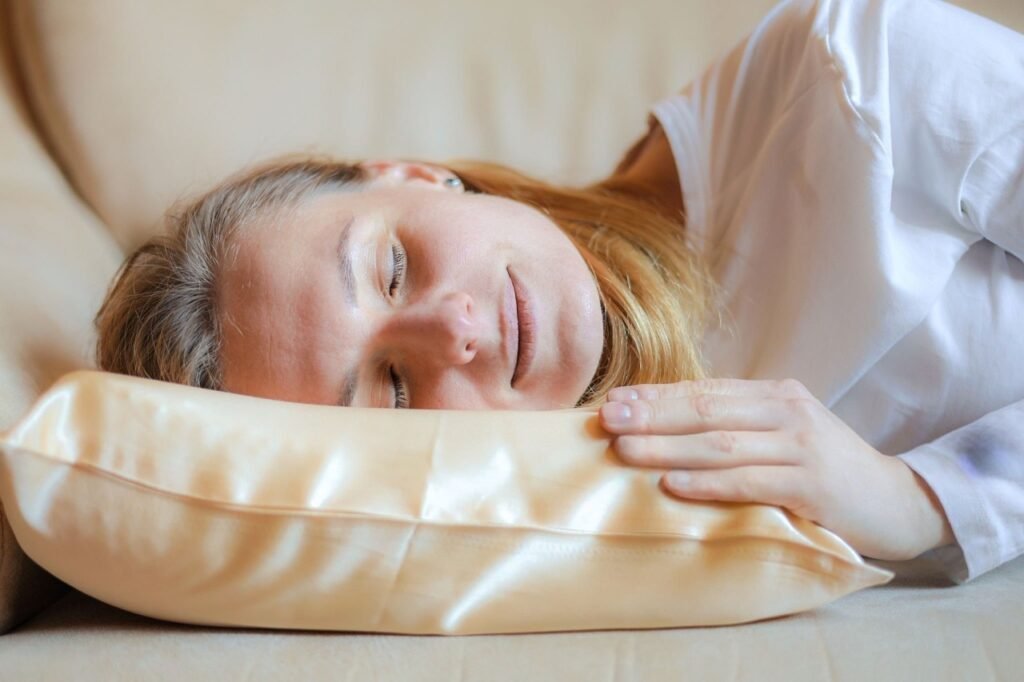
So, I decided to test the theory. I invested in a 100% pure mulberry silk pillowcase, one of those highly-touted ones with a high momme count. I was sceptical, but the science behind it was compelling. Silk is known for being much smoother than cotton. In fact, studies have shown that silk creates “up to 43% less friction than cotton,” meaning it doesn’t pull or crease skin overnight . A lower friction surface means less tugging on delicate facial skin, which means fewer sleep lines.
Within just a week, I noticed the difference. The harsh, deep creases on my cheeks from sleeping on my side were significantly less pronounced. They were softer, lighter, and faded much faster. The texture of my skin, especially around my eyes, felt smoother. That wasn’t just a feeling, either. Research backs this up. A study cited by Wellbeing Magazine found that silk “reduced morning crease depth by 12% compared to cotton” . It wasn’t a huge, life-altering number, but in the world of anti-aging, any reduction in friction is a win.
This brings us to the choice of material. You see, not all pillowcases are created equal. There’s a world of difference between a cheap, synthetic satin pillowcase and a high-quality, pure mulberry silk one. As Slip—a brand that essentially pioneered the modern silk pillowcase trend—explains, “satin isn’t a fabric; it’s a finish. The term ‘satin pillowcase’ is a misleading abbreviation…which generally means synthetic satin pillowcase. Synthetic satin (e.g. polyester) may feel nice and soft in your hand, but after an 8 hour sleep your hair and facial skin can really feel the difference” . This synthetic material is “petroleum based,” and it “sweats,” essentially negating any potential benefits .
For a pillowcase to truly help your skin, it needs to be breathable and naturally smooth, which is why high-quality, long-fibre mulberry silk, often graded as 6A, is the gold standard .
The Science of the Sponge: How Your Pillowcase Steals Your Serums
Let’s dig a little deeper into the mechanics of this thievery. It all boils down to friction and absorption.
- The Friction Factor
Cotton and other natural fibres are made of short, twisted strands that create a rough, microscopic surface. It might feel soft to the touch, but on a microscopic level, it’s like sleeping on a very fine sandpaper. Every time you move your head, that rough surface tugs and pulls at your skin. Over time, this repeated friction can lead to micro-tears in the skin’s barrier, contributing to irritation and, you guessed it, wrinkles.
Silk, on the other hand, is made of long, continuous filaments. Its molecular structure is much smoother, creating a surface that allows your hair and skin to “glide” instead of “snag.” Slip’s lab testing found that their silk “has been shown to reduce friction by 43% on average” compared to the cotton alternatives . This simple reduction in friction is a game-changer for preserving your skin’s integrity.
- The Absorption Attack
This is where the real sabotage happens. As I mentioned earlier, cotton is highly absorbent. It’s a thirsty fabric. It’s why we use it for towels. When you lay your face on a cotton pillowcase, it acts like a wick, pulling the moisture and active ingredients from your freshly-applied skincare straight into its fibres. “Slipsilk™ was shown to absorb significantly less face cream than cotton pillowcases,” explains Slip’s research, allowing “your skin’s moisture and valuable face and hair products where they belong, on your face and hair” .
Think about the math. A good night cream is expensive. You’re paying for those active ingredients. Yet, by using an absorbent pillowcase, you are literally paying for your pillowcase to be moisturised while your skin is left dry. It’s the ultimate skincare robbery. This is why dermatologists recommend switching to a less absorbent material like silk, especially if you have dry or sensitive skin. “Silk is less absorbent than cotton,” says Dr. Sharma, “which may help retain moisture” .
The Unseen Enemy: Bacteria, Dirt, and Detergent
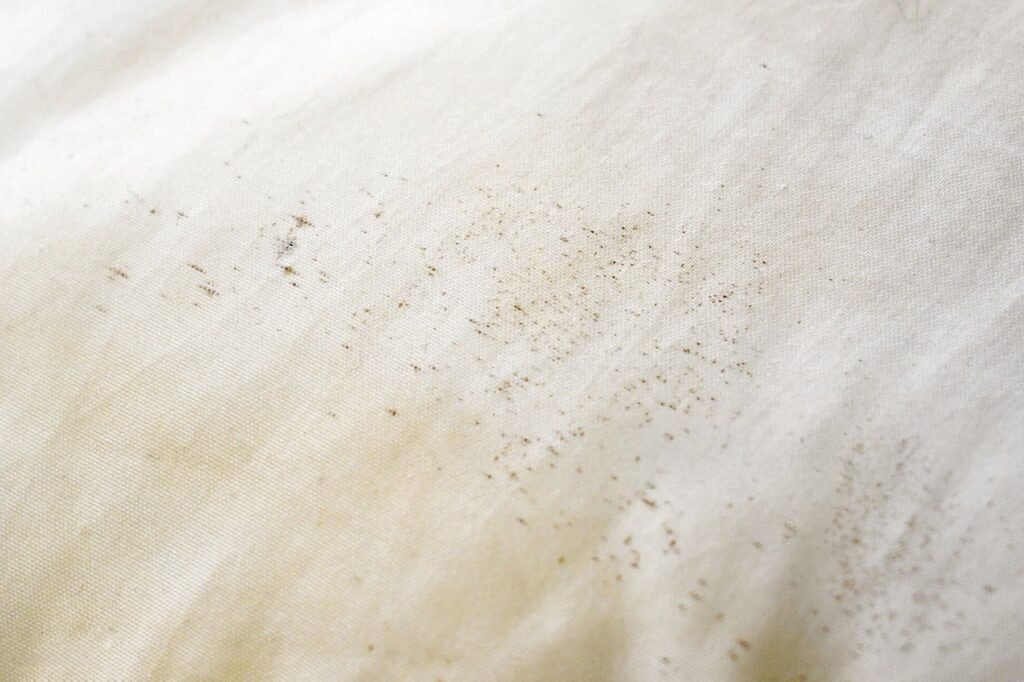
But the crime scene doesn’t end with stolen skincare. The pillowcase, especially a cotton one, is a literal petri dish for everything else you don’t want near your face. We all know we’re supposed to wash our pillowcases, but life gets in the way. We tell ourselves we’ll do it next weekend. But every night, our pillowcases absorb not just our skincare, but also our sweat, our natural oils, and dead skin cells . This creates the perfect environment for bacteria to multiply.
And then there’s the detergent. Even if you are diligent about washing your pillowcase, the products you use might be doing more harm than good. Most commercial laundry detergents are loaded with synthetic fragrances, optical brighteners, and enzyme-based cleaners that can linger in your sheets long after the rinse cycle ends. “All these may irritate your skin,” warns a report on the subject. You might even be allergic to some of them without even realising it .
Dr. Dina Gamal, a dermatologist, notes that simply using a dirty towel to dry your face is a common cause of irritation and breakouts. The same, of course, applies to your pillowcase . If your pillowcase isn’t clean, it’s a breeding ground for the very bacteria that causes acne. This is often why people who wash their face religiously can still suffer from breakouts. The source of the problem isn’t their face wash; it’s where they rest their head.
So, what does the science say about cleaning? “Washing your pillowcase every two to three days, especially if you’re breakout-prone, is a must,” advises Dr. Seymenoglu . This is even more critical than the material itself. While silk is a great option due to its non-absorbent and smooth nature, a clean cotton pillowcase is still leagues better than a dirty silk one.
I even decided to try a product that takes this problem and runs with it. I found a pillowcase with a composition that includes hyaluronic acid disposed on the fabric at a percentage of about 0.03 wt.% to about 10 wt.% . The idea behind this fabric, which came from a patent filing, is that you can actually add functional agents like vitamins and minerals directly into the textile so that during use, they are deposited onto your skin . This kind of advanced thinking shows how deeply this problem is being considered by product developers. While I can’t say for sure if this specific technology has made it to the mainstream market, the concept is fascinating and shows where the industry is heading.
My Ritual: The Night-Time Change That Changed Everything
So, after all this research and my own personal skin rebellion, what did I do?
First, I tossed out my old, 300-thread-count cotton pillowcases. I admitted defeat. They were the enemy. Then, I went shopping. I wasn’t looking for just any silk pillowcase, I was looking for the real deal. 100% pure mulberry silk with a high momme count. “Momme” is basically a unit of weight for silk, and the higher the number, the thicker, more durable, and more luxurious the fabric. As I discovered through my research, you can find 19 momme silk that is light and breathable, but I decided to go for a 22 momme, which is considered the “everyday glow-up,” balancing softness and durability . For those truly wanting the ultimate in luxury, 25 momme is also available, which is described as “heirloom-level luxury” . I chose a brand that promised it was made from the finest long-fibre mulberry silk and dyed with non-toxic dyes .
Here’s what changed.
- My Skin Retained Its Moisture
The very first morning after sleeping on the silk pillowcase, I woke up and my skin didn’t feel tight. It didn’t feel parched. It felt plump, which is a word I rarely use to describe my skin. Instead of my night cream disappearing into the ether, it had stayed on my face where it belonged. My skin looked more hydrated, and my fine lines seemed less pronounced.
- My Morning Hair Went from Hay to Okay (and Better)
I have naturally wavy hair that loves to frizz, especially during the humid months. Mornings used to mean 15 minutes of brushing, smoothing, and sighing . Sleeping on silk meant my strands glided instead of snagged. I woke up with fewer tangles, less frizz, and more shine . It’s not a hair-growth miracle, as Dr. Sharma points out that “hair growth is primarily influenced by genetics, nutrition, hormonal balance, and scalp health — not the fabric of your pillowcase” . However, by “minimising breakage,” it allowed my hair to look its best . My silk pillowcase has become my most effective hair tool.
- It Became a Comfort Ritual
This might sound a bit dramatic, but laying my head on silk at the end of a long day became a small act of self-respect. It wasn’t just about vanity anymore. It was about comfort. Silk is naturally temperature-regulating. It doesn’t trap heat like cotton, so on warm nights, my pillow stays cool against my skin . That small, luxurious feeling of cool silk on my cheek has become a signal to my brain that it’s time to wind down and relax. This is a mental health win as much as a beauty one.

The Verdict: Is It All Hype or a Hidden Secret?
So, is the silk pillowcase a miracle cure, or is it just clever marketing? The honest answer, which I found to be reassuring, is that it’s a bit of both. It is not a miracle cure. As sleep expert Dr. Sourabh Pahuja points out, “There is no strong scientific evidence that silk pillowcases improve sleep quality significantly” . Your sleep quality depends more on room temperature, mattress quality, and sleep hygiene . It’s not a magic wand that will erase wrinkles. Dermatologists are quick to caution that the anti-aging benefits are more about preventing mechanical damage—like friction—than they are about actually changing the skin’s biology.
Dr. Sharma advises that the claim “that silk enhances hair growth is a myth” . She also emphasises that while silk may “reduce static and friction,” its impact is minor compared to overall skincare and haircare routines . And she’s right.
However, to dismiss silk pillowcases entirely would be to miss the point. The issue isn’t that the pillowcase replaces your skincare; it’s that it enhances what your skincare is already doing. If your skincare is good, why would you want to waste it on a piece of fabric that just soaks it all up? The real strength of a silk pillowcase lies in its ability to be the best supporting actor. It creates the ideal environment for your skincare to work its magic. It reduces friction on aging skin and prevents your hair from looking like a bird’s nest.
The benefits of the silk pillowcase are in its “lesser of two evils” approach. The real message here isn’t that you need a silk pillowcase to survive. It’s that you need to treat your sleeping environment with the same respect you treat your skin.
Let’s not forget the biggest, most important factor of all: cleanliness. “The fabric of your pillowcase can play a role in skin and hair health, but it is not the ultimate deciding factor,” says Dr. Vichitra Sharma . “Materials that are rough or highly absorbent can contribute to skin irritation, dehydration, or friction-related hair breakage. However, other factors such as skincare routines, hydration levels, genetics, and overall hair- and skin-care practices have a much more significant impact on skin and hair health than just the pillowcase material.” The most important advice from any skin expert is to wash your pillowcase frequently. Whether it’s silk or cotton, a clean surface is a non-negotiable. “As long as you have a clean pillowcase, it doesn’t really matter whether you’re sleeping on silk or cotton,” says Dr. Gizem Seymenoglu .
So, I’m not going to tell you that a silk pillowcase will solve all your problems. I will say that it’s a piece of the puzzle I was missing for far too long. It is the silent partner in my skincare routine that finally started pulling its weight.
After all, the goal of skincare isn’t just to put the good stuff on; it’s to keep the good stuff on. It’s about creating a 24-hour environment where your skin, hair, and body can thrive. If a simple change in my nightly routine could stop my pillowcase from stealing my serums, reduce my morning frizz, and make me feel just a little more pampered, then why on earth wouldn’t I do it?
The choice is yours. You can continue to wage a nightly war against your own bedding, watching your hard-earned skincare disappear into a cotton void. Or you can choose to be the smartest person in the room and let your pillowcase become your ally, not your adversary. For me, I know which side I’m sleeping on.
Frequently Asked Questions
So, is the silk pillowcase a miracle cure, or is it just clever marketing? The honest answer, which I found to be reassuring, is that it’s a bit of both. It is not a miracle cure. As sleep expert Dr. Sourabh Pahuja points out, “There is no strong scientific evidence that silk pillowcases improve sleep quality significantly” . Your sleep quality depends more on room temperature, mattress quality, and sleep hygiene . It’s not a magic wand that will erase wrinkles. Dermatologists are quick to caution that the anti-aging benefits are more about preventing mechanical damage—like friction—than they are about actually changing the skin’s biology.
Dr. Sharma advises that the claim “that silk enhances hair growth is a myth” . She also emphasises that while silk may “reduce static and friction,” its impact is minor compared to overall skincare and haircare routines . And she’s right.
However, to dismiss silk pillowcases entirely would be to miss the point. The issue isn’t that the pillowcase replaces your skincare; it’s that it enhances what your skincare is already doing. If your skincare is good, why would you want to waste it on a piece of fabric that just soaks it all up? The real strength of a silk pillowcase lies in its ability to be the best supporting actor. It creates the ideal environment for your skincare to work its magic. It reduces friction on aging skin and prevents your hair from looking like a bird’s nest.
The benefits of the silk pillowcase are in its “lesser of two evils” approach. The real message here isn’t that you need a silk pillowcase to survive. It’s that you need to treat your sleeping environment with the same respect you treat your skin.
Let’s not forget the biggest, most important factor of all: cleanliness. “The fabric of your pillowcase can play a role in skin and hair health, but it is not the ultimate deciding factor,” says Dr. Vichitra Sharma . “Materials that are rough or highly absorbent can contribute to skin irritation, dehydration, or friction-related hair breakage. However, other factors such as skincare routines, hydration levels, genetics, and overall hair- and skin-care practices have a much more significant impact on skin and hair health than just the pillowcase material.” The most important advice from any skin expert is to wash your pillowcase frequently. Whether it’s silk or cotton, a clean surface is a non-negotiable. “As long as you have a clean pillowcase, it doesn’t really matter whether you’re sleeping on silk or cotton,” says Dr. Gizem Seymenoglu .
So, I’m not going to tell you that a silk pillowcase will solve all your problems. I will say that it’s a piece of the puzzle I was missing for far too long. It is the silent partner in my skincare routine that finally started pulling its weight.
After all, the goal of skincare isn’t just to put the good stuff on; it’s to keep the good stuff on. It’s about creating a 24-hour environment where your skin, hair, and body can thrive. If a simple change in my nightly routine could stop my pillowcase from stealing my serums, reduce my morning frizz, and make me feel just a little more pampered, then why on earth wouldn’t I do it?
The choice is yours. You can continue to wage a nightly war against your own bedding, watching your hard-earned skincare disappear into a cotton void. Or you can choose to be the smartest person in the room and let your pillowcase become your ally, not your adversary. For me, I know which side I’m sleeping on.
1. Does a silk pillowcase really make a difference for acne?
A silk pillowcase can help with acne, but the effect is indirect. By causing less friction and not absorbing as much of your skincare, it can create a better environment for your skin. The most effective way to prevent acne, however, is to wash your pillowcase frequently. “Washing your pillowcase every two to three days, especially if you’re breakout-prone, is a must,” says Dr. Gizem Seymenoglu . This removes the build-up of oils, sweat, and bacteria that can clog pores. So, while silk can help keep your skin clean and reduce product transfer, the primary remedy for acne-related breakouts from a pillowcase is hygiene.
2. Is a satin pillowcase the same as a silk pillowcase?
No. The terms are often used interchangeably, but they are different. “Satin” is a specific type of weave, not a natural fabric. It’s often made from synthetic materials like polyester, which is essentially plastic. While it may feel smooth, it doesn’t breathe like natural silk and it can trap heat and moisture, potentially making you sweat. Silk is a natural, breathable fibre. If you are looking for the benefits that come with a silk pillowcase—like less friction and less product absorption—you should look for “100% pure mulberry silk” specifically .
3. Is it worth it to buy a silk pillowcase if I have a budget?
Absolutely, but prioritize cleanliness over material. As Dr. Seymenoglu notes, “as long as you have a clean pillowcase, it doesn’t really matter whether you’re sleeping on silk or cotton” . So, if you are on a budget, your most important step is to change your pillowcase frequently. However, if you are looking to upgrade, look for high-quality, 100% pure mulberry silk. A good one can last for 5-7 years if cared for properly, making it a worthwhile investment for both your skin and hair .