Part I: The Sanctuary That Became a Battlefield
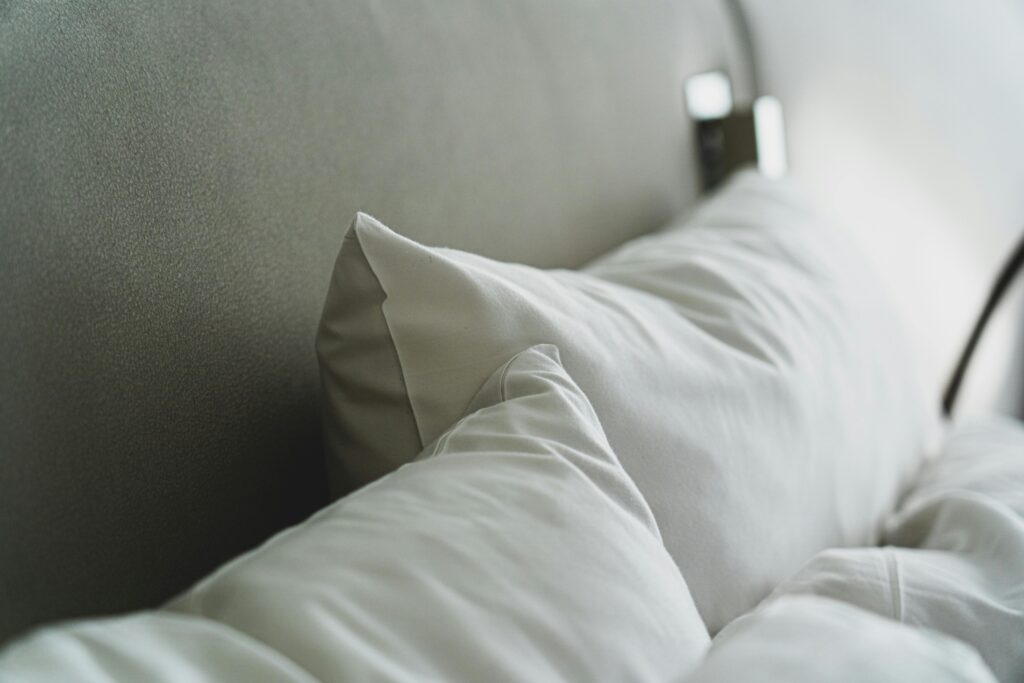
You know that feeling. It’s been a brutal day. Your boss piled on more work than humanly possible, the commute was a nightmare, and you’re pretty sure you haven’t taken a real break since breakfast. All you want is to collapse. You drag yourself through your nighttime routine—maybe you even skip it entirely because honestly, who has the energy?—and then you see it. Your bed. That soft, welcoming oasis with those cotton sheets you love so much. They feel cool and smooth against your tired skin as you slide in. You pull the covers up, sink your head into that perfectly fluffed pillow, and let out a long, deep sigh. This is it. This is safety. This is peace.
Except it’s not.
I know that sounds dramatic. I used to think the same thing. My bed was my happy place. But here’s the thing nobody tells you: that sanctuary of yours? It’s a war zone. And the enemy is so small you can’t even see it.
I learned this the hard way. For years, I battled these painful, swollen bumps on my jawline and cheeks. They weren’t your average pimples. These things were deep, angry, and they hurt. They’d sit under my skin for weeks, sometimes months, throbbing and tender. I tried every cleanser, every cream, every spot treatment the internet swore by. I spent a small fortune on dermatologist visits. And nothing worked. Or rather, things would work for a bit, and then my skin would flare up again, worse than before.
I was so frustrated. I’d stare at myself in the mirror, wondering what I was doing wrong. Was it my diet? Was it hormones? Was I just cursed?
It wasn’t until I stumbled across a random article late one night—after yet another painful cyst had appeared on my chin—that I started to connect the dots. The article was about something called “acne mechanica,” which is basically acne caused by friction, heat, and pressure on the skin. And it mentioned something that stopped me cold: pillowcases. Specifically, how bacteria builds up on them and then transfers right back onto your face while you sleep.
I looked at my pillow. It was a nice pillow. Egyptian cotton, 600 thread count. I was proud of that pillow. I washed my sheets every week, sometimes even every ten days if I was being lazy. That was normal, right? That’s what everyone does.
But then I started thinking about how my face felt in the morning. Sometimes it would feel a little greasy, especially in the summer. And my pillowcase… well, it didn’t always smell like fresh laundry by day five. It had this faint, almost musty smell. I just assumed that was normal, the smell of sleep.
Turns out, that smell was the smell of bacteria throwing a party.
Part II: The Invisible Ecosystem You Carry Everywhere
Here’s the thing about your skin that nobody really talks about. It’s not just skin. It’s an entire world. A microscopic metropolis with billions of residents going about their daily business. And like any city, it’s full of both good citizens and troublemakers.
The most famous resident of your skin city is a little bacterium called Cutibacterium acnes. I know, the name sounds scary. It literally has “acnes” right in there. But here’s the crazy part: C. acnes isn’t inherently bad. In fact, it’s one of the most common and important members of your skin’s microbiome. It lives on pretty much everyone. It hangs out in your hair follicles, munching on the oils your skin produces. For most people, it’s a harmless neighbor that causes zero problems.
I like to think of it as that quiet person who lives in your apartment building. You see them in the hallway sometimes, you nod at each other, and that’s it. No drama. No noise complaints.
But C. acnes has a dark side. It’s like a Jekyll and Hyde character. Under certain conditions, that quiet neighbor turns into a total menace. And the conditions that trigger this transformation? Well, that’s where the story gets interesting.
You see, not all C. acnes strains are created equal. Some are chill. Others are what scientists call “virulent.” They’re the ones that, when given the chance, will start causing trouble. And what gives them that chance? A perfect storm of factors: too much oil, clogged pores, and an environment where they can multiply without being kept in check.
This is where your cotton sheets enter the picture. And trust me, they’re not the innocent bystanders you think they are.
Part III: The Shedding That Never Stops
Let me paint you a picture. It’s gross, but it’s reality.
Your skin is constantly regenerating. Every day, you shed millions of tiny, microscopic flakes of dead skin. The scientific estimate is about 1.5 grams per day. That’s roughly the weight of half a teaspoon of sugar. Doesn’t sound like much, right? But think about it. That’s half a teaspoon of dead skin EVERY. SINGLE. DAY. Where do you think it all goes?
A huge chunk of it ends up in your bed.
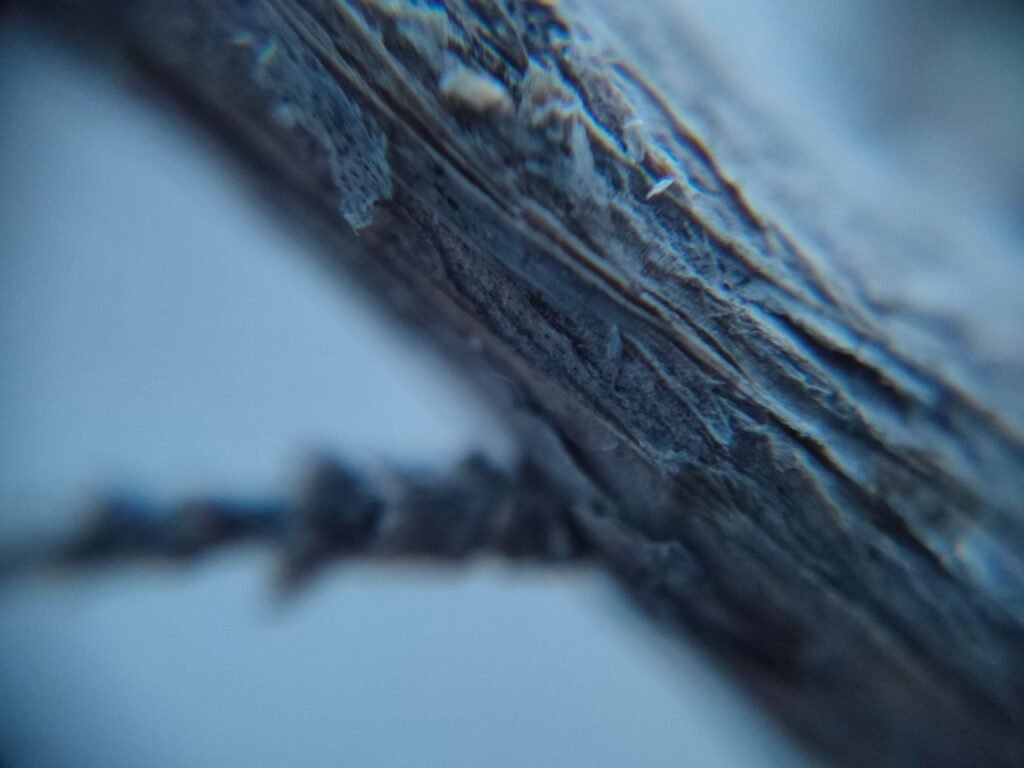
Every time you toss and turn, every time you roll over, every time you shift positions during the night, you’re rubbing dead skin cells off your body and depositing them directly into your sheets. And cotton? Oh, cotton is the perfect trap for this stuff. The fibers have this wonderful, soft, textured surface that’s basically designed to catch and hold onto particles. You might think that tight, high-thread-count weave is smooth, but on a microscopic level, it’s like a net. Those dead skin cells get caught in the fibers and they stay there.
Now, by itself, dead skin isn’t that big of a deal. We all shed. It’s natural. But dead skin cells are also food. To a bacteria like C. acnes, they’re a gourmet meal. Protein, nutrients, everything they need to grow and multiply.
And then there’s the oil.
Part IV: The Oily Buffet and The Cotton Sponge
Let’s talk about sebum. It’s the fancy scientific word for your skin’s natural oil. Your sebaceous glands produce it constantly to keep your skin lubricated and protected. It’s a good thing, normally. But when you’re sleeping, you’re sweating. Maybe not buckets, but the body naturally perspires to regulate temperature. That sweat mixes with the sebum already on your skin, and both get transferred to your sheets.
And again, cotton? It’s a sponge. A really, really good sponge. It absorbs that moisture and oil like it’s designed to do exactly that. Which, in a way, it is. Cotton’s absorbency is why it feels so comfortable and breathable. But that same property means it holds onto all that gunk. Sebum, sweat, dead skin cells—they all get absorbed right into the fabric and stay there.
Now you’ve got the perfect setup. You have a warm, dark environment (under your covers). You have a constant supply of moisture (your sweat). And you have an endless buffet (dead skin and sebum). It’s like a five-star resort for bacteria. They move in, they reproduce, they form colonies. And by the end of the week, your “clean” sheets are absolutely teeming with life.
I remember reading somewhere that after just one week of use, your pillowcase can harbor more bacteria than a toilet seat. I didn’t believe it at first. I thought it was one of those shock-value statistics. But then I did some research and realized it’s actually true. Think about that for a second. You’re pressing your face, every single night, into something that’s potentially dirtier than your toilet. And you’re doing it for seven or eight hours at a time.
Part V: The Biofilm Fortress
Here’s where it gets even more disturbing. C. acnes isn’t just sitting on your pillowcase, twiddling its microscopic thumbs. It’s actively building something. Something called a biofilm.
Think of a biofilm like a fortress. A slimy, sticky, nearly indestructible fortress. The bacteria produce this extracellular substance—a type of sugar polymer called PNAG—that acts like superglue. It glues the bacteria to the cotton fibers. It glues the bacteria to each other. It creates a protective matrix, a sort of shield that makes the bacterial colony incredibly resilient.
Why does this matter? Because biofilms are notoriously difficult to remove. They protect the bacteria from environmental stress, including the detergent and agitation of your washing machine. You can throw your sheets in the wash, and some of the surface bacteria might get removed, but the biofilm? That fortress? It can survive. It stays embedded in the cotton fibers, waiting.
And here’s the kicker: these biofilms can even protect C. acnes from common acne treatments. Think about that. You’re applying benzoyl peroxide or salicylic acid to your skin, trying to kill the bacteria, but the bacteria on your pillowcase are encased in a protective shell that makes them resistant. It’s like you’re fighting a war on one front while the enemy is launching attacks from a fortified bunker right under your nose.
Or, more accurately, right under your cheek.
I started realizing that my expensive skincare products were fighting a losing battle. I was trying to treat the acne on my face while unknowingly re-infecting myself every single night. It was like mopping up a spill while the tap was still running. No matter how much I mopped, the floor was never going to stay dry.
Part VI: The Nightly Transfer
Let’s fast forward to bedtime. You’ve done your skincare routine. You’ve washed your face, applied your serums, your moisturizers. Your skin feels clean and soft. You get into bed, lay your head on that pillow, and close your eyes.
And that’s when it happens. The transfer.
The bacteria that have been multiplying all week on your pillowcase are right there, waiting. They’ve been building their colony. They’ve been feasting on the dead skin and oil from previous nights. And now, you’re giving them fresh access. As you sleep, you shift, you move, you press your face deeper into the pillow. The friction of the fabric against your skin creates micro-tears. Tiny, invisible abrasions that you don’t feel but that make your skin more vulnerable.
And those bacteria? They slide right in.
But it’s not just the bacteria. It’s also the dead skin cells and oil from previous nights that are being pressed back into your pores. It’s like taking all the gunk you washed off your face that evening and rubbing it right back in.
Now, the conditions are prime. Your follicles are already producing sebum. Your pores are probably already a little clogged. And suddenly, you’re adding a concentrated dose of virulent C. acnes to the mix. The bacteria start multiplying aggressively. The immune system notices something is wrong. It sends out inflammatory signals. White blood cells rush to the site to fight the infection.
This is what causes the redness, the swelling, the pain. It’s your body fighting a bacterial invasion.
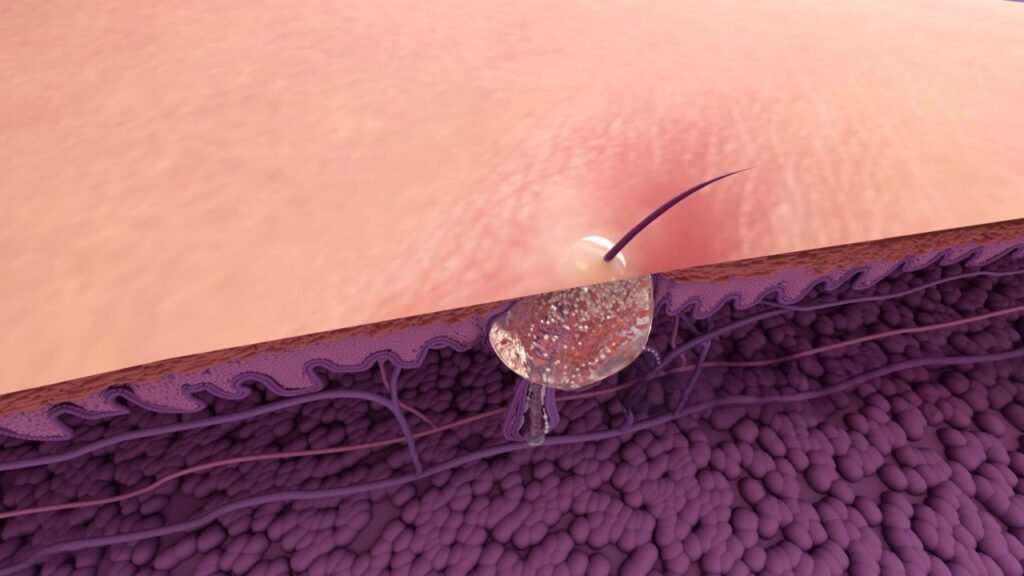
But with cystic acne, it goes deeper. The infection doesn’t just stay on the surface. The follicle wall ruptures deep in the dermis, and the infection spreads into the surrounding tissue. That’s why cystic acne feels like a hard, painful lump under your skin. It’s not just a pimple; it’s an abscess. It’s a full-blown infection raging beneath the surface.
And the scar it leaves behind? That’s the result of your body trying to heal a significant amount of tissue damage. Collagen gets deposited, sometimes too much or in the wrong pattern, and you end up with those permanent, pitted scars that are so hard to treat.
Part VII: The Realization and The First Step
I’ll never forget the morning I finally made the connection. I had woken up with a new cyst on my jawline. It was huge, painful, and I could feel it throbbing with every heartbeat. I was so frustrated I almost cried. I had been so careful with my skincare. I was using the right products. I was avoiding dairy. I was drinking water. And still, my skin was betraying me.
And then I looked at my pillowcase. It was day six of the weekly wash cycle. I picked it up and smelled it. It didn’t smell bad, exactly. But it didn’t smell clean either. It smelled like… me. Like my skin, my sweat, my oils. It was a familiar scent, but in that moment, it felt gross.
I realized that I had been making a huge mistake. I was washing my sheets once a week, which I thought was diligent. But my pillowcase, the thing that was literally touching my face for eight hours every night, was getting the same treatment as my fitted sheet, which touches my legs and back. It didn’t make sense.
The more I read, the more I understood. Dermatologists recommend washing your sheets once a week, but they specifically say that if you have acne, you should change your pillowcase every two to three days, or even every day if you can manage it. The pillowcase is the problem. It’s the primary vector for bacteria on your face. It’s the one thing that touches your face more than anything else.
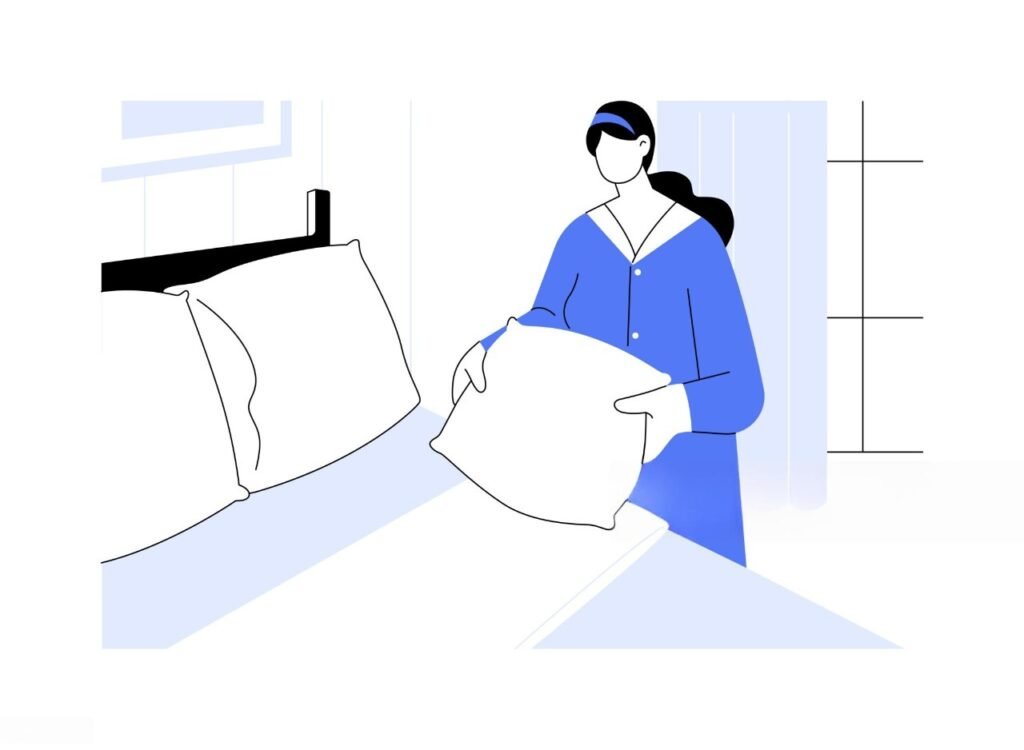
I started by buying a few extra pillowcases. They weren’t expensive. I just got a pack of cheap, plain white ones. And I started rotating them. I’d use one for two nights, then swap it out. I’d wash the used ones with my regular laundry. It was a small change. It took maybe an extra two minutes of effort per week.
And you know what? Within a few weeks, I noticed a difference. The number of new cysts I was getting decreased. The ones that did appear weren’t as painful, and they healed faster. My skin wasn’t perfect—I still had some breakouts—but the deep, painful, scarring ones? They were becoming less frequent.
Part VIII: The Washing Myth
Now, let’s talk about washing. Because I know what you’re thinking. “But I wash my sheets! I’m clean!”
First of all, good for you. Really. Washing your sheets is a good thing. But here’s the thing: your washing machine might not be doing as much as you think it is.
I mentioned biofilms earlier. Those slimy fortresses that bacteria build to protect themselves. They’re incredibly resilient. Regular laundry detergent and a normal wash cycle can remove surface-level bacteria and grime, but it can struggle to completely break down those biofilms. The bacteria can survive, embedded in the cotton fibers, waiting for you to put the “clean” sheet back on your bed.
There are a few things you can do to improve your odds. Hot water is better than cold water. It helps break down oils and kill more bacteria. But be careful, because hot water can also shrink your sheets, especially cotton ones. There’s a balance.
Using an antimicrobial laundry sanitizer can help. Look for products that specifically mention killing bacteria, not just deodorizing. And make sure you’re drying your sheets thoroughly. Bacteria love moisture. If you pull your sheets out of the dryer and they’re still slightly damp, you’re giving them a perfect environment to regrow.
But honestly, the most effective strategy is just frequency. Even if your washing machine isn’t perfect at killing 100% of bacteria, you’re still removing the vast majority of the gunk—the dead skin, the oils, the food source. By washing more frequently, you’re interrupting the bacterial life cycle. You’re not giving them enough time to build those massive colonies and those resilient biofilms.
Part IX: The Broader Picture
Now, I’m not saying that changing your pillowcase is a magic cure for cystic acne. If you have hormonal acne or a genetic predisposition, there’s no amount of laundry that’s going to completely fix it. Cystic acne is complex. It involves hormones, genetics, diet, stress, and a whole host of other factors. I’m not a dermatologist, and I’m not giving medical advice.
What I am saying is that the external environment matters. It matters a lot. If you’re constantly reintroducing bacteria and irritants to your skin, you’re making an already difficult situation worse. You’re fighting a battle on two fronts: the internal battle with your hormones and the external battle with your environment.
By washing your pillowcase more frequently, you’re removing one of those fronts. You’re giving your skin a fighting chance. You’re allowing your skincare products to work without being constantly undermined by the bacteria on your pillow.
Think of it this way: if you were trying to treat a skin infection, you wouldn’t keep rubbing the infected area with a dirty cloth. You’d use clean bandages, you’d change them regularly, you’d keep the area as clean and free from irritants as possible. Your pillowcase is basically a dirty cloth that you’re rubbing against your face all night. Treat it accordingly.
Part X: Reclaiming Your Sanctuary
I want to be really clear about something. I’m not saying you should become obsessive or paranoid about your sheets. I’m not saying you need to change your pillowcase three times a day or wash your sheets in boiling water. Life is too short for that kind of stress.
But I am saying that a small change, a tiny adjustment to your routine, can make a significant difference. It did for me.
I changed my pillowcase every two days. That was it. I didn’t change my diet. I didn’t change my skincare routine. I just made sure that the thing my face was resting on for eight hours a night was as clean as possible.
And slowly, over time, my skin got better. The deep, painful cysts became less frequent. The breakouts I did get were more superficial and healed faster. My skin wasn’t perfect, but it was better. And more importantly, I felt like I had some control. I was no longer a passive victim of my genetics or my hormones. I was actively doing something to help myself.
Your bed is supposed to be a sanctuary. It’s supposed to be a place of rest and healing. And it can be. But you have to be proactive. You have to understand that the microscopic world doesn’t stop just because you’ve closed your eyes.
The war on cystic acne is fought on many fronts. It’s fought with medication, with diet, with stress management, and yes, with clean sheets. By winning the small battle on your pillowcase, you’re giving yourself a better chance to win the larger war.
So tonight, when you get into bed, think about your pillowcase. When was the last time you changed it? Is it clean? Is it ready to be your sanctuary, or is it a breeding ground?
The choice, as always, is yours.
Capturing the Problem

Frequently Asked Questions (FAQs)
1. If I have acne, do I really need to change my pillowcase every day, or is every two or three days enough?
Look, changing your pillowcase every day is the gold standard. If you can do it, great. But I also understand that life gets busy, and doing laundry every single day isn’t realistic for most people. The most common recommendation from dermatologists is to change your pillowcase every two to three days if you’re acne-prone. That’s a manageable frequency that still significantly reduces bacterial buildup. If you’re in the middle of a bad flare-up, try daily changes for a week or two and see if it makes a difference. You might be surprised.
2. Why do I mainly get acne on my cheeks and jawline, and not on my forehead or nose?
This is the classic sign of “acne mechanica,” which is acne caused by friction and pressure. Your cheeks and jawline are the primary points of contact with your pillowcase. While you sleep, you’re constantly pressing your face into the fabric. The friction, combined with the bacteria and oils on the pillowcase, creates an inflammatory response that targets those specific areas. It’s not a coincidence that your cheeks and jawline are breaking out; it’s a direct result of how you sleep. Pay attention to your sleeping position and which side of your face is touching the pillow. That’s the side that’s going to be more prone to breakouts.
3. Can washing my sheets in hot water actually kill the bacteria and remove the biofilm?
Hot water is definitely better than cold water. It helps break down oils and kill more bacteria. But here’s the reality: biofilms are resilient. They’re designed to protect bacteria from environmental stress. The mechanical action of the washing machine—the agitation—is actually just as important as the water temperature. The physical scrubbing and rubbing help to break down and remove the biofilm. So, yes, washing in warm or hot water with a good detergent, and drying thoroughly, is the most effective way to clean your sheets. The goal isn’t just to “kill” the bacteria; it’s to physically remove them, along with their food source (dead skin and oils), from the fabric. And don’t forget to clean your washing machine itself occasionally—they can harbor bacteria too!