I used to think all mattress protectors were basically the same plastic-feeling sheet that made a crinkly noise every time I rolled over. That belief lasted exactly one summer. It was July, my apartment’s air conditioning was doing its best impression of a light breeze, and I woke up at 3 a.m. drenched in sweat, convinced something was medically wrong with me. It wasn’t a fever. It wasn’t the weather, not entirely. It was the mattress protector I’d bought two months earlier from a random online sale, the kind with a vinyl-ish backing that promised “100% waterproof protection” and delivered on that promise a little too well — it kept everything out, including any hope of air moving through my mattress.
That night sent me down a rabbit hole that lasted the better part of a year. I bought protectors, slept on them for weeks at a time, returned some, kept others, and annoyed my partner considerably by narrating my body temperature at bedtime like a weather report. What follows is everything that journey taught me, told the way I actually experienced it, not as a spec sheet.
Why Some Protectors Turn Your Bed Into a Sauna
Before I could figure out which protector to buy, I had to understand why the wrong one made me so miserable. A mattress protector sits directly between you and your mattress, which means it’s the one layer of bedding that never lets your body heat escape downward. If that layer is made of something that doesn’t breathe, your body heat has nowhere to go but back up at you, trapped between your skin and the sheet like a tiny greenhouse.
The culprit, I learned, is almost always the waterproofing method. Cheap protectors use a solid layer of vinyl, PVC, or a thick plastic laminate to block liquids. It works, but it works by sealing the fabric completely, the same way a raincoat keeps you dry by not letting anything through in either direction. Wear a raincoat to the gym and you’ll sweat just standing still. That’s essentially what a bad mattress protector does to your bed every single night, for eight hours, whether or not you’re actively spilling anything on it.
The better protectors use a different kind of barrier, usually a polyurethane membrane so thin it’s measured in microns, bonded to a soft fabric face like cotton, bamboo viscose, or Tencel. This membrane has a clever trick: it blocks liquid molecules, which are relatively large, while still letting water vapor, which is much smaller, pass through. Your skin releases moisture as vapor when you’re warm, so a breathable membrane lets that vapor escape instead of condensing into that swampy feeling. It’s the same basic idea behind breathable rain jackets that hikers wear, just adapted for a mattress instead of a mountain trail.
The Bamboo Rabbit Hole
My first serious upgrade was a bamboo-viscose mattress protector, mostly because three different sleep forums I’d been reading kept mentioning bamboo like it was some kind of miracle plant. I was skeptical, because “bamboo” gets slapped on everything from socks to cutting boards as a marketing buzzword, but I decided to actually try it rather than argue with strangers on the internet.

The difference showed up faster than I expected, within the first night, honestly. Bamboo-derived viscose has a naturally open fiber structure, which means the fabric itself has microscopic gaps that let air move through it even before you factor in the waterproof membrane underneath. It also has a slightly cooler hand-feel than cotton right out of the package, similar to how a cotton pillowcase feels cooler than a flannel one even at the same room temperature. That’s not marketing spin, it’s just physics: bamboo viscose conducts heat away from your skin a bit faster than plain cotton does, so it feels cool to the touch even when the room isn’t cold.
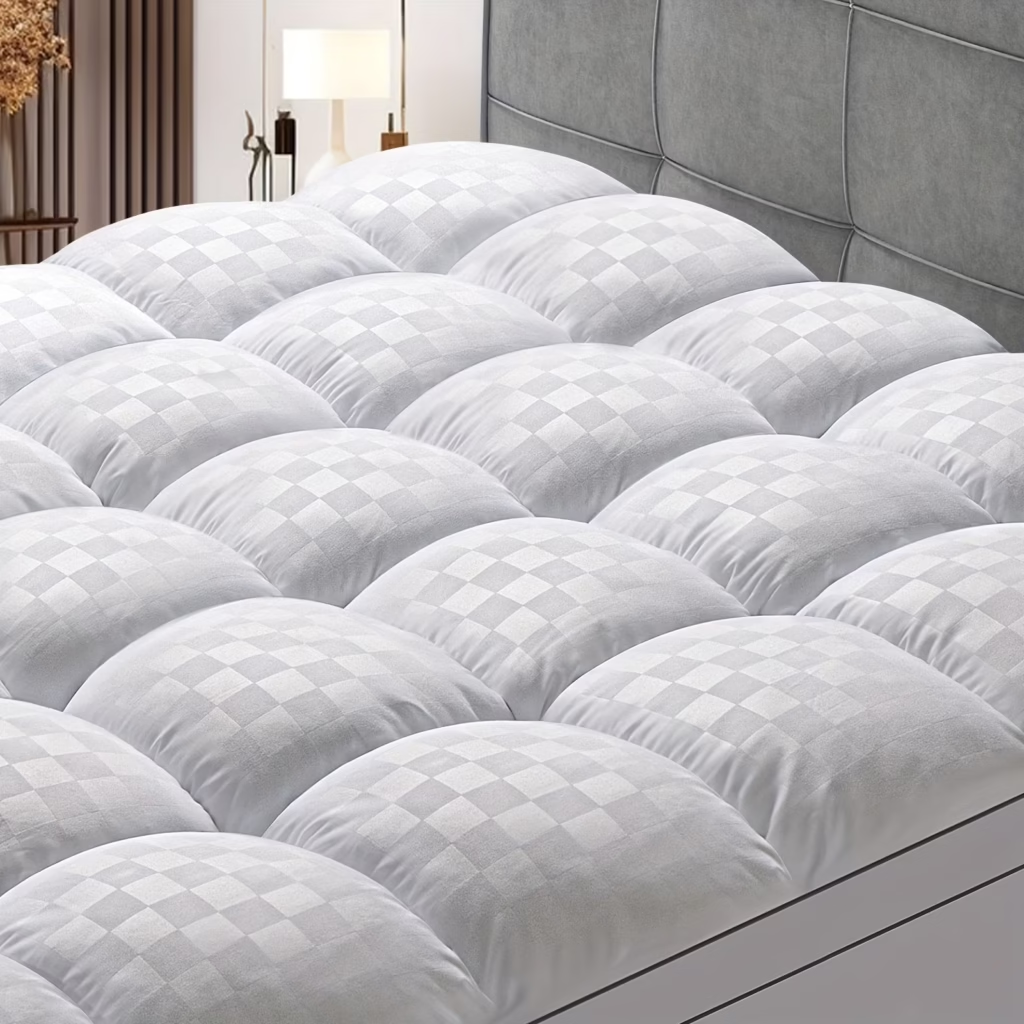
I ended up testing three different bamboo protectors that year, and one climbed to the top of my list for a specific reason that had nothing to do with the bamboo itself. It was the way the company handled the waterproof layer. Instead of one thick membrane, they used a thinner one and paired it with a quilted top layer that had actual loft to it, little pockets of air between the fabric and the membrane. That air gap turned out to matter more than I initially gave it credit for. Even a breathable membrane can feel warm if it’s pressed flat against your skin all night, but give it a little distance with a quilted layer and the warmth has somewhere to dissipate before it reaches you. That protector became the one I recommend most often to friends who message me at midnight complaining about waking up sweaty, because it strikes a balance between cooling comfort and genuine spill protection, which not every “breathable” protector manages to do at the same time.
Cotton Terry: The Old Reliable That Almost Got It Right
After the bamboo experiment, I went backward on purpose and tried a classic cotton terry protector, the kind hotels have used for decades. I wanted to know if the newfangled fabrics were actually necessary or if I’d just been chasing a trend.
Cotton terry has a lot going for it. It’s soft, it’s breathable in the way natural cotton always is, and it doesn’t have that slightly synthetic sheen some viscose blends have. For the first few weeks, I genuinely liked it. The problem showed up gradually rather than all at once. Cotton terry tends to be thicker and looped, almost like a bath towel, and while that looped texture traps air nicely when it’s dry, it also holds onto moisture longer once you’ve actually sweated into it. On humid nights, the protector didn’t feel hot exactly, but it felt damp, in a way that took longer to dry out between uses compared to the smoother bamboo and Tencel options. It’s a solid, budget-friendly choice, and if you live somewhere dry or you run cold rather than hot at night, it might suit you better than anything else on this list. But for someone specifically hunting for heat relief, it landed in the middle of the pack rather than at the top.
The Tencel Surprise
I hadn’t heard much about Tencel before a coworker mentioned her sheets were made from it and raved about how cool they slept. Tencel is a fiber made from wood pulp, similar in spirit to bamboo viscose but processed differently, in what’s called a closed-loop system that recycles almost all the solvents used to make it. I bring that up not to turn this into an environmental lecture, but because the manufacturing process actually affects the fiber’s structure in a way that matters for sleep.
Tencel fibers are smoother and more uniform than either cotton or standard viscose, which means the finished fabric has a silkier surface that doesn’t cling to skin the way some other materials do. That smoothness turned out to be the whole story. On a hot night, the last thing you want is fabric sticking to sweaty skin, because that clinginess traps a thin layer of warm, humid air right against your body. A smoother fabric lets you shift position without that clingy resistance, so heat has a constant chance to escape rather than pooling. The Tencel protector I tested became my personal favorite for the hottest stretch of summer, edging out even the bamboo option, though it came at a slightly higher price point, and I noticed it needed a gentler wash cycle to keep that silky texture from roughening up over time.
What Happened When I Tried the “Cooling Gel” Hype
Somewhere in the middle of all this testing, cooling gel-infused protectors started showing up everywhere in my ads, promising to actively pull heat away from my body rather than just letting it pass through. I bought one out of curiosity, expecting either a miracle or a scam, and landed somewhere in between.
The gel infusion, usually a layer of phase-change material or gel beads built into the fabric or a thin foam layer, does provide a genuine cooling sensation, but it’s a short-term effect rather than an all-night solution. Phase-change materials work by absorbing heat as they transition from one state to another, similar to how an ice pack feels cold until it fully melts and then just feels room temperature. For the first twenty or thirty minutes after getting into bed, that protector felt noticeably cool, almost refreshing. But once the material reached your body’s temperature, it stopped actively cooling and just behaved like a regular protector underneath, meaning the fabric and membrane quality mattered just as much as the gel gimmick on top of it. If you tend to run hot specifically at the start of the night, when you’re first drifting off, this kind of protector can genuinely help. If your problem is waking up hot at 3 a.m. like I originally did, the gel effect has usually worn off long before then, and you’re back to relying on the base fabric’s actual breathability.
The One With the Elastic Skirt Problem
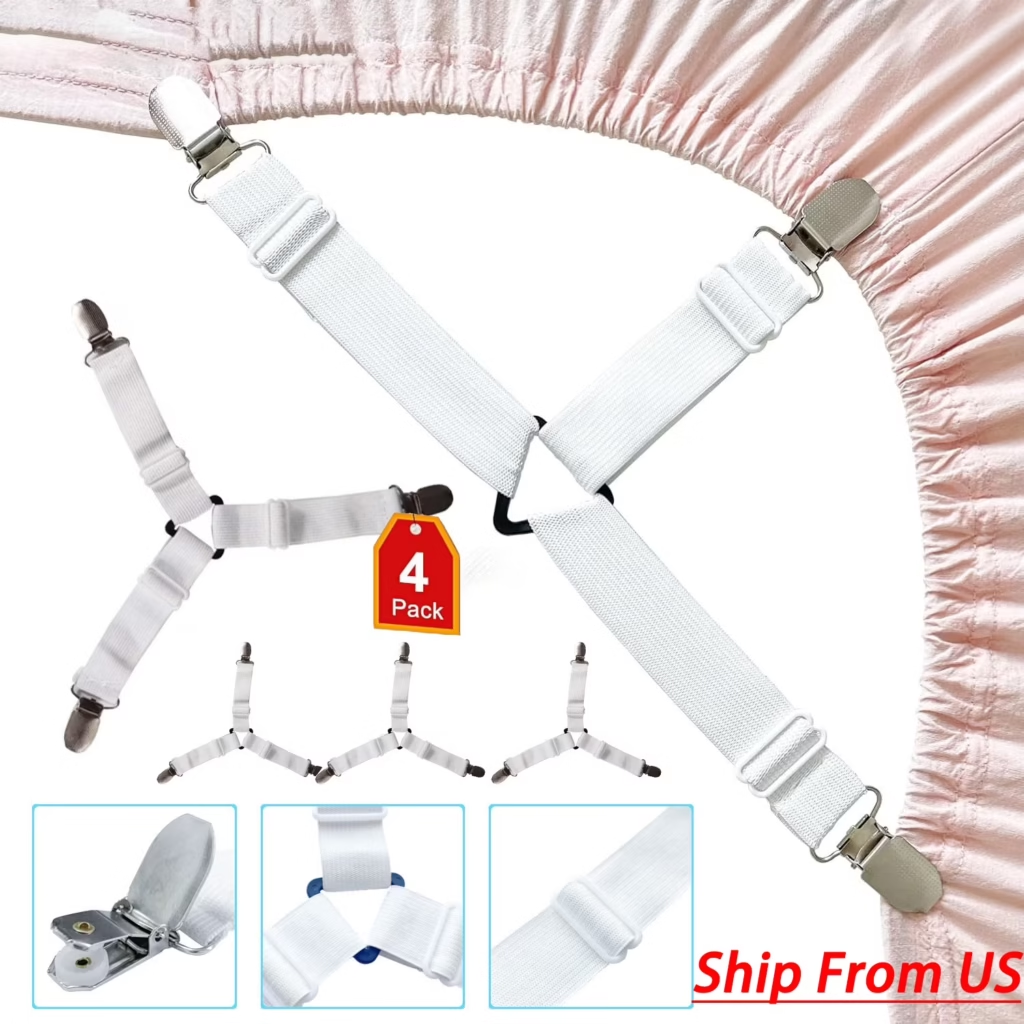
Not every lesson from this year was about fabric science. Some of it was just about fit. I bought a highly breathable, well-reviewed protector made from a cotton-Tencel blend, and it should have been perfect on paper. Instead, it became my least favorite purely because of how it was constructed around the edges.
FAQs
Do breathable mattress protectors still protect against spills and allergens?
Yes. The good ones use a thin, vapor-permeable membrane instead of solid plastic, so they block liquids and dust mites while still letting body heat and moisture pass through.
Is bamboo or Tencel better for hot sleepers?
Both sleep cooler than standard cotton or polyester. Tencel tends to feel smoother and slightly cooler to the touch, while bamboo viscose offers a similar cooling feel with a bit more plush softness.
How often should I wash a mattress protector to keep it breathable?
Every one to two weeks, using a gentle cycle without fabric softener, since softener residue can clog the pores that let moisture escape.