It started, as these things often do, with a mystery that had no obvious suspect.
Rhea had been doing everything “right.” She oiled her scalp every Sunday night, the way her mother had taught her, massaging warm coconut oil into her roots until her fingers ached. She used a sulfate-free shampoo because the salon girl had recommended it. She even started skipping a wash day here and there, convinced that “not overwashing” was the secret to healthier hair. And yet, every single morning, she woke up to the same thing: a frizzy halo around her face, flyaways that refused to be tamed, and by afternoon, hair that felt like straw at the ends but oddly greasy at the roots. It didn’t make sense. If she wasn’t washing away her natural oils, where on earth were they going?
The answer, it turned out, was staring at her from six inches away every single night. It wasn’t a shampoo. It wasn’t the weather. It wasn’t even her diet, though she’d spent weeks Googling “foods for hair growth” at 1 a.m. It was her pillowcase — soft, familiar, freshly laundered, 100% cotton, the kind you’d find in nearly every home on the planet. The very thing she rested her head on for seven or eight hours a night was pulling the moisture and oil straight out of her hair, one strand at a time, while she slept.
This is the story of how that happens, why it’s been hiding in plain sight for decades, and what it actually means for anyone who has ever woken up wondering why their hair looks worse after a full night’s rest than it did before bed.
A Fabric That Was Never Designed With Hair in Mind
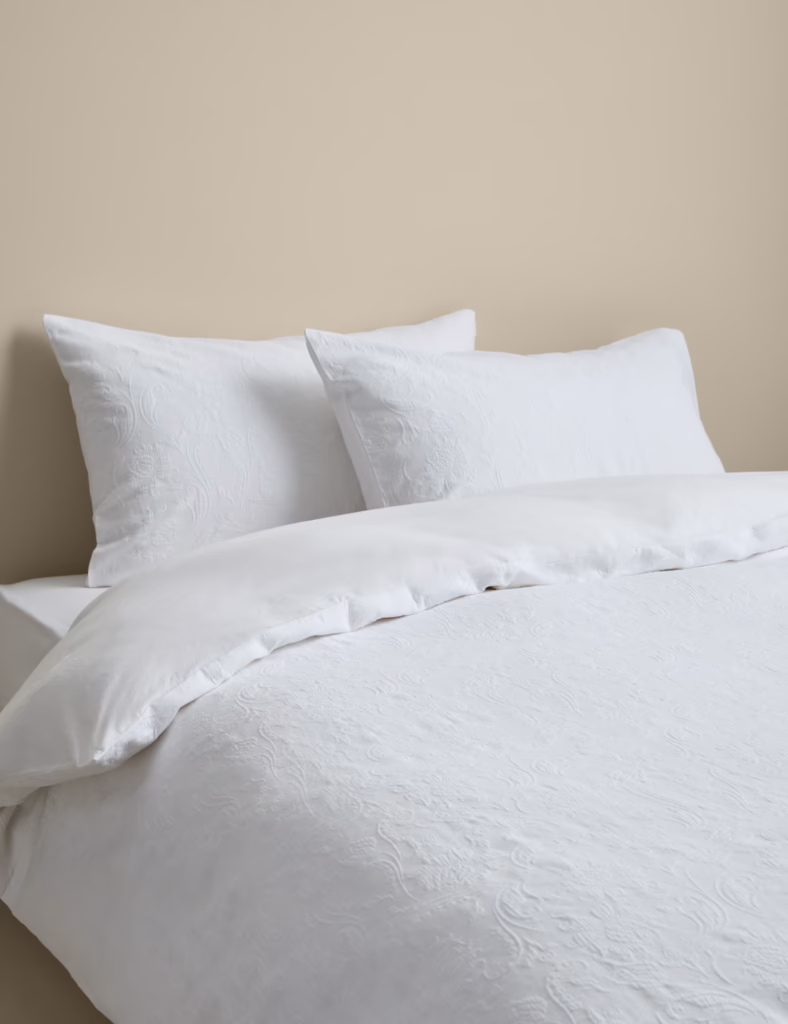
Cotton has a reputation problem, mostly because it doesn’t deserve one — at least, not entirely. It’s breathable, it’s affordable, it washes well, and it’s been the default bedding fabric for generations. Nobody sat down decades ago and thought about what a cotton pillowcase would do to hair overnight. It was made for comfort, temperature regulation, and easy care. Hair health simply wasn’t part of the equation.
But here’s the thing about cotton that most people never stop to consider: it’s a natural fiber, and natural fibers are absorbent by design. That’s actually cotton’s biggest selling point in almost every other context. It’s why cotton towels dry your body so effectively, why cotton t-shirts soak up sweat during a workout, and why cotton bedsheets feel so comfortable in humid climates. The fiber has a structure full of tiny pores and irregular surfaces that pull in moisture and hold onto it. That’s wonderful when you’re drying off after a shower. It’s a quiet disaster when it’s happening to your hair for eight hours straight, every single night, for years.
Think about what actually happens when your head touches that pillow. Your hair isn’t lying flat and undisturbed. It’s shifting, rubbing, and pressing against the fabric as you turn in your sleep — and most people move more during the night than they realize, sometimes dozens of times. Each of those movements creates friction between hair strands and the rough, porous surface of cotton fibers. And every time that friction occurs, the fabric is doing two things at once: pulling moisture out of the hair shaft through simple absorption, and roughing up the outer layer of the hair called the cuticle.
The Cuticle: Your Hair's Only Line of Defense
To understand why this matters so much, you have to understand what hair actually looks like up close, because most of us go through life without ever really thinking about it. A single strand of hair isn’t a smooth little tube. Under a microscope, it looks more like a pinecone or a stack of roof shingles, layer over layer of overlapping cells called cuticle scales. When those scales lie flat, hair looks shiny, feels smooth, and traps moisture inside the shaft where it belongs. When those scales are lifted or damaged, hair looks dull, feels rough, tangles easily, and loses moisture at a much faster rate than it should.
The natural oil your scalp produces — sebum — plays a critical role here. It’s not just there to make your roots look greasy after two days without a wash. Sebum acts as a natural conditioner, coating the hair shaft and helping to keep those cuticle scales smooth and sealed. It gives hair its natural shine and helps lock moisture inside, particularly toward the ends of longer hair where the oil has the hardest time traveling on its own.
Now picture that same hair sliding back and forth against a rough cotton surface for hours on end. Each pass lifts the cuticle scales slightly, like fingers ruffling shingles on a roof. Once those scales are lifted, moisture and oil that would otherwise stay locked inside the shaft can escape far more easily. And the cotton, sitting right there, absorbent by nature, is more than happy to soak up whatever escapes. It’s not villainous — cotton isn’t trying to do this — but the outcome is the same regardless of intention. Night after night, the pillowcase is functioning like a very slow, very patient sponge, quietly wicking away the oils your scalp worked hard to produce.
Why This Feels Confusing If You've Never Heard of It
Rhea’s confusion was completely reasonable, and it’s the same confusion that plays out in bathrooms and bedrooms all over the world. Most of us are taught to think about hair oil loss in terms of things we actively do: washing too often, using harsh shampoo, blow-drying on high heat, coloring too aggressively, brushing too roughly. All of those things absolutely matter. But almost nobody is taught to think about the eight hours of passive contact happening every night between hair and fabric, simply because it doesn’t feel like an “action.” You’re not doing anything. You’re asleep. Surely nothing damaging can happen while you’re unconscious and still?
Except something is happening, continuously, and it’s happening in a way that compounds. One night of sleeping on cotton isn’t going to ruin anyone’s hair. But hair health, much like skin health, isn’t really about single events. It’s about repeated exposure over time. A cotton pillowcase absorbing a small amount of oil and creating a small amount of friction on any one night is barely noticeable. Multiply that by 365 nights a year, for years in a row, and you start to see cumulative dryness, cumulative frizz, and cumulative breakage that seems to appear out of nowhere but was actually building slowly the entire time.
This is part of why so many people struggle to connect the dots. If the effect were immediate and dramatic, everyone would have figured out the pillowcase connection generations ago. But because it’s slow and additive, it hides behind other explanations — the weather got drier, the shampoo must be too harsh, maybe it’s just aging hair, maybe it’s genetics. Sometimes those things are true too. But the pillowcase is very often sitting there as a hidden multiplier, making every other stressor on the hair a little bit worse than it needed to be.
The Difference Between "Absorbent" and "Hair-Friendly"
Here’s something worth sitting with for a moment: the very qualities that make cotton such a beloved fabric for towels, sheets, and clothing are precisely the qualities that work against hair overnight. Absorbency and softness are wonderful traits in a bath towel. Nobody wants a towel that leaves them dripping. But hair isn’t skin, and it doesn’t need a fabric pulling moisture away from it. Hair needs the opposite: a surface that lets it glide rather than grip, one that doesn’t compete with it for moisture.
This is exactly why alternatives like silk and satin have become such a popular talking point in hair care circles over the past several years, and it isn’t just marketing fluff dreamed up by pillowcase brands looking to sell a premium product (although, to be fair, plenty of brands have leaned into the trend hard). Satin and silk fibers have a smoother, tighter weave with far less surface friction than cotton. Hair glides across them instead of catching and rubbing. And critically, these fabrics are far less absorbent, meaning they don’t pull moisture and oil out of the hair shaft the way cotton does. The hair keeps more of what the scalp naturally produces, the cuticle stays smoother for longer, and there’s simply less mechanical stress on each strand over the course of a night.
None of this means cotton is some kind of enemy that needs to be thrown out of every bedroom. Cotton has plenty of legitimate virtues — breathability being a major one, especially for people who sleep hot or live in warmer climates. But when it comes specifically to hair, especially hair that’s already dry, chemically treated, color-processed, curly, or prone to frizz, cotton’s absorbency becomes a liability rather than a benefit.
A Quick Detour Into the Chemistry of a Good Night's Sleep
It helps to understand, just briefly, what’s actually going on at a microscopic level, because it explains why this problem is so easy to miss and so slow to notice. Sebum, the oil your scalp produces, is made up mostly of fatty acids, wax esters, and triglycerides. It’s a genuinely useful substance chemically speaking — it’s water-resistant to a degree, which is part of why oily hair can feel unaffected by humidity while dry hair frizzes up the moment the weather turns. That water-resistant quality also means sebum doesn’t evaporate off the hair shaft quickly on its own. Left alone, it would simply sit there, slowly redistributing itself down the length of each strand over the course of a day or two, which is exactly why hairdressers often say a light coating of natural oil a day or two after washing is a good sign rather than a bad one.
Cotton fiber interrupts that slow, natural redistribution. Under a microscope, a cotton fiber looks almost like a twisted ribbon with a hollow center, and that hollow structure combined with countless tiny irregularities along its surface is precisely what gives cotton its legendary capacity to soak up liquid. It’s a mechanical property, not a chemical one — cotton isn’t “attracting” oil through some special chemical bond, it’s simply pulling it in through capillary action the same way a paper towel pulls up a spill. Sebum, being a semi-liquid substance sitting on the surface of a hair strand that’s now pressed against a capillary-action fabric for hours at a stretch, doesn’t stand much of a chance. A portion of it migrates from the hair into the fabric simply because that’s the direction the physics point.
This is also why washing a cotton pillowcase doesn’t “reset” the problem the way people sometimes assume it should. A freshly laundered, perfectly clean cotton pillowcase has exactly the same absorbent structure as a dirty one — it’s just as capable of pulling oil out of hair on day one as it is right before the next wash. Cleanliness affects hygiene, not the underlying fiber behavior. Even a brand-new, unused cotton pillowcase straight out of the packaging will behave the same way the very first night it’s used, because the effect isn’t about buildup or residue. It’s baked into the fiber itself.
What This Actually Looks Like Over Time
Let’s go back to Rhea for a moment, because her story is a useful lens for understanding how this plays out in real life rather than in a lab.
For the first year or two of noticing dry ends and morning frizz, she assumed it was simply “her hair type.” She has fine, slightly wavy hair — the kind that tangles if you so much as look at it wrong, according to her hairdresser. She spent money on leave-in conditioners, hair masks, overnight serums, and heat protectants. Some of these things helped, marginally, for a few hours after application. But by morning, no matter what she’d slathered on the night before, her hair looked like it had fought a losing battle against something invisible.
What she didn’t realize — what most people never realize — is that a good portion of whatever product she applied at night was also being absorbed straight into the pillowcase, right alongside her natural oils. She was essentially conditioning her pillow more effectively than she was conditioning her hair. The oils, the serums, the leave-in treatments — they were transferring from strand to fabric through the same friction and absorption process, all night long, every night.
This is a detail that rarely gets mentioned when people talk about nighttime hair routines, but it matters enormously. It’s not just that cotton takes away what your scalp naturally produces. It’s that cotton also takes away a meaningful percentage of whatever you deliberately apply to compensate. You end up in a strange, invisible loop: dry hair, apply product, product gets absorbed by pillowcase, wake up still somewhat dry, apply more product the next night, repeat. It’s not that the products don’t work. It’s that a portion of their effectiveness is quietly being diverted to a pillowcase instead of staying where it’s needed.
The Friction Factor Nobody Talks About Enough
Oil absorption gets most of the attention in this conversation, but friction deserves just as much airtime, because the two effects reinforce each other in a way that makes things worse than either one alone.
When hair strands rub repeatedly against a rougher, more textured surface like cotton, each individual strand experiences a kind of gentle sanding effect over the course of the night. This is especially pronounced for people who move a lot in their sleep, sleep on their stomach or side with their face pressed into the pillow, or have longer hair that has more surface area making contact with the fabric. The cuticle scales get lifted and roughened bit by bit. Once those scales are roughened, hair has a harder time reflecting light evenly, which is a big part of why hair that’s been sleeping on cotton for years often looks duller than hair that hasn’t, even when both are washed with the exact same products.
Roughened cuticles also catch on each other more easily, which is precisely why so many people wake up with tangled, knotted hair even if they went to sleep with it neatly braided or tied back. The knots aren’t random. They’re the physical result of thousands of tiny cuticle scales snagging against each other and against the pillowcase fibers throughout the night. And every time hair gets detangled — whether gently with a wide-tooth comb or less gently with an impatient brush during a rushed morning — a small amount of additional damage and breakage occurs. Cotton isn’t the sole cause of every knot or tangle, but it’s frequently an accomplice that makes an already tangle-prone hair type significantly worse.
Different Hair Types, Different Levels of Vulnerability
Not everyone experiences this equally, and that’s an important nuance that often gets lost when this topic comes up. Hair that’s naturally straight, thick, and untreated tends to be more resilient to a night or two on cotton simply because it has a sturdier cuticle structure and often produces enough natural oil to somewhat offset what gets absorbed. Curly and coily hair, on the other hand, tends to be significantly more vulnerable, and there’s a straightforward reason why: sebum has a much harder time traveling down the length of a curly strand compared to a straight one. The natural oil produced at the scalp has to navigate every bend and twist in a curl pattern, and it often simply doesn’t make it all the way to the ends without help. That means curly hair frequently starts out more prone to dryness at the ends, and losing even a bit more oil to a cotton pillowcase overnight can push already-dry ends into genuinely brittle, breakage-prone territory.
Chemically treated hair — color-treated, relaxed, permed, keratin-treated — faces a similar vulnerability, because these processes typically already compromise the cuticle to some degree during the treatment itself. Hair in that state has less of a protective barrier to begin with, so additional friction and oil loss from a rough fabric surface has an outsized effect compared to what it would do to virgin, untreated hair.
Even hair length plays a role that’s easy to overlook. Longer hair simply has more surface area making prolonged contact with the pillowcase throughout the night, and the ends — which are also the oldest, most fragile part of any strand, having endured the most washing, styling, and general wear over months or years — are usually the section most exposed to that fabric. This is a big part of why so many people notice damage concentrated specifically at the ends rather than evenly across the length of their hair. It’s not a coincidence. It’s simply where the most friction and the least natural oil coverage happen to intersect.
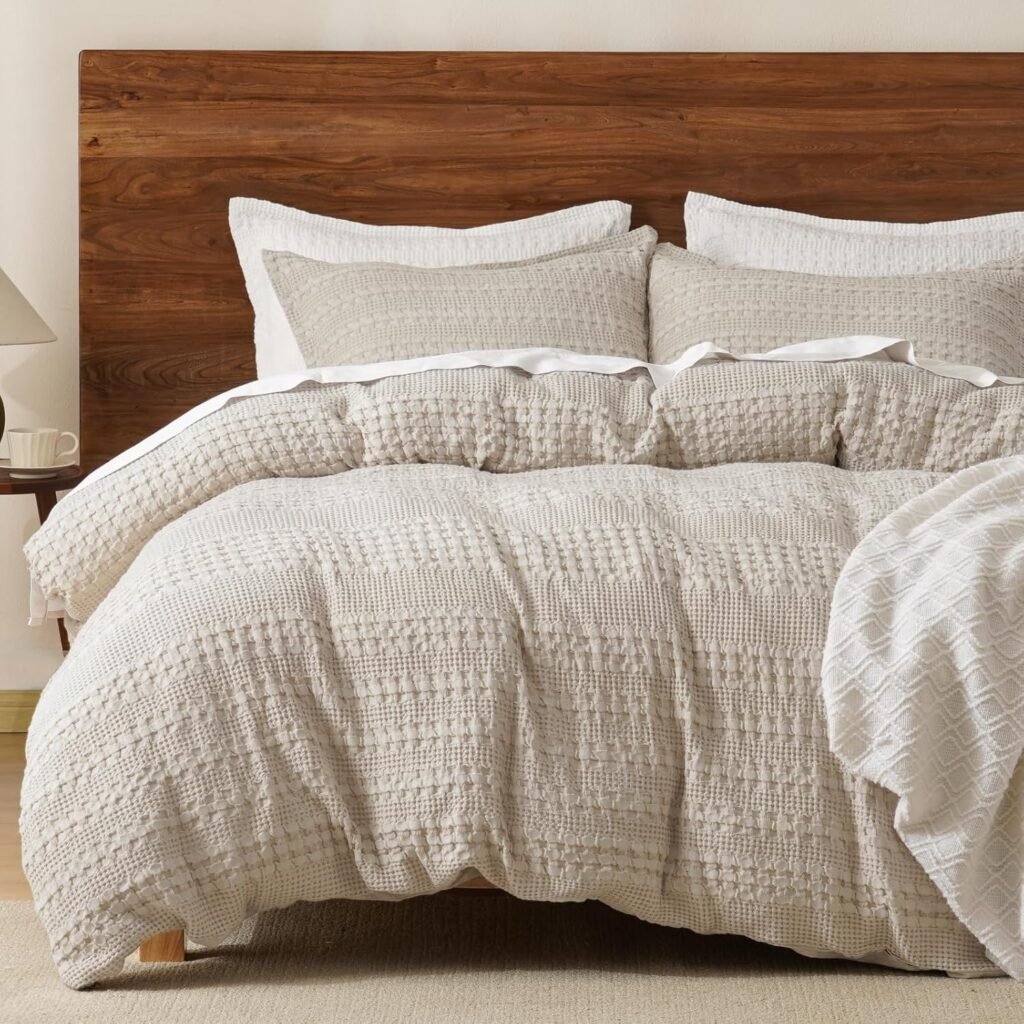
So What Actually Helps?
Understanding the mechanism is one thing, but the natural next question is what to actually do about it, and the honest answer is that there’s no single fix that works for everyone in every situation. That said, a few genuinely useful adjustments tend to make a real difference over time, without requiring anyone to overhaul their entire life or spend a fortune.
Switching to a smoother fabric for at least the pillowcase — even if the rest of the bedding stays cotton — tends to be one of the more effective changes people can make, precisely because it directly addresses both the friction and the absorbency issues at the same time. It doesn’t have to be expensive silk. Satin, which is far more budget-friendly and widely available, offers a similar smooth surface with much lower absorbency compared to cotton, even though the fiber content underneath is often polyester rather than silk.
Beyond the pillowcase itself, protective overnight hairstyles can meaningfully reduce how much hair surface actually makes contact with the fabric in the first place. A loose braid, a low bun secured without excessive tension, or a soft scrunchie-tied ponytail all reduce the amount of hair rubbing directly against the pillow throughout the night, which cuts down on both friction and the surface area available for oil absorption.
Timing matters too, more than people usually give it credit for. Applying a leave-in conditioner, a lightweight hair oil, or a hydrating serum shortly before bed gives the hair something to hold onto that isn’t purely reliant on the scalp’s natural sebum production, which means even if some of it gets absorbed by the pillowcase overnight, there’s still a reasonable amount left doing its job by morning. Just don’t expect this to fully offset the effects of a rough, absorbent cotton surface working against it all night. The product and the pillowcase aren’t really working together; they’re working in opposition, and the pillowcase usually wins a portion of that tug-of-war regardless.
Washing pillowcases more frequently than people typically think to also helps, simply because a pillowcase that’s already saturated with oil, product residue, sweat, and skin cells from previous nights isn’t a neutral surface anymore — it becomes a breeding ground for whatever’s already accumulated there, which can transfer back onto skin and hair, sometimes contributing to breakouts along the hairline and jaw as well as dullness in the hair itself.
Rhea's Ending, and What It Actually Changed
Rhea eventually made the switch, somewhat skeptically, expecting very little. She kept her regular routine exactly the same — same shampoo, same oiling schedule, same leave-in conditioner — and changed nothing except the pillowcase. Within about three weeks, she noticed her hair tangled less first thing in the morning. Within two months, the frizz around her hairline had visibly calmed down, not disappeared entirely, but noticeably reduced. Her hairdresser, who saw her every six weeks or so, commented unprompted that the ends looked less “chewed up,” which was, admittedly, an odd but accurate way to describe how damaged hair often looks under a stylist’s trained eye.
None of this was magic, and it wasn’t a total transformation. Hair care doesn’t usually work in dramatic before-and-after moments outside of shampoo commercials. It works in small, compounding shifts, the same way the damage accumulated in the first place. Cotton pillowcases didn’t ruin Rhea’s hair on their own, and switching away from cotton didn’t single-handedly fix it either. But removing one consistent, nightly source of oil loss and friction gave everything else she was already doing — the oiling, the conditioning, the careful product choices — an actual chance to work the way it was meant to, instead of being quietly undone every single night while she slept.
That, more than anything, is the real lesson buried in this whole story. Hair care isn’t only about what you put on your hair. It’s also about what your hair is resting against for a third of every single day, year after year, without you ever consciously thinking about it.
Frequently Asked Questions
1. Does this mean I need to throw away all my cotton bedding?
Not at all. The concern is specifically about direct, prolonged contact between hair and fabric, which mainly involves the pillowcase. Sheets, duvet covers, and other cotton bedding aren’t in continuous contact with hair in the same way, so there’s no need to replace an entire bedding set — just the pillowcase, if you choose to make a change.
2. How long does it take to notice a difference after switching pillowcase fabrics?
It varies from person to person depending on hair type, length, and overall hair health, but many people report noticing less morning frizz and tangling within a few weeks, with more visible improvements in shine and end condition over a couple of months of consistent use.
3. Is silk necessary, or will a cheaper satin pillowcase work just as well?
Satin offers a similarly smooth, low-friction surface at a fraction of silk’s price, and for most people focused purely on reducing friction and oil absorption, it works quite effectively. Silk has some additional benefits related to temperature regulation and skin feel, but satin is a perfectly reasonable and budget-conscious alternative for hair-specific concerns.