There is a moment that happens to almost everyone who has ever considered buying a silk pillowcase after reading about all its wonderful benefits, and that moment is opening the checkout page and seeing the price. Sixty dollars. Eighty dollars. Sometimes well over a hundred for a single pillowcase, before shipping. For a lot of people, myself included the first time I looked into it, that number quietly ends the conversation right there. It starts to feel like smooth, tangle-free hair is a luxury reserved for people with a very specific kind of disposable income, and everyone else is stuck dealing with frizz and morning knots as just another fact of life.
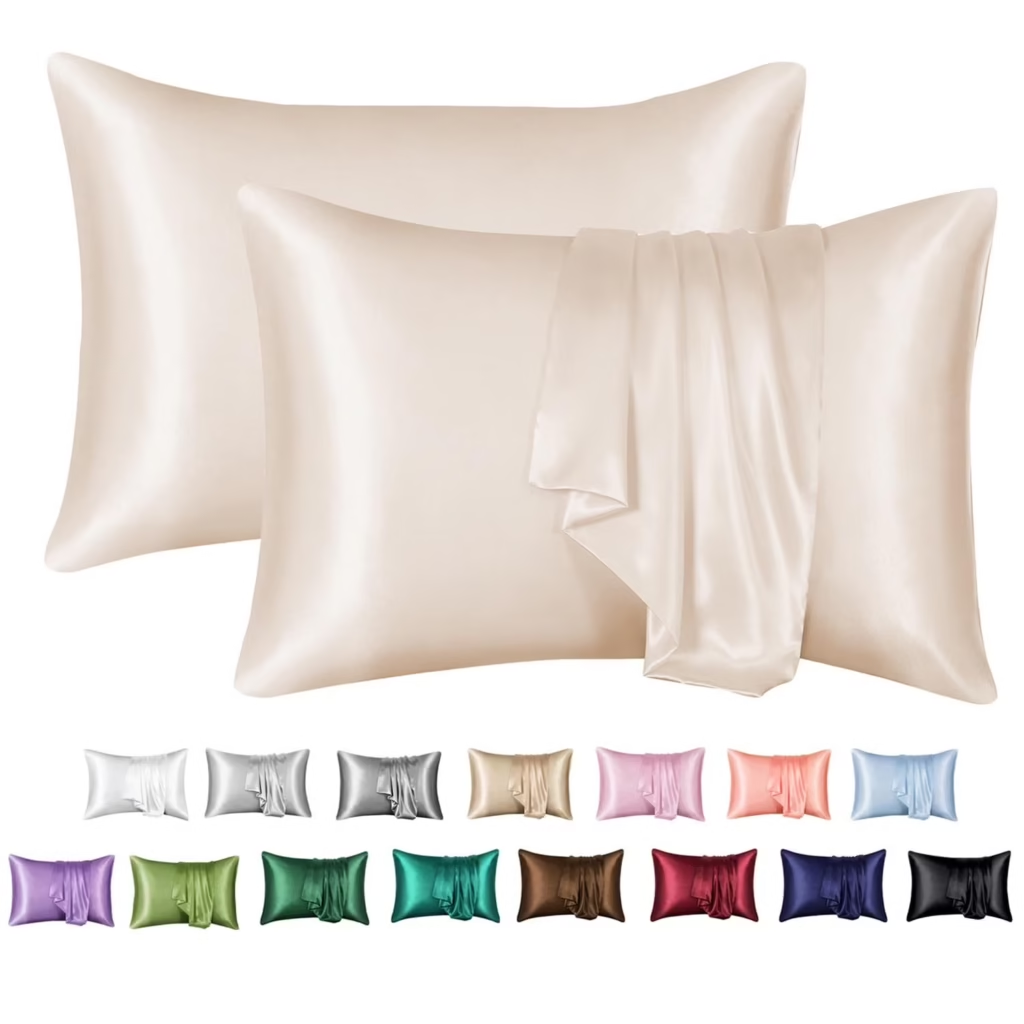
Except that isn’t actually true, and it took a conversation with a hairstylist I trust to really understand why. She put it simply: silk gets all the attention because it’s the original, the most talked-about, the one dermatologists mention in interviews. But satin, done well, delivers the vast majority of the same practical benefit for hair, at a small fraction of the price. The two fabrics are not the same thing, and it would be dishonest to pretend they are identical, but for anyone whose actual goal is simply to stop waking up with a frizzy, tangled mess every morning, a well-made satin pillowcase set is often the smarter, more realistic starting point, and sometimes it’s genuinely all a person needs.
That conversation is really the reason this whole article exists, and I want to walk through it properly, the way she walked me through it, rather than just handing over a list of products and calling it a day.
Satin Versus Silk: What's Actually Different
The confusion between satin and silk trips up almost everyone shopping in this category for the first time, and it’s worth clearing up before anything else, because it changes what you should actually expect from a budget purchase.
Silk is a natural fiber, produced by silkworms, most commonly the mulberry silkworm, and it has a protein structure that gives it its characteristic smoothness, breathability, and moisture-retaining properties. Satin, on the other hand, is not a fiber at all. It’s a weave, a specific way of interlacing threads that creates a glossy, smooth surface on one side of the fabric and a duller, slightly rougher surface on the other. Satin can technically be woven from silk fibers, but the overwhelming majority of satin pillowcases sold at accessible prices are woven from polyester, sometimes with a small percentage of other synthetic fibers blended in.
This distinction matters practically because it explains both the price gap and the performance gap between the two materials. Polyester satin can be manufactured at industrial scale for a fraction of the cost of raising silkworms and processing raw silk threads, which is exactly why a satin pillowcase set can retail for the price of a nice dinner out, while a comparable silk one costs closer to a full week’s grocery budget. It also explains why satin, while smooth, doesn’t quite match silk’s natural moisture-retention properties or its breathability, since polyester is inherently less absorbent and less breathable than a natural protein fiber.
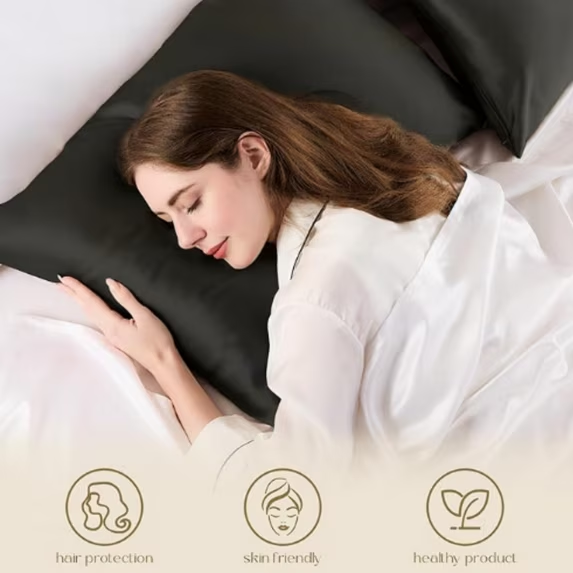
None of that makes satin a bad choice. It makes it a different choice, with a different set of tradeoffs, and for a huge number of people those tradeoffs land squarely in “worth it” territory, especially when the alternative is doing nothing at all and continuing to sleep on rough cotton.
Why the Surface Still Matters, Even With a Cheaper Fabric
The core reason any of this works, whether we’re talking about a two-hundred-dollar silk pillowcase or a fifteen-dollar satin one, comes down to the same basic physical principle: friction. Hair frizzes and tangles primarily because the outer cuticle layer of each strand gets roughed up by repeated rubbing against a coarse surface over the course of a night’s sleep. Cotton, which is what the overwhelming majority of standard pillowcases are made from, has a comparatively textured, absorbent weave. Every time your head shifts position during the night, and research on sleep movement suggests this happens dozens of times without you ever waking up to notice, that cotton surface drags against your hair, lifting the cuticle scales and creating the rough, tangled texture people associate with a bad hair morning.
A satin weave, even in polyester, is dramatically smoother than a cotton weave at the surface level. Hair glides across it rather than catching against it, which means less friction, less cuticle disruption, and noticeably less tangling by morning. It also absorbs less moisture than cotton does, so while it won’t retain and redistribute moisture back into hair the way natural silk does, it also won’t pull nearly as much moisture and natural oil out of your hair and skin overnight compared to cotton, which is a real and meaningful improvement on its own.
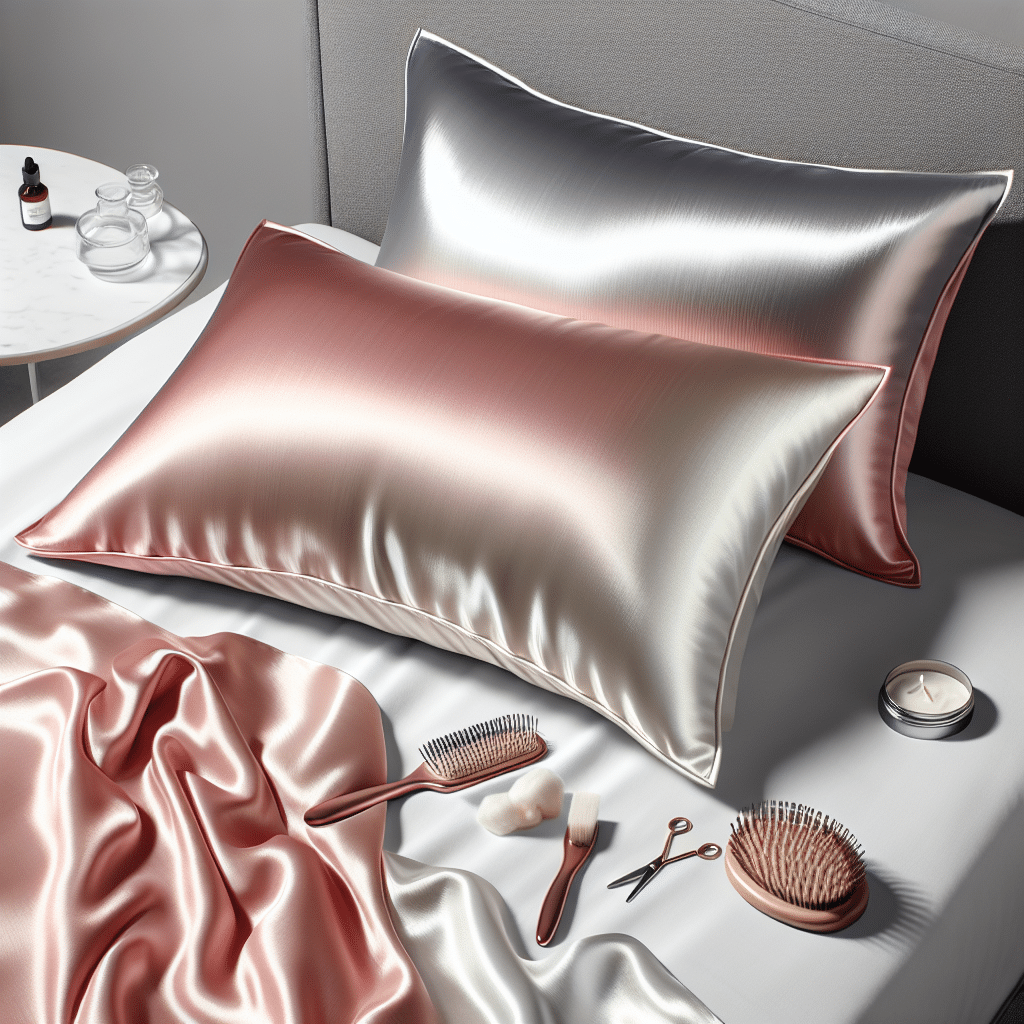
So the honest, unglamorous truth is this: the biggest jump in hair protection doesn’t happen when you upgrade from a good satin pillowcase to an expensive silk one. It happens the moment you switch away from cotton at all, to literally any smoother, less absorbent fabric. That first switch is where almost all of the visible, felt difference lives, and it’s exactly why a budget-friendly satin set is such a genuinely smart place for most people to start, rather than a compromise they should feel disappointed about.
What Actually Separates a Good Cheap Satin Pillowcase From a Bad One
Here’s where things get a little more complicated than “just buy the cheapest one,” because not all budget satin pillowcases are created equal, and there is a meaningful quality range even within a fairly tight price bracket. A stylist friend who has tried more of these than most people would ever bother to walked me through what she actually checks before recommending one to a client on a budget.
The first thing she looks at is the weave density, sometimes listed as GSM, which stands for grams per square meter, essentially a measure of how tightly woven and substantial the fabric is. A very cheap, thin satin pillowcase, often the kind bundled for a few dollars with an entire bedding set as an afterthought, tends to feel slippery in a slightly unpleasant, plasticky way, and it usually thins out and starts pilling after just a handful of washes. A properly made budget satin pillowcase, even at a low price point, should feel substantial in the hand, closer to a soft fabric than a thin, slick sheet of material, and should hold up to at least a few months of regular washing without visible wear.
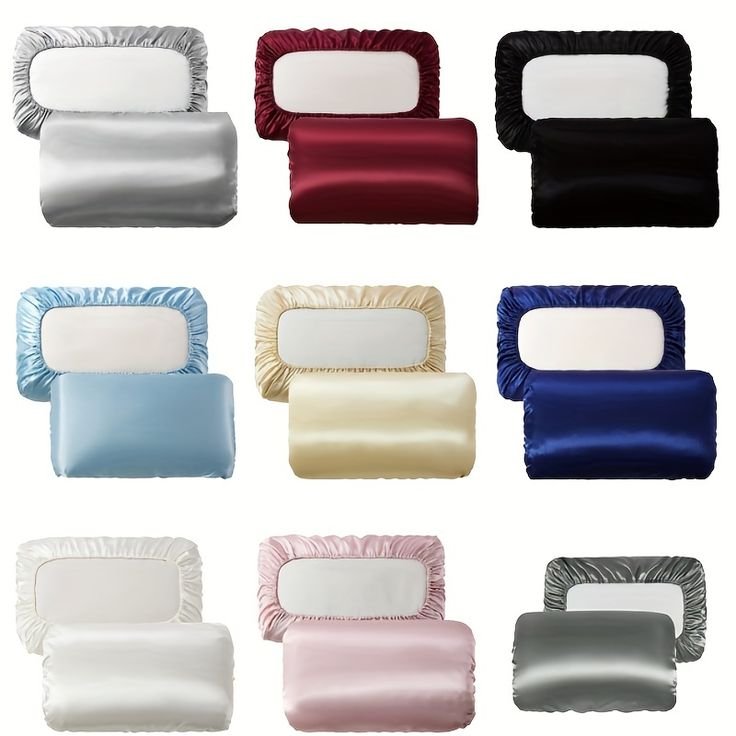
The second thing worth checking is the closure style, the same detail that matters for silk pillowcases and matters just as much here. A pillowcase with an envelope closure, where the fabric folds over and tucks the pillow inside securely, tends to stay in place through a full night of movement far better than one with just an open end or a flimsy zipper that catches and snags with repeated use. Since a huge part of the benefit comes from the hair actually staying in consistent contact with the smooth side of the fabric all night, a closure that lets the case slip or bunch up partially undoes the whole purpose of buying it in the first place.
The third consideration, and one that’s easy to overlook while comparing prices, is which side of the fabric actually faces up when the pillowcase is on the pillow. Satin has a distinctly glossier, smoother face and a duller, slightly rougher reverse side, and a well-constructed pillowcase is sewn so the smooth side reliably faces outward no matter which way the case gets flipped during laundering or use. Cheaper, poorly constructed cases sometimes have inconsistent stitching that can leave the rougher side exposed depending on how it happens to be positioned, which quietly defeats the entire point.
Working Through the Actual Options at Different Price Points
With all of that context in place, it’s worth walking through what actually tends to show up as genuinely solid choices once you start comparing budget satin pillowcase sets side by side, rather than just picking whatever appears first in a search result.
At the very accessible end of the spectrum, brands like Bedsure have built a reputation specifically around offering satin bedding that punches noticeably above its price point. Their pillowcase sets typically come in pairs, which matters more than it might initially seem, since having two on hand means one can be in the wash while the other stays in use, keeping a consistent routine going without ever having to sleep on a rough backup pillowcase in the meantime. The weave on Bedsure’s satin cases tends to feel more substantial than the price suggests, and the envelope closure style keeps the fabric properly in place overnight, which, as covered earlier, genuinely affects how well the whole thing performs in practice rather than just on paper.
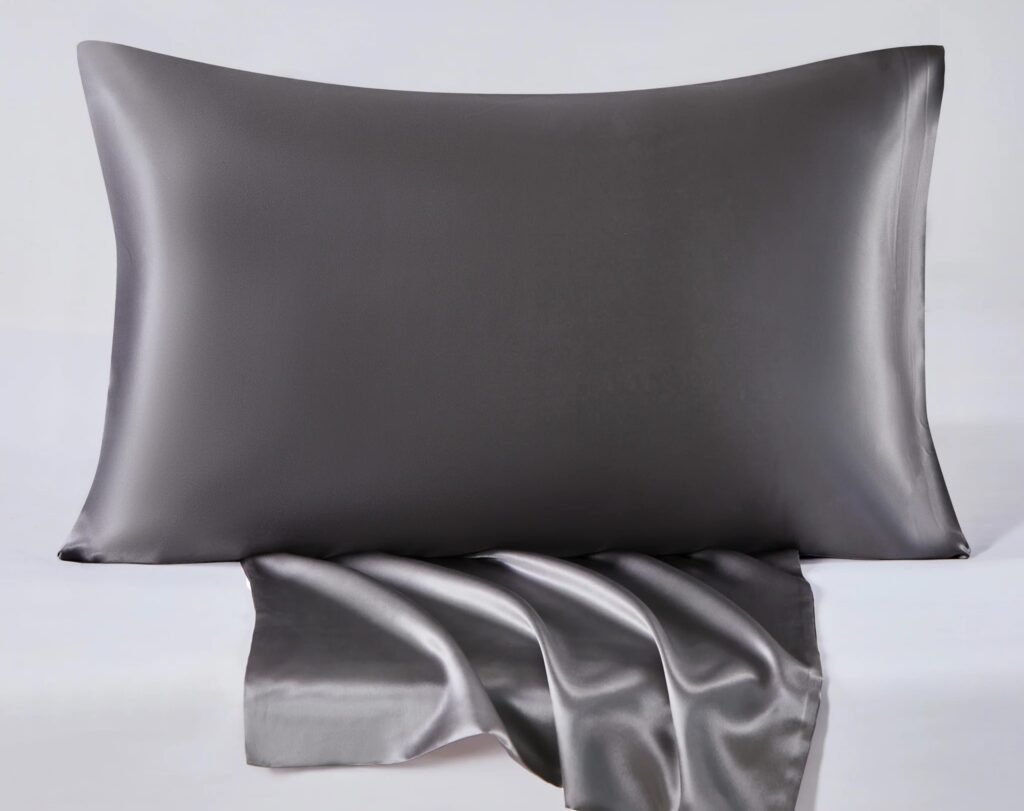
MR&HM is another name that comes up constantly in this exact conversation, largely because the brand offers an unusually wide range of colors and sizes at a genuinely low price, without the fabric feeling as thin or slippery-in-a-bad-way as some of the lowest-tier competitors. For anyone shopping with a specific bedroom color scheme in mind, and wanting the pillowcase to actually coordinate with existing sheets rather than standing out as an obviously separate purchase, this tends to be one of the more satisfying options, since the color range genuinely extends well beyond the standard black, white, and blush pink that dominates most budget bedding categories.
Auchen sits in a similar bracket and tends to show up favorably in comparisons specifically for people who run warm at night, since their satin weave has a slightly more breathable feel compared to some of the thicker, heavier options in the same price range. For anyone who has previously avoided satin or silk products out of concern that they might feel hot or clammy overnight, this particular option tends to address that specific worry more directly than most.
Moving very slightly up in price while still staying well within budget territory, Bare Home offers satin pillowcase sets that lean into a more traditional bedding-brand feel, with tighter quality control and a slightly more premium weave, while still costing meaningfully less than any genuine silk product. This tends to be a good middle option for anyone who wants something that feels a little more like an intentional bedding purchase rather than an impulse buy, without actually crossing over into silk pricing territory.
A Story Worth Sharing About Managing Expectations
I want to include a specific story here, because it captures something important about this whole topic that a simple product list can’t really convey on its own. A cousin of mine, who has thick, curly, color-treated hair, had heard endlessly from friends about how life-changing silk pillowcases supposedly were, but simply couldn’t justify the price given everything else going on in her budget at the time. She almost gave up on the idea entirely, assuming that anything cheaper wouldn’t actually do anything meaningful.
She eventually picked up a two-pack of satin pillowcases during a routine online shopping trip, more out of curiosity than real expectation, spending less than the cost of a single takeout meal. Within about a week and a half, she mentioned, almost as an afterthought during a phone call, that her morning detangling routine had gotten noticeably shorter, and that her curls seemed to be holding their shape better than she remembered from before. She hadn’t changed her shampoo, her conditioner, or anything else about her routine. The only variable that had shifted was the fabric under her head every night.
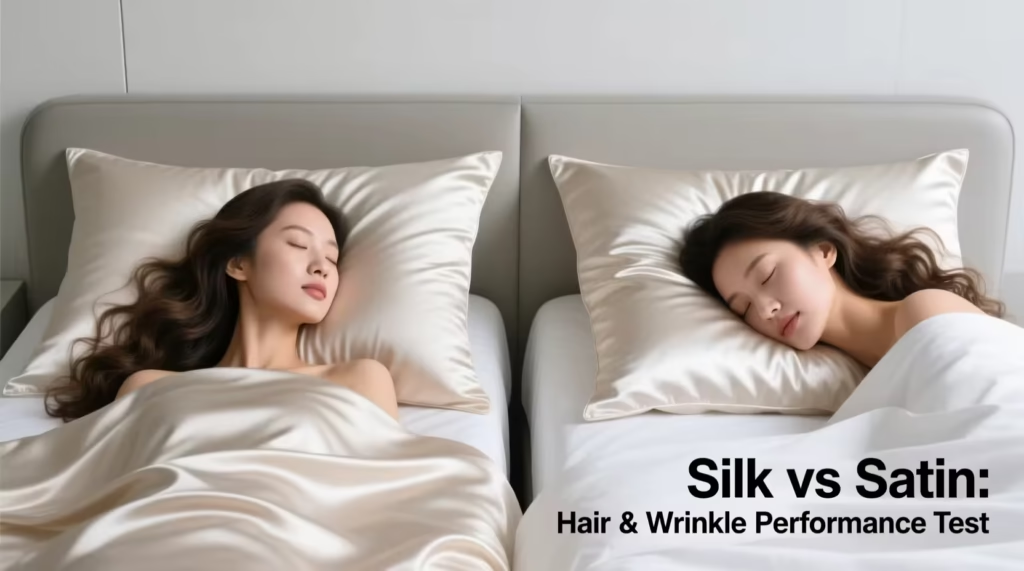
Her experience wasn’t identical to what someone switching to a premium silk pillowcase might describe, and it would be misleading to claim otherwise. But it was a real, tangible improvement, achieved at a price point that fit comfortably into an already-stretched budget, and for her that made it an unambiguous win rather than a compromise she had to talk herself into.
How to Actually Care for a Budget Satin Pillowcase So It Lasts
Because satin pillowcases in this price range are made primarily from polyester rather than natural silk fibers, the care instructions differ in some meaningful ways, and getting this part right genuinely extends how long a budget purchase stays looking and performing well.
Unlike silk, which requires cool water and extremely gentle handling to avoid breaking down its protein structure, polyester satin is considerably more forgiving and can generally handle a normal machine wash cycle without much fuss. That said, washing in cool or warm water rather than hot still helps preserve the glossy finish longer, since high heat can cause the synthetic fibers to lose some of their smoothness and shine over repeated washes. A mild detergent, without heavy fabric softener, also helps, since some fabric softeners can leave a slight residue on synthetic satin that dulls its natural sheen over time.
Drying is where a little extra care goes a long way. While polyester satin can technically survive a machine dryer far better than silk ever could, using a low heat setting rather than high heat helps prevent the fabric from developing a slightly rougher texture over time, since excessive heat exposure gradually degrades the smoothness that makes satin useful for hair protection in the first place. Air drying remains the gentlest option when time allows, though it’s genuinely less critical here than it is for silk.
Having at least two pillowcases in rotation, which most budget sets already provide by default since they’re commonly sold in pairs, makes an enormous practical difference, since it means there’s always a clean one available without having to fall back on a rough cotton pillowcase on laundry day, which would undo several days of consistent benefit in a single night.
Setting Realistic Expectations Without Undermining the Value
It would be a disservice to wrap up this conversation without being fully honest about the limits of what a budget satin pillowcase can and can’t do, because overselling it would just set people up for disappointment, and that’s not the goal here.
A polyester satin pillowcase will not retain and release moisture back into hair overnight the way genuine mulberry silk does, since polyester simply isn’t as breathable or naturally moisture-regulating as a protein-based natural fiber. For someone with extremely dry, brittle, or severely damaged hair, particularly hair that has been through heavy chemical processing, a genuine silk pillowcase may eventually prove worth the additional investment, once budget allows, as the added moisture retention becomes more meaningfully impactful at that level of hair fragility.
A budget satin pillowcase also generally won’t last quite as many years of daily use as a well-made, properly cared-for silk one, since the natural durability of high-quality silk fiber, when maintained correctly, tends to outlast synthetic satin over the very long term, even though satin holds up perfectly well for the kind of realistic, multi-year use most people actually get out of their bedding before wanting to refresh their bedroom decor anyway.
But for the specific, common, everyday problem that sends most people searching for a solution in the first place, namely waking up with frizzy, tangled, rough-feeling hair after a night on standard cotton, a well-made, properly constructed satin pillowcase addresses that problem directly and noticeably, at a price that removes cost as a barrier for almost anyone willing to spend what they’d otherwise spend on a single coffee shop order each week for a month.
Who a Budget Satin Pillowcase Makes the Most Sense For
Not every situation calls for the same recommendation, and it’s worth being specific about who tends to benefit most from starting with satin rather than immediately saving up for silk, because the honest answer depends a fair bit on individual circumstances.
Anyone shopping for a household with multiple people, rather than just one person’s pillow, tends to find satin the far more practical choice simply on cost grounds alone. Outfitting an entire family’s worth of pillows in genuine silk quickly becomes an expense most households can’t reasonably justify, whereas a full set of satin pillowcases across several bedrooms remains entirely affordable, meaning everyone in the house gets the benefit rather than just one person.
Students, people between jobs, or anyone managing a genuinely tight monthly budget also tend to be well served by satin as a starting point, not as a permanent compromise necessarily, but as a way to get the majority of the benefit immediately rather than waiting months to save toward a silk purchase. There’s a real cost to waiting too, since every month spent sleeping on rough cotton while saving for something better is a month of avoidable frizz and tangling that a fifteen or twenty dollar purchase could have addressed in the meantime.
People who are still figuring out whether they even like sleeping on a smoother, glossier fabric at all also benefit from starting with satin, since it removes the risk of spending significantly more money on silk only to discover a personal preference for a more matte, cottonlike feel against the skin, or discomfort with the way satin can feel slightly cooler and slicker to the touch initially before someone adjusts to it. Testing that preference out at a lower price point before committing to a bigger purchase is simply a more sensible way to shop.
On the other end, people managing specific hair conditions that are particularly sensitive to moisture loss, such as very tightly coiled natural hair textures that are already prone to dryness, or hair that has undergone extensive chemical relaxing or coloring treatments, may eventually find that the added moisture retention of genuine silk makes a meaningfully bigger difference for their specific situation than it would for someone with straighter, less porous, unprocessed hair. Even in these cases though, starting with a good satin option while working toward a silk purchase is a perfectly reasonable way to bridge the gap rather than doing nothing at all in the interim.
A Few Small Habits That Make Any Pillowcase Work Better
Regardless of whether the fabric under your head tonight is satin, silk, or something else entirely, a few small habits amplify the benefit considerably, and they cost nothing beyond a little bit of routine.
Going to bed with hair either fully dry or loosely braided rather than completely loose and slightly damp makes a noticeable difference on top of whatever the pillowcase itself contributes, since damp hair is more fragile and prone to friction damage regardless of what surface it rests against. A simple, loose braid or a soft twist, secured with a fabric-covered elastic rather than a plain rubber band that can snag and pull, keeps hair contained and further reduces the amount of movement and friction it experiences overnight, working alongside the smoother fabric rather than replacing the need for it.
Washing the pillowcase itself regularly matters just as much as the fabric choice, something that gets mentioned constantly in hair care circles but still catches people off guard. Even the smoothest, best-constructed satin pillowcase accumulates the same oil, product residue, and skin cells that any pillowcase does over the course of several nights of use, and sleeping on a satin pillowcase that hasn’t been washed in two or three weeks largely cancels out the benefit that made it worth buying in the first place. A rotation of two pillowcases, washing one every few days while the other stays in use, keeps this from ever becoming an issue.
It’s also worth pointing out that pairing a satin pillowcase with a matching satin bonnet or scarf, for anyone who prefers to keep hair fully wrapped overnight rather than loose against the pillow at all, tends to compound the benefit even further, since it addresses both the friction against the pillow and any friction against a headboard, arm, or shoulder during restless sleep. This combination shows up often in recommendations from stylists who work specifically with curly, coily, or chemically treated hair textures, where every small reduction in overnight friction adds up more visibly than it might for someone with straighter, less porous hair.
Bringing It All Together
Coming back to where this conversation started, with that intimidating checkout page showing a price that quietly talked a lot of people out of ever trying a smoother pillowcase at all, the real takeaway is that the expensive silk option was never actually the only door into better hair mornings. A thoughtfully chosen, well-constructed satin pillowcase set opens that same door, just built a little differently, at a price that doesn’t require months of saving or a special occasion to justify.
For my cousin, and for a lot of people navigating tight budgets while still wanting to take reasonably good care of their hair, that distinction between “the only real option” and “a genuinely effective, accessible option” made all the difference in actually trying something instead of continuing to put it off indefinitely. The pillow itself doesn’t know or care how much its cover cost. It just needs to be smooth enough to let hair glide instead of catch, night after night, and a good satin pillowcase, chosen carefully rather than grabbed at random from the cheapest listing available, does exactly that.
Frequently Asked Questions
Is satin as good as silk for preventing hair frizz?
Not quite identical, but close for most everyday purposes. Satin significantly reduces the friction that causes frizz and tangling, just without silk’s extra natural moisture-retention benefit, which matters most for very dry or heavily damaged hair.
How long does a budget satin pillowcase typically last?
With gentle washing in cool or warm water and low-heat drying, a well-made polyester satin pillowcase can reasonably last one to two years of regular use before the smoothness noticeably fades.
Can a cheap satin pillowcase feel hot or uncomfortable to sleep on?
Some thinner, lower-quality options can feel slightly warmer than cotton, but well-made satin from reputable budget brands is generally breathable enough for comfortable year-round use, especially lighter-weight weaves designed with this in mind.