A few winters ago, a friend of mine sat across from me at a coffee shop, running her fingers through hair that looked like it had survived a small storm overnight, and asked the question I now hear more often than almost anything else: why does my hair look fine when I go to bed and completely different by morning, even when I haven’t touched it? She wasn’t imagining things, and she wasn’t doing anything unusual before bed. She was simply sleeping on the wrong surface, and had been for years without ever questioning it. That conversation is really where this whole topic begins, because most people never think to blame their pillow for frizzy, tangled, or flat hair. They blame the shampoo, the weather, the styling products, sometimes even their own hair type, when the actual culprit has been sitting under their head every single night the whole time.
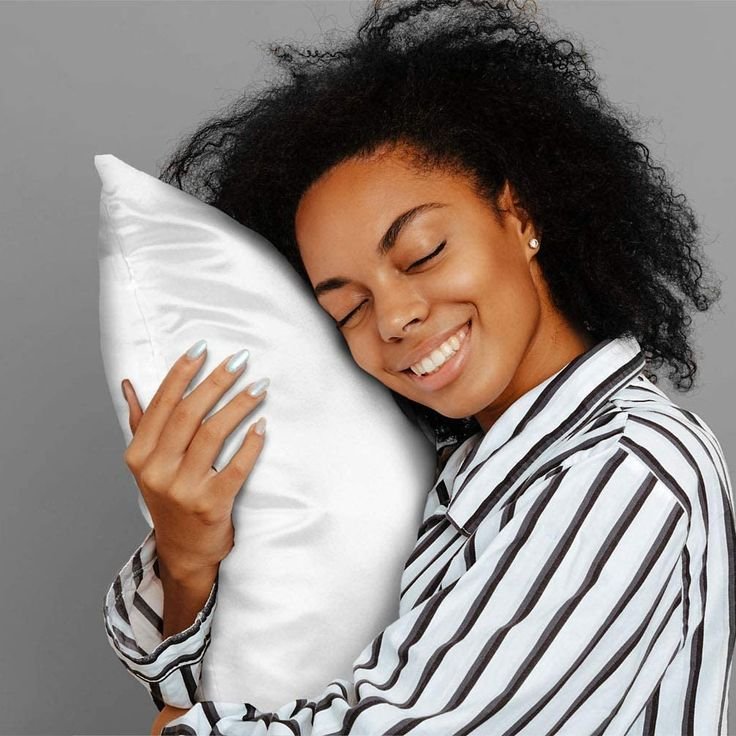
This is where the idea of a 22-momme mulberry silk pillowcase enters the picture, and it is worth explaining properly, because the phrase gets thrown around a lot in beauty articles without anyone actually breaking down what it means or why that specific number matters so much.
What Momme Actually Means, and Why 22 Keeps Coming Up
Momme is a unit of measurement that originated in Japan, and it describes the weight and density of silk fabric, specifically how much 100 yards of silk weighs when the fabric is a certain standard width. The higher the momme count, the denser, heavier, and generally more durable the silk. It sounds like a small technical detail, but it actually determines almost everything about how a pillowcase performs, how long it lasts, and whether it delivers the frizz-reducing benefits people buy it for in the first place.
Silk pillowcases on the market usually range anywhere from about 12 momme, which is thin and somewhat flimsy, up to 30 momme or higher, which is thick, plush, and often quite expensive. Somewhere in the middle of that range sits 22 momme, and this particular number has become something of a sweet spot that stylists, dermatologists, and long-time silk pillowcase users keep coming back to, for reasons that make a lot of sense once you understand what is happening at the fabric level.
Anything below about 19 momme tends to feel thin against the skin, almost like a slightly upgraded polyester, and it wears out fast. The threads are looser, the fabric is less dense, and after a handful of washes it can start to look worn, develop small snags, or lose the smoothness that made it appealing in the first place. On the other end, silk above 25 or 30 momme is undeniably luxurious, but it comes with a much heavier price tag, and beyond a certain point, the added weight and thickness do not actually improve hair or skin benefits any further. Twenty-two momme lands right in the zone where the silk is dense enough to feel substantial and durable, smooth enough to genuinely reduce friction on hair, and still reasonably priced compared to the higher-end options.
Why Mulberry Silk Specifically, and Not Just "Silk"
There is another detail that gets glossed over constantly in product descriptions, and it deserves its own moment of attention: not all silk comes from the same source, and the type matters just as much as the momme count.
Mulberry silk comes from silkworms that are fed an exclusive diet of mulberry leaves in a fully controlled environment, which produces a fiber that is remarkably uniform, smooth, and strong compared to silk harvested from wild silkworms that eat a varied, uncontrolled diet. Wild silk, sometimes labeled tussar or eri silk, tends to have a rougher texture, a more inconsistent thread thickness, and a duller sheen, because the worms producing it are not raised under the same controlled conditions. For a pillowcase whose entire purpose is to reduce friction against hair and skin, that consistency in fiber quality is not a small detail, it is really the whole point.
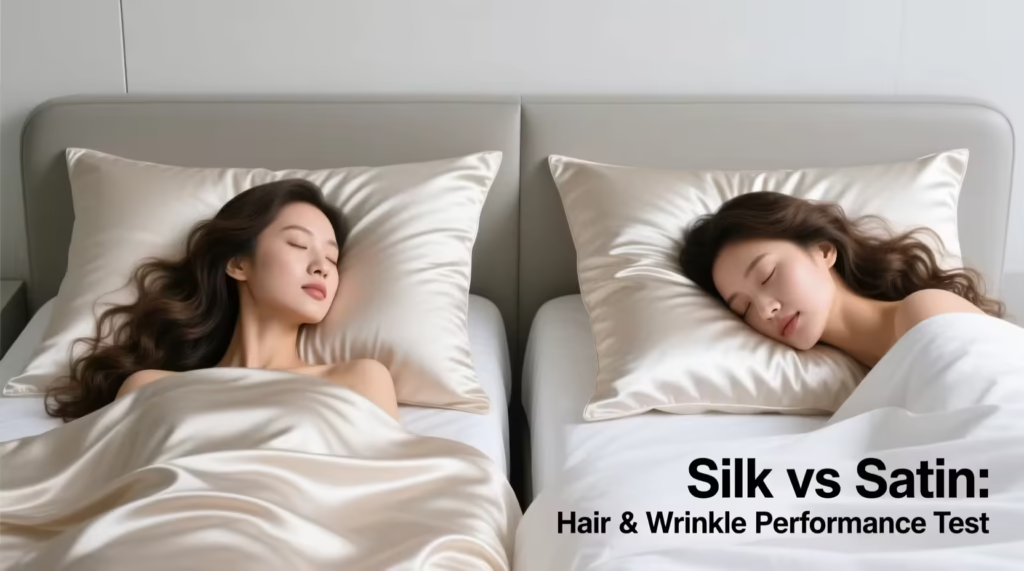
When a brand advertises “22-momme mulberry silk,” it is really making two separate promises at once: a specific weight and density of fabric, and a specific, higher-quality source of the raw fiber itself. Either one on its own would be a partial story. Together, they describe a pillowcase that is genuinely built to deliver on the frizz-reduction and hair-protection claims that get made about silk in general, rather than a cheaper, blended, or synthetic imitation riding on the reputation that real mulberry silk has earned over centuries of use.
The Actual Mechanics of How It Reduces Frizz
It’s worth pausing here and actually explaining why any of this changes what your hair looks like in the morning, because the science behind it is simple enough that it is worth understanding rather than just taking on faith.
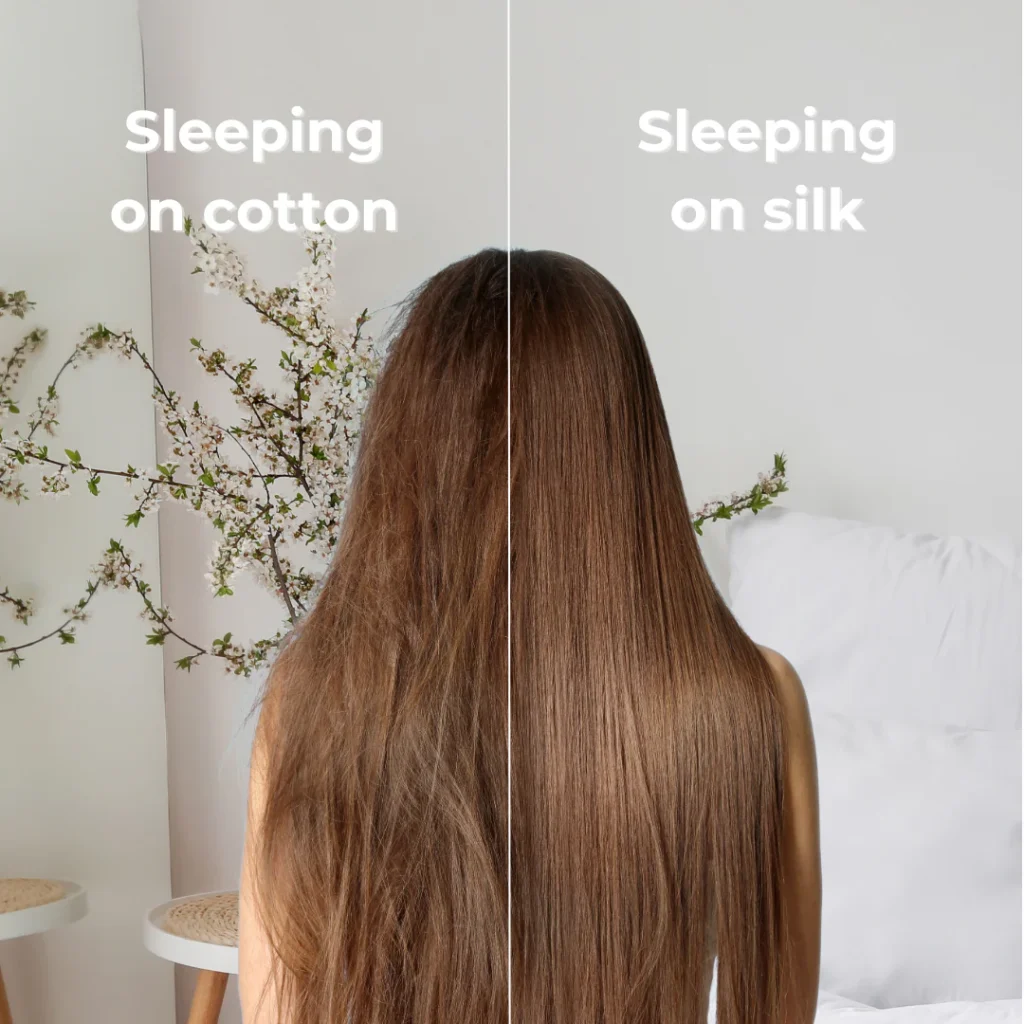
Hair frizz happens largely because of friction and moisture loss. Every strand of hair has a cuticle layer, tiny overlapping scales a bit like shingles on a roof, and when hair lies flat and undisturbed, those scales stay smooth and closed, which is what gives hair its shine and softness. Friction against a rough surface lifts those scales, roughens the surface of each strand, and causes strands to catch against one another, which is exactly what frizz and tangling actually are at a physical level.
Cotton, the fabric most standard pillowcases are made from, is comparatively rough and absorbent. Its woven fibers create noticeably more friction against hair than a smooth silk surface does, and cotton also pulls moisture directly out of both hair and skin over the course of a night, since that is literally what cotton is good at, absorbing liquid. A dense, smooth mulberry silk pillowcase does the opposite on both counts. Its fibers are finer and smoother, allowing hair to glide across the surface rather than catching and rubbing, and silk is far less absorbent than cotton, meaning it draws out much less natural moisture and oil from hair and skin overnight.
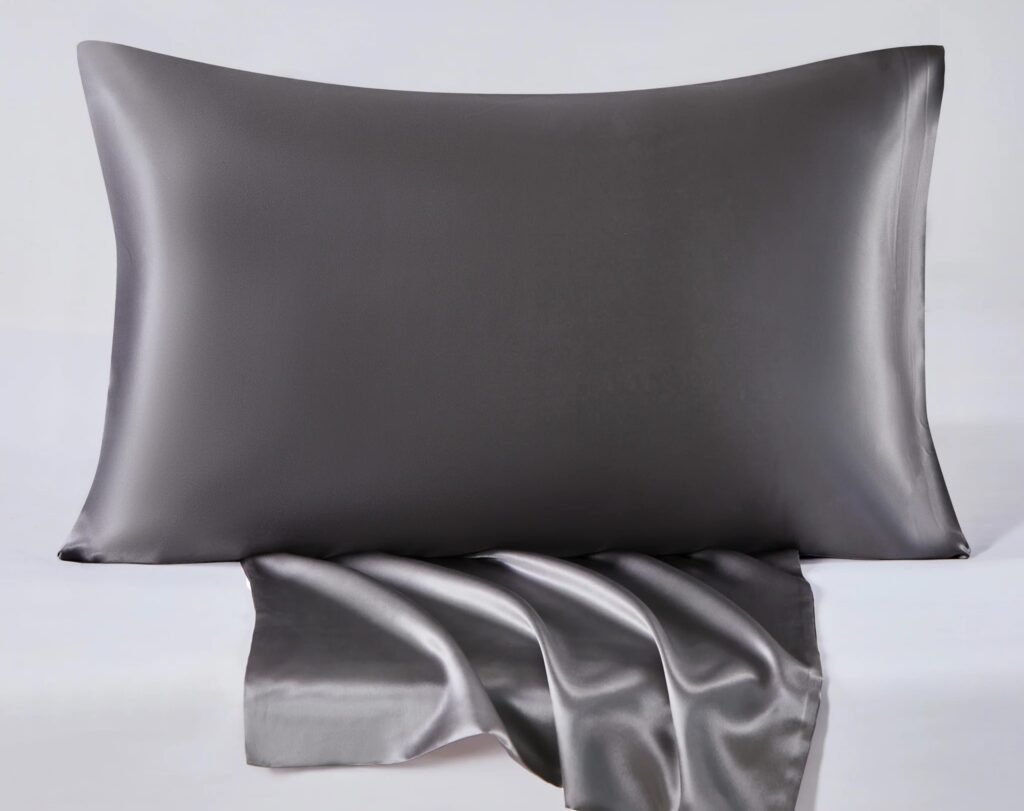
Momme count comes back into this equation directly, because the density of the weave is what determines how smooth that surface actually is in practice. A thin, low-momme silk pillowcase might technically be silk, but if the weave is loose and the fabric is thin, it will not glide the same way, and over time it will not hold up to repeated washing without pilling or thinning further, which brings the friction problem right back. Twenty-two momme silk maintains that smooth, dense surface wash after wash for long enough that people genuinely notice the difference in how their hair looks after a full night’s sleep, week after week, rather than just for the first month before the fabric starts to break down.
What to Actually Look for When Buying One
Given how much variation exists across brands calling their products “22-momme mulberry silk,” it helps enormously to know what separates a genuinely good one from a product using the label loosely to justify a higher price tag.
The first thing worth checking is whether the listing specifies both the momme count and the silk grade, since grade refers to the quality and consistency of the fibers themselves, usually labeled with a letter and number combination like 6A, which is generally regarded as the highest commercially available grade for mulberry silk. A pillowcase advertising 22 momme without mentioning grade at all is not necessarily bad, but it is a detail worth asking about, because momme measures weight, not fiber quality, and a heavier fabric made from lower-grade, inconsistent fibers will not feel or perform the same as one made with properly graded silk.
The second thing worth checking is the closure type. Silk pillowcases generally come with either a zipper closure, an envelope closure, or an old-fashioned ribbon tie, and this seems like a minor detail until the middle of the night when a pillow inevitably shifts inside its case. Zipper closures keep the pillow fully secured and prevent the case from bunching or slipping, which matters enormously for actually getting the friction-reducing benefit throughout the whole night rather than just for the first hour before things shift around. Envelope closures are a reasonable middle ground, tucking closed without a zipper, though they can occasionally loosen with a particularly restless sleeper.
Thread count sometimes gets mentioned alongside momme, and this is one of those areas where marketing language occasionally muddies the water, since thread count is really a cotton-industry measurement that does not translate cleanly onto silk in the same way. For silk specifically, momme and weave type, usually charmeuse for pillowcases because of its glossy front side and duller back, matter far more than any thread count figure printed on the packaging.
Finally, the country of origin and manufacturing transparency tend to correlate fairly reliably with quality in this specific product category. Brands that are upfront about sourcing their silk from established mulberry silk regions, and that describe their manufacturing process in some detail rather than using vague language like “premium silk blend,” tend to be the ones actually delivering genuine 22-momme mulberry silk rather than a cheaper synthetic or blended alternative dressed up with the right buzzwords.
A Small Digression on Price, Because It Matters
There is no getting around the fact that genuine 22-momme mulberry silk pillowcases cost more than the average cotton or polyester one, and it is worth being honest about why, rather than pretending price is not part of this decision for most people.
Real mulberry silk is a labor-intensive material to produce. Silkworms need a carefully controlled environment, a consistent diet of fresh mulberry leaves, and skilled handling throughout the cocoon harvesting and thread extraction process, none of which can be meaningfully automated the way synthetic fiber production can be. A genuine 22-momme mulberry silk pillowcase, sold on its own rather than in a set with sheets and other accessories, typically falls somewhere in a noticeably higher price bracket than a standard cotton pillowcase, and that price reflects real production costs rather than pure markup, though markup certainly exists at the higher end of the market too.
What tends to make this purchase worthwhile for people, despite the higher upfront cost, is durability combined with the compounding benefit over time. A well-made 22-momme silk pillowcase, cared for properly with gentle washing in cool water and air drying rather than machine drying, can reasonably last several years of regular use, whereas cheaper cotton pillowcases wear out, thin, and get replaced far more frequently. When the cost is spread out over that lifespan, and combined with less need for deep conditioning treatments and detangling products because the hair simply tangles less to begin with, the actual value proposition ends up looking quite different than the sticker price alone suggests.
How People's Experience Actually Changes After Switching
It is one thing to explain the mechanics and the shopping considerations, but the real reason this topic keeps coming up in beauty conversations is the lived experience people describe after making the switch, and it tends to follow a fairly consistent pattern.
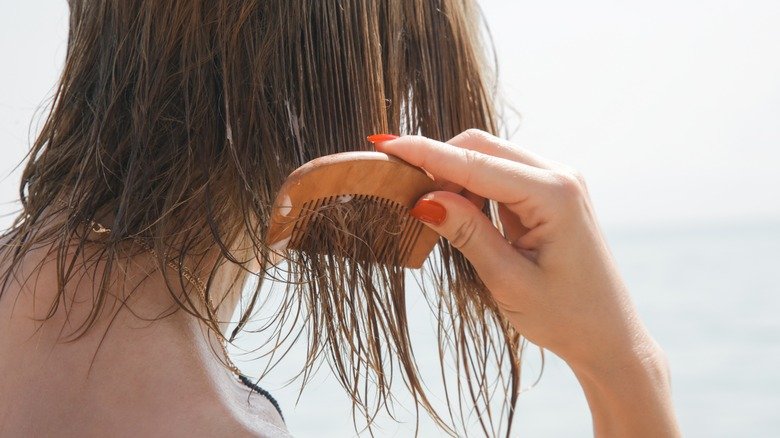
The first thing most people notice, usually within the first week, is simply less time spent detangling in the morning. Hair that used to require several minutes of careful brushing to work through knots at the nape of the neck, where the head rests most directly against the pillow, starts requiring noticeably less effort, because those knots simply are not forming with the same frequency or severity.
The second thing, which tends to show up a little later, over the course of two to three weeks, is an improvement in overall shine and softness, particularly for people with color-treated, curly, or naturally drier hair types. Because less moisture is being pulled out of the hair overnight, strands that used to look a little dull and rough by mid-week start holding onto more of the smoothness and shine they had right after washing, since the pillowcase is no longer working against whatever conditioning or styling routine the person already has in place.

People with curly or wavy hair often describe an additional benefit that straight-haired people notice less directly: their curl pattern holds up noticeably better overnight. Curly hair is particularly vulnerable to friction because the shape of the strand itself creates more surface area and more points of contact with a pillow compared to straight hair, so switching to a smooth, low-friction surface tends to produce a more visible difference for curl definition specifically, alongside the general frizz reduction everyone tends to notice.
There is also a smaller, less talked-about benefit around hair shedding and breakage. Extremely tangled hair, especially first thing in the morning, tends to get pulled and stressed more aggressively during brushing, since detangling a genuinely matted section often requires more force and more repeated strokes than gently working through hair that never tangled as badly to begin with. Reducing that overnight tangling indirectly reduces the amount of mechanical stress hair goes through during the morning brushing routine, which over months and years adds up to noticeably less breakage for a lot of people, particularly those with longer or chemically treated hair that is already more fragile than virgin, untreated hair.
Caring for a Silk Pillowcase So It Actually Lasts
Since durability is such a central part of the value argument for a genuine 22-momme mulberry silk pillowcase, it is worth spending a little time on how to actually care for one properly, because poor washing habits are the single fastest way to shorten the life of even a very high-quality piece of silk.
Cool water and a gentle, silk-specific or mild detergent make the biggest difference of anything in this whole care routine. Hot water and harsh detergents break down the protein structure of silk fibers over time, causing the fabric to thin, lose its sheen, and become more prone to snagging. Hand washing is ideal, but a washing machine’s gentle or delicate cycle, with the pillowcase placed inside a mesh laundry bag to prevent it from catching on zippers or hooks from other items, works reasonably well for people who are not going to hand wash regularly in practice.
Drying matters just as much as washing. Machine drying, even on a low heat setting, tends to be too aggressive for silk over repeated cycles, causing fibers to weaken and the fabric to lose some of its characteristic smoothness. Air drying, laid flat or hung in a way that avoids direct, prolonged sunlight, which can fade the color and weaken fibers over time, keeps a silk pillowcase performing the way it did on the day it was purchased for much longer than repeated machine drying would allow.
Rotating between two or three pillowcases, rather than relying on just one washed and reused constantly, also extends the overall lifespan considerably, since it spreads out the wear from both nightly use and the washing process itself across multiple pieces of fabric rather than concentrating it all on one.
A Few Standouts Worth Knowing About
Once you start actually shopping in this specific category, a handful of names keep surfacing across reviews, salon recommendations, and long-time silk pillowcase users, and it is worth talking through a few of them in a bit of detail rather than just listing brand names in isolation.
One that comes up constantly among people who have tried several over the years is Mulberry Park Silks, largely because the brand is unusually transparent about its sourcing and grading, listing both the momme count and the silk grade directly on the product rather than burying that information or leaving it out entirely. Their pillowcases tend to use a proper zipper closure, which, as mentioned earlier, matters far more in practice than it sounds like it should, since it keeps the case from sliding around and bunching up in the middle of the night.
Slip is another name that shows up frequently, particularly among people who first heard about silk pillowcases through beauty editors and dermatologists rather than through general shopping searches. The brand built much of its early reputation on skincare benefits specifically, and its pillowcases tend to use a slightly heavier momme weight within the same general range, with a noticeably plush feel that a lot of users describe as the closest thing to a hotel-quality product available for home use.
For people who are trying this out for the first time and are not yet ready to commit to the higher end of the price range, brands like ZIMASILK and Fishers Finery tend to offer a genuine 22-momme mulberry silk product at a noticeably lower price point than the more premium names, without cutting corners on the actual silk grade or weave density in any way that shows up in day-to-day use. The main differences at this price tier tend to show up in smaller details, like the range of available colors, the packaging, or slightly less polished stitching along the seams, rather than in the core performance of the fabric itself.
Whichever specific product someone ends up choosing, the underlying advice stays the same regardless of brand: confirm the momme count is genuinely 22, look for explicit mention of mulberry silk and, ideally, a grade like 6A, and pay attention to closure type and washing instructions before adding anything to a cart, since those details matter more to the actual day-to-day experience than the specific label on the packaging.
The Skin Side of the Story, Briefly
Most conversations about silk pillowcases, including this one, tend to center almost entirely on hair, but it would be a little incomplete not to at least mention the parallel benefit that skincare-focused users talk about just as often, because the same friction-reducing mechanics apply to skin exactly the way they apply to hair.
A rough cotton pillowcase pressing against a cheek or forehead for several hours every night creates the same kind of friction against skin that it creates against hair strands, and dermatologists have pointed to this as one contributing factor, among several others, in the formation of sleep lines, those temporary creases that show up on the face after sleeping on one side for an extended period and that, with enough repetition over years, can contribute to more permanent fine lines in some people. A smooth, dense silk surface reduces that dragging and pressure in the same way it reduces hair friction, which is part of why so many silk pillowcase brands market to both the hair and skincare audience simultaneously rather than picking one or the other.
This does not mean a silk pillowcase is a substitute for an actual skincare routine, and no honest source would claim that it is. But for anyone already invested in switching pillowcases for the sake of their hair, it is worth knowing that the skin benefit tends to arrive as a welcome bonus rather than something that needs to be purchased or considered separately.
Who This Actually Makes the Biggest Difference For
Not everyone experiences the same dramatic before-and-after that gets described in glowing product reviews, and it is worth being honest about who tends to notice the biggest difference after switching, rather than suggesting the benefit is universal and identical for every single hair type.
People with naturally curly, coily, or highly textured hair tend to report the most noticeable change, simply because that hair type has more surface area and more points of contact against a pillow to begin with, which means there was more friction to reduce in the first place. People with long hair, generally past shoulder length, also tend to notice a bigger difference, since longer hair has more total length exposed to friction throughout the night compared to a short haircut where much less hair is actually making contact with the pillow at all. Anyone with color-treated, chemically relaxed, keratin-treated, or otherwise processed hair also tends to see a more pronounced improvement, because processed hair generally starts out more porous and more prone to moisture loss than virgin, unprocessed hair, so reducing one additional source of dryness and friction has a proportionally bigger impact.
That said, people with short, straight, unprocessed hair absolutely still notice a difference, particularly around morning tangling at the nape of the neck and general hair texture by the end of the week, even if the transformation is a little less dramatic than what gets described by someone with long, curly, color-treated hair making the same switch. The underlying mechanism benefits every hair type to some degree, it simply shows up more visibly for some than others.
Bringing It All Together
Coming back to that friend from the coffee shop, the story does have a satisfying resolution. She ended up trying a 22-momme mulberry silk pillowcase after that conversation, somewhat skeptically at first, expecting it to be another overhyped beauty product that would not really change much. Within about two weeks, she sent a message describing how she was spending noticeably less time each morning working through tangles, and how her hair, which she had always assumed was simply prone to frizz by nature, actually looked smoother and calmer than she remembered it looking in years. Nothing about her hair itself had changed. She had not switched shampoos, started a new treatment, or altered her diet. The only variable that changed was what her hair rested against for roughly a third of every single day.
That is really the core insight worth carrying away from all of this. Hair care conversations tend to focus overwhelmingly on what gets applied to hair while it’s awake and being actively styled, brushed, and treated, and they tend to overlook the several hours every night where hair is left completely alone, pressed against a surface, with absolutely no say in the matter. Choosing that surface carefully, and specifically choosing a dense, genuine 22-momme mulberry silk pillowcase rather than a thinner or lower-quality imitation, turns out to be one of the simplest, least effort-intensive changes available for anyone dealing with persistent frizz, tangling, or dullness that no amount of daytime product seems to fully resolve.
Frequently Asked Questions
Why is 22 momme considered the ideal weight for a silk pillowcase?
It strikes a balance between durability and cost. Anything lower tends to feel thin and wear out quickly, while much higher momme counts add expense without meaningfully improving the frizz-reducing benefits.
Why is 22 momme considered the ideal weight for a silk pillowcase?
Yes, generally. Mulberry silkworms are raised on a controlled diet, producing more uniform, smoother fibers than wild silk varieties, which translates into a genuinely smoother surface for hair to glide across overnight.
Why is 22 momme considered the ideal weight for a silk pillowcase?
With gentle washing in cool water and air drying, a well-made one can reasonably last several years of regular use, especially if two or three are rotated to spread out wear from nightly use and washing.