It was 11:42 PM on a humid Tuesday, and I was staring blankly at the ceiling, my chest tight with a familiar, restless buzzing. I had done everything the sleep gurus preach. I put my phone in another room two hours prior. I drank chamomile tea until my bladder protested. I wore blue-light blocking glasses that made me look like an extra in an 80s sci-fi movie. Yet, there I lay, hyper-awake, watching the shadow of a hanging coat shift against the wall, listening to the hum of my own racing thoughts.
My eyes drifted down to the foot of the bed. My comforter was a chaotic burst of high-contrast tropical botanical prints—furious lime greens, aggressive hot pinks, and intersecting black jungle leaves. Surrounding the bed was a landscape of minor visual noise: a stack of unread hardbacks leaning precariously on the nightstand, laundry waiting to be folded on the accent chair, and a maze of stray charging cables trailing across the hardwood floor.
To the conscious mind, it was just a slightly messy room with an energetic duvet cover. But to my nervous system—the ancient, primal brain that spent millennia scanning dark environments for stealthy predators—it was a battlefield of high-alert triggers.
What I didn’t realize that night, but eventually uncovered through months of frantic research and conversations with environmental psychologists, was that my room was secretly betraying my endocrine system. Every visual element was whispering a quiet, persistent message to my adrenal glands: Stay alert. Something here needs your attention.

The Nervous System Doesn't Read Aesthetics; It Reads Threat Level
We tend to think of decor as a purely aesthetic choice. You pick a geometric Duvet cover because it looks trendy on Instagram; you stack books on your nightstand because it feels scholarly and cultured. But your biology does not care about design trends. Your peripheral vision and subconscious brain process visual information long before your conscious mind translates it into stylistic preferences.
When you walk into a sanctuary, your autonomic nervous system is supposed to shift seamlessly from the sympathetic state (fight or flight) to the parasympathetic state (rest and digest). For this transition to occur, your brain requires absolute visual predictability and low stimulation.
When your eyes register high-contrast geometric shapes, jarring color combinations, or piles of unsorted items, your amygdala—the brain’s threat detection hub—is forced to process every single line, shadow, and color edge.
Visual Chaos / Loud Patterns ➔ High Cognitive Load ➔ Amygdala Alert ➔ Adrenal Spike ➔ Cortisol Secretion
In a natural setting, high visual contrast usually means movement or an obstacle: a predator hiding in tall grass, a sharp cliff edge, or a storm on the horizon. When you surround your sleeping area with loud, clashing bedding patterns and physical clutter, you are effectively forcing your brain to decode a endless maze of high-frequency visual data at the exact moment it should be winding down.
The Cortisol Connection: Why You Wake Up at 3:00 AM
Cortisol is often villainized as the “stress hormone,” but it is actually a vital rhythm keeper for human life. Under healthy conditions, your body follows a precise diurnal cortisol curve. Cortisol surges shortly after waking (the Cortisol Awakening Response) to give you energy to face the day, and then gradually glides downward throughout the late afternoon and evening, reaching its absolute lowest point around midnight.
When your late-night cortisol levels remain artificially elevated, melatonin—the body’s sleep signal—cannot perform its job efficiently. They operate on a physiological seesaw: when cortisol is high, melatonin drops; when cortisol drops, melatonin can rise.
When you lay in a bed wrapped in aggressive visual patterns surrounded by physical clutter, your brain experiences cognitive friction. Even with your eyes closed, the immediate memory of that chaotic environment lingers in your mind’s spatial map. Your brain knows the environment is unsafe and unsettled.
The result? The adrenal cortex releases micro-doses of cortisol straight into your bloodstream. You don’t necessarily feel a full-blown panic attack; instead, you experience a subtle, internal hum of alertness. Your heart rate stays elevated by 4 to 6 beats per minute, your core body temperature refuses to drop, and you spend three hours tossing, turning, and wondering why your brain won’t simply hit the off switch.
The Turning Point: Stripping Away the Noise
Realizing that my bedroom was acting as a physical stress generator felt both absurd and liberating. The transformation didn’t happen overnight, but I decided to run a radical experiment.
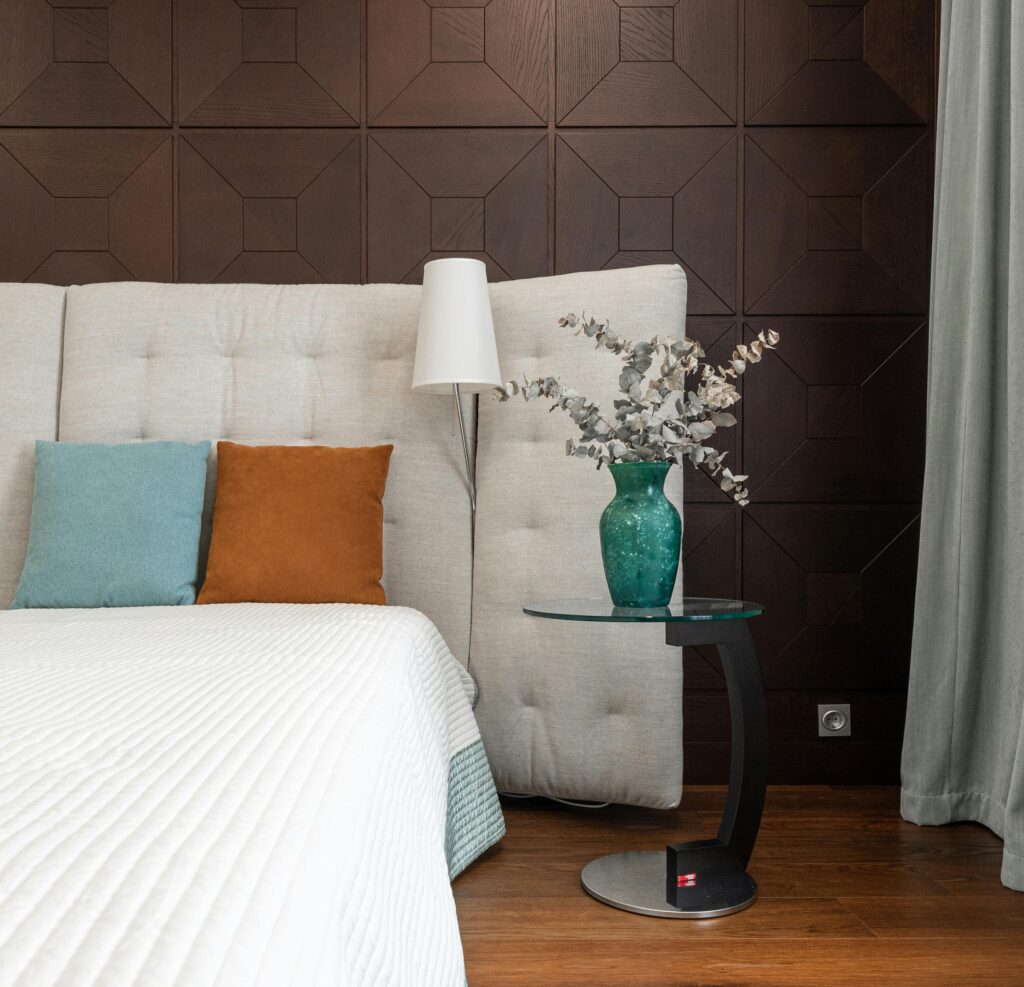
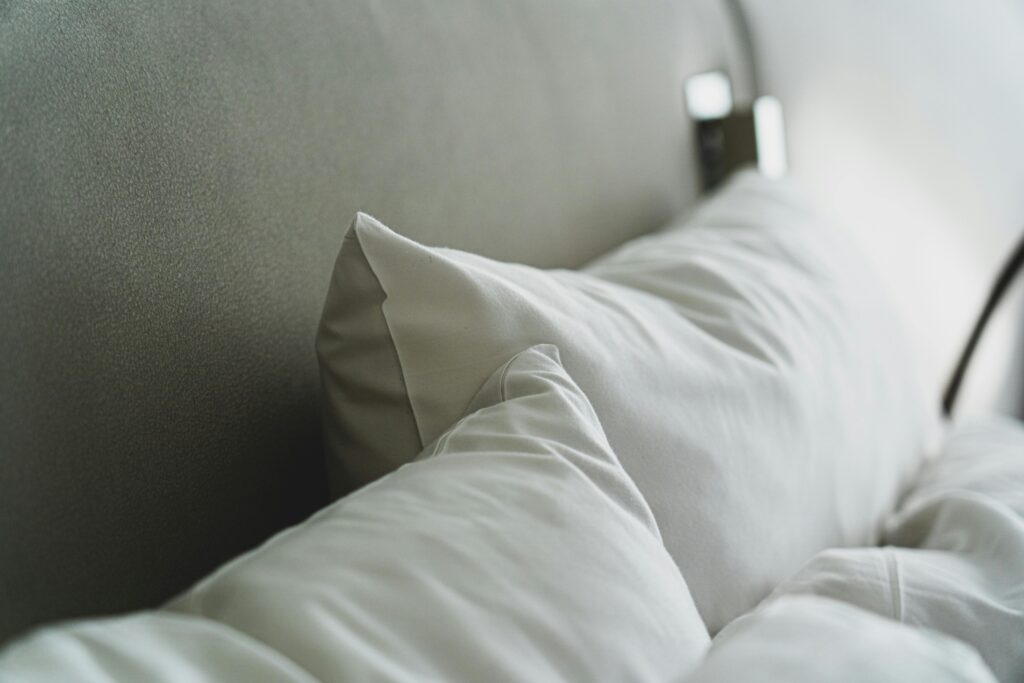
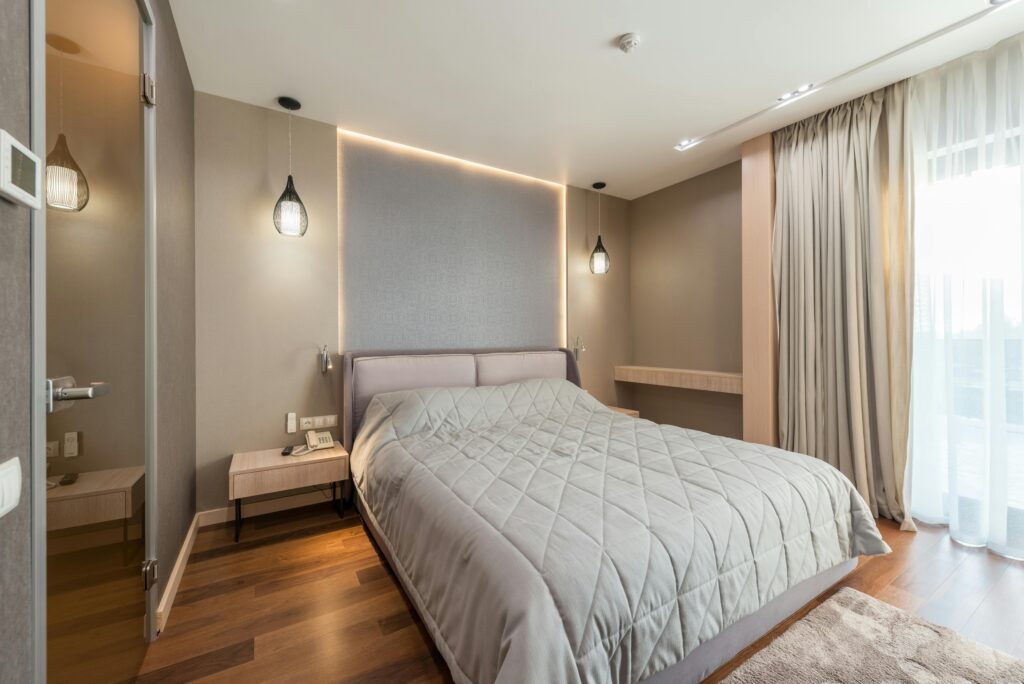
First, I stripped the bed. I threw the chaotic tropical comforter into the back of a storage closet and replaced it with plain, washed linen in a quiet shade of muted oatmeal. I removed the clutter from the nightstand until only a warm lamp and a glass of water remained. I moved the chair of half-folded laundry out of sight.
The shift in energy was instantaneous and palpable. Walking into the room felt like stepping off a bustling, horn-honking city street into a quiet, cool library.
Without the loud geometric lines grabbing my peripheral focus, my eyes naturally softened. I felt my shoulders drop away from my ears—a physical release I hadn’t realized I was holding. That first night in the minimalist setup, I fell asleep within fifteen minutes. I didn’t wake up at 3:15 AM searching for nonexistent threats. My nervous system had finally received the visual signal it desperately needed: The environment is clear. You are safe to sleep.
Frequently Asked Questions
Can bedding patterns really affect sleep if I sleep with the lights off?
Yes. The biological transition to sleep begins long before you turn out the lights. The 30 to 60 minutes you spend in your bedroom before sleep set your body’s physiological baseline. If your brain is processing high-contrast visual stimuli right before lights-out, your cortisol levels elevate prior to lying down, keeping your body in a hyper-vigilant state long after the room goes dark.
Does this mean my entire home has to be plain white or minimalist?
Not at all. Living areas can thrive on vibrant colors and energetic design. However, the bedroom serves a unique physiological purpose: it is a sanctuary intended to downshift your autonomic nervous system. Keeping the sleep zone neutral, quiet, and uncluttered allows your brain to associate that specific room with safety, stillness, and rest.
What are the best colors and textures for reducing nighttime stress?
Opt for low-contrast, muted tones inspired by nature—such as soft warm neutrals, hazy sage greens, gentle stone greys, or muted sky blues. Matte, organic textures like washed linen, brushed cotton, and soft wool absorb light rather than reflecting it, creating a visual sense of depth and calm that invites your nervous system to relax.