It started, as these things often do, with a white sale.
Unraveling the Thread Count Myth
I was standing in the middle of a department store, surrounded by towering piles of sheets that felt less like bedding and more like a high-stakes math problem. Every package screamed a number at me: 400. 600. 800. One boasted a seemingly impossible 1,200. The implication was clear. Higher was better. More was softer. Bigger numbers meant better sleep.
And I was buying it. I was about to drop a significant amount of money on a set that promised a thread count so astronomically high, it seemed like it should be able to weave itself.
But a small voice, the one that usually pipes up when I’m about to make a bad decision, stopped me. It whispered a simple question: does this actually matter? Or is this just a really, really successful marketing scam?
This question sent me down a rabbit hole that changed the way I think about something as simple as a bed sheet. I realized that the sheet aisle is less a place to shop and more a place where we surrender our critical thinking at the door. We’ve been trained to look for one number, to treat it as the sole indicator of quality, comfort, and luxury. But the truth, as I was about to discover, is far more nuanced.
The Myth of the Magic Number
The first thing I learned is that the bedrock of this belief—the idea that a higher thread count always equals better sheets—is, to put it bluntly, a lie. Not a little white lie, but a foundational, industry-distorting untruth.
The Good Housekeeping Institute, a place that has scientifically tested more bedding than I could ever hope to see, has been shouting this from the rooftops for years. After testing hundreds of sheet sets, their conclusion is stark: “higher thread count did not correlate with improved performance or necessarily a softer feel” . You can have a 1,000-thread-count sheet that feels like sandpaper and a 200-thread-count sheet that feels like a dream. The number on the box is just not a reliable indicator of what you’re going to experience when you climb into bed.
So, if the number is a lie, why is it so pervasive?
The Math That Makes You Pay More
To understand the scam, you have to understand the math—the dirty math, as I came to call it.
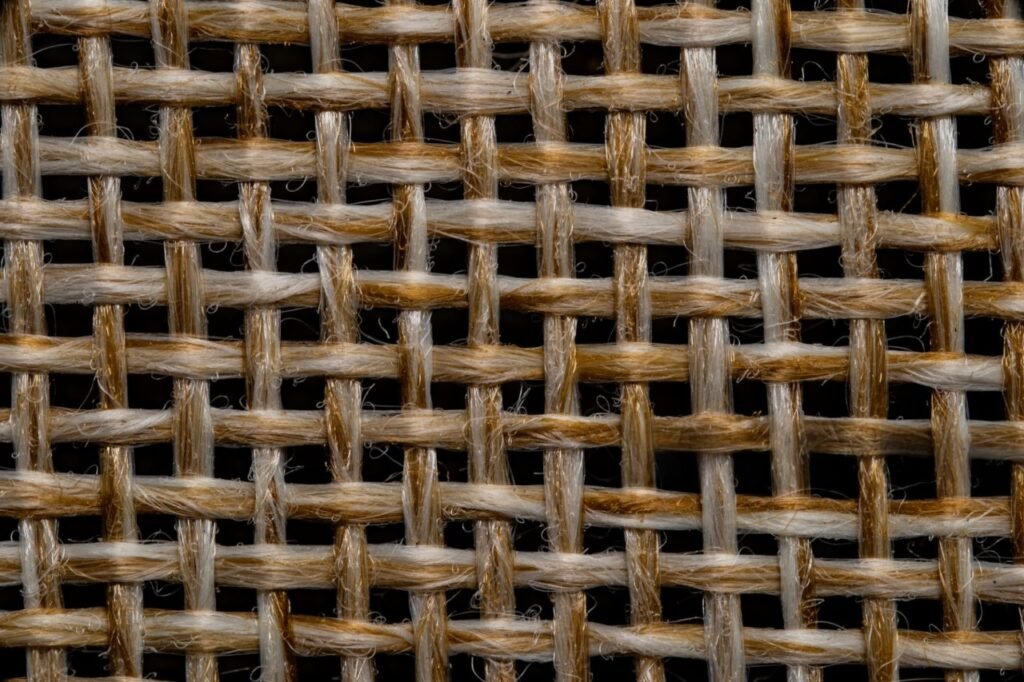
Thread count, in its purest form, is simple. It’s a measure of how many threads are woven into one square inch of fabric, counting both the vertical (warp) and horizontal (weft) threads . If you have 250 vertical threads and 250 horizontal threads, you have a 500-thread-count sheet. Clean. Simple.
But somewhere in the mid-1990s, manufacturers discovered a loophole . They realized they could manipulate the system by using a technique called “ply.”
Imagine you have a thread. A single, simple thread. That’s single-ply. But if you take two or three thin, cheap threads and twist them together to make one thicker yarn, that’s a two-ply or three-ply thread .
Here’s where the scam starts: when counting the thread count, some manufacturers count each individual strand within that plied yarn as a separate thread. A fabric might only have 250 actual woven positions per square inch, but if those positions are filled with two-ply yarns, a manufacturer could claim a “500-thread-count” sheet. Inflate it to three-ply? Suddenly that same basic fabric is a “750-thread-count” sheet .
It’s a numbers game. A marketing trick. The FTC has even flagged this practice as deceptive, but enforcement is inconsistent, and the practice is so widespread that it’s become the industry norm . A 1,000-thread-count sheet is almost always a guarantee that you’re buying multi-ply yarns . The number is inflated, but the quality? It hasn’t moved an inch.
What Actually Matters: The Fabric of Your Dreams
Once I understood the scam, I started looking for the real indicators of a great sheet. And the experts, from textile analysts at Good Housekeeping to bedding designers, pointed to two things: the fiber and the weave . Get these right, and you can ignore the big number on the front of the package.
The First Secret: It Starts with the Plant
The journey to a soft, durable sheet begins in the ground. It begins with the cotton plant itself. And the most important thing to know about cotton is something called “staple length” .
This is the length of the individual fibers that make up the cotton. Think of it like hair. Short, chopped-up hair is rough and prone to breakage. Long, flowing hair is smooth and strong.
- Short-staple cotton: The fibers are short, roughly 13-25mm. They are cheaper to produce, but because the fibers are short, there are more loose ends poking out of the yarn. This leads to a fabric that feels rough, pills easily, and breaks down faster in the wash. This is the cotton used in most mass-market, low-cost sheets, no matter how high the thread count on the box might be .
- Long-staple cotton: With fibers measuring 25-35mm, this is where things start to get good. The longer fibers create a smoother, stronger yarn. There are fewer ends sticking out, so the fabric feels softer, resists pilling, and is much more durable. This is the stuff of quality bedding .
- Extra-long-staple cotton: The holy grail. Fibers that reach 35mm or longer. The most famous varieties are Pima cotton from the American Southwest and, of course, the legendary Egyptian cotton from the Nile Delta . These fibers are so long they can be spun into incredibly fine, strong, and supremely smooth yarns. A sheet made from quality extra-long-staple cotton is an heirloom piece. It will feel soft for years and will only get better with age.
“A fabric with a thread count of 200 high-quality fibers can have a better hand… than a thread count of 400 inferior-quality fibers” .
It’s a lesson in focusing on the raw material, not just the finished product.
The Second Secret: How You Weave It
The weave is the pattern in which the threads are locked together. It determines how the fabric looks, feels, and how it breathes. The two most common weaves for sheets are percale and sateen, and they are completely different experiences .
Percale: The Crisp and Cool Classic.
Imagine the feeling of a crisp, freshly ironed linen shirt. That’s percale. It uses a plain, one-over-one-under weave that creates a matte, durable, and incredibly breathable fabric . This weave allows for maximum airflow, making it the best choice for hot sleepers or for use in warmer climates .
A percale sheet typically has a thread count in the 200-400 range . Because the weave is so simple, packing in more threads just makes it heavy and less breathable. Our top pick from L.L.Bean has a thread count of just 280 . It’s the most popular choice in high-end hotels because of its durability and crisp feel that softens beautifully with every wash .
Sateen: The Silky and Smooth Luxury.
On the other end of the spectrum is sateen. This isn’t a weave in itself, but a cotton fabric woven in a satin weave, with a four-over-one-under pattern . This technique floats more of the yarn on the fabric’s surface, creating a luminous sheen and a silky, smooth feel from the very first use . It has a heavier drape and sleeps warmer than percale .
Because more of the yarn is on the surface, sateen can accommodate higher thread counts. The sweet spot is typically 300-600 . A quality sateen in this range offers that luxurious hotel-suite feel, but if you go too high, you’re likely entering the realm of multi-ply inflation .
The Real-World Test: A Wake-Up Call
I couldn’t write this without some hard data. The experts at Good Housekeeping didn’t just theorize; they did a test that perfectly illustrates this point. They took seven different sheet sets from the same brand, all 100% cotton sateen, with thread counts ranging from 200 all the way up to 1,000. Then, they tested them for softness, durability, and pilling .
The results were eye-opening.
One of their key tests was a simple blind softness test, where people felt the fabrics without knowing which was which. The winners?
The 500-thread-count set came out on top. But get this: less than 30% of the testers chose the 1,000-thread-count set as the softest . The most expensive sheet, with the most astronomical number, didn’t win. It lost to its more modestly priced siblings.
When they tested for pilling, the 1,000-thread-count set actually looked worse than the 200-thread-count set after a simulated wear-and-tear test . It was the 400-thread-count style that came out looking pristine. The highest number was not only not the best; in some ways, it was the worst.
It’s a perfect, scientific illustration of why you can’t trust the number on the box.
A World Beyond the Number
The final piece of this puzzle is understanding that thread count isn’t just misleading; it’s often irrelevant. The concept only really works for 100% cotton sheets with single-ply weaves . Once you venture into other materials, the whole system falls apart.
- Linen: The very nature of a linen sheet, made from the thick fibers of the flax plant, means its thread count will inherently be low. You should pay attention to the fabric’s weight, measured in GSM (grams per square meter), instead . A good linen sheet is prized for its breathability, its lived-in texture, and the fact that it gets softer with every wash for years .
- Bamboo and Microfiber: These are man-made fibers that can be extruded into incredibly thin threads. This allows manufacturers to pack a thousand of them into a square inch, creating a high thread count that is completely meaningless . A 1,000-thread-count microfiber sheet is likely to be hot, non-breathable, and less durable than a good-quality cotton sheet with a third of the count.
A Simpler Way to Buy Better Sheets
So, with all this information, you might be feeling a little overwhelmed. But the takeaways are actually simple.
The next time you are faced with the blazing, oversized numbers of the bedding aisle, arm yourself with this knowledge.
- Forget the Big Number. The first thing you do is ignore the giant thread count on the front of the package. It is the least useful piece of information you have.
- Start with the Material: Flip the box over. The most important word you’re looking for is “long-staple cotton,” “Pima cotton,” or “Egyptian cotton” (and be suspicious of the last one; it’s a widely abused label). This is the foundation of softness and durability .
- Choose Your Weave: Think about how you sleep. If you run hot, look for “Percale.” It will be crisp, cool, and breathable . If you want that buttery, silky feel and don’t mind sleeping a little warmer, look for “Sateen” .
- Find the Sweet Spot: If it’s a percale sheet, the best thread count is between 200 and 400. If it’s a sateen sheet, look for 300 to 600 . That is where you’ll find genuine quality made with single-ply yarns.
- It’s About the Feeling: Remember, the ultimate test isn’t a number. It’s the feeling of the fabric against your skin, the quality of the stitch, the way it feels after a year of washing. A high-quality sheet should get softer with time, not pill and fall apart.
I walked out of the department store that day without the 1,200-thread-count sheets. Instead, I bought a simple, 280-thread-count percale set from a brand known for quality cotton. I’ve had them for three years now. They’re cool to the touch, they’re crisp, and they’ve softened into the most comfortable sheets I’ve ever owned.
And I didn’t have to pay a premium for a number that never meant anything in the first place.
Frequently Asked Questions
What is the absolute best thread count for a good set of sheets?
There isn’t one single “best” number. The sweet spot depends entirely on the weave. For percale sheets, which are cooler and crisper, look for a count between 200 and 400. For sateen sheets, which are silkier and heavier, aim for 300 to 600. A number in these ranges usually signals a good quality fabric without artificial inflation . Anything much higher, especially over 800, is likely a marketing gimmick.
What makes a sheet feel soft, if not the thread count?
Softness comes primarily from two factors. First is the quality of the fiber, or “staple length.” Long-staple cotton like Pima or Egyptian cotton produces smoother, finer, and stronger yarns . Second is the weave. A sateen weave floats more threads on the surface, creating a silky feel, while a percale weave feels crisp and cool and softens over time . The thread count is a distant third in importance.
Is a 1000-thread-count sheet ever a good buy?
Almost never. A 1000-thread-count sheet is a red flag. It is almost certainly using multi-ply yarns, twisting two or three cheap threads together and counting them as individual threads to inflate the number . This creates a fabric that is often heavier, less breathable, and more prone to pilling than a lower-count sheet made with high-quality, single-ply cotton. You are almost always paying a premium for a mathematically inflated number, not a superior product .