Let me take you back to a humid August afternoon in Lahore, about three years ago. My aunt, who we lovingly call Khala Jan, had just returned from a month-long trip to Toronto. She had brought back gifts for everyone—perfume for my father, maple syrup cookies for the kids, and for herself, a breathtakingly beautiful set of pure white Egyptian cotton sheets. She had spotted them in a high-end mall downtown and had practically hugged them all the way through customs.
That evening, she decided to put her new treasure on the double bed in her guest room. With the excitement of a child on Eid morning, she tore open the packaging. The fabric was smooth, cool, and impossibly soft. She fluffed it open, tucked one corner under the mattress, then the other… and that’s when the trouble started.
The fitted sheet was drowning. It hung over the sides of her bed like a melting ghost. The flat sheet, meanwhile, barely kissed the edges on either side. She tugged, folded, and even called my uncle for a second pair of hands. Nothing worked. The beautiful, expensive, dreamy sheets from Canada simply did not fit her standard Pakistani double bed.
That night, as she slept on a crumpled mess of wrinkled cotton, she turned to me and said, “Beta, why is a bedsheet so complicated? It is just a rectangle, no?” I laughed, but deep down, I knew exactly what had happened. She had fallen into the same trap that countless Pakistani households fall into every year. She had forgotten the golden rule: A bedsheet is not just a piece of cloth; it is a map of your bed.
And that is why, dear reader, I am writing this guide. Not as a boring list of measurements you will forget, but as a story—a roadmap—to save you from the fate of Khala Jan’s misfit sheets. Because whether you are shopping at Gul Ahmed, Al Karam, ChenOne, or a small stall in Anarkali Bazaar, knowing your size is the difference between a royal sleep and a wrestling match with your own bedding.
The Great Confusion: Why Size Matters
Let me paint you a picture. Walk into any dary (bedding fabric store) in Karachi or Islamabad, and what do you see? Walls and walls of fabric, pre-stitched bedsheets, and salesmen who will promise you the moon. They will say, “Madam, this is single bed size,” or “Sir, this is queen size.” But here is the secret they don’t shout from the rooftops: There is no single standard in Pakistan.
No, really. We have inherited a beautiful, chaotic blend of British colonial measurements, American sizing trends, and our own desi charpai logic. A bedsheet labeled “Double Bed” in a shop in Sadar, Rawalpindi, might be six inches narrower than a “Double Bed” from a brand in DHA, Karachi. And don’t even get me started on the difference between a flat sheet (which we Pakistanis mostly use as the only sheet) versus a fitted sheet (which is still a mysterious luxury for many of us).
So, before you hand over your hard-earned rupees, you need to understand three things: the size of your mattress, the size of the sheet, and the most overlooked measurement of all—the drop.

The Drop: The Hero Pakistan Forgot
Let me introduce you to a term that will save your sanity: the drop. In the West, people often use fitted sheets that cling to the mattress, so the drop is just the depth of the mattress. But in Pakistan, where we still love our flat sheets (the ones we tuck in or let hang loose), the drop is everything.
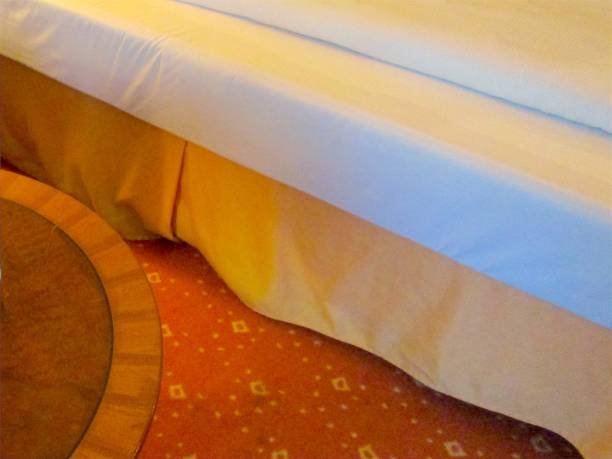
The drop is how far the sheet hangs down from the top edge of your mattress toward the floor. Do you want a short, practical drop that just covers the box spring? Or a long, romantic, hotel-style drop that nearly kisses the floor? Most standard Pakistani bedsheets come with a drop of roughly 10 to 14 inches. But here is the catch: the thicker your mattress, the smaller your drop will be.
My cousin in Islamabad bought a gorgeous memory foam mattress that was twelve inches thick. She then bought a standard “King” bedsheet. When she put it on, the sheet barely covered the sides of the mattress. There was no drop at all. It looked like a tight, sad little cap on a giant’s head. She had to return it and buy a “King Plus” size, which is harder to find and more expensive. All because nobody told her about the drop.
So remember this rule of thumb: Mattress Thickness + Desired Drop = Sheet Size.
Now, let’s get down to the actual numbers. I have measured, tested, and argued about these with shopkeepers across the country. These are the most common bedsheet sizes you will find in Pakistan today.
The Single Bed: The Lonely Warrior
Let’s start small. The single bed is the faithful companion of every hostel room, every maa’s spare room, and every child’s bedroom from Karachi to Peshawar. But do not let the name fool you. A “single” in Pakistan is not the same as a “single” in IKEA.
A standard Pakistani single mattress is usually 36 inches wide and 75 inches long. Some modern singles stretch to 39 inches wide (often called “Twin” in Western terms). But here is what you need to know about the bedsheet.
A typical ready-made single bedsheet in Pakistan will measure about 60 inches wide by 108 inches long. Wait, what? That is much bigger than the mattress, right? Exactly. That extra width and length create the drop on the sides and the tuck-in at the top and bottom. If you buy a single bedsheet that is exactly 36×75 inches, you would have a sheet that sits only on top of the mattress, flying away with the first ceiling fan breeze.
My story with a single bed: When I was a university student in Lahore, I had a single bed in my hostel. I bought a cheap, bright orange bedsheet from Liberty Market. It was labeled “Single.” It turned out to be 70×110 inches. It was enormous. I had to fold it twice to make it work. I learned that day that “single” in Pakistan is a very flexible word. So, always, always check the actual inches or centimeters on the package. Do not trust the word alone.
The Double Bed: The Heart of the Pakistani Home
Now we come to the soul of this guide. The double bed. This is the most common bed in Pakistani households. It is where parents sleep, where grandparents nap, and where the entire family gathers on a lazy Sunday morning with anda paratha and mobile phones.
But oh, the confusion here. A “double” in Pakistan is technically 54 inches wide and 75 inches long. However, over the last decade, we have seen a quiet revolution. More and more people are switching to “Queen” size mattresses (60 inches wide), but they still ask for “Double” bedsheets. This is a disaster waiting to happen.
A standard Pakistani double bedsheet size is roughly 90 inches wide by 108 inches long. This gives you a nice drop of about 18 inches on each side of a 54-inch mattress. It also gives you plenty to tuck at the head and foot.
But if you have a Queen mattress (60 inches wide), the same sheet will give you only a 15-inch drop on each side. That is still fine for most people. But if your mattress is thick (say, 12 inches), that drop becomes even smaller. You might end up with a sheet that barely covers the mattress depth, leaving your ugly box spring exposed.
Let me take you back to a humid August afternoon in Lahore, about three years ago. My aunt, who we lovingly call Khala Jan, had just returned from a month-long trip to Toronto. She had brought back gifts for everyone—perfume for my father, maple syrup cookies for the kids, and for herself, a breathtakingly beautiful set of pure white Egyptian cotton sheets. She had spotted them in a high-end mall downtown and had practically hugged them all the way through customs.
That evening, she decided to put her new treasure on the double bed in her guest room. With the excitement of a child on Eid morning, she tore open the packaging. The fabric was smooth, cool, and impossibly soft. She fluffed it open, tucked one corner under the mattress, then the other… and that’s when the trouble started.
The fitted sheet was drowning. It hung over the sides of her bed like a melting ghost. The flat sheet, meanwhile, barely kissed the edges on either side. She tugged, folded, and even called my uncle for a second pair of hands. Nothing worked. The beautiful, expensive, dreamy sheets from Canada simply did not fit her standard Pakistani double bed.
That night, as she slept on a crumpled mess of wrinkled cotton, she turned to me and said, “Beta, why is a bedsheet so complicated? It is just a rectangle, no?” I laughed, but deep down, I knew exactly what had happened. She had fallen into the same trap that countless Pakistani households fall into every year. She had forgotten the golden rule: A bedsheet is not just a piece of cloth; it is a map of your bed.
And that is why, dear reader, I am writing this guide. Not as a boring list of measurements you will forget, but as a story—a roadmap—to save you from the fate of Khala Jan’s misfit sheets. Because whether you are shopping at Gul Ahmed, Al Karam, ChenOne, or a small stall in Anarkali Bazaar, knowing your size is the difference between a royal sleep and a wrestling match with your own bedding.
The Great Confusion: Why Size Matters
Let me paint you a picture. Walk into any dary (bedding fabric store) in Karachi or Islamabad, and what do you see? Walls and walls of fabric, pre-stitched bedsheets, and salesmen who will promise you the moon. They will say, “Madam, this is single bed size,” or “Sir, this is queen size.” But here is the secret they don’t shout from the rooftops: There is no single standard in Pakistan.
No, really. We have inherited a beautiful, chaotic blend of British colonial measurements, American sizing trends, and our own desi charpai logic. A bedsheet labeled “Double Bed” in a shop in Sadar, Rawalpindi, might be six inches narrower than a “Double Bed” from a brand in DHA, Karachi. And don’t even get me started on the difference between a flat sheet (which we Pakistanis mostly use as the only sheet) versus a fitted sheet (which is still a mysterious luxury for many of us).
So, before you hand over your hard-earned rupees, you need to understand three things: the size of your mattress, the size of the sheet, and the most overlooked measurement of all—the drop.
I once bought a King-size khaddar bedsheet in winter from Landhi Bazaar in Karachi. It was so large that I used it as a makeshift curtain for my balcony as well. The shopkeeper laughed and said, “Beta, this sheet can cover three of my beds.” He was not lying. But here is the warning: King sheets are heavy. They take forever to dry on the roof during monsoon season. And if you have a thin mattress, the drop will be so long that it will puddle on the floor, collecting dust and becoming a tripping hazard for your father getting up for Fajr prayer.
The Oddballs: Super Single, Queen Plus, and Custom Sizes
Now, let me tell you about the wild cards. These are sizes that should not exist but do, because Pakistan.
- Super Single: About 48 inches wide. Common in some hostels and old bungalows. You will not find a standard sheet for this. Buy a Double sheet and fold the extra under the mattress.
- Queen Plus: A marketing term for sheets that are 100×116 inches. Designed for very thick Queen mattresses. Worth every extra rupee.
- Charpai Size: Do not laugh. I am serious. Many village homes and even city rooftops in summer use the traditional charpai (woven rope bed). These are often 40×72 inches. No readymade sheet fits perfectly. People just drape a large dhurrie or a Double sheet over it.
Fabric Matters as Much as Size
Before I send you off, let me add one more layer. Size is nothing without fabric. A 90×108 inch sheet in lawn (the crisp, printed cotton we all love in summer) will shrink after the first wash. Yes, lawn shrinks. That beautiful 18-inch drop might become a 15-inch drop after two hot water washes.
I learned this the hard way with a fancy Zara Shahjahan bedsheet. It fit my double bed perfectly fresh out of the packet. After washing, it was tight on the corners like a stretched shalwar. Now, I always buy my lawn bedsheets one size up—if I want a Double fit, I buy a Queen sheet and let it shrink into perfection.
On the other hand, khaddar (hand-spun cotton) and winter wool blends are heavier and rarely shrink much. But they are also bulkier, so you need a slightly larger sheet to achieve the same drop.
My Final Advice Before You Shop
Here is what I want you to do the next time you go bedsheet shopping in Pakistan. Take out your phone. Measure your mattress width, length, and thickness. Write it down. Then, decide how much drop you want. Add mattress thickness + drop, multiply by two, add to width and length. That is your ideal sheet size.
Then, ignore the label. Look at the actual inches on the pack. And if you are buying loose fabric from a thaan (unstitched cloth), buy at least 2.5 meters for a single, 3.5 meters for a double, and 4.5 meters for a king. Add an extra half meter for shrinkage.
And finally, remember Khala Jan. She still has those Canadian sheets, by the way. She uses them as a table cover on her dining table now. They fit perfectly there. Every cloud has a silver lining.
Now go forth, measure your mattress, and sleep like a king—or at least like someone whose bedsheet does not attack them in the night.
FAQs
Q1: Why do Pakistani bedsheet sizes differ so much from international brands like IKEA or Home Centre?
This is because Pakistan traditionally followed the UK imperial system (feet and inches) but with local variations based on common mattress manufacturing. International brands like IKEA use European or metric sizes (e.g., 140×200 cm for double). Pakistani local dary shops also add extra fabric for drop and tucking, which foreign brands often do not account for. Always compare the actual inch/cm measurements, not the label name.
Q2: What is the best bedsheet size for a standard Pakistani double bed with a thick 10-inch mattress?
For a 54×75 inch double bed with a 10-inch thick mattress, look for a flat sheet that is at least 90 inches wide and 108 inches long. This will give you an approximate 18-inch drop on the sides and plenty to tuck at the top and bottom. If you want a fitted sheet, you will need a pocket depth of at least 10 inches, which is rare but available at brands like ChenOne or Interwood.
Q3: My bedsheet is too big for my bed. Can I alter it at home?
Absolutely. This is very common in Pakistan. Wash and dry the sheet first to account for any shrinkage. Then, turn the sheet inside out, lay it on your bed, and pin the excess fabric where you want the new seam. Sew straight lines or take it to your local darzi (tailor) for a minimal fee. Remember to leave extra for the drop and for future shrinkage. Do not cut off the excess unless you are sure—you can always hide the fold under the mattress.