Sarah stood in the linen aisle of a home goods store on a Tuesday evening, holding two nearly identical packages of pillowcases in her hands. One was priced at twelve dollars. The other, wrapped in slightly glossier packaging with a small green leaf logo in the corner, cost thirty-four dollars and had one word printed across the front in bold letters: Hypoallergenic. She had been waking up with a stuffy nose and itchy eyes for weeks, and somewhere in the back of her mind she’d convinced herself that this word was the answer. She put the cheaper pair back on the shelf, paid extra for peace of mind, and went home hopeful.
Three weeks later, nothing had changed. The sneezing continued. The itchy eyes continued. And Sarah, like millions of people before her, was left wondering what exactly she had paid for.
This scene plays out in bedrooms and department stores every single day, because “hypoallergenic” has become one of the most trusted yet least understood words on a bedding label. It sits there on packaging, radiating a sense of medical authority, as though a lab somewhere tested the product and issued a certificate. But the truth, once you start pulling at the thread, is a lot messier and a lot more interesting than most shoppers realize.
A Word Born in a Lipstick Factory, Not a Bedroom
To understand what “hypoallergenic” means on a fitted sheet or a duvet insert, it helps to go back to where the word actually came from, because it wasn’t born in the textile industry at all. It was coined in the 1950s by cosmetics companies trying to sell makeup to women who complained of skin reactions. A copywriter needed a term that sounded scientific enough to reassure buyers without making an outright medical promise, and “hypoallergenic” was the result. The prefix “hypo” simply means “under” or “less than,” so technically the word only ever promised that a product was less likely to cause an allergic reaction than some unspecified baseline. It never promised zero risk, and it never promised universal safety.
That vagueness was never accidental. In the decades since, the term has drifted from cosmetics into skincare, then into baby products, and eventually into bedding, carrying the same built-in ambiguity the whole way. No government agency in the United States, the United Kingdom, the European Union, or most of Asia has ever established a legal definition or testing standard that a company must meet before printing “hypoallergenic” on a package. A manufacturer can use the word on a set of pillowcases without submitting a single test result to anyone. It is, in the plainest possible terms, a marketing claim rather than a medical one.
This doesn’t mean the word is meaningless or that every hypoallergenic label is a scam. It means the burden falls on the shopper to understand what’s actually being claimed, because the label alone won’t tell you.
What Your Bedding Is Actually Fighting
Before diving deeper into what hypoallergenic bedding claims to do, it’s worth pausing on what it’s supposedly protecting you from, because most people picture the fabric itself as the enemy. In reality, cotton, polyester, bamboo, and silk are rarely the direct cause of an allergic reaction. The real culprits are far smaller and far less visible.
Dust mites are the single biggest allergen source hiding in a mattress or pillow. These microscopic creatures, invisible to the naked eye, feast on flakes of shed human skin, and a single bed can host anywhere from thousands to millions of them. They thrive in warm, humid environments, and a used mattress can double in weight over ten years simply from the accumulated mass of dust mites and their waste. It isn’t the mite itself that triggers a reaction in most people, but a protein found in its droppings, which becomes airborne every time someone sits down, rolls over, or shakes out a blanket.
Beyond dust mites, pet dander that has migrated onto bedding, mold spores that develop in humid climates, and residual pollen carried in on clothing or hair all settle into the fibers of sheets, pillows, and comforters. Feather and down fillings can also carry proteins that trigger reactions in people with a genuine bird protein sensitivity, which is a different and rarer condition than a general dust allergy. So when a company markets a hypoallergenic pillow, what they are really claiming, whether or not they say it out loud, is that the product resists one or more of these specific triggers better than an ordinary alternative.
The Three Real Mechanisms Behind the Marketing
Once you strip away the vague marketing language, a genuinely well-designed hypoallergenic bedding product usually relies on one of three actual mechanisms, and understanding these is far more useful than trusting the word on the tag.
The first mechanism is tight weaving. Dust mites and their allergenic waste particles are astonishingly small, but they still need physical space to pass through fabric. A tightly woven textile, often described using a thread count or a weave density measurement, can physically block these particles from migrating in and out of a pillow or mattress cover. This is why allergy specialists frequently recommend zippered mattress and pillow encasements made from a densely woven fabric, sometimes with a pore size specifically engineered to be smaller than a dust mite or its waste particles. This is a real, testable, physical barrier, and it’s arguably the strongest evidence-based tool in the entire hypoallergenic bedding category.
The second mechanism is material choice. Some fibers are simply less hospitable to dust mites than others. Wool, somewhat counterintuitively given its reputation as an itchy fabric, actually wicks moisture away from the body efficiently, and because dust mites need humidity to survive, a consistently drier sleeping surface becomes less attractive to them over time. Natural latex, harvested from rubber trees and used in some pillows and mattress toppers, has a naturally resistant structure to dust mites and mold, and doesn’t offer the same organic debris for mites to feed on that traditional fiber fillings can. Silk, being a smooth protein fiber, doesn’t trap moisture or skin flakes as readily as looser cotton batting.
The third mechanism, and the one that draws the most skepticism from allergists, is chemical treatment. Some manufacturers apply antimicrobial or anti-dust-mite finishes to fabric during production. These treatments can genuinely reduce microbial growth for a period of time, but they typically degrade with washing, and the coating itself can occasionally introduce a new chemical sensitivity in some users, which is a strange irony worth sitting with. A product marketed as reducing one allergy risk could, for a small number of people, introduce another.
Why the Same Label Means Different Things From Brand to Brand
Here’s where things get genuinely confusing for the average shopper. Because there’s no legal standard, one company’s hypoallergenic label might refer to a tightly woven cotton percale sheet that mechanically blocks dust mite penetration, tested and verified through an independent lab. A completely different company’s hypoallergenic label might simply mean the product is made of polyester rather than down, based on the loose logic that synthetic fill can’t trigger a feather allergy, without any additional testing behind the claim at all. Both products can carry the exact same word on their packaging, priced similarly, sitting on the same shelf, while offering wildly different levels of actual protection.
This is exactly what happened to Marcus, a father in Ohio who bought hypoallergenic bedding for his daughter after her pediatrician diagnosed a dust mite sensitivity. He assumed the label meant the sheets had been tested and approved for exactly her condition. What he’d actually purchased was a polyester microfiber sheet set marketed toward parents concerned about feather allergies in comforters, a completely different issue than what his daughter was dealing with. His daughter’s symptoms didn’t improve until he separately purchased a zippered, allergen-barrier mattress and pillow encasement, which was the product actually designed to solve her specific problem. The bedsheet’s hypoallergenic label wasn’t false advertising exactly, but it also wasn’t solving the issue he thought it was solving.
The Certifications That Actually Carry Weight
If the word “hypoallergenic” itself can’t be trusted at face value, shoppers aren’t entirely without tools. A handful of independent certification programs do carry genuine, verifiable testing behind them, and learning to spot these logos on packaging is far more useful than reading the marketing copy.
OEKO-TEX Standard 100 is probably the most internationally recognized certification in the textile world. It doesn’t specifically test for allergen resistance, but it does verify that a fabric has been tested for harmful substances, including certain chemical residues, heavy metals, and formaldehyde, all of which can contribute to skin irritation and respiratory symptoms in sensitive individuals. A product carrying this certification has at least been through a standardized, third-party laboratory process, rather than relying on a company’s own internal claim.
The Asthma and Allergy Foundation of America runs a certification program specifically built around asthma and allergy triggers, and products that carry their seal have undergone scientific testing to verify reduced allergen exposure, reduced irritant potential, or both. In the United Kingdom, Allergy UK offers a similar seal of approval after products pass a structured clinical review process. These certifications aren’t perfect and don’t cover every product category evenly, but they represent something the word “hypoallergenic” alone never does: an external party actually checked the claim.
GREENGUARD certification, more commonly associated with furniture and building materials, also appears on some mattress and bedding products, and focuses specifically on chemical emissions and indoor air quality, which matters for people whose reactions are triggered by off-gassing rather than dust or dander.
The Materials Worth Understanding Before You Buy
Walking through a bedding aisle with allergy concerns in mind becomes a lot less confusing once you understand what each common material actually offers and doesn’t offer.
Organic cotton, particularly when woven into a tight percale weave, offers a naturally breathable surface that resists moisture buildup, which in turn makes it a less hospitable environment for dust mites over time. It’s not inherently magic, but the combination of breathability and washability at high temperatures makes it one of the more dependable choices for people managing dust mite sensitivities.
Bamboo-derived fabric, often labeled as bamboo lyocell or bamboo viscose, has surged in popularity partly because of genuine moisture-wicking properties and a naturally smooth fiber structure that many people find gentler against sensitive skin. Whether it offers meaningfully better allergen resistance than a well-woven cotton alternative is still debated among researchers, and much of the marketing language around bamboo bedding outpaces the actual clinical evidence, but the comfort and breathability benefits are real enough on their own.
Silk, historically expensive and less common in everyday bedding, resists dust mite colonization reasonably well due to its tightly structured protein fibers and natural resistance to moisture retention. It’s also naturally resistant to mold growth in humid climates, though the price point keeps it out of reach for a lot of households.
Down and feather fillings deserve special attention because they’re often the direct target of hypoallergenic marketing, and the truth here is more nuanced than most packaging suggests. A true allergy to bird proteins found in feathers is relatively uncommon, and much of what people attribute to “feather allergies” is actually a reaction to the dust mites and dander that accumulate inside an old, unwashed down pillow over years of use, rather than the feathers themselves. High-quality down that has been properly washed and sterilized during manufacturing, then encased in a tightly woven ticking fabric, can actually be perfectly tolerable for many people who assume they’re allergic to it. That said, for the smaller population with a genuine bird protein sensitivity, synthetic fill alternatives made from polyester microfiber remain the safer and more reliably hypoallergenic choice, since they contain no biological material at all.
Wool, mentioned earlier for its moisture-wicking properties, carries its own asterisk. Some people experience a contact irritation from raw wool fibers that has nothing to do with an actual immune allergy but still produces itching and redness. Processed wool bedding, where the fiber has been treated and softened, tends to minimize this issue considerably, but it’s worth testing in person if skin sensitivity rather than respiratory allergy is the primary concern.
Polyester microfiber, often the least glamorous option on this list, is frequently the most reliably hypoallergenic in the strictest sense, because it contains no organic material for mites to feed on and no natural proteins capable of triggering an immune response. Its main drawbacks are reduced breathability compared to natural fibers and a tendency to trap heat, which matters for comfort even if it doesn’t matter for allergies.
The Washing Routine That Matters More Than the Label
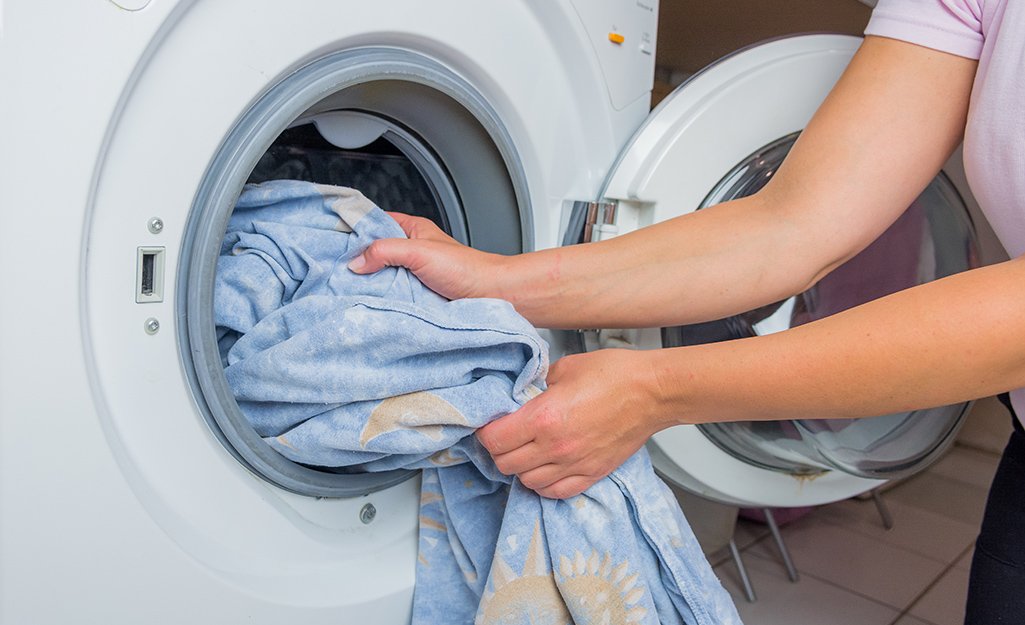
Here’s something that allergists tend to emphasize far more than shoppers expect: no fabric, no matter how expensive or how aggressively marketed, stays hypoallergenic without proper maintenance. Dust mites and their waste accumulate in bedding regardless of the fiber content, and the single most effective tool against them isn’t a specific material at all, but a consistent washing routine using water hot enough to kill mites and their eggs, generally above one hundred thirty degrees Fahrenheit.
A family in Arizona learned this the hard way after spending several hundred dollars replacing their entire bedding set with premium hypoallergenic products, only to see minimal improvement in their son’s morning congestion. It wasn’t until an allergist walked them through a proper weekly hot-water washing schedule for sheets and pillowcases, combined with a mattress encasement, that symptoms actually began to improve. The expensive fabric wasn’t doing much on its own without the maintenance behind it.
This is a point worth sitting with for a moment, because it reframes the entire premise of hypoallergenic shopping. The word on the label describes a starting point, not a permanent state. A hypoallergenic pillow that never gets washed, sits in a humid bedroom, and gets used for a decade past its recommended replacement date will eventually accumulate just as many allergens as an ordinary one. The material can slow the process down, in some cases meaningfully, but it can’t stop it indefinitely on its own.
Reading a Label Like Someone Who Actually Knows What They're Looking For
By the time most people finish learning all this, the natural next question becomes practical: how do you actually shop for bedding with this knowledge in hand, standing in a store or scrolling through an online listing? The answer isn’t to avoid the word “hypoallergenic” altogether, since ignoring it wouldn’t necessarily hurt, but it isn’t especially useful as a standalone signal either.
Instead, the more reliable approach is to look past the marketing word and toward the specific claims underneath it. A trustworthy listing usually explains why a product is being marketed as hypoallergenic, rather than simply printing the word and moving on. It might mention a specific weave density designed to block allergen particles, a fill material free of biological proteins, or a third-party certification logo that can be independently verified. If a product only says “hypoallergenic” in bold letters with no further explanation anywhere on the packaging or product description, that’s usually a sign the word is doing more marketing work than actual protective work.
It also helps to think about which specific problem is being solved. Someone dealing with a diagnosed dust mite allergy needs a fundamentally different solution, namely tightly woven mattress and pillow encasements combined with frequent hot washing, than someone dealing with a mild skin sensitivity to synthetic dyes or chemical fabric treatments, who might do better with an OEKO-TEX certified natural fiber free of harsh finishing chemicals. Buying “the hypoallergenic one” without identifying which specific trigger is actually causing symptoms is a bit like buying “the medicine” at a pharmacy without checking what it treats.
When the Problem Isn't the Bedding at All
It’s worth acknowledging something that gets lost in most articles about allergy-friendly bedding: sometimes the actual source of morning congestion or itchy skin has nothing to do with sheets or pillows at all. Bedroom humidity levels, nearby carpeting that traps dust and pet dander, an aging air conditioning filter that’s been ignored for months, or seasonal outdoor pollen drifting in through an open window can all produce symptoms that feel exactly like a bedding allergy, prompting an expensive and ultimately unnecessary shopping spree.
An allergist in Chicago has often pointed out to patients that bedding is usually the second or third thing worth investigating, not the first, and that a proper allergy test identifying the specific trigger, whether it’s dust mites, pet dander, mold, or something else entirely, saves people from years of trial-and-error purchases based on hopeful marketing claims. This doesn’t mean bedding never matters. Given how many hours a person spends with their face pressed against a pillow every single night, it matters quite a lot for anyone with a confirmed dust mite or dander sensitivity. But it does mean the word “hypoallergenic” works best as one piece of a larger picture, rather than a magic fix purchased in isolation.
The Hotel Industry Figured This Out Years Ago
There’s an interesting parallel worth mentioning here, because the hospitality industry quietly solved this problem for itself long before most consumers started paying attention to bedding allergens. Large hotel chains change bedding between nearly every guest, wash linens at industrial temperatures far higher than a typical home washing machine can reach, and often use tightly woven, budget-friendly polyester-cotton blends rather than luxurious natural fibers. None of this is marketed with the word “hypoallergenic” anywhere on the packaging, and yet the combination of high-heat washing, frequent replacement, and dense weave construction achieves much of what a home shopper is actually hoping to buy when reaching for a premium hypoallergenic label. The lesson embedded in this comparison isn’t that hotel sheets are secretly superior, but that the underlying habits and construction choices matter more than any single word stitched onto a tag.
This is part of why some allergists gently push back when patients ask which specific hypoallergenic brand to buy, redirecting the conversation instead toward frequency of washing, water temperature, and whether an actual barrier product covers the mattress and pillows underneath the visible sheets. The visible layer of bedding, the one a guest or a family member actually touches and sees, matters less for allergen exposure than the hidden layers underneath, which spend years accumulating dust mite waste unless specifically protected.
A Note on Children's Bedding and Marketing Pressure
Parents shopping for children’s bedding face a particularly intense version of this confusion, because marketing language aimed at nurseries and kids’ bedrooms tends to lean even harder on words like “hypoallergenic,” “gentle,” and “safe,” often stacked together on a single package with soft pastel colors and cartoon animals reinforcing a sense of trustworthiness. A parent exhausted from months of a congested toddler waking up at 3 a.m. is an easy audience for a confident-sounding label, and completely understandably so.
The same underlying rules apply here as anywhere else in the bedding aisle, though the stakes can feel higher given how much time young children spend asleep relative to adults, often twelve hours a night or more during early childhood. A tightly woven, OEKO-TEX certified cotton sheet paired with a properly encased mattress and a consistent weekly hot-water wash will typically do more for a child with a genuine dust mite sensitivity than any single branded sheet set claiming hypoallergenic status on its own. Pediatric allergists frequently recommend parents get an actual allergy panel done before assuming a bedding-related cause at all, since childhood congestion has an enormous number of possible explanations ranging from common colds to structural nasal issues, none of which any pillowcase can solve.
Bringing It All Back to the Linen Aisle
Return, for a moment, to Sarah standing in that store aisle with two pillowcases in her hands. If she walked back into that same store today with everything laid out here, her decision would look quite different. She’d check whether the packaging explained the actual mechanism behind the hypoallergenic claim, rather than simply trusting the word. She’d look for a recognizable independent certification logo rather than relying on the manufacturer’s own description. She’d think honestly about whether her symptoms actually pointed toward a dust mite issue, in which case a tightly woven pillow encasement and a hot-water washing routine would matter far more than the pillowcase fabric itself, or whether her symptoms pointed toward something else entirely, perhaps worth a conversation with a doctor before spending another dollar on premium textiles.
None of this means the word “hypoallergenic” is worthless or that companies using it are inherently dishonest. Many products marketed this way genuinely do offer real, measurable benefits for people with legitimate sensitivities. But the word by itself, floating alone on a package with no further explanation, isn’t a guarantee, a certification, or a medical diagnosis. It’s an invitation to ask a few more questions before reaching for your wallet, and in a marketplace full of confident-sounding claims, that small habit of curiosity turns out to be worth quite a lot.
Frequently Asked Questions
Does "hypoallergenic" mean a product is allergen-free?
No. The term only suggests a product is less likely than some unspecified alternative to trigger a reaction, and no regulatory body requires testing before the word can be used on a label.
Are hypoallergenic mattress and pillow encasements worth buying separately from sheets?
For people with a diagnosed dust mite allergy, yes. Tightly woven encasements that physically block allergen particles tend to make a bigger practical difference than switching sheet fabric alone.
Is down bedding always bad for allergy sufferers?
A true feather protein allergy is fairly uncommon, and much of what people experience is actually a reaction to accumulated dust and dander in old, unwashed down products rather than the feathers themselves.