Let me just start by saying — I’m not a scientist. I’m not a laundry expert. I’m just someone who got really tired of looking at my favorite bedsheets and wondering why they turned into ghosts.
You know what I’m talking about, right?
You buy these beautiful sheets. Maybe it’s that deep burgundy color. Or that soft sage green that matches your curtains perfectly. You spend good money on them. Not crazy money, but like — you didn’t buy the cheapest ones on the shelf. You felt the fabric. You imagined how nice your bedroom would look. You even texted a photo to your friend.
First night? Heaven.
Second week? Still great.
Two months later? You pull them out of the dryer and you literally stop and stare. They look… tired. The color is patchy. The edges are lighter than the middle. That rich burgundy is now kind of a muddy pinkish-brown. What the heck happened?
I’ll tell you what happened. Because I’ve done all the stupid mistakes. And I mean all of them.
The First Mistake I Made — Thinking New Sheets Are "Done"
Okay so here’s something nobody told me until I was maybe thirty years old.
When you buy a new bedsheet, the color isn’t permanently locked in. I know. I know. You think, “It’s brand new from the store. Of course the color is final.” Nope.
Here’s the truth. In the factory, they dye the fabric. But not all the dye actually sticks. Most of it does — like 95% or something. But that last 5%? It’s just sitting there. Loose. Hanging out on the surface of the threads like a bunch of lazy friends who won’t leave your couch.
So the very first time you wash those sheets — especially if you use warm water like I used to — that loose dye just washes away. Down the drain. Gone forever.
That’s why the first wash is always the most dramatic. You might even see the water turn a little pink or blue. That’s not your sheets falling apart. That’s just the extra dye finally leaving.
But here’s the thing that got me. I used to think, “Oh it’s fine, it’s just the first wash.” But then it kept happening. Slowly. Every time I washed them. And I couldn’t figure out why.
The Dryer Is Not Your Friend (I Learned This The Hard Way)
Let me tell you about my “everything together” phase.
For years, I just threw everything into the washing machine together. Jeans. Towels. Bedsheets. T-shirts. Socks. Didn’t matter. Same load. Same warm water. Same everything.
I thought I was being efficient.
I was actually being an idiot.
Here’s why. Under a microscope — and I’ve seen pictures of this, it’s wild — cotton fibers look like little twisted ribbons with rough edges. Not smooth at all. Almost like tiny little scales.
So when your soft bedsheets tumble around with a pair of rough denim jeans? Those jeans are basically sandpaper. Every single tumble, every single rub, scrapes off microscopic bits of dyed fiber. You can’t see it happening. But it’s happening. Hundreds of tiny scrapes per wash. Thousands over a few months.
And towels? Don’t even get me started. Terrycloth towels are like little loops of grip. They grab onto your sheets and just rub and rub and rub.
Now I separate everything. Sheets with sheets. Towels with towels. Jeans get washed alone or with other jeans. It’s annoying. It takes more time. But my sheets actually last now. So I’ll take the extra twenty minutes.
Hot Water Is a Trap. I Fell For It.
Okay I need to confess something embarrassing.
Until about two years ago, I washed almost everything in hot water. I had this idea in my head that hot water = clean. Like if I didn’t use hot water, I was basically just splashing room-temperature nothing onto my clothes.
Turns out I was boiling the color right out of my sheets.
Here’s the science part — but I’ll keep it simple. Heat makes things expand. Your fabric fibers expand in hot water. The dye molecules are sitting inside those fibers. When the fibers expand, the dye molecules get loose. They start wiggling around. And eventually, they just let go and float away.
I had this one set of charcoal gray sheets. Beautiful. Like a storm cloud. Dark, moody, perfect for winter.
I washed them in hot water for maybe six weeks. You know what they looked like after that? A weird greenish-gray. Like someone left a pencil drawing in the rain. I was so mad.
Now I wash everything in cold water. Unless someone was sick with a fever or something. Then okay, fine, hot water. But normally? Cold. Always cold. My sheets still get clean. And they don’t turn into ghosts.
Hard Water — The Villain Nobody Talks About
Alright here’s something I didn’t even know existed until I moved to a new apartment and suddenly my sheets started fading twice as fast.
Hard water.
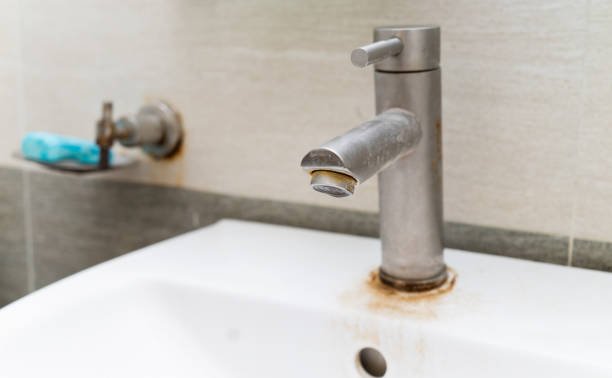
If you’ve never heard of it — hard water is just water that has a lot of minerals in it. Calcium. Magnesium. Stuff like that. It’s not dangerous. You drink it every day. But it is absolutely terrible for your laundry.
Here’s what happens.
Those minerals in the water grab onto your laundry detergent. They don’t just leave it alone. They attack it. They create this weird sticky residue called soap scum. You’ve seen it in your shower or your bathtub — that white-gray film that’s hard to scrub off.
Now imagine that film building up inside your bedsheet fibers. Not on top. Inside.
So now you have sheets that are coated with this rough, scratchy mineral layer. And that layer — just like the jeans I talked about earlier — acts like sandpaper. Every time you move in your sleep, every time you wash them, that mineral layer is scraping away at the dye.
Plus it makes your sheets look dull. Even if the color hasn’t faded much, the mineral buildup blocks light. So your sheets just look… dead. Lifeless. Grayish.
The fix is stupidly simple. Half a cup of white vinegar in the rinse cycle. Once a month. That’s it. The vinegar dissolves the mineral buildup without hurting the dye. I learned this from my aunt who’s been doing laundry for fifty years. She laughed at me when I told her I didn’t know about hard water.
The Sun Is Not Always Your Friend
Okay this one hurt to learn because I love line-drying my sheets.
There’s nothing better than crawling into bed with sheets that smell like sunshine and fresh air. It feels like a luxury hotel. It feels like your grandmother’s house.
But here’s the problem.
The sun has UV light. And UV light is basically a bleaching agent. That’s why newspapers left in a window turn yellow. That’s why a poster on a sunny wall looks faded after a year.
I hung my beautiful lavender sheets outside for two whole months one summer. My dryer was broken and I was too cheap to go to the laundromat. Every week, nice sunny day, out on the line they went.
By the end of that summer, those lavender sheets looked almost white. I’m not exaggerating. They smelled amazing. But they were ruined.
Now if I line-dry, I do it in the shade. Or I hang them inside-out so the UV light fades the side nobody sees. Or I just use the dryer on low heat. It’s not as romantic. But my sheets keep their color.
So Here's What I Actually Do Now

Look. I’m not perfect. I still forget sometimes. I still throw a towel in with my sheets when I’m in a hurry. But most of the time, I follow these rules and my sheets actually last more than a year now.
Cold water. Always.
Gentle detergent. Not too much — extra detergent actually makes fading worse because it’s more chemicals rubbing against the dye.
Separate loads. Sheets alone. Towels alone. Jeans alone.
Half a cup of vinegar once a month.
Line-dry in the shade, or low heat in the dryer.
And here’s the thing I finally accepted — sheets are going to fade. All of them. It’s not a scam. It’s just what happens when you wash something over and over. The only question is how fast.
If you do everything wrong? Your burgundy sheets will look pink in two months.
If you do everything right? They’ll still fade, but slowly. Gently. After two years, they’ll be a soft, dusty rose instead of a screaming burgundy. And honestly? That’s kind of nice too. Like an old friend whose face has softened with age.
My grandmother used to say something like — “Your sheets hold your dreams and your sweat and your bad days. Of course they change. Nothing that close to you stays the same.”
I think about that every time I make my bed now.
Three Short FAQs (Because People Always Ask)
1. Can I fix sheets that already look faded?
Sort of. You can buy fabric dye — Rit is the common one — and re-dye them in your washing machine. Go darker than the original color. Navy blue covers a lot of sins. Just run an empty hot cycle afterward or your next white t-shirt might come out tie-dyed.
2. Does bleach help white sheets stay white?
No and yes. Chlorine bleach actually weakens cotton and can make whites look yellow over time. Use oxygen bleach instead — OxiClean type stuff. Or do the old trick: hang white sheets in direct sun. The sun bleaches naturally without damaging the fibers.
3. Do expensive sheets fade slower?
Not always. Honestly? Some cheap sheets fade slower because they use different kinds of dye that soak in deeper. High thread count sheets (like 800+) are so tightly woven that the dye sits near the surface and rubs off faster. Mid-range sheets — 300 to 500 thread count — usually hold color the best. I learned that after wasting way too much money on “luxury” sheets that looked old after three months.