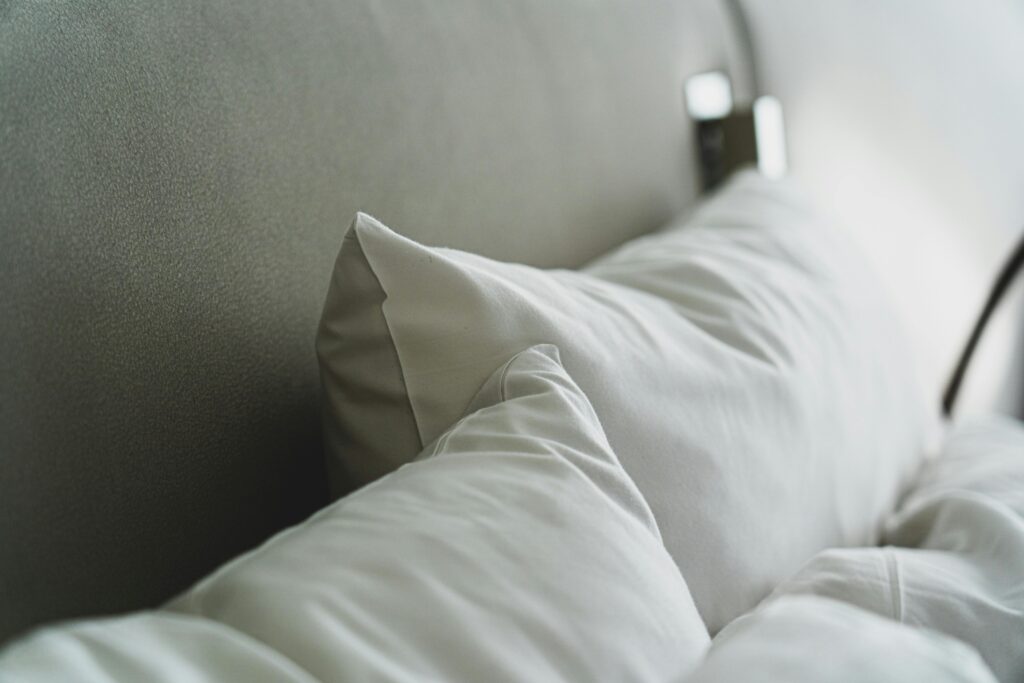
You bought crisp white sheets, and a few months later they have a dull, creamy tint that no amount of washing seems to fix. It’s one of the most common bedding complaints, and it usually isn’t a sign of poor quality. Yellowing happens for a handful of predictable reasons, most of which come down to what happens on the bed every night and how the sheets get washed. Once you know the cause, you can usually bring the color back.
Why White Sheets Turn Yellow
Body oils and sweat. Your skin produces oils and sweat all night, and they soak into the fibers. Over time, these build up and oxidize, which is what produces that yellow or beige tint. It tends to show most around the pillow area and the center of the bed.
Detergent and fabric softener residue. Using too much detergent, or using fabric softener often, leaves a film in the fabric that traps oils and dirt. That film can turn yellow on its own and makes the sheet look dull.
Hard water minerals. Minerals like iron and calcium can settle in the fabric and give white sheets a yellow or grayish look over time.
Skincare and hair products. Night creams, lotions, hair oils, and sunscreen transfer onto sheets and pillowcases, building up gradually.
Not washing often enough. The longer oils sit in the fabric, the harder they are to remove, and the more permanent the yellowing looks.
Heat and age. High-heat drying and repeated bleach use can weaken fibers and shift the color slightly. Fabrics also naturally dull a little with age.
How to Whiten Yellowed Sheets
Step 1: Start with a hot wash, if the fabric allows. Check the care label first. Many cotton sheets can handle warm or hot water, which dissolves body oils far better than cold water.
Step 2: Use the right amount of detergent. Follow the recommended amount for your load size. Too much leaves residue, and too little won’t lift the oils.
Step 3: Add a booster. Options that many people use include:
- White vinegar (about a cup in the rinse) to help break down residue and soften hard water minerals
- Baking soda (about half a cup in the wash) to help lift odors and buildup
- Oxygen-based whitener (such as products labeled as oxygen bleach), which is generally gentler on fabric than chlorine bleach
Step 4: Soak stubborn sheets. For heavily yellowed sheets, soak them for a few hours in warm water with an oxygen-based whitener before washing as usual.
Step 5: Rinse thoroughly and dry well. An extra rinse cycle can help remove leftover product, and drying fully avoids new musty smells. Drying in sunlight can also give white cotton a natural brightening effect.
A Word of Caution About Bleach
Chlorine bleach can brighten white cotton, but it also weakens fibers over time and can make yellowing worse if it reacts with minerals or residue in the fabric. Use it sparingly, if at all, and never mix it with vinegar or other cleaners. Always check the care label first, since some fabrics and blends don’t tolerate bleach.
How to Prevent Yellowing in the Future
- Wash sheets weekly so oils don’t have time to set
- Rotate between two sets so each one gets a rest
- Skip fabric softener or use it rarely
- Measure detergent instead of pouring freely
- Wash your face and remove heavy products before bed when possible
- Dry on medium heat rather than the highest setting
- Use a water softener or add vinegar if you have hard water
What If the Sheets Are Too Far Gone?
If a sheet is thin, brittle, or still dull after a few treatments, the yellowing may be tied to worn-out fibers rather than surface buildup. At that point, replacing it is usually the better option.
Frequently Asked Questions
Does yellowing mean my sheets are dirty? Not always. It often reflects built-up oils and residue rather than visible dirt, but it does mean the sheets need a deeper cleaning.
Can I use vinegar and baking soda together? They’re usually used separately, since mixing them in the same step makes them cancel each other out. Use one in the wash and the other in the rinse.
Do colored sheets yellow too? The buildup happens either way, but it’s much more visible on white and very light sheets.
How often should I wash white sheets? Weekly is a good standard, and more often in hot, humid weather.
The Bottom Line
White sheets turn yellow mainly because of body oils, residue, hard water, and infrequent washing, and most of the time you can reverse it with a hot wash, the right booster, and a better routine. Good fabric also helps, since quality cotton releases buildup more easily. Our Premium Cotton sheets are made from fibers that wash clean and stay bright with regular care.