Let me make this article feel like a conversation between you and me. Pull up a chair, or better yet, crawl into bed. But wait—not that bed. The one with the rough sheets.
I still remember the exact moment I started questioning everything I knew about bedding. I was twenty-two, living in my first “grown-up” apartment, and I had just spent what felt like a fortune on a set of navy blue sheets from a big-box store. They looked luxurious. The packaging promised “hotel luxury.” That first night, I slid between them fresh out of the shower, and I swear, it felt like I was being hugged by a burlap sack that had been left out in the desert sun.
I tossed. I turned. The fabric dragged against my heel like sandpaper. Around 2 AM, I found myself googling, “Why do my sheets feel like cardboard?”
That was a decade ago. Since then, I’ve become a bit of a sheet detective. I’ve learned that rough sheets aren’t a punishment for buying cheap things. Sometimes, expensive sheets feel rough too. Sometimes, your favorite sheets suddenly turn hostile after a few washes.
Let me walk you through the mystery—and the fix.
The Villain Isn’t Always the Price Tag
A few years after the burlap-sack incident, I visited my friend Priya. She had just gotten married and received these incredible Egyptian cotton sheets as a gift. I was jealous. They probably cost more than my first car. That night, I crashed in her guest room, expecting to float on a cloud.
Instead, I woke up with a red mark on my cheek from the crease.
The sheets were… prickly. Not soft at all. I didn’t say anything, of course, but I was confused. How can a $300 set of sheets feel worse than my old college dorm bedding?
Here’s what I’ve learned since then. The story of rough sheets has three main characters: the fiber, the finish, and the wash.
Let’s start with the fiber. Everyone talks about thread count like it’s the holy grail. “600 thread count!” the package screams. “1000!” Well, let me tell you a secret that sheet companies don’t want you to know. A high thread count can be a lie. Sometimes, manufacturers twist thin, short fibers together and pack them in so tightly that there’s no room for air. You know what that creates? A stiff, heavy, rough pancake of a sheet. It’s like weaving with dental floss instead of cotton balls.
The real secret is in the staple length. Cotton fibers come in short, long, and extra-long. Short fibers (like in cheap cotton) have rough little ends that poke up through the weave. Those ends are what scratch your legs at 3 AM. Long-staple cotton—like Egyptian, Pima, or Supima—has smooth, continuous fibers that bend and flex. They feel like liquid.
But even long-staple cotton can be ruined. And that brings me to the second character: the finish.

The Day I Ruined My Favorite Sheets (With Vinegar)
Let me tell you a sad story. About two years ago, I found the one. A set of percale weave, long-staple cotton sheets from a brand I won’t name (but you know the one—it starts with a B). They were crisp but soft. Cool but cozy. I loved them.
And then I killed them.
It happened slowly. I have a habit of using too much detergent. I like the smell, you know? And I had read somewhere that vinegar is good for laundry. So I started adding a cup of vinegar to every wash. Then I got scared of germs, so I turned the water temperature up to “scalding.” Then, because I was impatient, I started blasting them in the dryer on high heat for a full ninety minutes.
After three months, my beautiful sheets felt like sandpaper coasters.
Here’s the chemistry lesson I wish I had known. Detergent residue builds up. When you use too much soap, it doesn’t all rinse away. It sticks to the cotton fibers like wax. Then, when you add vinegar and high heat? You’re basically cooking that waxy soap residue onto the threads. The fabric becomes stiff and rough.
Also, high heat destroys the microscopic curl of cotton fibers. Think of each cotton thread like a tiny spring. Heat makes that spring go straight and brittle. No spring, no softness.
The fix was humiliatingly simple. I had to strip my sheets.
I filled my bathtub with the hottest water my tap could produce. I added half a cup of baking soda and a full cup of white vinegar. Not together at first—you don’t want a volcano. Vinegar first, then baking soda, then I swirled it. Then I submerged those sad, crusty sheets and let them soak for eight hours.
The water turned a disgusting, murky gray. That was all the built-up detergent, fabric softener (another enemy!), and body oils that had fused into the fabric. I drained the tub, rinsed the sheets three times in cold water, and then—here’s the important part—I dried them on low heat with three clean wool dryer balls.
When I pulled them out, they weren’t perfect. But they were 80% softer. I actually cried a little. Not because of the sheets, but because I realized I had been fighting against my bedding for years when I could have just… been gentle.

The Plot Twist: Sometimes It’s You (Not the Sheet)
Let me pause here and get personal. For a long time, I blamed the sheets. Then I blamed the washing machine. But one winter, I visited my sister in Minnesota. She has the cheapest sheets on earth—polyester blends from a discount store. And they felt amazing on her bed. Soft. Warm. Fluffy.
I was offended. Why do her cheap sheets feel better than my expensive ones?
Then I realized: it’s not just the sheet. It’s the body touching the sheet.
My sister has naturally soft, hydrated skin. She drinks a gallon of water a day and slathers herself in shea butter after every shower. Me? I live in a dry climate, I take scalding hot showers (I know, I’m a hypocrite), and I never moisturize my legs. My skin is a desert. Have you ever rubbed dry skin against fabric? It creates friction. That friction feels like roughness, but it’s actually your own skin catching on the threads.
Also, rough feet. I’ll admit it—I neglect my heels. One night, I filed my calluses and put on thick lotion and cotton socks before bed. The next morning, my “rough” sheets felt completely different. Softer. Because I had removed the sandpaper from my own body.
Sometimes, the fix isn’t new sheets. It’s a glass of water and a pumice stone.
The Four Fixes That Actually Work (From a Recovering Sheet Abuser)
After a decade of trial and error—and many sleepless nights—I have a short list of things that actually fix rough sheets. No gimmicks. No expensive “bedding refresher” sprays.
First, switch to a liquid detergent designed for sensitive skin, and use half of what the bottle says. I use two tablespoons max for a large load. That’s it. And I always run an extra rinse cycle. Always.
Second, ditch fabric softener. I know, I know. Fabric softener feels nice in the bottle. But it coats fibers with a waxy film that, over time, makes sheets feel greasy and rough. Use wool dryer balls instead. They beat the fibers soft without residue.
Third, wash in warm (not hot) water and dry on low heat. Pull them out when they are 95% dry and let them air dry the rest of the way. If you hear your sheets thumping around in a hot dryer for an hour, you are felting the fibers. You are making felt. Felt is not soft.
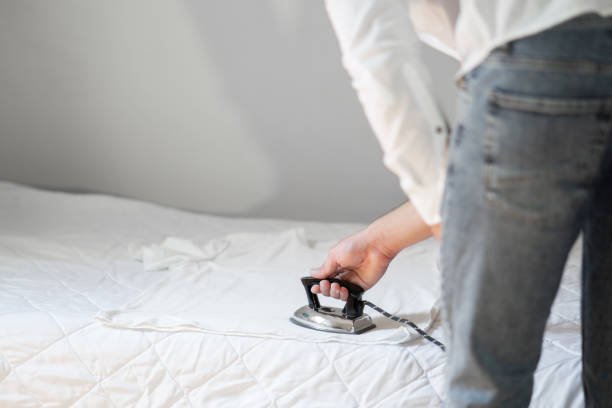
Fourth—and this one surprised me—iron your sheets. I’m serious. I thought my grandmother was crazy when she told me this. But ironing flattens the fibers and seals the weave. It makes cotton feel silky and smooth. I don’t do it every week, but once a month? It transforms the texture.
One Last Story: The Bamboo Lie
Before I let you go, I have to warn you about something. A few years ago, everyone started talking about bamboo sheets. “Eco-friendly!” “Naturally soft!” “Like butter!”
So I bought a pair. A $150 set of bamboo viscose sheets. Out of the package, they were the softest thing I had ever touched. I’m talking dangerously soft. Like sleeping inside a cloud made of silk.
After three washes? They pilled. They became rough in patches. And they stretched out like a worn-out t-shirt.
Here’s the secret that bamboo companies don’t advertise: “bamboo” sheets are usually bamboo viscose or rayon. That means the bamboo plant is dissolved in harsh chemicals and then extruded into fiber. The initial softness comes from a chemical process, not the natural fiber. And that softness washes away. Plus, bamboo viscose has short, weak fibers that break and pill.
I’m not saying don’t buy bamboo. I’m saying know what you’re getting. If you want lasting softness, stick with long-staple cotton (Egyptian, Pima, Supima), linen (which starts rough but gets softer for decades), or Tencel lyocell (which is a more eco-friendly, durable version of bamboo).
The Happy Ending
Tonight, I’m climbing into a bed with cotton percale sheets that are three years old. They feel like a gentle handshake. Not slippery, not scratchy. Just… right. I wash them in cold water with two tablespoons of detergent. I dry them on low. Once a month, I strip them with vinegar and baking soda. And I drink more water.
If your sheets feel rough, don’t go out and buy new ones yet. Try the bathtub strip. Lower your dryer temperature. Look at your heels. You might save a hundred dollars and a lot of heartbreak.
And if you do buy new sheets? Remember the long-staple cotton secret. Ignore the thread count wars. And never, ever trust a sheet that feels like plastic out of the package.
Now go make your bed. You deserve a soft landing.
FAQs (Short, Because You Have Places to Be)
1. My sheets feel rough right out of the package. Should I return them?
Not yet. Wash them twice in warm water with half the usual detergent and no fabric softener. Dry on low with wool dryer balls. New sheets often have a “sizing” coating (starch from manufacturing) that makes them stiff. Two washes usually fix it. If they’re still rough, then yes—return them.
2. Can I fix sheets that have already pilled and gone rough?
Partially. Use a fabric shaver or a clean disposable razor to gently shave off the pills. Then do a vinegar/baking soda strip soak for 4 hours. Then wash with an extra rinse cycle. They won’t be new again, but you might get another year of comfortable sleep out of them.
3. What’s the one thing I should never do to my sheets?
Never use bleach. Never. Bleach eats cotton fibers and leaves behind a rough, brittle texture. If you need to whiten, use oxygen bleach (like OxiClean) or hang your white sheets in direct sunlight. The sun naturally bleaches and softens fibers without destroying them.