It was one of those lazy Friday evenings in Lahore, the kind where the winter sun dips behind the DHA rooftops and the entire city smells like brewing chai and smoke from the anghithi. I was sitting on my floor mattress—yes, a very traditional gadda—staring at my mismatched bedsheets and the faded paint on my walls.
My cousin, Alina, had just returned from a trip to Istanbul via Karachi, and she was scrolling through her gallery on her new iPhone. “Yaar,” she sighed, “why does every house in Pakistan look the same? White walls, a heavy double roti bed, and those dusty artificial flowers?”
She wasn’t wrong. For years, our bedrooms have been the forgotten corners of Pakistani interior design—functional, sure, but rarely personal. But something shifted in 2026. I decided to redecorate my small room in Gulshan-e-Iqbal, and in the process, I accidentally stumbled upon the biggest trends sweeping across homes from Islamabad to Karachi.
Let me walk you through what I learned. This isn’t a boring design manual. This is the story of how our bedrooms finally woke up.
The Great Migration from the Floor to... Half-Floor
The first thing Alina pointed out was my gadda. “Throw it away,” she said. I almost cried. A traditional gadda (thick cotton mattress) is a South Asian heirloom. But here is the twist for 2026: We aren’t switching to Western beds entirely.
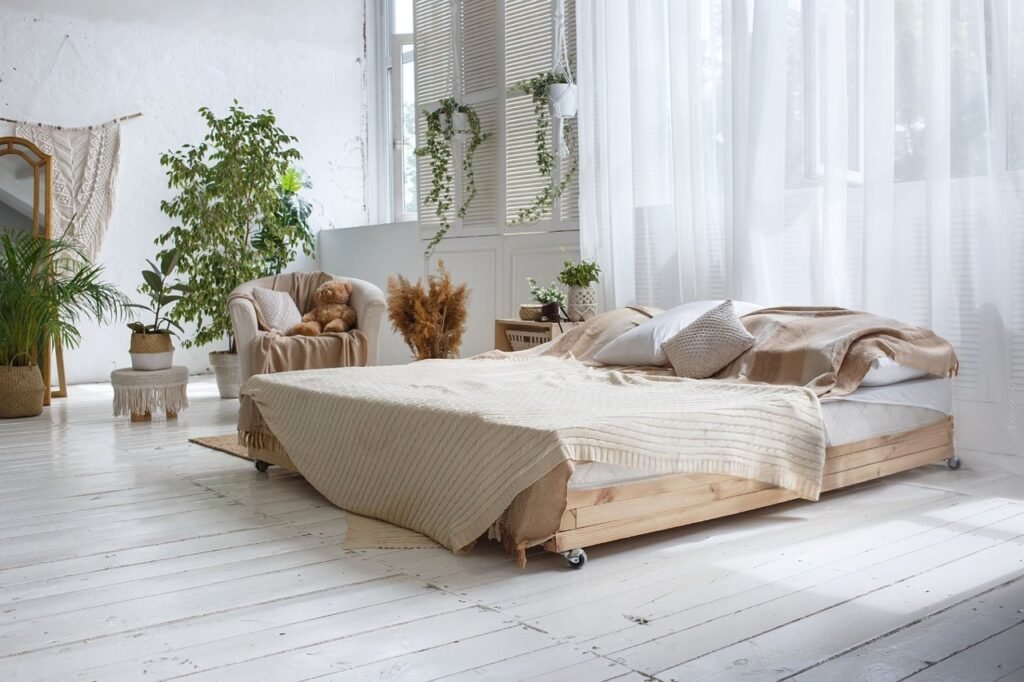
Instead, the “Platform Bed” has arrived. Imagine a wooden base that sits just 6 to 9 inches off the floor. No legs. No creepy space for bachay ki goli (marbles) to roll under. It is essentially a sophisticated, modernized khaat.
I visited a workshop in Timber Market, Karachi (online, of course, because traffic). The carpenter, Ustad Sherazi, showed me his bestseller. It was solid sheesham wood, oiled to a matte finish, with no headboard. “Young people want low,” he laughed. “They say it makes the ceiling look higher.”
He was right. I bought one. Suddenly, my 10×12 room looked like a suite at the Nishat Hotel. The low profile invites you to sit, to lounge, to sleep. It bridges the gap between our desi love for floor sitting and Western ergonomics. If you are upgrading in 2026, ditch the four-poster monster. Go low. Go wide.
The Death of the Matching Curtains
My mother is a wonderful woman, but she has committed a crime against aesthetics for thirty years: The Matching Set. You know the one. The bedsheet, the curtains, the pillow covers, and the dupatta draped over the dressing table—all the exact same print from ChenOne.
In 2026, we are rebelling.
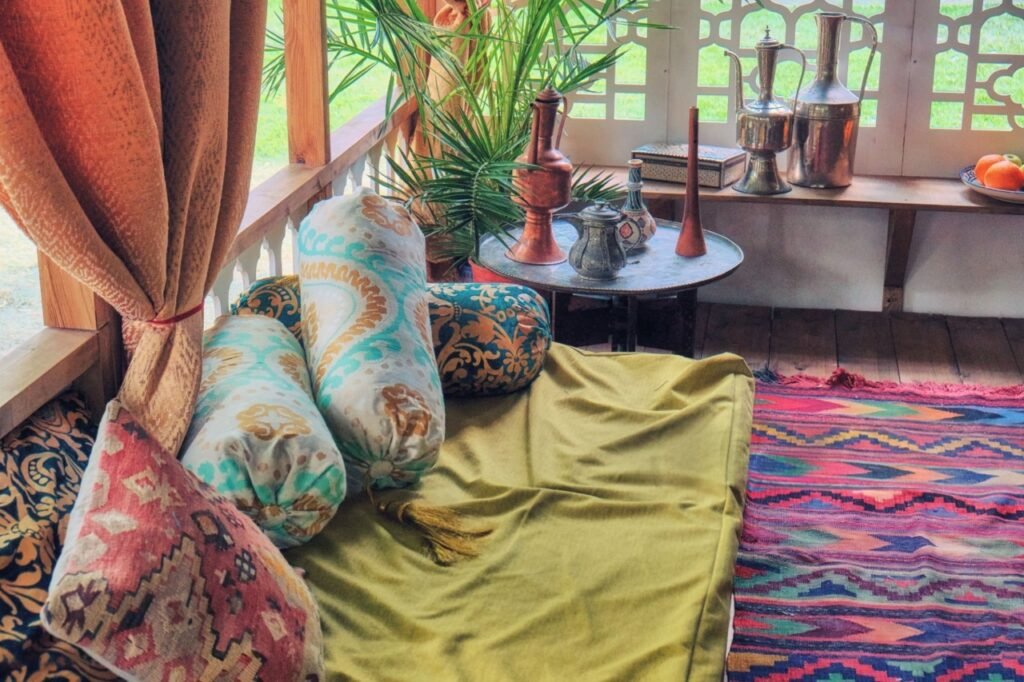
The trend is called “Maximalist Mismatch,” and it saved my budget. I kept my old blue walls. Instead of buying blue curtains, I bought burnt orange velvet drapes from a small vendor on Instagram (ChiniotiHandloom—highly recommend). I kept my floral bedsheet but added a Ralli (Sindhi patchwork quilt) folded at the foot.
The rule is simple: Texture is king. You want linen curtains, a cotton bedsheet, a velvet throw pillow, and a jute rug. Everything clashes, but everything works.
My friend Zara in Islamabad took it further. She painted one wall Gulabi (deep pink) and left the others white. Then she hung truck art mirrors and a vintage chand baali (moon and star) tapestry. It looks chaotic if you describe it, but in person, it feels like a hug. Don’t be afraid of color. Be afraid of boring.
The "Smart" Fan (Yes, The Ceiling Fan)
Let’s be real. Pakistan is hot. Even in 2026, ACs are expensive to run, and load shedding (though better now) still haunts us. The ceiling fan is our national hero. But the ugly metallic pankha with the pull chain? Retired.
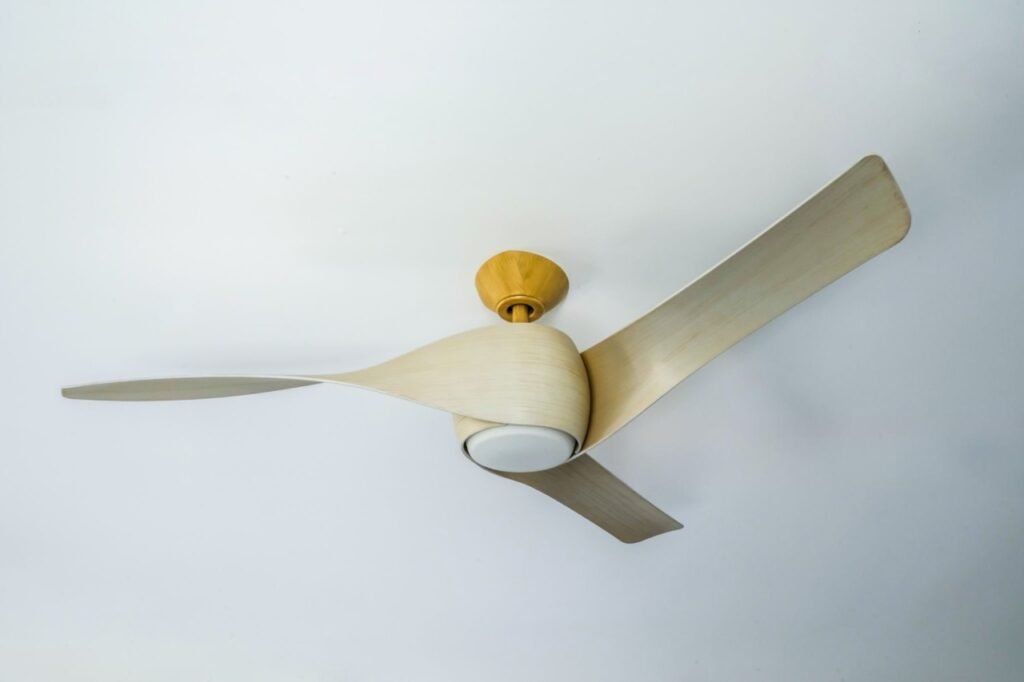
The new trend is the “Smart Hub” fan. These aren’t just fans; they are centerpieces. I bought a brushed nickel fan with wooden blades shaped like palm leaves. It has an LED light that changes temperature (warm for winter, cool for summer) and a remote control that I magnetically stuck to my headboard.
But the coolest part? They are energy efficient. My electricity bill dropped by 15% just by switching to these BLDC (Brushless DC) motors. My father was so impressed he replaced all the fans in the house.
Design-wise, people are moving away from the standard 56-inch size. In 2026, we use two smaller, sleeker fans in a large master bedroom, or one massive 72-inch fan in a small room to create a dramatic, airy feel. It’s functional art. Who knew the humble pankha would become a status symbol?
The DIY Clay Wall (Lime Plaster)
Three months ago, I watched a YouTube video of a house in Multan. The walls looked… alive. They weren’t smooth. They had ridges, dips, and a warm, sandy color. That is Lime Plaster, and it is the biggest architectural trend of 2026.
Forget expensive Italian marble or imported wallpaper. Lime plaster is made from limestone, water, and natural pigments. It is breathable (which means less humidity and fungus in Karachi monsoons), antibacterial (great for kids), and it smells like rain.
I called a plaster worker, Naseem bhai. He thought I was crazy. “You want kachi look?” he asked, confused. Yes, I wanted rough.
He applied three coats by hand. It took one week. The result? My bedroom looks like a cave in Cappadocia, but also like a haveli in Bahawalpur. It costs less than half of what wallpaper would cost.
Because it’s handmade, every wall is unique. When the light hits it from the window, the shadows dance on the ridges. It is the perfect antidote to the sterile, glossy tiles we have all grown tired of. If you are building a house or renovating in 2026, do not paint. Plaster.
The Revival of the Jharoka (Not Literally)
Okay, we don’t live in the Mughal era. We live in flats and narrow streets. But the spirit of the Jharoka* (the overhanging enclosed balcony) has returned in the form of the “Window Seat.”
In Pakistan, we waste window space. We put a heavy curtain over it and forget about it. In 2026, if you have a window, you build a seat under it.
I converted the useless space under my bedroom window. I bought two second-hand wooden crates, painted them white, put a custom cushion on top (foam from Anarkali), and added a small bookshelf underneath. Now, that spot is my adda. In the mornings, I drink my doodh patti there. In the evenings, I watch the street dogs fight over the garbage truck. (Hey, it’s authentic.)
This trend is huge because square footage is expensive in cities like Lahore and Karachi. You aren’t adding a room; you are reclaiming dead space. Plus, it adds storage. Lift the cushion, and I hide my winter sweaters and extra chaddars inside. Desi jugaad meets Scandi design.
The Outdoor Bedroom (Balcony Sleeping)
This one shocked me. For years, we kept the bedroom strictly inside (air-conditioned, sealed, silent). But 2026 has seen the rise of the “Mosquito Net Canopy.”
Not the cheap plastic ones. The aesthetic ones. Think four bamboo poles holding up a white, billowy, Victorian-style net. People are placing their beds (or daybeds) on covered balconies or barsati (roofed terraces).
In the winter, especially in Punjab and Sindh, the weather is glorious for three months. Why sleep inside a box? I shifted my charpai to the balcony. I strung up fairy lights (solar powered, very important because electricity is expensive) and hung a heavy mosquito net.
Sleeping outside, with the net filtering the moonlight, is a spiritual experience. You hear the azaan faintly in the distance, feel the real breeze, not the AC wind. It’s dangerous? Maybe. But living in Pakistan has always required a little jigar. For 2026, the trend is to blur the line between inside and outside. If you have a barsati, don’t use it for storage. Sleep there.
The Tech Detox Corner
This is the saddest trend, but the most necessary. We realized that we lie in bed, scrolling Instagram reels until 2 AM, and then wonder why we have headaches.
The 2026 bedroom has a “No Phone Zone.” Usually, this is the dressing area or the corner near the window.
I bought a cheap wooden box from Chandi Ghar (thrift market) and labeled it “The Dungeon.” At 10 PM, my phone goes in. I charge it there, away from my bed. On the nightstand, I replaced my phone with an analog alarm clock (yes, the ticking kind) and a stack of Urdu novels.
It took three days to get used to it. Now? I sleep like a log. My eyes don’t burn. This isn’t just an interior design trend; it’s a mental health revolution. In Pakistan, where life is already tension (stress), your bedroom should be an asylum, not another screen.
The Saucha (Bathroom Integration)
In traditional Pakistani homes, the bathroom is a separate, shameful closet. In 2026, luxury is “The Wet Room.”
If you are building a master bedroom, you knock down the wall. You keep the toilet separate (obviously, for istinja and hygiene), but you open up the sink and the shower area.
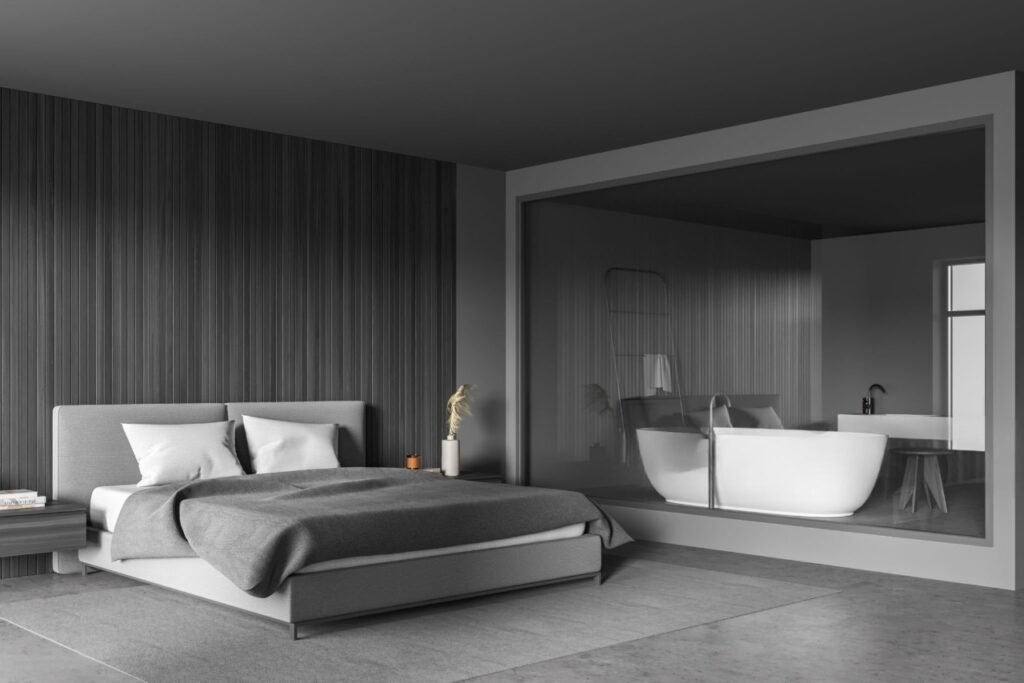
I visited a friend’s house in DHA Phase 8. His bedroom had a freestanding concrete tub (yes, concrete, very industrial) right next to the bed. There was a rainfall shower head with no enclosure. A glass partition separated the wet area from the carpet.
It feels like a spa. It also forces you to keep the room tidy because everyone can see your shampoo bottles. But the openness makes the 10-marla bedroom feel like a 2-kanal palace. It’s risky for families with small kids, but for young couples and bachelors, this is the ultimate status symbol of 2026.
Sustainable Chics (The Bori Bag)
Last but not least, let’s talk about storage. Plastic drawers are out. Woven bori (jute sack) baskets are in.
Remember the bags that rice and flour come in? Artisans in rural Punjab and Sindh are now upcycling those grainsacks into high-end storage cubes. They dye them with natural indigo, add leather handles, and sell them.
I bought three. They hold my socks, my shalwar kameez collection (don’t judge, I have 12), and my chargers/cables. They look rustic and earthy. They don’t make that horrible screeching sound of plastic.
This trend ties into “Vocal for Local.” In 2026, Pakistanis are finally proud of their desi craftsmanship. We aren’t trying to look like IKEA catalogues anymore. We are mixing an IKEA lamp with a Multani khusa (shoe) as a doorstop. We are putting a chabbi (traditional carved box) next to a Samsung Frame TV. The result is a culture on the walls.
How I Pieced It All Together
So, after two months and a budget of roughly 85,000 PKR (which included the platform bed and the plaster), my room is done.
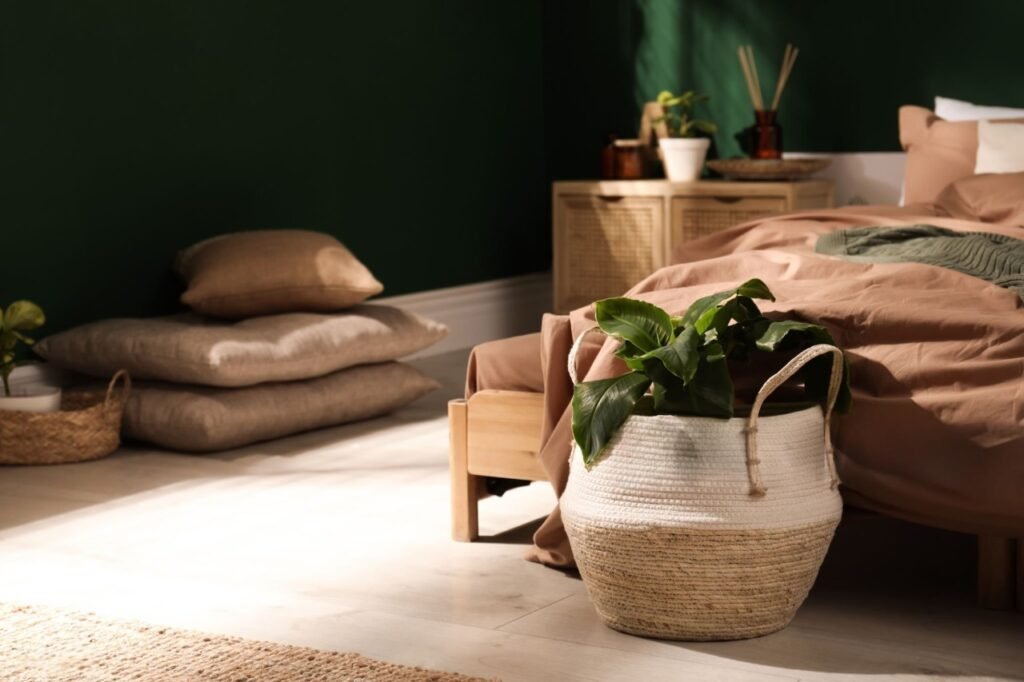
I wake up on the low bed. I see the rough, warm lime wall. I walk to my window seat to open the curtains. The fan whirs silently above me. My phone is locked in the box.
Does it look like a magazine? No. There is a tea stain on the Ralli. The cat has scratched the bori basket. But it feels like me. It is the first time my bedroom hasn’t looked like my parents’ guest room.
The biggest lesson of 2026? We stopped copying the West. We stopped copying the Gulf. We finally looked at our own soil—our sheesham wood, our lime plaster, our grain sacks—and realized it is beautiful.
Three Short FAQs
1. What is the most budget-friendly trend for a small bedroom in Pakistan?
Definitely the DIY Clay Wall (Lime Plaster) . It costs significantly less than imported wallpaper or high-end paint. A standard room in Lahore or Karachi can be plastered for PKR 8,000 to 15,000, and it instantly adds texture and value. Second is the Window Seat using old crates (free/cheap).
2. Are low platform beds comfortable for older people or those with knee pain?
Not really, and that’s an honest answer. While the low platform bed (6-9 inches) is very trendy for young people, traditional higher beds are better for elders. The compromise in 2026 is the Medium Platform (15-18 inches high) which looks modern but doesn’t require you to squat to stand up.
3. How do I keep the "Mosquito Net Canopy" clean in Pakistan's dusty environment?
Wash it! Use a light, cheap cotton or muslin net, not heavy polyester. Throw it in the washing machine on a gentle cycle once a month. Hang it outside to dry in the dhup (sunlight), which kills any hidden germs. For daily dust, a quick shake before maghrib prayers is enough.