By a person who has spent way too much money on bad pillows and finally figured it out.
It started, as most of my obsessions do, with a single night of good sleep.
I was in a Marriott in downtown Chicago. You know the kind of trip—work-related, slightly lonely, the minibar priced like a kidnapping ransom. But that night, after a terrible flight and an even worse sandwich, I fell into the bed. And I didn’t just sleep. I descended. Like a stone into a warm pond. No tossing. No 3 a.m. panic about my emails. Just eight hours of silence and softness.
When I woke up, the sun was filtering through those heavy blackout curtains, and I thought: Why can’t my bedroom feel like this?
So began a three-year experiment. I tried things that worked (white duvets, layered lighting) and things that failed miserably (scent diffusers that smelled like a dentist’s office). I learned that hotel rooms aren’t actually complicated. They’re just intentional. Every single thing in there—from the reading light to the weird little notepad by the phone—has a job.
So let me walk you through what I figured out. By the end of this, your bedroom will feel like a place you escape to, not just a room where you crash after brushing your teeth.
The Great White Pillow Conspiracy (And Why You’re Losing)
Let me confess something embarrassing. For ten years, I bought the wrong pillows. I’d walk into a big-box store, squeeze a pillow that felt vaguely marshmallow-like, and bring it home. A week later, I’d wake up with my neck at a 45-degree angle and my spine sounding like a bowl of Rice Krispies.
Hotels don’t have that problem. Why? Because they use a pillow ecosystem.
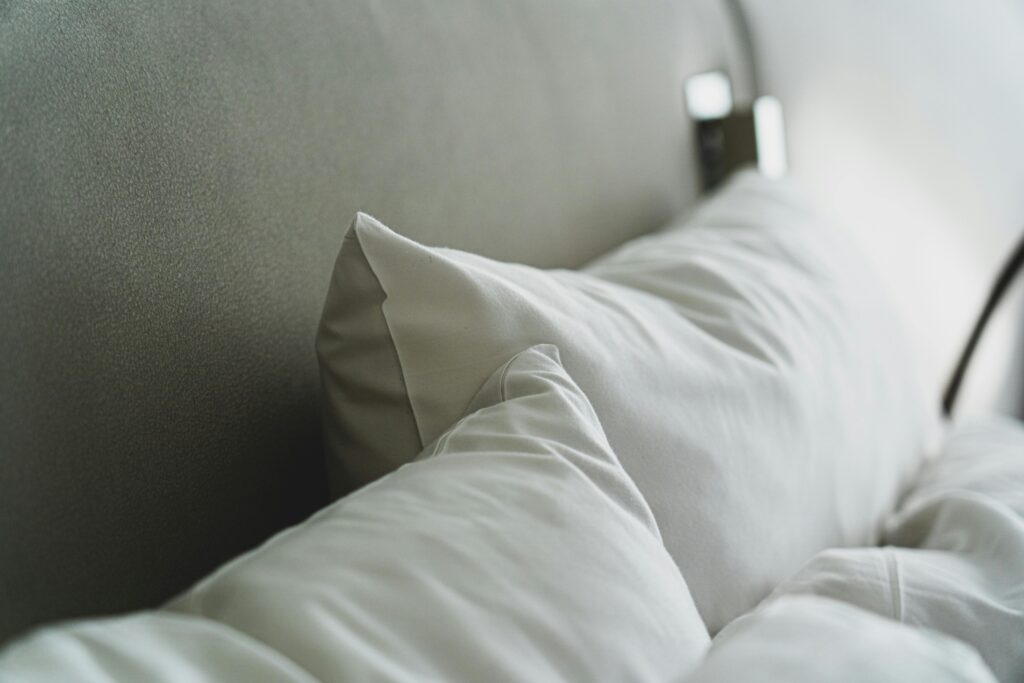
The first time I opened a hotel duvet cover, I found four pillows. Not two. Four. And here’s the secret: they were all different. Two were firm, synthetic-filled squares for sitting up and reading. Two were soft, feather-down clouds for actual sleeping. I copied this immediately.
Here’s my rule now:
- The sleepers: Goose down or a high-quality down alternative. They should be soft enough to fold in half but springy enough to hold your head.
- The shams: These are the decorative, firmer pillows that go behind the sleepers. They create that “wall” of fluff you see in magazine photos.
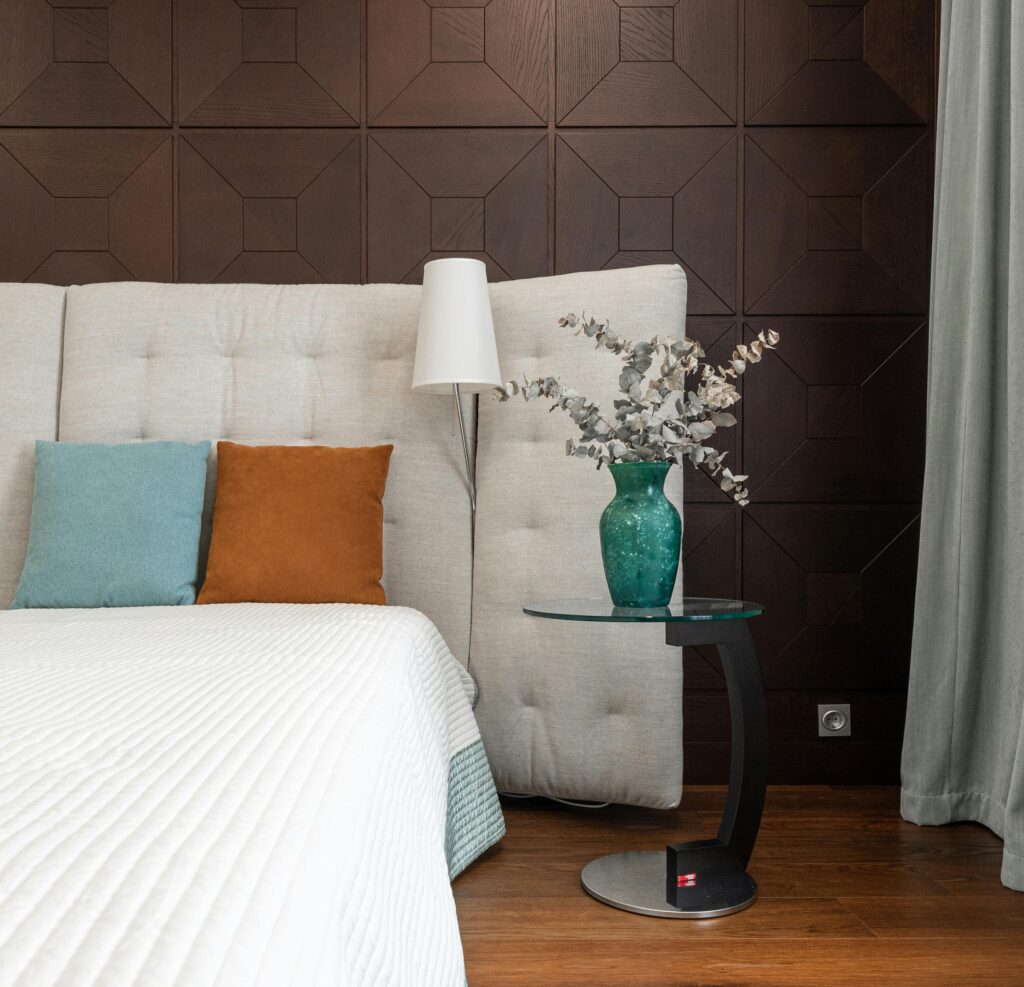
- The euro pillows: Big 26×26 inch squares that lean against the headboard. Honestly, these are mostly for looks. But they add that instant “I have my life together” vibe.
I bought mine from a hotel supply website (yes, those exist). Cost me about $80 for all four. My neck has not complained since.
The White Duvet Dare
Now, this part might scare you. I know because it scared me.
I have a dog. I drink coffee in bed on Sundays. I am, by nature, a messy human. So the idea of a white duvet seemed like a cry for help. But I took the dare. And something strange happened.
Hotels use white for a reason. It’s not just about looking clean (though that’s part of it). White is a reset button. When your bed is all white—duvet, sheets, pillowcases—your eyes relax. There’s no pattern to decode, no competing colors. Just texture and light.
Also, you can bleach white. You can’t bleach beige.
I bought a 100% cotton white duvet cover from a budget-friendly brand (think IKEA or Target’s Threshold line). Then I added a lightweight white quilt at the foot of the bed for warmth and a little visual layering. The whole thing costs less than a nice dinner out.
And yes, I still spill coffee. But now I just spot-clean it. No panic. Because I’ve accepted that a hotel-looking bedroom isn’t a museum. It’s a system.

The Lighting Lie We All Believe
For years, I thought my bedroom lighting was fine. I had a ceiling fixture with three bulbs and a lamp on my nightstand. That’s enough, right?
Wrong.
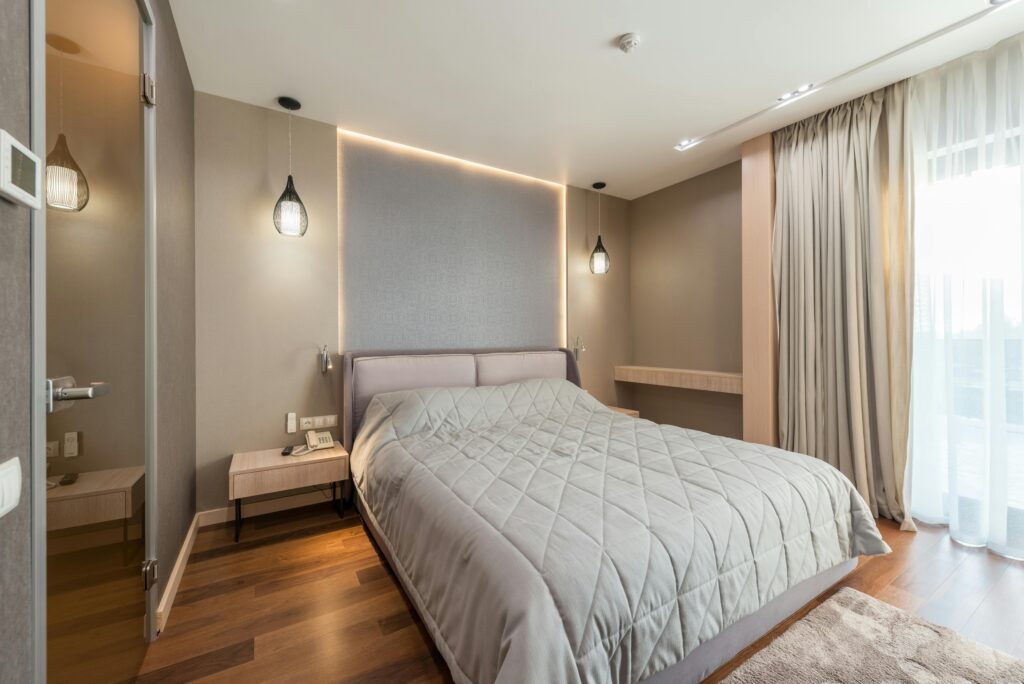
Hotels don’t have one light. They have zones. And this was the single biggest change I made.
Let me break down what I added, and I promise it’s not complicated:
- Ambient light: That’s your ceiling light or a soft overhead fixture. But here’s the trick—put it on a dimmer. A $15 dimmer switch from the hardware store turned my harsh overhead into a gentle sunset.
- Task light: A swing-arm sconce or a small reading lamp on each nightstand. This is the light you actually use to read or scroll your phone. Hotels aim these down so the light hits your book, not your sleepy eyes.
- Accent light: This one blew my mind. I added a single, low-wattage floor lamp in the corner behind a chair. Not to read by. Just to create a warm glow on the wall. Cost me $25. Changed everything.
The rule of thumb: You should be able to turn off your ceiling light and still feel like the room is wrapped in a hug. If it feels like an operating room, you’ve gone too far.
The Art of Almost Nothing
Here’s where I made my most expensive mistake.
I bought a giant, colorful canvas from a home goods store. It had swirls of red and gold and blue. I thought: This is sophisticated.
It was not sophisticated. It was loud. It screamed at me every time I walked in.
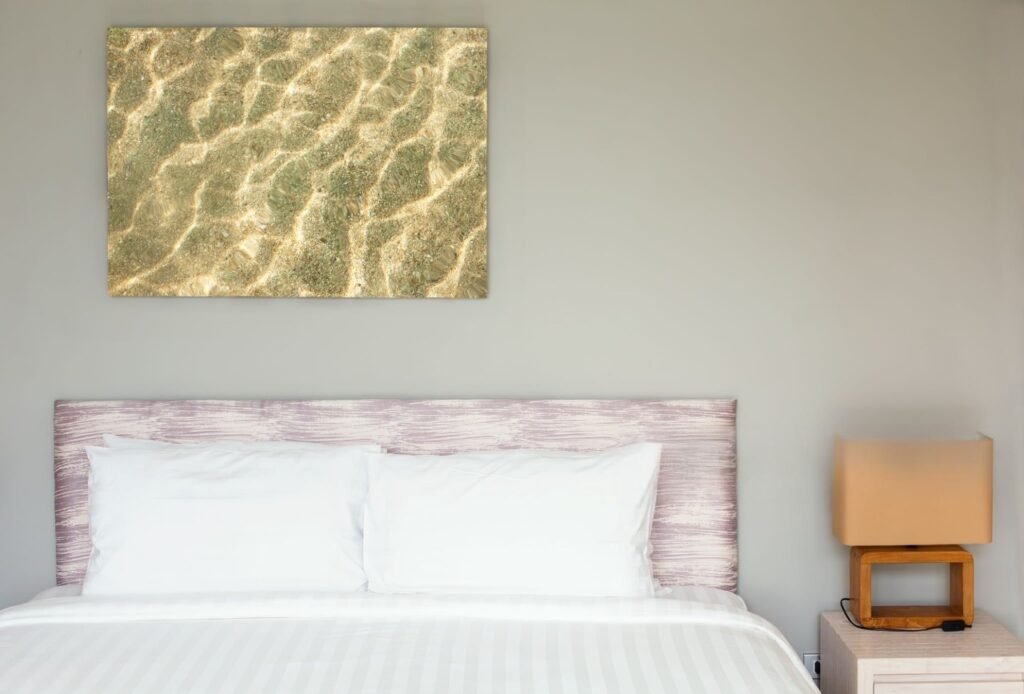
Hotels keep art simple. One large piece above the bed, or two smaller matching pieces. Neutral colors. Landscapes or abstract shapes that don’t demand your attention. The art is there to support the room, not to be the main character.
I swapped my red canvas for a single black-and-white photograph of a foggy forest. It cost $18 for the print and $12 for a simple black frame. Now my eyes rest when I look at it.
Also: no family photos in the sleeping area. I love my nieces, but their school portraits belong in the hallway. The bedroom is for calm, not for a visual to-do list.

The Nightstand Rule That Changed Everything
Look at your nightstand right now. I’ll wait.
Is it a disaster? Mine was. A stack of books I’ll never finish. Three different charging cables. A water glass from 2022. A single lonely vitamin.
Hotels have a secret rule about nightstands: Only three things per side.
Here’s what I keep now:
- A small lamp (the task light I mentioned earlier)
- A single book (just one—finish it before you add another)
- A coaster and a glass of water
That’s it. Everything else—the phone, the hand cream, the random receipts—goes in the drawer. When I wake up in the morning, my eyes don’t see clutter. They see calm. It sounds small, but I promise you, it changes the whole feeling of the room.
The Blackout Curtain Revelation
I used to think blackout curtains were for shift workers and vampires. Then I stayed in a hotel in Seattle during the summer (sunset at 9:45 p.m.) and I understood.
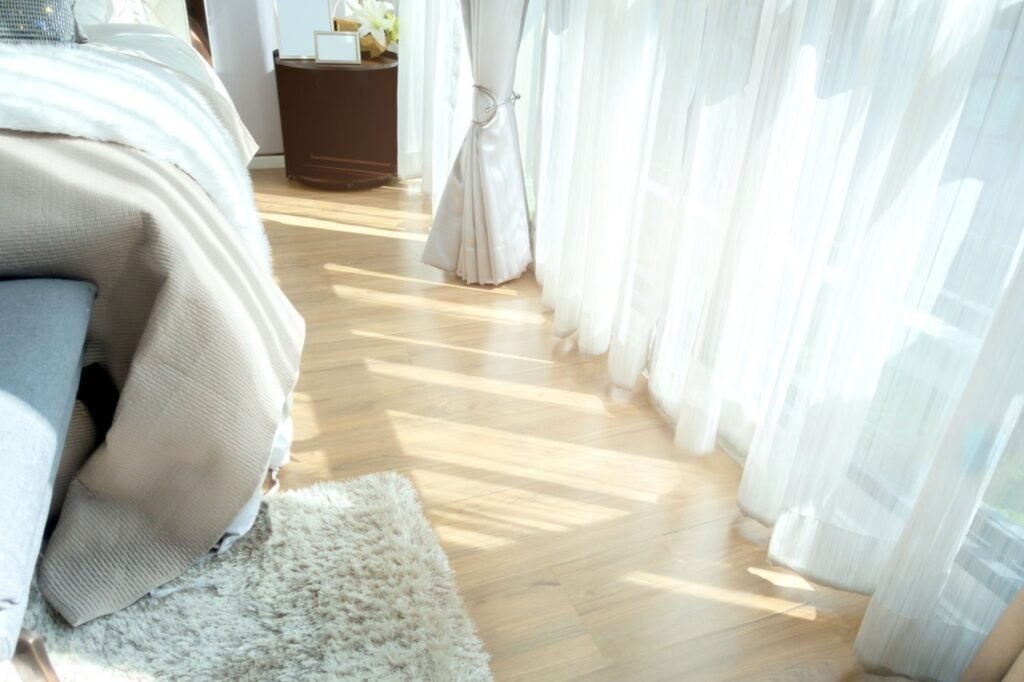
Hotels don’t just use any curtains. They use double-layered systems. There’s a sheer curtain that lets in soft light during the day, and then a heavy, lined blackout curtain that blocks 99% of light when closed.
I found a set on Amazon for $40. They’re not fancy. But when I pull them shut at night, the room goes completely dark. Not dim. Dark. My brain reads that as “sleep time now” so efficiently that I’ve started falling asleep fifteen minutes faster.
Pro tip: Get curtains that reach the floor. Even if your window is short. The extra length makes the ceiling look higher. Hotels do this trick constantly.
The Smell Test
You know that smell. The clean, slightly floral, vaguely expensive scent of a hotel lobby? It’s not an accident.
Hotels use signature scents pumped through their HVAC systems. You don’t have to go that far. But I learned that a bedroom that looks like a hotel still feels wrong if it smells like last night’s takeout or your gym bag.
I tried a few things:
- Candles: Nice, but I kept forgetting to blow them out.
- Plug-in diffusers: Some were good. Some smelled like a public restroom.
- Linen spray: This was my winner.
I make my own now. In a small glass spray bottle, mix:
- 1 cup distilled water
- 2 tablespoons rubbing alcohol (helps it mix)
- 15 drops of lavender essential oil
- 10 drops of eucalyptus
I spray this on my pillows and duvet every morning when I make the bed. It takes four seconds. The scent is light, clean, and gone by bedtime—so it doesn’t compete with your actual sleep cycle.
The Floor Should Feel Good Barefoot
This was the last thing I fixed, and I almost didn’t fix it because I’m lazy.
I had a beige carpet that was… fine. But hotel rooms never have “fine” floors. They have either hardwood with a thick rug, or a low-pile carpet that feels soft but not shaggy.
I couldn’t afford new flooring. So I bought a 5×7 foot wool-blend rug from a discount store ($89) and placed it so my feet land on it the second I step out of bed. Then I added two cheap but soft bath mats on either side of the bed (hotels do this constantly—nobody talks about it).
Now when I wake up at 2 a.m. to get water, my feet touch something warm and soft. It’s a tiny thing, but it makes the room feel finished.
The Final Touch: A Little Bit of Nothing
Here’s the hardest part of making your bedroom look like a hotel: you have to remove things.
Not add them. Remove them.
Walk around your bedroom right now. Pick up everything that isn’t furniture, a lamp, or a book. The laundry pile? Gone. The stack of mail? Gone. The exercise equipment you haven’t touched since 2019? Out.
Hotels have empty surfaces on purpose. An empty nightstand looks peaceful. An empty dresser top looks like a fresh start. We’re so used to filling every horizontal inch of our homes that we forget: space itself is beautiful.
I cleared off my dresser. I put my jewelry in a drawer. I moved the pile of tech cords to a closet. And suddenly, my room felt twice as big and ten times as calm.
Three Short FAQs (Because People Always Ask)
Item #1
I use a washable white duvet cover and change it every two weeks. For spot stains, a mix of hydrogen peroxide and dish soap (1:1) removes almost anything. Also, I trained my dog to sleep on a specific blanket at the foot of the bed. He thinks it’s a throne. I think it’s a stain barrier. Win-win.
Item #2
The pillows. No question. Replace your old, sad pillows with four hotel-style ones (two firm, two soft). It costs under $100 and changes how the whole bed looks and feels. After that, get the dimmer switch for your overhead light. Those two things will get you 80% of the way there.
Item #3
Rarely. Most high-end hotels avoid open flames and strong, constant scents because guests have allergies. That’s why a light linen spray (used in the morning, not at night) is a better choice. It gives you that “fresh” feeling without triggering headaches or burning your house down.
I still don’t have a minibar in my bedroom. And I don’t have someone folding my towels into little origami swans. But most nights, when I turn off the last lamp and pull the blackout curtains closed, my room feels like that Marriott in Chicago.
Quiet. Soft. Intentional.
And honestly? That’s better than a vacation. Because now I get to wake up there every single day.
![Image: A cozy, dimly lit bedroom at night with soft lamp glow, white bedding, and heavy curtains drawn shut. A single glass of water sits on the nightstand.]
Now go make your bed. And maybe treat yourself to a good pillow. You’ve earned it.