The Quiet Secret Hidden in Every Luxury Hotel Room
There is a reason why stepping into a beautifully designed hotel room feels completely different from entering an ordinary bedroom. Within only a few minutes, our shoulders relax, our breathing slows, and our minds seem to release the stress accumulated throughout the day. The room itself appears to whisper that it is finally time to rest.
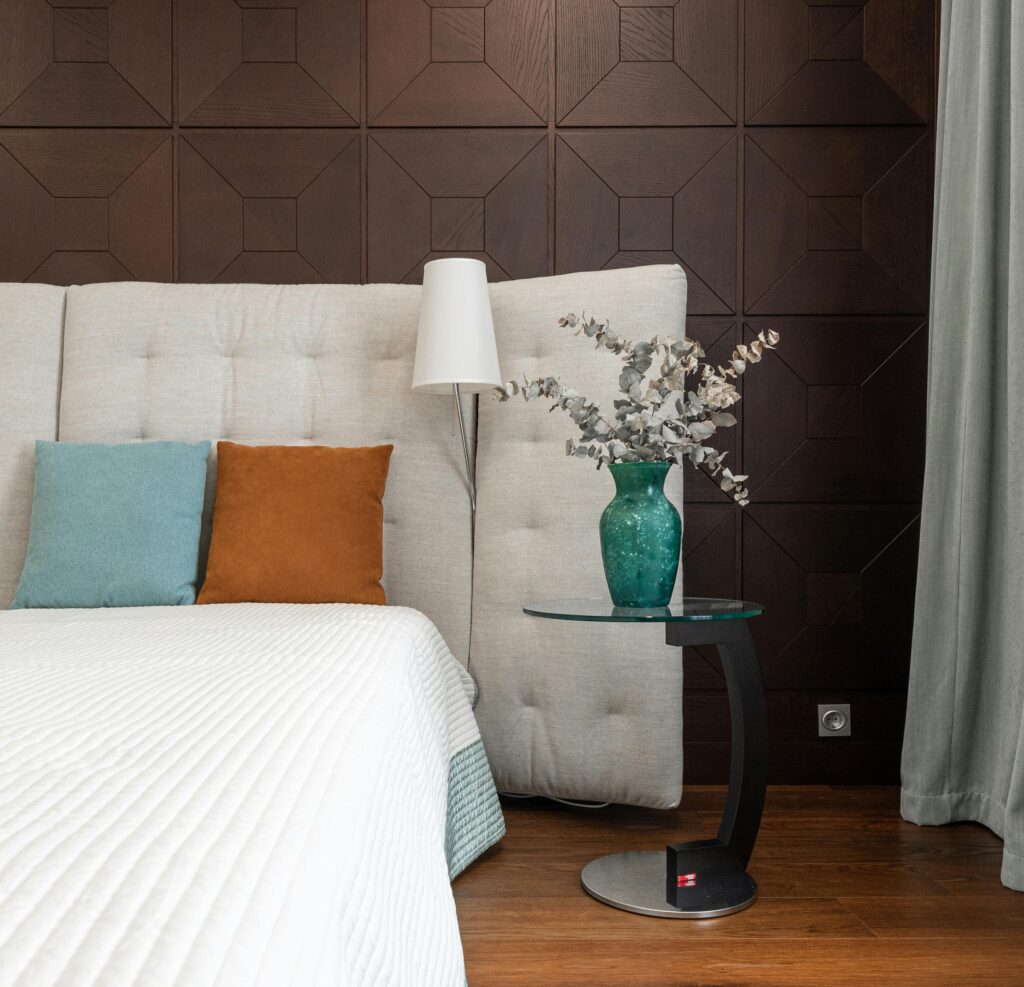
What many people never realize is that this feeling is not accidental. Luxury hotels invest enormous resources into understanding lighting psychology, using carefully layered illumination to influence human emotions and biological rhythms. Every lamp, every wall sconce, every hidden LED strip, and every bedside fixture works together to encourage the body toward relaxation long before the head touches the pillow.
Instead of relying solely on expensive mattresses or premium bedding, leading hospitality designers create an environment where the brain naturally begins producing melatonin, the hormone responsible for preparing the body for sleep. When we recreate these lighting techniques at home, we can transform an ordinary bedroom into a calming retreat that gently guides us toward drowsiness every evening.
Understanding Why Hotel Lighting Makes Us Feel Sleepy
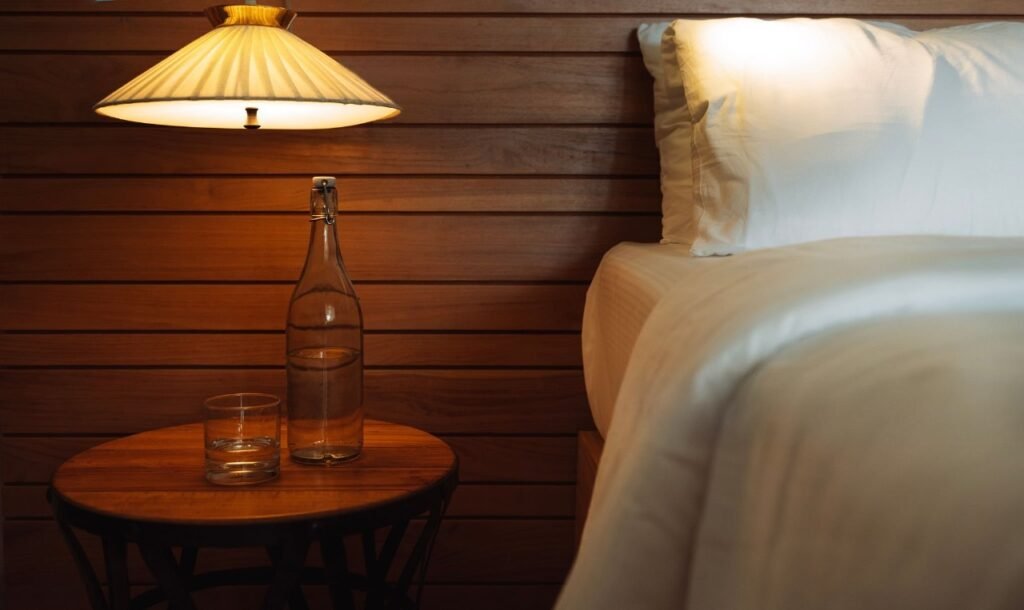
Imagine arriving at a luxury hotel after a long journey. As the door opens, there is no harsh ceiling light flooding the room. Instead, pools of warm golden light softly illuminate the corners. Shadows remain gentle rather than dramatic. Nothing feels overly bright or visually demanding.
Our eyes immediately begin adjusting to this softer environment.
This gradual reduction in brightness tells the brain that daylight has disappeared. As exposure to blue-rich light decreases, the body naturally begins transitioning from an alert daytime state into a peaceful nighttime rhythm. Heart rate subtly lowers, cortisol levels begin decreasing, and relaxation becomes effortless.
Hotels understand that lighting affects far more than visibility. It shapes emotional comfort.
Rather than depending on one overpowering ceiling fixture, luxury rooms create multiple gentle layers of illumination. These overlapping light sources eliminate visual stress while producing an atmosphere associated with warmth, safety, and rest.
The result feels almost magical—but it is entirely based on environmental psychology.
Creating Layers of Light Instead of One Bright Source
The biggest difference between an ordinary bedroom and a luxury hotel room often comes down to a single design principle.
Hotels rarely depend on one central ceiling light.
Instead, they build several independent layers of illumination that work together throughout the evening.
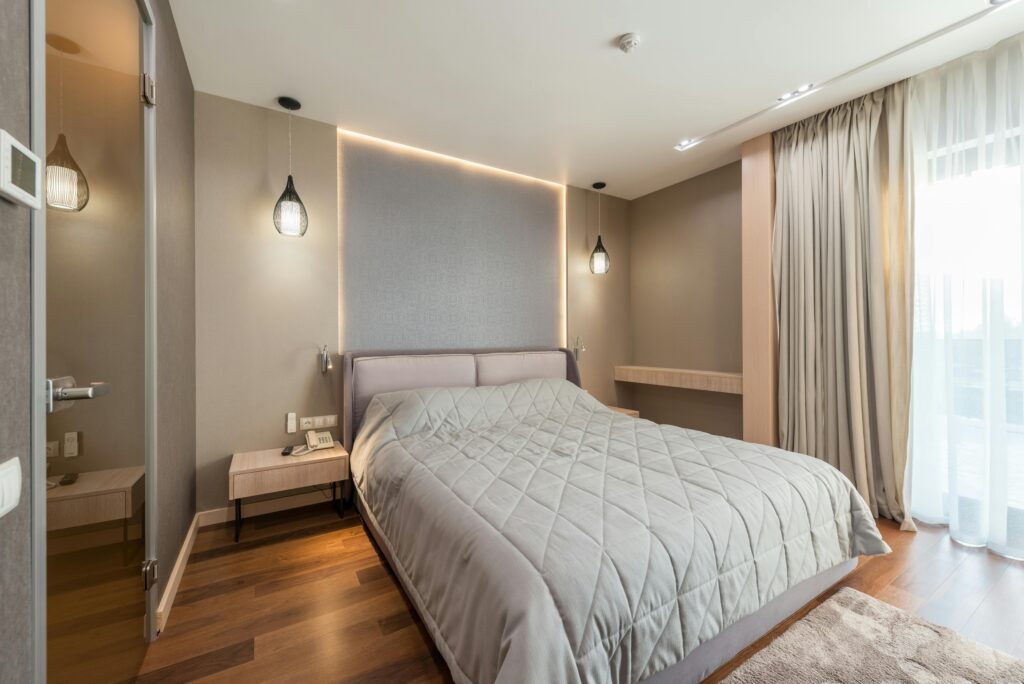
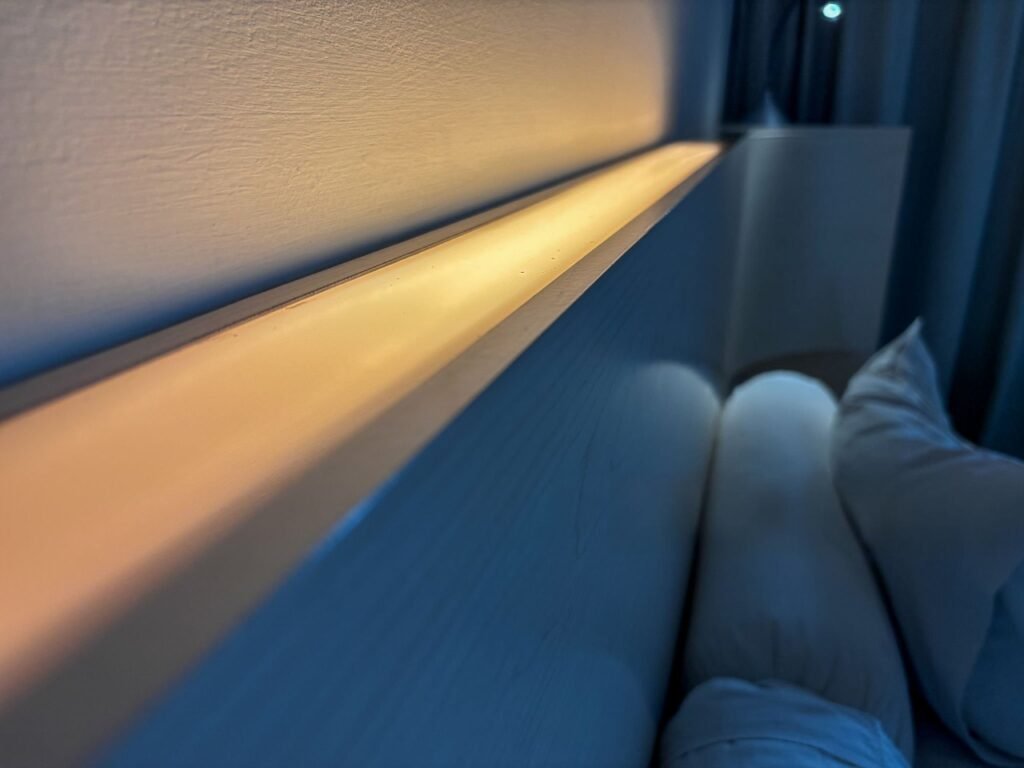
Ambient lighting softly fills the room without creating glare. Bedside lamps provide personal reading light while maintaining warmth. Accent lighting gently highlights artwork, curtains, or architectural features. Hidden LED strips beneath furniture introduce depth without overwhelming the eyes.
Together these layers produce visual balance.
Instead of forcing our eyes to adapt between bright and dark areas, the room becomes comfortably consistent. This consistency reduces mental stimulation while encouraging physical relaxation.
Choosing the Perfect Color Temperature for Sleep
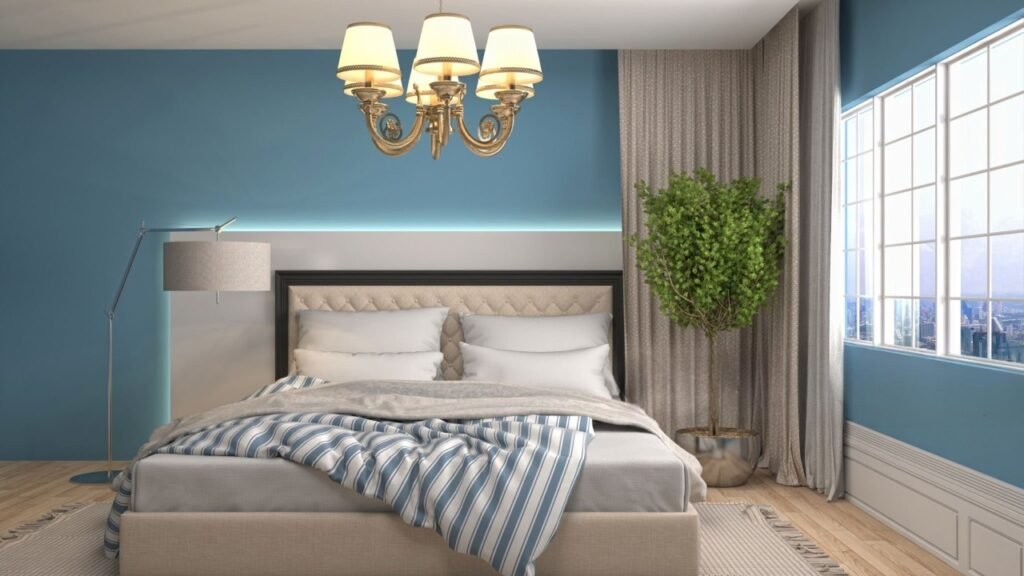
Perhaps the most important psychological trick hotels use involves color temperature.
During daytime, cool white lighting helps maintain alertness and concentration. However, as evening approaches, luxury hotels deliberately transition toward warmer tones that resemble sunset and candlelight.
The ideal range typically falls between 2200K and 2700K.
Within this spectrum, light appears soft amber rather than bright white.
Our brains instinctively associate these colors with evening, campfires, fireplaces, and sunsets—signals humans have relied upon for thousands of years.
The warmer the light becomes, the less stimulation reaches the brain’s alertness centers.
That subtle shift encourages the body to prepare for sleep naturally.
The Hidden Power of Indirect Lighting
Luxury hotels rarely expose the brightest part of the bulb directly to guests.
Instead, light reflects from walls, ceilings, fabric lampshades, or decorative panels before reaching the eye.
This technique is known as indirect lighting, and its psychological effects are remarkable.
Soft reflected illumination minimizes eye strain while creating an environment that feels spacious yet intimate.
Because there is less direct glare, our visual system works less intensely. Reduced visual effort translates into reduced mental effort.
Without consciously noticing it, we begin feeling calmer.
This is precisely why hotel rooms often seem incredibly peaceful despite having multiple lighting fixtures.
Why Dimmers Are the Most Valuable Bedroom Upgrade
Hotels rarely maintain one fixed brightness level.
Instead, guests can gradually reduce illumination throughout the evening.
This gradual transition mirrors nature.
As the sun slowly disappears below the horizon, brightness declines over time rather than instantly.
Our bodies evolved alongside this predictable rhythm.
Installing dimmer switches allows us to recreate that same biological experience indoors.
Instead of abruptly turning lights off, brightness slowly decreases over thirty to sixty minutes.
The brain interprets this fading light as nighttime approaching.
Sleepiness follows naturally.
Eliminating Blue Light Before Bed
Modern electronics have dramatically disrupted human sleep patterns.
Televisions, smartphones, tablets, and computer monitors emit significant amounts of blue wavelengths that suppress melatonin production.
Hotels increasingly combat this issue by minimizing unnecessary blue lighting throughout guest rooms.
Replacing cool white LED bulbs with warm alternatives immediately reduces evening stimulation.
Even decorative lighting now emphasizes amber and golden tones instead of bright white illumination.
Combined with reduced screen exposure during the final hour before bed, this strategy dramatically improves sleep readiness.
How Shadows Create Emotional Comfort
Luxury lighting is not about making every corner equally bright.
Instead, designers intentionally preserve gentle shadows.
These darker areas create depth, softness, and intimacy.
When lighting is perfectly even, rooms can resemble offices or hospitals.
When shadows remain subtle and balanced, the environment feels warmer, quieter, and emotionally secure.
Our brains interpret these spaces as restful rather than stimulating.
This delicate balance between light and shadow explains why boutique hotels often feel far more relaxing than brightly illuminated homes.
Using Bedside Lamps as Psychological Sleep Anchors
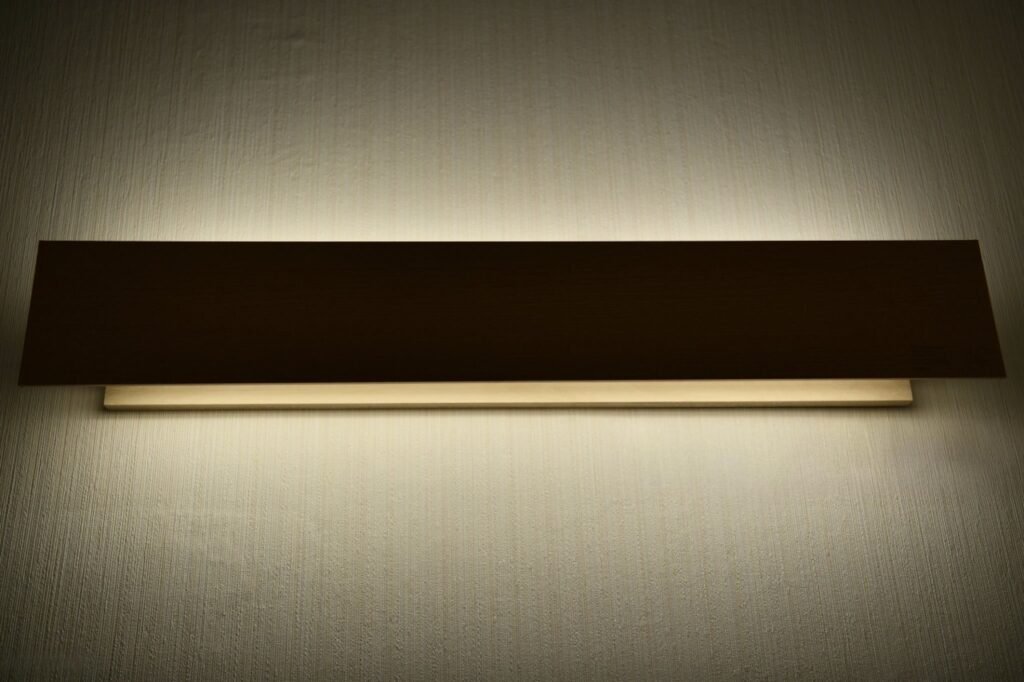
One overlooked hotel design feature is symmetry.
Matching bedside lamps create visual harmony.
The room immediately appears organized, balanced, and calm.
Every evening the same ritual begins.
One lamp remains on while reading.
Brightness stays low.
Conversation slows.
The lamp is switched off.
Darkness follows.
Over time this sequence becomes a psychological cue.
Eventually, simply turning on that bedside lamp signals the brain that bedtime has begun.
Habits become biological triggers.
Reducing Ceiling Lighting After Sunset
Bright overhead lighting is excellent for cleaning, organizing, and working.
It is not ideal for preparing the mind for sleep.
Hotels encourage guests to rely on table lamps, wall sconces, and floor lighting during evening hours.
This changes the direction of illumination.
Instead of bright light pouring downward from above, warm light gently surrounds occupants from lower levels.
The atmosphere immediately becomes softer.
This subtle adjustment significantly enhances relaxation.
Creating an Evening Lighting Ritual
Hotel experiences feel memorable because they remain consistent.
The same principle applies at home.
Every evening, we can gradually dim lights, switch on bedside lamps, close curtains, silence electronic devices, and reduce environmental stimulation.
Repeating this sequence night after night conditions the brain to associate these visual changes with sleep.
Eventually, drowsiness begins appearing automatically.
The Emotional Connection Between Warm Light and Safety
Human beings evolved around firelight.
For thousands of generations, evenings were illuminated by candles, fireplaces, lanterns, and sunsets.
Warm lighting therefore carries deep psychological meaning.
It represents shelter.
Comfort.
Protection.
Home.
Luxury hotels deliberately recreate this ancient emotional memory.
When our bedrooms adopt similar lighting characteristics, our nervous systems instinctively respond with relaxation.
Sleep becomes less of a struggle and more of a natural transition.
Designing a Bedroom That Feels Like a Five-Star Suite
Transforming a bedroom does not require expensive renovations.
Simple adjustments often produce dramatic improvements.
Replace cool bulbs with warm ones.
Introduce two bedside lamps.
Add hidden LED strips behind the headboard.
Use dimmers wherever possible.
Avoid bright overhead fixtures during the evening.
Allow gentle shadows to remain.
Maintain visual balance with symmetrical lighting.
Each improvement subtly influences the mind until the room itself begins encouraging rest.
Eventually, entering the bedroom feels remarkably similar to checking into an elegant luxury hotel.
Conclusion
The secret behind hotel-style lighting is not luxury—it is psychology. Every carefully positioned lamp, warm-toned bulb, and softly illuminated corner communicates the same message to the brain: the day is ending, the environment is safe, and it is time to sleep. By embracing layered lighting, warm color temperatures, indirect illumination, dimmers, and consistent evening rituals, we can recreate the deeply calming atmosphere of the world’s finest hotels within our own homes. The transformation is not simply visual; it reshapes the way we unwind, allowing our bodies to drift naturally into restful, restorative sleep night after night.
Frequently Asked Questions
Item #1
Yes. Warm, dim, layered lighting reduces visual stimulation and supports the body’s natural production of melatonin, making it easier to feel sleepy.
Item #2
Warm light between 2200K and 2700K closely resembles sunset and candlelight, making it ideal for evening relaxation.
Item #3
Yes. Bright overhead lighting can increase alertness. Using bedside lamps, wall sconces, or indirect lighting creates a softer environment that encourages relaxation.