There I was, 2:00 AM, staring at the ceiling fan like it owed me money.
My nose was stuffy. My skin felt itchy. And no matter how many times I flipped my pillow to the “cool side,” sleep was a distant memory. I groaned, kicked off the duvet, and immediately regretted it as a cloud of… something… puffed into the air.
That’s when I realized it had been six weeks since I changed my sheets.
Don’t judge me. You’ve been there too. Life gets loud. Work gets crazy. And that top sheet? It looked clean. But looking clean and being clean are two very different planets.
So, the next morning, fueled by regret and a double espresso, I decided to go on a journey. Not a spiritual one to the mountains, but a practical one to my laundry room. I was going to learn how to wash bedsheets properly. No more guesswork. No more shoving everything into the machine on “Speed Wash” and wondering why my back broke out in hives.
If you are ready to stop treating your sheets like a crime scene and start treating them like a sanctuary, pull up a chair. Let me tell you how I fixed my 2 AM nightmare.
Chapter One: The Great Stripping (It’s Not What You Think)
Before you even look at your detergent bottle, you have to commit the crime of removal. I used to just yank the sheets off like I was starting a lawnmower. Big mistake. You know what happens when you aggressively whip a fitted sheet into the air? Dust mites throw a rave. All that dead skin and pollen goes flying into the air you’re about to breathe for the next ten minutes.
Here is the gentle art of the “Stripping.”
I stood at the foot of my bed like a surgeon approaching the operating table. I took off the pillowcases first—one by one, folding them into a little stack. Then, the flat sheet. Finally, the dreaded fitted sheet.
Pro tip I learned the hard way: Don’t ball the fitted sheet into a wet knot of shame. Instead, I turn it inside out as I pull it off the mattress. This traps the dust inside the fabric ball so it doesn’t explode everywhere.
But wait. The journey doesn’t end at the washing machine.
I carried the pile to the hallway, and this is the step 90% of people skip. The pre-check. I spread each item on the floor (yes, the clean floor) and looked for the enemy. A small blood stain from a cut on my knee. A smear of last night’s chocolate ice cream. A mysterious yellow shadow on my husband’s side.
If you throw these into the hot water without pre-treating, you are baking those stains in like a ceramic glaze. They will never leave.
Chapter Two: The Hot Water Debate (Or, Why Your Grandmother Was Right)
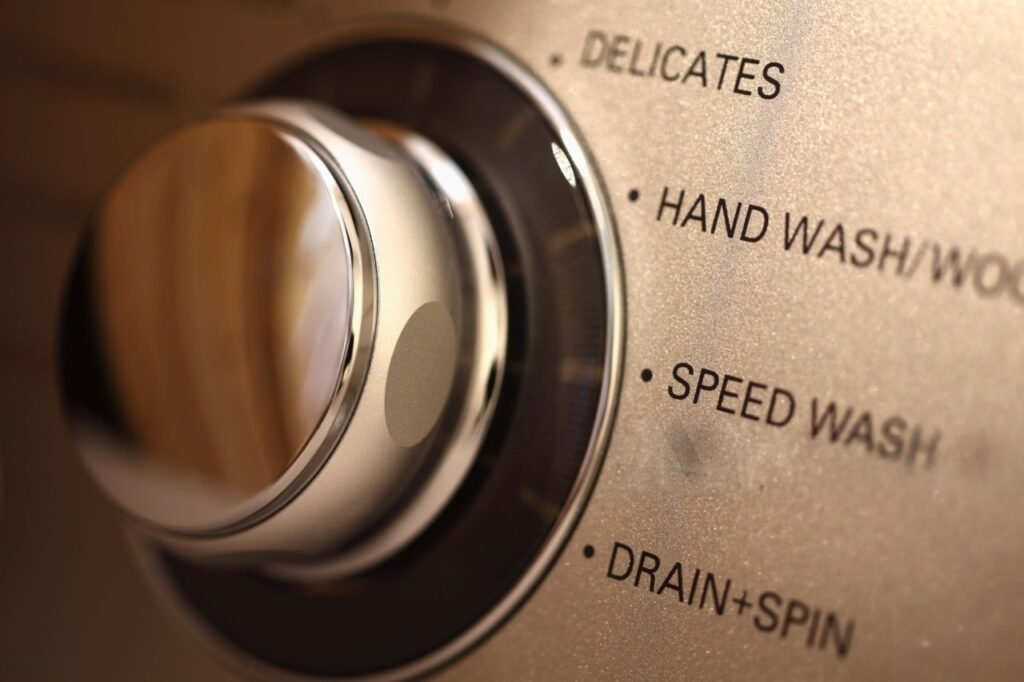
I used to be a “Cold Water Only” snob. I thought it saved the planet and preserved my colors. And for jeans or t-shirts? Sure. But for bedsheets? Let me tell you a secret.
Sheets are the sweaty gym clothes of the sleeping world.
You drool. You shed skin cells. You sweat. Sometimes you spill tea. Cold water just giggles at these things. It doesn’t kill the bacteria; it just gives them a chilly bath and sends them back to your bed.
So, I called my grandma. (Seriously. I did this research for you.)
She said, “Honey, if it ain’t your Sunday dress, wash your sheets in hot.”
The rule I live by now:
- Cotton or linen sheets? Hot water (130°F / 55°C). This kills dust mites and strips body oils.
- Microfiber or delicate bamboo? Warm water (not hot, not cold). Hot will melt the synthetic fibers over time.
For that particular wash, my sheets were 100% cotton. I cranked the dial to Hot. I watched the steam fog up the lid and I felt a grim satisfaction. Take that, night sweats.
Chapter Three: The Science of Soap (Less is More)
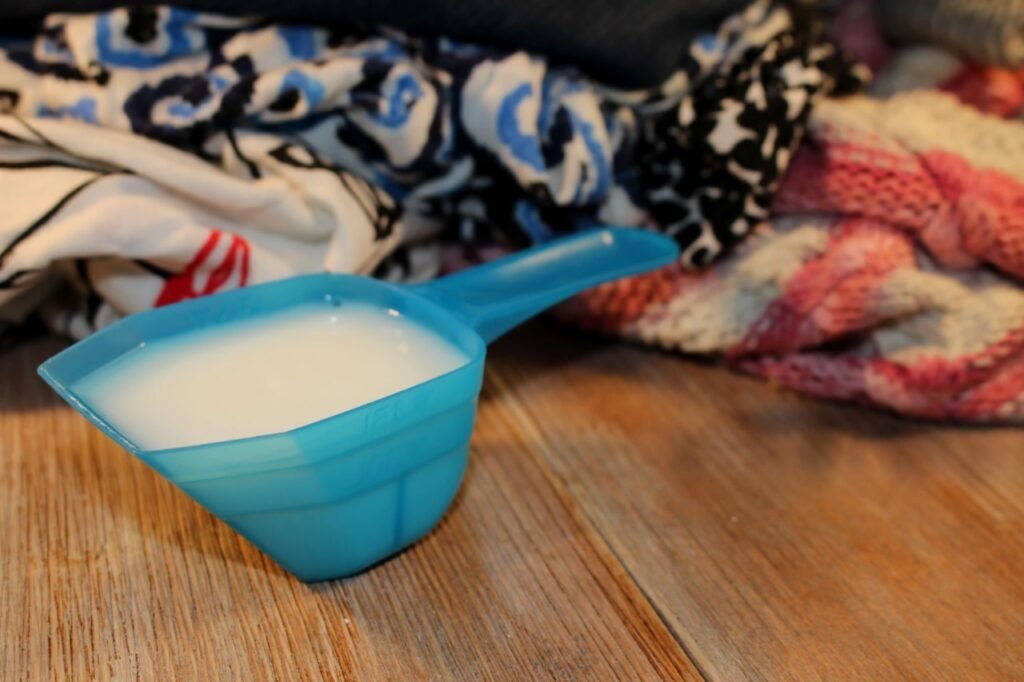
I have a confession. I used to be a “glug-glug-glug” pourer. You know the type. I thought if a little soap was good, a half-bottle was better. I wanted my sheets to smell like a tropical rainforest exploded.
Then I learned about soap buildup.
About two months ago, my sheets felt… crispy. Not the good, hotel-quality crisp. The bad, “I-forgot-to-put-fabric-softener-in” waxy crisp. I ran my finger down the fabric and a white, powdery residue came off. That wasn’t dirt. That was me. That was three months of excessive detergent clumping onto the fibers because I used too much.
Modern HE (High Efficiency) washers only need two tablespoons of detergent. Two tablespoons.
I stood there in my laundry room with a measuring spoon like I was baking a cake. I poured in exactly 2 tbsp of Tide. Then, I did something revolutionary.
I added ½ cup of white vinegar.
Don’t close the article! I know it sounds crazy. Vinegar smells like pickles. But here is the magic: when you pour vinegar into the bleach compartment (or directly in the drum), it breaks down the alkaline residue from the detergent. It naturally deodorizes without perfumes. And guess what? When the rinse cycle finishes, the vinegar smell is 100% gone. Your sheets don’t smell like a deli. They smell like nothing—which is the ultimate sign of clean.
I skipped the fabric softener entirely. I know, I know. You love that “soft” feeling. But fabric softener is basically wax. It coats the threads and makes them less absorbent. You want soft? We get soft in the next step. Not in the wash.
Chapter Four: The Drying Tango (Low and Slow vs. Solar Power)
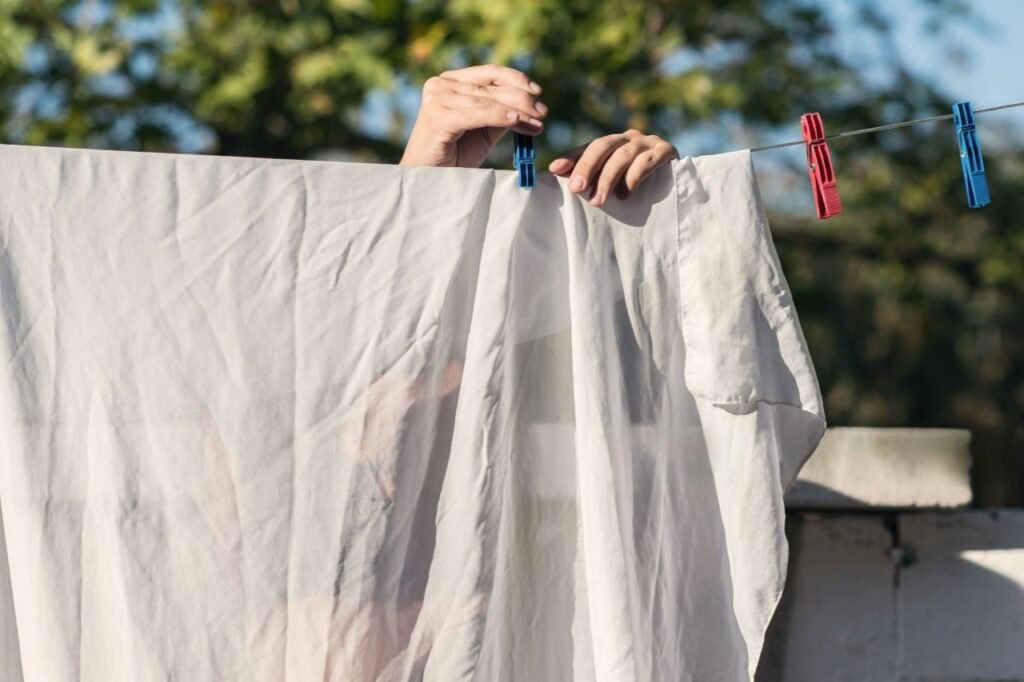
The dryer is a liar. It promises fluffy clouds but often delivers shrink-wrapped nightmares.
I used to blast my sheets on “High Heat” for 90 minutes because I was impatient. I wanted to make the bed NOW. But high heat destroys elastic in fitted sheets. It breaks down cotton fibers. It turns a Queen size into a Twin size after a few washes.
Here is the routine that saved my marriage to my bedding:
Step one: Out of the washer, I shake each sheet violently. Like I’m trying to scare the wrinkles out of it. This fluffs the fibers before they even hit the heat.
Step two: Into the dryer on Medium heat for 20 minutes. Not Low. Not High. Medium. This gets the bulk of the water out.
Step three: This is the secret. After 20 minutes, I pull them out while they are 90% dry but still slightly damp. I smooth them flat on the floor (or over the shower rod).
Step four (The Game Changer): On sunny days, I hang them outside.
Listen. No dryer sheet, no fancy spray, no “Mountain Breeze” scented bead can compete with the smell of line-dried sheets. I bought a simple $15 clothesline from the hardware store. When you hang cotton sheets in the sun, UV rays bleach out stains naturally and kill any remaining bacteria. Plus, that smell? It’s not “fresh linen” perfume. It’s the actual smell of ozone and clean air.
If you don’t have a yard, that’s fine. Finish them in the dryer on Air Fluff (no heat) for another 15 minutes. But I beg you, try the line drying once. You will become a convert.
Chapter Five: The Folding Puzzle (And the Golden Corner Trick)
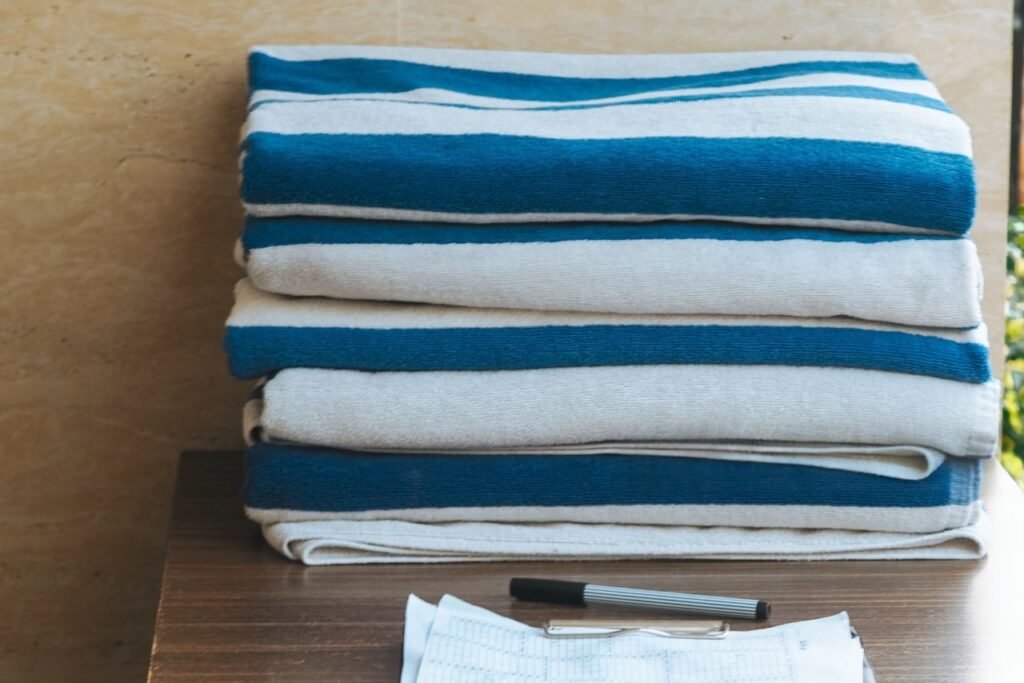
Folding a fitted sheet is the origami of the adult world. For thirty years of my life, I just rolled the stupid thing into a giant elastic sausage and shoved it in the closet. It looked like a crime scene.
But then, during a boring YouTube spiral at 11 PM, I watched a hotel housekeeper do it in 15 seconds. My mind exploded.
Let me teach you the trick, because it actually makes making the bed fun.
- Turn the fitted sheet inside out. Put your hands into the two top corners (the short side).
- Fold the sheet in half by bringing your right hand to your left hand. Tuck the right-hand corner inside the left-hand corner. Now you have a little “envelope” of two corners inside two corners.
- Do it again. Bring the bottom corners up and tuck them inside the top bundle. Now all four corners are nested inside each other like Russian dolls.
- Lay it on a flat surface. It’s now a rough square. Fold it into thirds, then thirds again.
Voila. A perfect, flat, stackable rectangle that looks like you bought it from a department store. I felt like a wizard.
Chapter Six: The Final Make (A Ritual, Not a Chore)
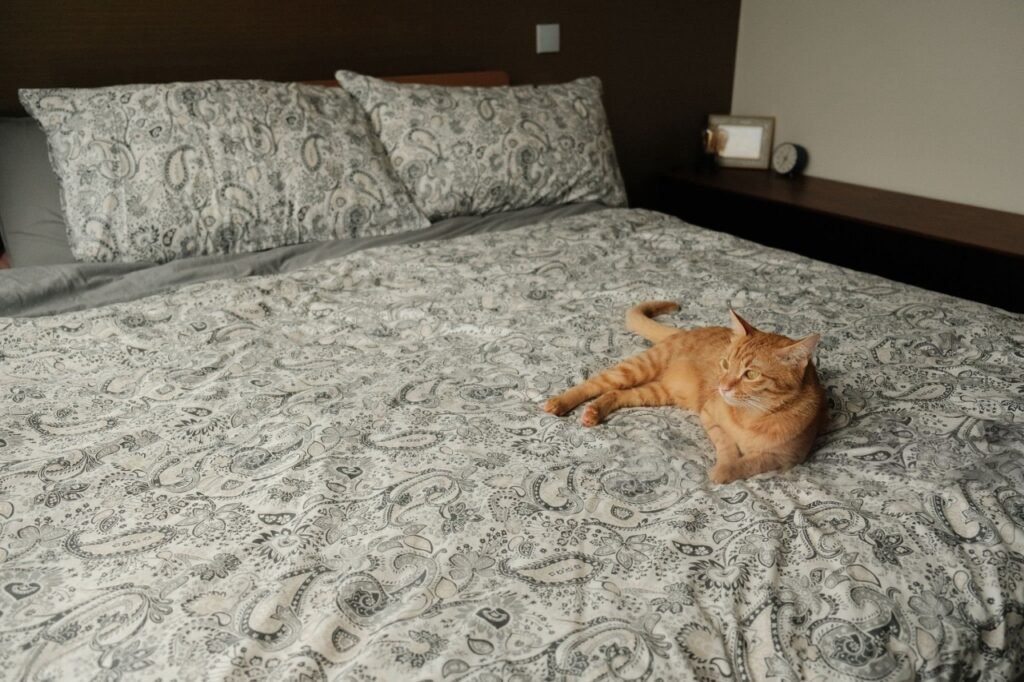
It was 4 PM on a Sunday. The sun was golden. The sheets were crisp and warm from the line. I walked into my bedroom with that stack of perfect rectangles.
Making the bed used to feel like a punishment. But now? It feels like a gift to my future self. The self at 10 PM who is tired, who had a hard day, who just wants to melt.
I put the fitted sheet on first. I love that little “snap” of the elastic over the corner. Then the flat sheet. I do hospital corners (tucked under the mattress at a 45-degree angle). It takes 30 extra seconds but it keeps the sheet from becoming a tangled mess at 3 AM.
The pillows get fluffed. The duvet gets shaken like a giant marshmallow.
I stood back. The bed looked like a cloud landed on a frame.
And you know what I realized? Washing sheets isn’t a chore. It’s a reset button. Every time I lay down on that clean cotton, the stress of the day dissolves a little faster. My skin stopped itching. My 2 AM ceiling-fan-staring sessions stopped happening.
The Weekly Rule I Swear By Now
I marked it on my calendar: Sheet Sunday.
Every Sunday morning, I strip the bed before coffee. While I sip my espresso, the sheets wash. While I read the news, they dry. By noon, the bed is remade.
If you take one thing from my 2 AM horror story, let it be this: Frequency matters more than technique. Even if you do everything wrong (cold water, too much soap, high heat dryer), doing it every week is better than doing it perfectly once every two months.
So go ahead. Strip that bed. Crank the hot water. Skip the softener. Find the sun.
Your sleeping self will thank you. And the ceiling fan? It’ll finally get some rest, too.
Frequently Asked Questions (Because My Friends Asked Me These)
1. How often do I really need to wash my sheets if I shower before bed?
Look, I’m not the sheet police. But here is the dermatologist-backed truth: Once a week. If you sleep naked or you sweat a lot? Twice a week. If you wear full pajamas and keep your room at 65°F? You can maybe stretch it to two weeks, but don’t tell me I didn’t warn you about the dust mites. Showering before bed helps, but you still shed dead skin cells just by existing.
2. Why do my sheets feel scratchy even after I wash them?
Two culprits, friend. Number one: You are using too much detergent. That waxy buildup makes fabric stiff. Run them through a wash cycle with no soap and a cup of white vinegar to strip the residue. Number two: You are drying them on high heat for too long. Over-drying bakes the fibers and makes them brittle. Pull them out while they are still slightly damp.
3. Can I wash my pillows too? Or is that a myth?
You can, and you should. Not the foam ones (those just get sunned and vacuumed). But your standard polyester or down pillows? Wash two at a time (to balance the machine) on warm gentle cycle. Use a splash of bleach if they are white. Here’s the test: Fold your pillow in half. Does it stay folded? Or does it spring back? If it stays folded like a sad taco, throw it away. Buy a new one. You spend a third of your life on that thing. Don’t be cheap.