It was mid-April in Lahore, and I swear the city had turned into a tandoor.
I remember waking up at 3 AM, my kameez sticking to my back like a second layer of skin. The ceiling fan was doing its best impression of a tired butterfly—flapping but not moving any air. I peeled myself off the mattress, stumbled to the window, and considered sleeping on the tiles in the bathroom. Don’t judge me. You’ve thought about it too.
That’s when my mother, who has a sixth sense for these things, called out from her room: “Beta, it’s not the fan. It’s your bedsheet.”
I rolled my eyes. “Ammi, it’s just a sheet.”
She laughed that knowing laugh. “Just a sheet? You’re sleeping on a polyester nightmare. No wonder you’re sweating like a kulfi in July.”
And just like that, my summer mission began.
The Great Bedsheet Disaster of 2023
Let me rewind a little. I used to be one of those people who bought bedsheets based on one criterion only: does it look pretty on the Instagram ad? If it had nice floral prints or those trendy boho patterns, I threw my money at the screen. I had no idea that fabric could make or break your sleep.
My breaking point came during a particularly brutal heatwave in Karachi. My cousin Ayesha was visiting from Islamabad, and she took one look at my bed and said, “Yaar, this looks like a hospital sheet from the 80s.”
Harsh. But fair.
That night, the three of us (me, Ayesha, and my sweating back) decided to do an experiment. We pulled out every bedsheet in the house—there were seven—and ranked them by how long we could last under each before needing a cold shower. My favorite floral print came last. It felt like being wrapped in a plastic bag.
So, if you’re reading this from a sticky room in Lahore, Karachi, Islamabad, or Multan (God help you if you’re in Multan right now), let me save you the sleepless nights. After testing, sweating, and interviewing every fabric shop owner on Liberty Market, here is the real story of the best bedsheets for summer in Pakistan.
The Cotton Miracle: My First Real Love
After my 3 AM meltdown, Ammi took me to her trusted fabric guy in the basement of a plaza on Tariq Road. His name was Khaleel Bhai, and he had the kind of no-nonsense attitude you only get from people who have spent forty years touching cloth.
“Batao, kya chahiye?” he asked, not looking up from his ledger.
“Something that won’t kill me in my sleep,” I said.
He handed me a plain white piece of fabric. “Feel.”
I touched it, and I swear I heard angels. It was cool. Not cold like an AC, but cool like the other side of the pillow. It was soft but had a tiny bit of texture. It felt… honest.
“Egyptian cotton,” Khaleel Bhai said. “Giza 87. 400 thread count. Nothing more, nothing less.”
Now, I had heard the term “thread count” before from fancy hotel commercials, but I never knew what it meant. Khaleel Bhai explained it like this: “Thread count is the number of threads per square inch. People think higher is better. 1000, 1500—chaiye? But beta, in our weather? That’s a blanket. You want 300 to 500. Sweet spot is 400.”
I bought that white sheet. It cost me a pretty penny—around 8,000 rupees—but that night, I slept like a log in a freezer. The cotton absorbed my sweat and disappeared it. It breathed. I didn’t wake up once.
The verdict on Egyptian Cotton: If you have the budget (6,000–15,000 Rs for a double bed), just buy it. It’s the closest thing to sleeping on a cloud that has air conditioning.
The Surprising Hero: Khaddar (Yes, Really)
But here’s the plot twist. A few weeks later, my grandmother came to stay with us. Dadi is 82, grew up in a village near Gujranwala, and has never used an AC in her life. She saw my fancy Egyptian cotton sheet and snorted.
“Mehnga kapra,” she said. “Aur phir bhi thand nahi aati.”
I was offended on behalf of my sheet. “Dadi, this is the best!”
She went to her old trunk, pulled out a greyish bedsheet that looked like it had survived Partition, and laid it on her bed. It was khaddar. The rough, handspun cotton that farmers have worn for centuries.
I touched it and made a face. “It’s so… scratchy.”
Dadi just smiled. “Raat ko dekhna.”
That night, I sneaked into her room while she was in the kitchen. I lay down on that khaddar sheet for exactly two minutes. And then I understood.
Khaddar is not soft. Let’s get that straight. It feels like a very polite version of burlap. But here’s the magic: it doesn’t stick to your skin. Not even a little bit. You roll over, and the sheet stays where it is. Your body heat doesn’t get trapped. It’s like the sheet is actively rejecting your sweat.
I asked Khaleel Bhai about this the next day. He nodded like I had finally learned something important. “Khaddar is the original summer fabric of this land. Before ACs, before imported cotton, there was khaddar. It’s not soft because it doesn’t need to be. It’s functional.”
I bought a khaddar bedsheet the same day. It cost me 1,500 rupees. One thousand five hundred.
The verdict on Khaddar: If you want the most breathable, sweat-proof, no-nonsense sheet for under 2,000 rupees, this is it. Just wash it three times before first use. It softens up slightly. Not a lot. But enough.
The Linen Obsession That Broke My Bank (Worth It)
Okay, so here’s where things got dangerous.
My friend Zain, who has always been the “aesthetic guy” of our group, invited me to his family’s farmhouse near Bhurban. It was June. I was prepared to suffer. But when I walked into the guest room, I stopped.
The bed was dressed in the most beautiful pale olive-colored sheets I had ever seen. They looked wrinkled—intentionally wrinkled, like a linen shirt that costs 20,000 rupees. I touched them. They felt cool, crisp, and almost… dry? Even though it was humid outside.
“Linen,” Zain said, handing me a glass of lemonade. “From Lithuania.”
“Lithuania?!” I said. “We have bedsheet diplomats now?”
He laughed. “Worth every rupee. Linen is made from flax. It wicks moisture better than cotton. It dries faster. And it gets softer every time you wash it. But here’s the catch for Pakistan: it’s expensive. And it wrinkles like a 90-year-old’s face.”
I slept on that linen sheet for three nights. On the first night, I noticed it wasn’t as instantly cool as my Egyptian cotton. But by morning, I wasn’t sweaty. At all. The linen had regulated my temperature all night. When I woke up, the sheet felt dry.
I asked Zain where he got it. “Online. Imported. 25,000 rupees for a queen set.”
I choked on my lemonade.
The verdict on Linen: If you have a serious budget (20,000 Rs and up) and you hate waking up sweaty more than you hate ironing, go for linen. But be prepared for wrinkles. Linen does not care about your aesthetic.
The Cheap Fix: Good Old Cotton Percale
Not everyone has 25,000 rupees for Lithuanian linen. I certainly don’t. So I kept searching for the Goldilocks sheet—the one that’s cool, affordable, and available on every street corner in Pakistan.
That’s when I discovered cotton percale.
Percale is just a type of weave. It’s not a fancy fabric like Egyptian cotton or linen. It’s regular cotton, but woven in a simple, one-over-one-under pattern that makes it crisp and breathable. Remember hotel sheets that feel like they’ve been starched? That’s percale.
I found a percale sheet at a local store in Gulberg for 3,500 rupees. It was white with thin blue stripes. Nothing fancy. But the first night I used it, I felt like I was back in that Bhurban farmhouse. Not quite as cool as linen, but close. And definitely cooler than my old polyester nightmares.
Khaleel Bhai later told me, “Percale is the smart man’s summer sheet. Not too expensive, not too rough, not too soft. Just right.”
The verdict on Percale: This is the best value-for-money summer bedsheet in Pakistan. 3,000 to 5,000 rupees. Washes well. Stays crisp. No regrets.
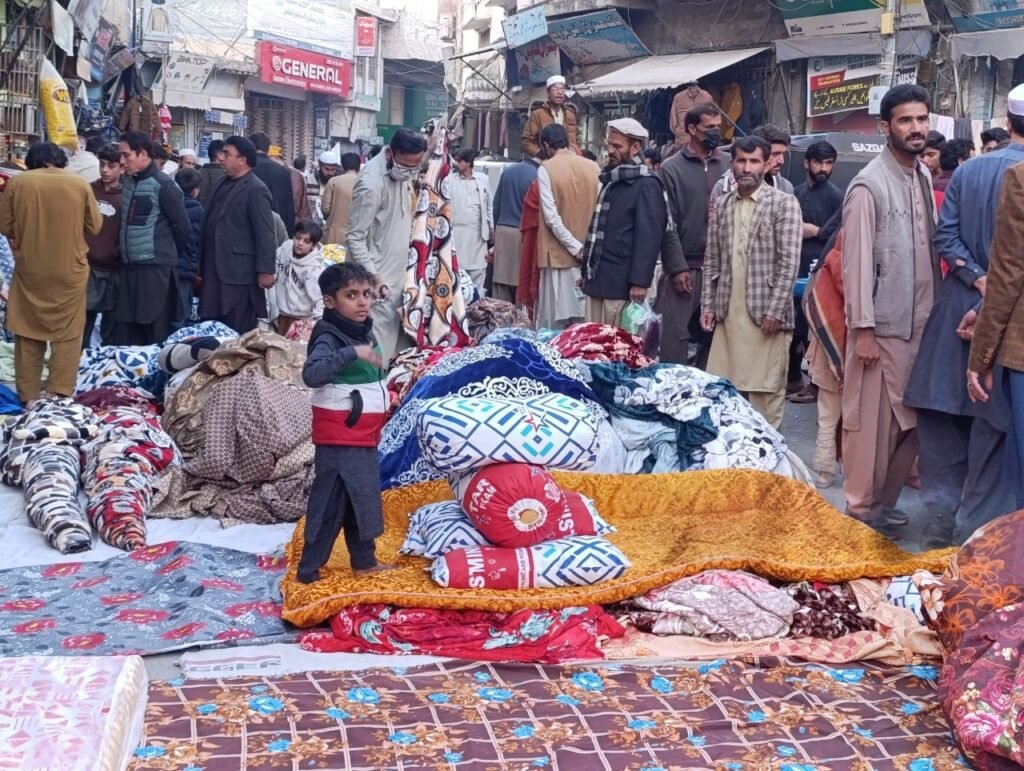
What to Avoid (Learn From My Mistakes)
Before we go further, let me tell you about the sheets you should run away from.
- Polyester (Satin/Charmeuse):I know they look shiny and feel slippery like a Bollywood villain’s suit. But in summer? They are death. Polyester doesn’t breathe. It’s literally plastic. You will wake up in a puddle of your own making.
- Microfiber:This is marketed as “soft” and “affordable.” Don’t fall for it. Microfiber is just thin polyester. It traps heat like a greenhouse. I bought a microfiber sheet once from an online sale for 1,200 rupees. I donated it after one night.
- High thread count cotton (800+):This sounds premium, but Khaleel Bhai explained it perfectly: “Thread count 800 means they have twisted two or three thin threads together to cheat the count. It becomes heavy. Dense. Not for our weather.” Stick to 300–500.
- Silk:I know someone’s rich aunt has a silk sheet. Silk is beautiful for winters. In summer, it clings to sweaty skin like a jealous lover. Avoid.