David had been sleeping badly for almost a year before he finally admitted the problem might be his bed itself. Every morning followed the same script. He’d wake up with a tight chest, a stuffy nose, and eyes that felt like they’d been rubbed with sand overnight. By mid-morning, after a shower and a cup of coffee, most of it faded. By the time he crawled back under the covers the next night, the cycle started all over again. He’d blamed the change of seasons, then his old carpet, then a scented candle his wife had bought, before an allergist finally sat him down and asked a question nobody had asked him before: “When’s the last time you actually looked inside your mattress?”
David hadn’t. Nobody really does. A mattress looks the same on day one as it does on day ten years later, at least from the outside, which is exactly what makes it such a convincing hiding place for one of the most common indoor allergy triggers in the world. What the allergist explained to him that afternoon is the same thing worth unpacking here in detail, because it turns out the humble zippered mattress and pillow encasement, an unglamorous product that rarely gets mentioned outside of allergy clinics and hotel supply catalogs, has more legitimate scientific backing behind it than almost anything else sold under the broader “hypoallergenic” umbrella.
The Hidden Ecosystem Living Under the Sheets
To understand why an encasement works, you first have to understand what it’s actually built to contain, and the answer is stranger than most people expect. A typical used mattress, according to research going back decades, can host anywhere from tens of thousands to several million dust mites at any given time. These creatures are members of the arachnid family, distant cousins of spiders and ticks, though far too small to see without magnification. They don’t bite, they don’t carry disease in the way mosquitoes or fleas do, and they don’t even seek out human contact deliberately. Instead, they simply live where the food is, and the food, in this case, is the constant, quiet shower of dead skin cells that every human being sheds continuously, day and night, in the thousands per hour.
A mattress and the pillows resting on top of it collect years of this shed skin, tucked into fibers and foam that also happen to trap the humidity produced by human breath and body heat overnight. It’s an close to perfect microhabitat, warm, humid, and endlessly stocked with food, which is exactly why a bed becomes one of the densest dust mite habitats in an entire home, often outpacing carpets, curtains, and upholstered furniture combined.
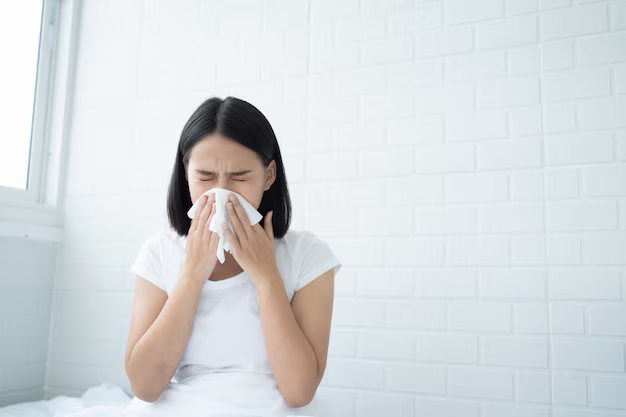
The allergic reaction itself isn’t triggered by the mites crawling around, contrary to what a lot of people assume. It’s triggered by proteins found in their fecal matter and in fragments of their decomposing bodies after they die. These particles are lightweight enough to become airborne with almost any disturbance, a person rolling over, plumping a pillow, or pulling back a comforter in the morning, and once airborne, they’re easily inhaled or come into contact with the eyes, nose, and skin. For someone with a genuine dust mite sensitivity, this triggers the release of histamine and other inflammatory chemicals in the body, producing the exact symptoms David had been living with for the better part of a year: congestion, itchy eyes, sneezing, and in some cases a tight, wheezy chest that can aggravate underlying asthma.
Why Washing Sheets Alone Isn't Enough
It’s a reasonable question to ask why simply washing bedsheets frequently wouldn’t solve this problem entirely, since sheets do get washed regularly in most households. The honest answer is that sheets are only the outermost, most visible layer of a much deeper structure. Underneath the fitted sheet sits the mattress itself, an object that almost nobody launders because it obviously can’t go into a washing machine, and the same goes for the bulk of a pillow’s interior filling. Dust mites don’t confine themselves to the top layer of fabric a person actually touches. They burrow into batting, foam, and stuffing, embedding themselves in places a weekly sheet-washing routine simply can’t reach.
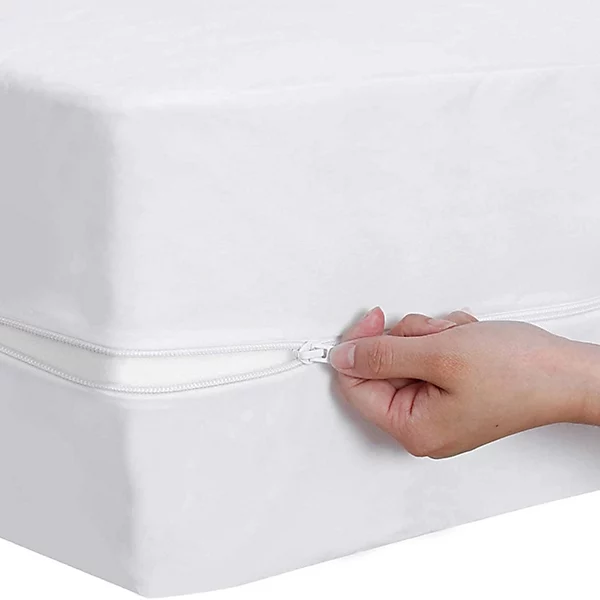
This is precisely the gap that an allergen-proof mattress or pillow encasement is designed to close. Rather than trying to remove dust mites from deep inside a mattress, which is close to impossible once a mattress has been in use for any real length of time, an encasement works by physically sealing the entire object inside a barrier fabric with pores small enough to prevent both the mites and their allergenic waste particles from passing through in either direction. The mites already living inside an older mattress don’t need to be eliminated for the encasement to work, because they simply lose access to their food supply and their exit route at the same time. Whatever population already exists inside eventually dies off from starvation, while the zippered barrier prevents fresh allergen particles from escaping into the surrounding air that a sleeper breathes each night.
What the Actual Research Shows
This isn’t simply a plausible-sounding idea marketed by bedding companies, which is worth emphasizing given how much of the broader hypoallergenic bedding category rests on shakier ground. Allergen-impermeable encasements have been studied fairly extensively in clinical and environmental health research over the past several decades, largely because dust mite allergy is one of the most common indoor triggers of both allergic rhinitis and asthma worldwide, affecting a meaningful percentage of the population in humid and temperate climates especially.
Multiple studies measuring dust mite allergen concentrations in bedrooms before and after the introduction of impermeable mattress and pillow covers have found measurable reductions in airborne and settled allergen levels within the covered bedding. Research specifically looking at asthma patients with confirmed dust mite sensitivity has shown that consistent use of encasements, particularly when combined with other environmental control measures like reducing indoor humidity and regular vacuuming with a HEPA filter, correlates with reduced frequency of asthma symptoms and, in some studies, reduced reliance on rescue inhaler medication over time.
It’s worth being precise here rather than overselling the point, because the scientific literature on this topic isn’t uniformly glowing. Some larger studies that looked at encasements as a single, isolated intervention, without pairing them with broader environmental changes, found more modest or inconsistent symptom improvement, which has led some researchers to argue that encasements work best as one piece of a larger allergen-reduction strategy rather than a standalone cure. This nuance matters, because it explains why some people who buy an encasement expecting total symptom relief come away disappointed, while people who use it as part of a fuller approach, alongside humidity control and frequent high-heat laundering of removable bedding, tend to report the most consistent improvement.
The Physics of a Pore Small Enough to Matter
What actually makes an encasement effective, from a pure materials science standpoint, comes down to something surprisingly simple: pore size. Dust mites themselves measure somewhere around a quarter of a millimeter in length, genuinely tiny but not microscopic in the strictest sense. Their allergenic waste particles, however, are considerably smaller, and it’s these particles that a properly engineered encasement fabric needs to block.
A well-constructed allergen barrier fabric is woven tightly enough that its pore size falls below the threshold needed to stop these microscopic waste particles from passing through, while still remaining porous enough to allow air and moisture vapor to move through the fabric so the mattress doesn’t become an uncomfortable, sweaty surface to sleep on. This is a genuinely delicate engineering balance. A fabric woven too loosely fails to block allergens effectively, defeating the entire purpose. A fabric woven too tightly with no breathability becomes hot, sticky, and uncomfortable enough that people often stop using the product altogether within a matter of weeks, which is its own kind of failure even if the barrier technically works.
This is why the better-tested and better-reviewed encasement products on the market tend to use a specific category of fabric, often a tightly woven microfiber or a laminated membrane fabric, engineered specifically around this pore-size threshold, rather than a generic waterproof mattress cover repurposed and marketed under an allergen-friendly label. The distinction matters more than it might seem. A basic plastic or vinyl mattress protector, the kind designed to stop liquid spills, might incidentally block some allergens simply by being non-porous, but it typically traps heat and moisture so effectively that it becomes uncomfortable within a single night’s sleep, and moisture trapped against the mattress surface can actually encourage dust mite and mold growth in the layers not covered by the encasement. A properly engineered allergen encasement solves the barrier problem without creating this secondary moisture problem.
The Zipper Detail That Actually Matters
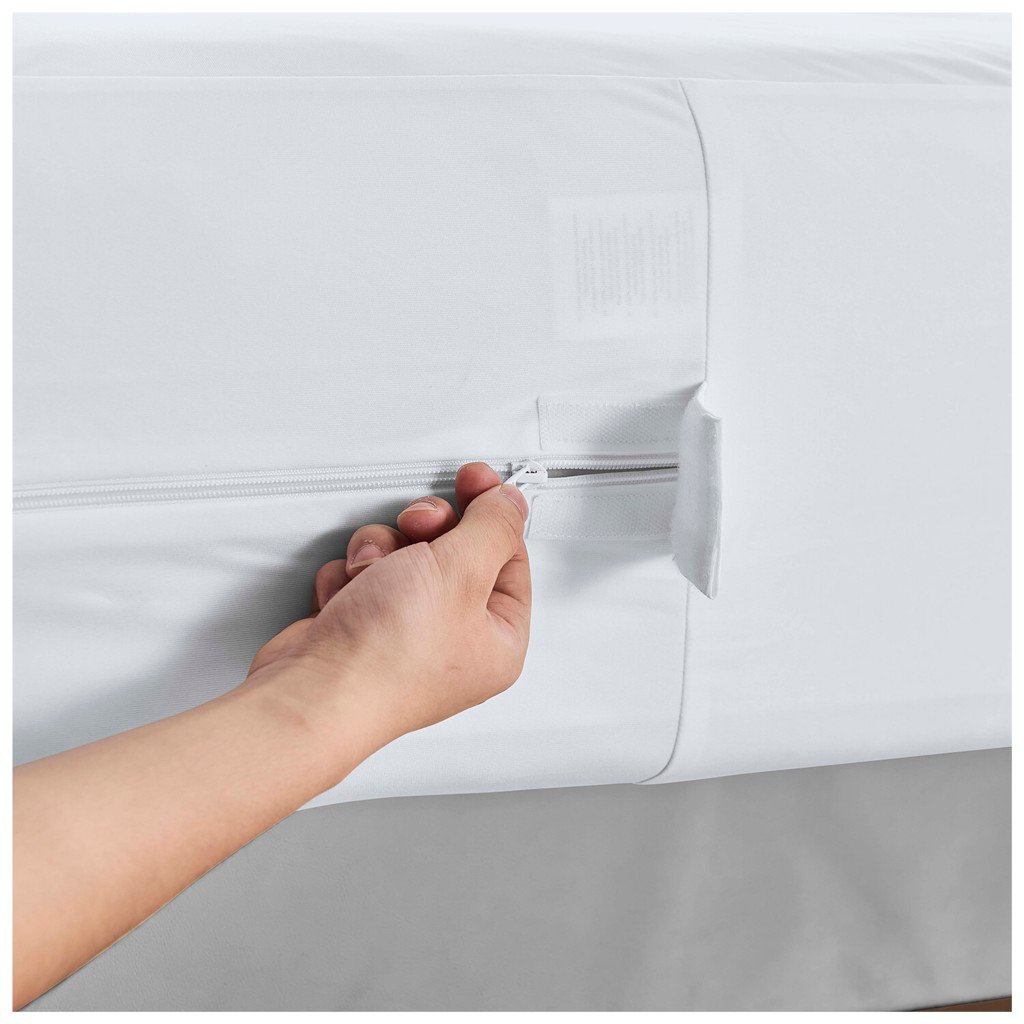
It might seem strange that so much attention gets paid to something as small as a zipper, but the zipper closure is genuinely one of the more important design details separating an effective encasement from an ineffective one. A mattress or pillow encasement that doesn’t fully seal, whether because of a gap left by a poorly designed zipper, a missing zipper flap, or a closure that doesn’t run the complete perimeter of the object, effectively creates an escape route for the allergen particles the entire product is designed to contain.
Higher-quality encasements typically include a fabric flap that folds over the zipper track itself, sometimes described as a zipper guard or a dust flap, specifically to close this gap. Some designs also use a slightly curved or L-shaped zipper track at the corner of the encasement rather than running it in a straight line across one edge, reducing the mechanical stress on the zipper over years of daily use and lowering the chance of a seam failure developing over time. None of this is aesthetic. Every one of these small design choices exists specifically to preserve the integrity of the seal the fabric itself creates, because a barrier fabric with a single unsealed gap performs little better than no barrier at all for the specific allergen particles it’s meant to contain.
This is part of why allergists and researchers studying encasement effectiveness tend to specify “zippered” and “fully encasing” as necessary qualifiers rather than treating any mattress cover as equivalent. A fitted sheet-style mattress protector that only covers the top and sides while leaving the underside exposed doesn’t create the sealed environment necessary for the starvation effect on existing mite populations to actually occur, since air, moisture, and organic debris can still reach the mattress interior from the uncovered side.
The Story of a Bedroom That Finally Made Sense
Going back to David for a moment, his experience after finally trying a set of properly fitted zippered encasements on both his mattress and his two pillows tracked closely with what the broader research would predict. Within the first week, he didn’t notice much of a difference, which his allergist had actually warned him about in advance, explaining that the existing allergen load already present in the air and settled into surrounding fabric, curtains, and carpet takes time to decline even after the source is sealed off. By roughly the third week, his morning symptoms had noticeably softened, and by the two-month mark, combined with a switch to washing his removable bedding weekly in hot water and running a portable HEPA air purifier in the bedroom overnight, his congestion had reduced dramatically, though not entirely, which is a distinction worth being honest about.
His allergist made a point of explaining that an encasement isn’t a cure in the way a course of antibiotics might resolve an infection. It’s closer to a maintenance intervention, something that continues doing its job passively as long as it stays properly fitted and undamaged, but doesn’t retroactively undo years of allergen exposure overnight. For David, understanding this distinction mattered, because it kept him from giving up on the product after the first disappointing week, and it kept his expectations realistic enough that he didn’t feel misled once real improvement did show up a bit later.
Encasements and Asthma: Where the Evidence Gets Most Interesting
Among all the potential benefits attributed to allergen-proof encasements, the connection to asthma management is where the scientific literature carries the most weight, largely because asthma symptoms are more objectively measurable than subjective congestion or itchiness. Researchers can track inhaler usage, nighttime awakenings due to breathing difficulty, and in clinical settings, even measure lung function directly using spirometry before and after an intervention like encasement use.
Several controlled studies focused specifically on children and adults with dust mite-sensitized asthma have found that consistent encasement use, again typically paired with other environmental controls, correlates with fewer nighttime symptom flare-ups and, in some cohorts, a modest reduction in the need for daily controller medication over several months of consistent use. This doesn’t mean an encasement replaces prescribed asthma medication, and no credible allergist would ever suggest swapping a controller inhaler for a mattress cover. But as a supportive, low-risk, non-pharmaceutical intervention that reduces one identifiable environmental trigger, the evidence base here is notably stronger than for most other categories of “hypoallergenic” bedding products on the market.
What to Actually Look for When Buying One
Given everything above, choosing an actual encasement becomes a more specific and slightly technical decision than picking bedding based on a vague marketing label. The fabric itself matters most, and looking for language describing a specific pore size rating, often expressed in microns, or an independent certification from an allergy-focused organization gives a shopper something more concrete to evaluate than a simple “allergen-proof” claim printed without further explanation.
Full encasement design matters just as much as fabric quality, meaning the product needs to wrap entirely around the mattress or pillow on all six sides rather than draping over the top like a fitted sheet. The zipper needs a fabric flap covering the track itself, and ideally an additional small tab or pull mechanism that prevents the zipper from working itself open gradually through nightly movement, which is a surprisingly common failure point in cheaper products.
Breathability deserves just as much consideration as barrier strength, since a product that blocks allergens perfectly but sleeps unbearably hot is a product that eventually ends up folded in a closet rather than actually protecting anyone. Reading through verified customer reviews specifically mentioning temperature and comfort, rather than relying purely on the allergen-blocking claims on the packaging, tends to be a more reliable way to judge this in practice.
Finally, machine washability matters more than people initially expect, since the encasement itself, unlike the mattress or pillow underneath it, can and should be washed periodically, typically every two to three months, to remove any allergen particles or dust that have settled on its outer surface over time, even though the barrier layer itself is preventing anything from passing through into the mattress interior.

Where Hospitals Quietly Got There First
Long before allergen-proof encasements showed up in home goods stores, hospitals and long-term care facilities were already using a version of the same technology, though for slightly different reasons. Healthcare settings have to worry not just about dust mites but about bed bugs, bodily fluids, and cross-contamination between patients, which pushed the medical supply industry to develop tightly woven, fully sealed, easily disinfected mattress covers decades before the average consumer had ever heard the phrase “allergen-proof.” The engineering behind a modern consumer-grade encasement borrows heavily from this institutional lineage, and it’s part of why the better products on the market today tend to describe their fabric using clinical-sounding language, referencing barrier performance and microbial resistance testing, rather than softer marketing terms like “cozy” or “luxurious.”
This institutional history is worth mentioning because it underscores something important about the category as a whole. Unlike a lot of consumer bedding trends that emerge from marketing departments looking for a new angle to sell an old product, allergen-proof encasements emerged from an actual engineering problem that needed solving in a setting where the stakes were considerably higher than a mildly stuffy nose. That doesn’t automatically make every encasement sold today effective, since plenty of manufacturers now slap similar language onto lower-quality products riding the coattails of a legitimate technology, but it does mean the underlying concept has a track record stretching back further and resting on sturdier ground than most bedding innovations aimed at allergy sufferers.
Common Doubts Worth Addressing Directly
A handful of doubts come up often enough among first-time buyers that they’re worth addressing plainly rather than glossing over. One common concern is whether an encasement traps existing allergens inside the mattress permanently, effectively sealing a problem in rather than solving it. This concern gets the mechanism backwards. The mites already living inside an older mattress lose their food supply once sealed off from the skin flakes and moisture that would otherwise migrate through the surface, and while their remains stay inside the mattress rather than vanishing, they also stay contained rather than becoming airborne, since the entire point of the sealed barrier is to prevent particles from moving through it in either direction. Over time, as the existing population dies off without being replenished, the allergen load inside the sealed mattress becomes largely irrelevant precisely because it can no longer escape into the surrounding air a person actually breathes.
Another common doubt centers on whether buying a brand new mattress would simply be a cleaner, more effective solution than encasing an old one. It’s a reasonable instinct, but even a brand new, completely mite-free mattress starts accumulating skin flakes and moisture from the very first night it’s slept on, and without an encasement in place from day one, it will develop its own dust mite population over months and years just like any other mattress. Encasing a new mattress immediately, rather than waiting for a problem to develop, is actually one of the more efficient uses of the product, since it prevents the buildup from ever starting rather than trying to interrupt an established colony later.
A third doubt, often raised by people who tried a cheap plastic mattress protector years ago and found it unbearably hot and noisy, understandably assumes all encasements share that same reputation. This is where fabric quality genuinely separates one product from another. Older vinyl-style covers, the crinkly plastic sheets sometimes remembered from childhood visits to a grandparent’s house, bear little resemblance to the tightly woven, breathable microfiber or laminated membrane fabrics used in better modern encasements, which are specifically engineered to allow air and moisture vapor through while still blocking allergen particles. Judging the entire category based on decades-old plastic covers is a bit like judging modern smartphones based on a rotary telephone; the underlying category has moved considerably since then.
A Small, Unglamorous Fix With Real Backing
There’s something almost anticlimactic about the conclusion here, given how much attention gets paid to fancy organic fibers, bamboo weaves, and elaborately marketed “hypoallergenic” sheet sets in the broader bedding industry. The product with arguably the strongest, most consistent scientific support behind it isn’t a beautiful set of Egyptian cotton sheets or a trendy eucalyptus fiber duvet cover. It’s a plain, often unattractive, zippered fabric case that most people never see once it’s tucked under a fitted sheet, doing its quiet work night after night without anyone thinking about it.
For someone like David, or anyone else whose mornings have quietly been shaped by an unexplained stuffiness or itch for months without an obvious cause, understanding the actual mechanism behind an allergen-proof encasement, the pore size, the sealed zipper design, the starvation effect on existing mite populations, and the supporting research specifically around asthma and allergic rhinitis, turns what might otherwise feel like just another bedding gimmick into something worth taking seriously. It won’t solve every case of morning congestion, and it works best paired with other environmental changes rather than treated as a stand-alone miracle fix, but among the crowded and often confusing world of allergy-marketed bedding products, it remains one of the few with genuine research standing behind it.
Frequently Asked Questions
Do zippered encasements need to cover the entire mattress, or just the top?
The full mattress and all sides need to be covered for the barrier to work properly. A top-only cover leaves the mattress interior exposed to air, humidity, and organic debris from underneath, which prevents the sealed environment needed to stop allergen exchange.
How long does it take to notice symptom improvement after using an encasement?
Most people don’t notice a dramatic difference in the first week, since existing allergen particles already settled in the room take time to decline. Many people report meaningful improvement somewhere between four and eight weeks, especially when paired with regular hot-water washing of sheets and pillowcases.
Can an encasement replace asthma or allergy medication?
No. Research supports encasements as a helpful supportive measure that reduces one specific environmental trigger, not as a replacement for prescribed medication. Anyone with diagnosed asthma or allergies should continue following their doctor’s treatment plan alongside any environmental changes.