That First Awful Moment of the Day
You know that feeling. The alarm goes off, and before you even open your eyes, there it is—that familiar, dull ache radiating from the base of your spine. You lie there for a moment, negotiating with yourself, trying to remember if you did anything particularly strenuous yesterday that would justify this kind of morning misery.
I remember the morning it really hit me. I was thirty-four years old, and I’d been waking up with this nagging lower back pain for maybe six months. At first, I blamed it on my desk job. Then I blamed it on getting older. Then I blamed it on my weekend warrior habits—too much gardening, too little stretching.
But that particular morning, I couldn’t even sit up straight. I had to roll onto my side, push myself up with my arms, and literally crawl my way out of bed. My wife asked if I was okay. I said yeah, just stiff. But I wasn’t okay. I was in trouble, and I didn’t even know it yet.
Here’s the thing nobody tells you about chronic back pain. It’s not just the physical discomfort. It’s the slow erosion of your happiness. The way you start avoiding activities you used to love. The constant low-grade irritability that seeps into your relationships. The way you become that person who always says “my back” when someone asks how you’re doing.
For months, I chased solutions. I bought ergonomic chair cushions for my office. I started doing yoga. I visited a chiropractor three times a week. I spent hundreds of dollars on massage therapy. And all the while, the problem was sitting right under me every single night, silently, patiently, slowly making everything worse.

The Conversation Nobody Was Having
If you’d asked me back then whether my mattress was the problem, I probably would have shrugged and said it was fine. It was comfortable enough when I lay down at night. It hadn’t collapsed or anything dramatic. It was just… there. An old, familiar piece of furniture I’d had for years.
And that’s exactly the problem. We’re all walking around with these old, tired mattresses, completely unaware that our bodies are staging a silent protest every single night.
The human spine is this incredible, complex structure—twenty-four vertebrae stacked like building blocks, with these shock-absorbing discs in between that let us bend, twist, and move through the world. It’s designed to carry us through a lifetime of activity. But here’s what they don’t tell you in anatomy class: your spine needs support even when you’re sleeping.
When you lie down, your body weight needs to be distributed evenly. Your spine should maintain its natural S-curve, with your head, shoulders, hips, and legs properly aligned. Think of it like a bridge. A suspension bridge needs its cables and towers to hold everything up. If one of those cables snaps, the whole structure starts to stress and warp.
Your mattress is that bridge’s foundation.
I started doing research when I realized my back wasn’t getting better. I was desperate. I’d spent my life savings on appointments and treatments, and I was still waking up feeling like someone had taken a baseball bat to my lower back. So I dove into the science—the real science, not the marketing fluff from mattress companies.
What I found was honestly shocking. There’s this 25-year review in the Journal of Orthopaedics and Traumatology that looked at 47 different studies on how mattresses affect spinal health. And the evidence was crystal clear: what you sleep on dramatically impacts how your spine functions.
A medium-firm mattress consistently came out on top. Not too hard, not too soft. Just right. The reason is that medium-firm provides enough support to keep your spine aligned while still contouring enough to relieve pressure points. Too soft, and your heavier parts—hips, shoulders—sink too deep, turning your spine into a hammock. Too firm, and you create pressure points that make you toss and turn all night, never really resting.

The Secret Life of Your Mattress
Let me tell you what happened when I finally decided to take a really close look at my mattress.
I stripped off all the sheets and comforters, and what I saw made my stomach drop. There was a visible dip right in the center where I’d been sleeping for years. It wasn’t something you’d notice with sheets on, but now, in the harsh light of day, I could see it plain as day. A depression, maybe three inches deep, shaped exactly like my body.
I’d been sleeping in a hole.
Think about that for a second. Every night, for hours, my lower back was sinking into this void while my head and legs were propped up on the edges. It was like sleeping in a hammock that was slightly too short for me—my spine curved downward in the middle, straining against gravity for eight hours straight.
It explained everything. The morning stiffness. The way I’d toss and turn all night, never really settling. The constant need to shift positions. My body knew something was wrong, even if my brain refused to admit it.
What really got me was realizing how slow this process was. A mattress doesn’t fail all at once. It’s gradual. A little sag here, a little compression there. You get used to it. Your body adapts, compensating for the lack of support by tensing up certain muscles, contorting into unnatural positions. It’s the classic boiling frog problem—the temperature rises so gradually that you don’t realize you’re in danger until it’s too late.
And here’s the thing most people don’t know: the materials in a mattress have a limited lifespan. The foam breaks down. The springs lose their bounce. The fibers compress. After about seven to ten years, most mattresses can no longer provide the support your spine needs.
I’d had mine for eight years.

My Friend Marco and His Impossible Position
Around this same time, my friend Marco was dealing with a completely different set of back problems. Marco was a stomach sleeper—the kind of person who could fall asleep facedown in about thirty seconds flat. He swore he couldn’t sleep any other way.
The problem was, his back was killing him. Every morning, without fail, he’d wake up with this sharp pain right in the center of his lower back. He went to physical therapy. He tried inversion tables. Nothing worked.
I told him to look at his mattress, and he did. But here’s the twist—Marco’s mattress wasn’t too soft. It was too firm. Way too firm.
You see, stomach sleeping is already hard on your back because it forces your neck into this awkward rotation and puts your lower back into an exaggerated arch. When you add a mattress that’s too firm—one that doesn’t allow your hips and chest to sink at all—that arch becomes even more extreme. Your spine is basically like a bow, curved upward in the middle, with your head and feet pulling down on the ends.
I found this study that explained it perfectly. For stomach sleepers, you actually need a mattress with just enough give to allow some natural contouring, but firm enough to prevent your pelvis from sinking too deep and creating that painful arch. It’s a delicate balance.
Marco ended up switching to a medium-firm mattress and trained himself to sleep partly on his side. The transformation was remarkable. Within two weeks, his morning pain was practically gone. He said he felt like he’d been given his life back.
The Week That Changed Everything
After seeing that dip in my own mattress, I decided to run a little experiment. I’d read about this study where researchers took people with chronic back pain and had them sleep on their own mattresses for one night, then on specially designed supportive mattresses for three nights, then back to their own mattresses.
The results were wild. Participants reported an 18% decrease in pain scores and a 25% higher comfort rating on the supportive mattresses compared to their own. That’s just three nights of better sleep.
So I borrowed my sister’s guest room mattress for a week. It was a newer, medium-firm thing she’d bought last year. Nothing fancy, just a solid, supportive bed.
The first night was weird. My body didn’t know what to do with itself. I’d been sleeping in that hole for so long that proper alignment actually felt uncomfortable at first. I tossed and turned more than usual. But by the second night, something shifted.
I woke up the next morning, and for the first time in months, I didn’t feel that familiar ache. I actually had to stop and think about it. Where was the pain? It just… wasn’t there. I sat up—normally, not with that careful, guarded motion I’d developed—and felt fine. Stiff, maybe, but not in pain.
By the third day, I was a believer. My energy was up. My mood was better. I wasn’t snapping at my wife for small things. I actually looked forward to getting up in the morning instead of dreading that first moment when my feet hit the floor.
It sounds dramatic, but I honestly felt like I’d been living in a fog and someone had finally lifted the haze.

The Hidden Toll Nobody Talks About
One thing that shocked me during this whole journey was just how much my back pain had been affecting every other part of my life. I thought it was just physical discomfort. Something I could power through, ignore, soldier on with.
But chronic pain doesn’t work that way. It seeps into everything.
I noticed it first at work. I was an editor at the time, spending hours hunched over manuscripts. The pain in my back made it harder to concentrate. I’d find myself getting distracted, irritable, snapping at writers over minor errors. I started taking sick days—not because I was physically unable to work, but because the mental drain of being in pain all day was just too much.
At home, I was a different person too. I used to love playing pickup basketball on Saturdays. Now I found excuses to stay home. Gardening, which used to be my meditation, felt like a chore. Even simple things like carrying groceries felt like a monumental effort.
My wife noticed, of course. She’d ask me what was wrong, and I’d say nothing, but she knew. She could see it in the way I moved, the careful way I sat down, the grimace I couldn’t quite hide when I bent over.
And the worst part? I’d started to accept this as normal. “I’m in my mid-thirties now,” I told myself. “This is just what getting older feels like.”
That’s the biggest lie we tell ourselves. Back pain isn’t a normal part of aging. It’s a signal that something is wrong. And when that something is as simple as an unsupportive mattress, it’s practically criminal to ignore it.
The science on this is really clear. When you’re in chronic pain, your body produces stress hormones like cortisol. When those hormones stay elevated over long periods, they can cause weight gain, high blood pressure, and a weakened immune system. Your relationships suffer because you’re irritable. Your work suffers because you can’t concentrate. Your emotional well-being takes a nosedive.
All because of a mattress.

What the Science Actually Says
I want to pause here and talk about what the real science says, because there’s so much marketing noise out there. Every mattress company wants to convince you that their product is the magic bullet. But the evidence is actually pretty consistent.
The Lancet published this really important study back in 2003 that looked at 313 adults with chronic non-specific low-back pain. They split them into groups—some got firm mattresses, some got medium-firm. The results were pretty definitive. The medium-firm group had significantly better outcomes for pain in bed, pain on rising, and disability compared to the firm mattress group.
What’s interesting is that this challenges the old assumption that harder is better. A lot of people think they need a rock-hard mattress for their back. That’s actually not true at all. Your spine needs some contouring—some give—to relieve pressure points and allow proper circulation.
The 25-year review I mentioned earlier confirmed all of this. Medium-firm support was consistently associated with better pressure distribution, improved sleep quality, reduced morning stiffness, and lower low-back pain intensity.
But here’s where it gets complicated. The review also pointed out that “mattress selection should also consider body habitus, age, sex-related anthropometry, preferred sleep position, and thermal comfort.”
Translation: there’s no one-size-fits-all solution. Your body weight matters. Your age matters. Whether you’re male or female matters. How you sleep matters. Whether you tend to sleep hot or cold matters.
A 130-pound side sleeper needs something completely different from a 220-pound stomach sleeper. The lighter person needs more contouring, more give, because their body doesn’t create enough pressure to deform a firmer surface. The heavier person needs more support, more resistance, to prevent sinking too deep.
This is why I get annoyed when I see those mattress commercials promising one mattress that works for everyone. It’s just not scientifically accurate.
The Science of Sleep Positions
I became kind of obsessed with sleeping positions during my research. It turns out, how you sleep matters almost as much as what you sleep on.
Side sleeping is the most common position, and for good reason. It naturally allows your spine to maintain a neutral position, especially when you bend your knees slightly and sleep in what’s called the “fetal position.” The freedom to adjust your knees and hips makes it easier to keep everything aligned.
But even side sleepers can get into trouble with the wrong mattress. If it’s too soft, your heavier hips will sink too deep, creating a slope that torques your spine. If it’s too firm, you’ll develop pressure points on your hips and shoulders, which leads to tossing and turning.
Back sleeping is the second most common position. This one requires a delicate balance. You need enough support to maintain the natural curve of your lower back, but enough contouring to fill the space behind your knees. Too firm, and the natural curve becomes exaggerated. Too soft, and your lower back arches too much.
Then there are stomach sleepers, who are basically doing back sleep on hard mode. This position forces your neck to rotate to one side and can create that exaggerated arch in your lower back. Dr. Kevin Lees, who runs chiropractic operations at The Joint, says that stomach sleepers actually need a firmer mattress to prevent their pelvis from sinking and creating that painful arch.
I remember reading about this and thinking, “No wonder Marco was struggling.” He was sleeping in the most challenging position possible with a mattress that was completely wrong for it.
The really interesting thing is that your sleeping position isn’t necessarily fixed. You can train yourself to sleep differently. It’s not easy, but it’s possible. Marco did it, and it changed his life.

The Day I Finally Replaced My Mattress
You know that feeling when you’ve been putting off something important for way too long, and you finally just do it? That was me at the mattress store.
I walked in determined to make an informed decision. No more guessing. No more trusting the salesperson who works on commission. I was going to use everything I’d learned.
First, I thought about my sleeping position. I’m primarily a side sleeper, sometimes rolling onto my back. I knew I needed something with enough give to relieve pressure on my hips and shoulders, but enough support to keep my spine straight.
Second, I considered my body weight. I’m around 180 pounds, which puts me in that middle range where medium-firm is usually the sweet spot.
Third, I thought about what I’d learned about materials. The memory foam that was popular a few years ago has issues—it tends to sleep hot and can lose its contouring ability over time. The newer latex and hybrid options seemed more promising.
But the most important thing I learned? Don’t just lie on a mattress for five minutes in the store and call it good. Lie down for at least ten to fifteen minutes. Get into your normal sleeping position. Close your eyes. See how it really feels.
So that’s what I did. I lay down on about a dozen different mattresses. I brought a book and read in my sleeping position. I rolled over. I tested how easy it was to move around. I paid attention to whether I felt any pressure points.
And when I finally found the right one, I knew it immediately. It felt like my body just relaxed into it. There wasn’t that “this is too hard” or “this is too soft” feeling. It just… worked.

What Changed and What Didn’t
I’ll be honest with you—replacing my mattress didn’t solve everything overnight. The first week was actually a little rough. My body had spent years compensating for that sagging mattress, and now it had to readjust to proper support. Some muscles that had been tensed up for years started to relax, and that relaxation wasn’t always comfortable.
But by the second week, I felt a difference. By the third week, I was waking up without that familiar ache for the first time in years. By the end of the first month, I realized I’d gone days—maybe even a week—without thinking about my back at all.
I started playing basketball again. I gardened without dreading the aftermath. I could carry my daughter around without having to put her down after a few minutes. I felt more energetic during the day, slept better at night, and generally felt like a better, more present version of myself.
But I also realized that the mattress was just one piece of the puzzle. I still needed to stretch regularly. I still needed to pay attention to my posture during the day. I still needed to exercise. The mattress didn’t cure everything—it just removed one massive obstacle to feeling better.
It’s like trying to drive a car with one wheel out of alignment. You can keep driving, but it’s going to cause wear and tear on every other part of the vehicle. Your engine will work harder. Your tires will wear unevenly. Eventually, something’s going to break.
That’s what a bad mattress does to your body. It throws everything out of alignment and forces your muscles to constantly compensate. The chiropractor can adjust you, the physical therapist can give you exercises, the massage therapist can work out the knots. But if you go home and sleep on that sagging mattress every night, you’re basically undoing all their work.

A Warning for the Stubborn
I was stubborn about my mattress for way too long. I told myself it was fine. I told myself I couldn’t afford a new one. I told myself it wasn’t that bad.
Looking back, I was being an idiot.
The average person spends about a third of their life sleeping. If you live to be eighty, that’s roughly twenty-six years of your life spent in bed. That’s not nothing. That’s not an area where you should cut corners or make do with something that’s actively harming you.
The cost of a new mattress might seem high. But here’s what I realized: I was spending hundreds of dollars on chiropractor appointments, massage therapy, physical therapy, and pain medication. All of it trying to fix the symptoms of a problem that my mattress was causing every single night.
When I added it up, I’d spent more on treatments in the past year alone than a good quality mattress would cost. And none of those treatments worked long-term because the underlying problem never changed.
So I want to say this as clearly as I can: if you’re waking up with lower back pain that improves as the day goes on, if you’re tossing and turning through the night, if you see visible dips or sagging in your mattress, or if your mattress is more than seven to ten years old, you need to replace it.
Not when it’s convenient. Not when you save up enough money. Not when you find a good sale. Now.
Your health is too important to put off. Your quality of life is too important to sacrifice. The people who love you—they notice when you’re in pain, even if you think you’re hiding it. They want you to feel better. They want the version of you that isn’t constantly fighting against their own body.
The Emotional Toll of Chronic Pain
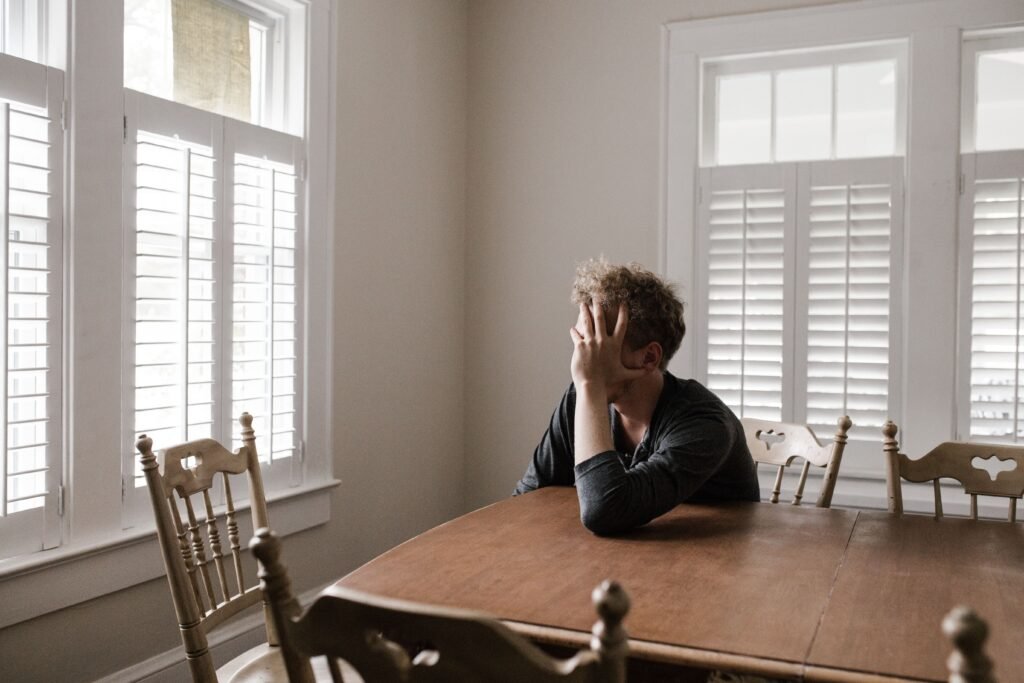
I want to talk about something that doesn’t get discussed enough: the emotional weight of living with chronic pain.
When you’re in pain every day, it wears you down. It’s like carrying a heavy backpack that you can never take off. At first, you might not notice how heavy it is. But over time, it wears grooves into your shoulders, changes how you walk, makes you tired even when you haven’t done anything.
I remember one particularly bad night. I was lying in bed, unable to sleep because of the pain, and I just started crying. Not because of the physical discomfort, although that was bad enough. I cried because I was exhausted from fighting my body all the time. I cried because I felt like I was missing out on so much of life. I cried because I couldn’t remember what it felt like to wake up feeling good.
That’s not an exaggeration. I literally could not remember the last time I’d woken up without pain. It had been so long that I’d forgotten what normal felt like.
This is the part of chronic back pain that nobody tells you about. It’s not just the physical discomfort. It’s the slow erosion of your spirit. It’s the constant low-level depression that comes from being in pain all the time. It’s the anxiety about whether this is going to be your life forever. It’s the sense of loss for the person you used to be.
The science on this is pretty clear. Chronic pain and depression are deeply intertwined. They feed into each other, creating this vicious cycle that’s incredibly hard to break.
And all of this can be caused by something as simple as sleeping on the wrong mattress.
I’m not saying a new mattress will cure depression. But I am saying that when you remove one major source of pain from your life, everything else gets a little easier. You have more energy. You’re less irritable. You can focus better. You’re more present with the people you love.
It’s like finally sleeping through the night after weeks of insomnia. Everything just… lifts.
The Role of Quality Materials
One thing I learned during my deep dive into mattress science is that not all mattresses are created equal. The quality of the materials really does matter.
The old-style innerspring mattresses, where it’s just a metal coil system with some padding, tend to break down pretty quickly. The springs compress, the padding flattens, and suddenly you’re sleeping on something that’s basically a flat surface with no contouring at all.
Memory foam can be great for some people—especially side sleepers—but it has this problem where it sleeps hot. It also tends to lose its ability to contour over time, especially if you’re a heavier person.
The newer hybrid options, which combine a coil support system with layers of various foams, tend to offer the best of both worlds. The coils provide structural support and bounce, while the foam layers provide contouring and pressure relief.
And then there’s latex, which is incredibly durable. It sleeps cooler than memory foam and provides this really nice combination of support and contouring. The downside is that it’s expensive and heavy.
But here’s the thing: spending a little more on quality materials can make a massive difference in how long your mattress lasts. A cheap mattress might start sagging after three or four years. A quality one can easily last a decade or more.
I remember reading about a study that tested mattress longevity. After years of simulated use, the higher-quality mattresses maintained their support and contouring much better than the cheaper ones. The foam in cheap mattresses compressed and permanently deformed much faster.
When you consider that you’re spending about 56 hours a week on your mattress—2,920 hours a year—the investment in quality starts to make a lot of sense.

My Recommendations
I’m not a doctor. I’m not a chiropractor. I’m just someone who spent way too many years in pain before finally figuring out that the problem was right under me the whole time.
But if I could go back and give my past self some advice, here’s what I’d say:
First, take the time to really evaluate your current sleeping situation. Look at your mattress with honest eyes. Does it have dips or sags? Is it more than seven years old? Do you wake up in pain that gets better as the day goes on? These are all signs that something needs to change.
Second, when you’re shopping for a new mattress, don’t be seduced by marketing claims. The science is pretty clear about what works best for most people: medium-firm support, with individual adjustments based on sleeping position and body weight.
Third, don’t skimp on quality. A mattress is not an area where you want to cut corners. You’re going to be spending a third of your life on it. It’s worth investing in something that’s going to support you properly for years to come.
Fourth, remember that your sleeping position matters. If you’re a stomach sleeper, consider whether you might be able to train yourself to sleep on your side. If you’re a back sleeper, make sure you’re getting adequate support under your lower back. If you’re a side sleeper, pay attention to pressure points on your hips and shoulders.
And finally, be patient with yourself. Your body has been compensating for a bad mattress for a long time. It might take a few weeks to readjust to proper support. That’s normal. Don’t give up.

Conclusion: The Rest of Your Life Starts Tonight
I know this has been a long read. But here’s the thing—I wrote it all because I wish someone had told me these things years ago. I wish someone had sat me down and said, “Hey, your back pain isn’t just a normal part of aging. It’s probably your mattress, and you need to do something about it before it gets worse.”
I wasted a lot of time in pain. I wasted a lot of money on treatments that didn’t work because they were addressing the symptoms, not the cause. I missed out on things because I was too tired, too sore, too cranky to enjoy them.
And for what? Because I couldn’t be bothered to take a close look at my mattress? Because I didn’t want to spend the money? Because I’d convinced myself it was fine?
Don’t be like me. Don’t wait until the pain is so bad you can’t ignore it. Don’t put it off until some vague future date when you have more time or more money or more energy.
The best time to deal with a bad mattress is right now. Tonight. When you get home, take a real look at what you’re sleeping on. Be honest with yourself. And if it’s not serving you, make a plan to change it.
Your spine supports you every single day. It carries you through your life, your work, your relationships. It’s a miracle of engineering, honestly—the way it handles all that weight and movement without falling apart.
It deserves better than a broken-down, unsupportive mattress. And honestly? So do you.
The rest of your life starts tonight. Make it a good one.
FAQs
1. How can I tell if my mattress is causing my back pain or if it’s something else?
The biggest clue is timing. If your back pain is worst in the morning and gradually improves as you move around during the day, that’s a strong sign your mattress is the culprit. Also, notice how you feel when you sleep elsewhere—if hotel beds or your couch leave you feeling better in the morning, that’s another red flag. Visible sagging or body impressions in your mattress, age over seven years, and poor sleep quality with lots of tossing and turning are all strong indicators that your mattress needs replacement.
2. What’s the ideal mattress firmness for someone with lower back pain?
The scientific consensus from multiple studies points to medium-firm as the best choice for most people with lower back pain. However, your ideal firmness depends on a few factors. Side sleepers often need more contouring (slightly softer) to relieve pressure on hips and shoulders, while stomach sleepers need more support (slightly firmer) to prevent the lower back from arching. Body weight also matters—lighter individuals usually need softer surfaces, while heavier individuals need more firm support to prevent excessive sinking. Ultimately, the right mattress should allow your spine to maintain its natural alignment while relieving pressure points.
3. Is it normal to experience some discomfort when switching to a new mattress?
Yes, this is actually quite common and usually temporary. Your body has likely spent months or years adapting to your old, unsupportive mattress by tensing certain muscles or adopting unhealthy sleeping postures. When you switch to a properly supportive mattress, these compensation patterns need to readjust, which can cause some initial discomfort. Most people find that this adjustment period lasts one to three weeks. If the pain continues beyond that, however, the mattress might not be the right fit for you, and you should consider returning it if possible.