It was three in the morning, and the ceiling fan was doing nothing but circulating the hot, sticky air around my bedroom. The sheets were soaked, my hair was plastered to my forehead, and that feeling of being both too exhausted to move and too uncomfortable to sleep was becoming a familiar, nightly torture. This was the third summer in a row I’d been through this, and I was willing to try just about anything. After clicking through a dozen late-night shopping sites, I landed on the seemingly perfect solution: a cooling gel pad. It wasn’t expensive, it had four stars, and the reviews were full of people claiming it had saved their summer. The Amazon package arrived two days later, and I unrolled this blue, squishy rectangle onto my pillow, full of hope. As I laid my head down on its surprisingly cold surface, I felt a moment of bliss—only to wake up two hours later, face stuck to the pillow, feeling just as hot as before.
This experience stuck with me. Was it just my imagination, or was this product just a gimmick? I ended up going down a rabbit hole of research because I wanted to know the actual science behind these things. I wanted to understand: do these gel pads really reduce your core body temperature, or are they just a patch on a broken system?
The First Touch: The Science Behind the Chill
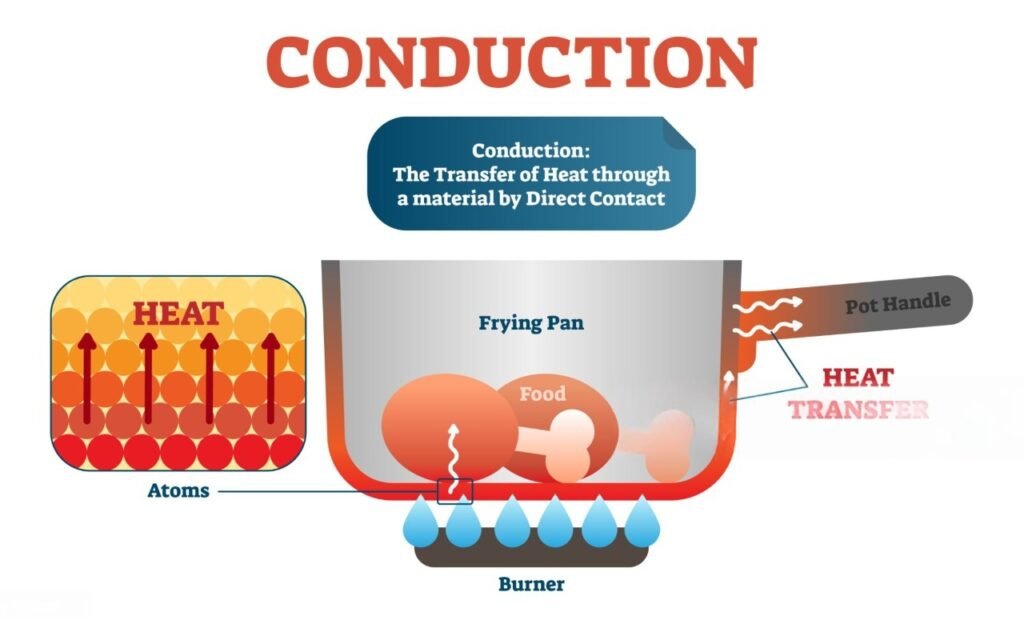
Let’s go back to that moment I laid my head down. That immediate cold feeling is very real. It’s not a trick. Most cooling gel pads are based on a simple principle of thermodynamics: conduction. The pad absorbs your body heat because it’s cooler than your skin at the moment of contact. It feels good because the gel inside is often made from a polymer that retains water, which can absorb a lot of heat energy to change its own temperature—this is called high specific heat capacity. Think of it like a giant ice cube that doesn’t melt [citation:1]. It draws that heat away from your skin, and that initial shock of cold is usually very effective.
The problem starts after about twenty to thirty minutes. The gel is excellent at absorbing that initial burst of heat, but once the gel’s temperature rises to match your skin’s temperature, the transfer stops. The science of how the human body cools itself is actually much more complicated than just touching something cold. Your body relies on vasodilation (pushing blood closer to the surface to cool down), sweating, and ambient temperature to regulate its core. A gel pad that stays cool for a few minutes does not impact this core system. The truth about cooling gel pads is that they do lower your body temperature, but only the temperature of the surface they are touching—your skin, not your core. It’s a topical solution to a systemic problem.

The Sticky Reality: When Comfort Turns into Discomfort
The next morning, I tried it again, thinking maybe I had used it wrong. This time, I placed it on the back of my neck and went to sit on the porch. The effect was pleasant for about ten minutes. Then I got up to grab my coffee, and the pad started sliding down my back. This is the less glamorous truth about gel pads: they are often a practical disaster in the real world. Because they rely on conduction, they need to stay flush against the skin. That’s easy when you’re lying perfectly still in bed. It’s nearly impossible when you’re tossing and turning.
I found this fascinating physical limitation buried in a few articles. The human body is constantly generating heat, especially when we are trying to sleep and our metabolism is slowing down. A static gel pad can only absorb a fixed amount of heat before it reaches saturation. Once saturated, it actually acts as an insulator. Instead of continuing to help you cool down, it traps your body heat against your skin. The cooling effect stops, and if the gel warms up beyond your skin temperature (which can happen in a warm room), it can actually start making you feel hotter [citation:2]. That “soggy” feeling isn’t just sweat; it’s often the heat radiating back at you. When I peeled that thing off my face at 3 AM, the spot where it had been was clammy and warm—the exact opposite of what I’d paid for.

The Skin Deep Truth
I decided to do a little experiment. I actually did get out of bed and start looking for the data. While I’m no physicist, I found a lot of information from sleep science foundations explaining that temperature regulation is primarily about blood flow. The body cools itself by sending warm blood to the extremities and sweating. A gel pad doesn’t trigger these biological responses; it just changes the temperature of the epidermal layer.
Here’s a hard truth: a cooling gel pad can reduce the temperature of the skin on your forehead or neck by several degrees. This creates a neurological signal that tells your brain, “You’re cold,” but it doesn’t do much to lower the temperature of the blood flowing through your core. The sensation is a powerful placebo effect at best and a distraction at worst. The only real way to lower your actual body temperature is to activate your body’s natural cooling mechanisms—airflow to evaporate sweat or ingesting cold substances [citation:3]. The truth about cooling gel pads is that they are excellent for localized inflammation or minor fever discomfort, but they are a very blunt instrument for whole-body temperature regulation.
The Dusty Shelf
By the end of the summer, my cooling gel pad was shoved in the back of a drawer, slightly dusty and warped from the heat. I had to ask myself if it was a waste of money. The answer is complicated. For a quick, localized cool-down—like if you have a headache or a hot flash, or if you just got back from a run and need to cool your pulse points—they are fantastic. They are excellent for post-workout recovery because they constrict blood vessels and reduce swelling.
But as a sleep aid? As a solution for a hot room? No. I realized I was trying to cool my entire internal thermostat with a gel pack, which is the equivalent of putting a band-aid on a broken leg. The problem wasn’t the gel pad; the problem was the lack of airflow in my room, the heavy comforter, and the fact that my body was generating heat faster than the pad could dissipate it.
The Verdict: Are They Worth It?
So, do cooling gel pads actually lower your body temperature? The technical answer is yes, but only locally, and only for a finite period. They lower the surface temperature of your skin, which can make you feel comfortable for a few minutes. However, they do not influence the thermoregulatory set point of your brain nor do they increase the rate at which your body dissipates heat via sweat or radiation. In short, they cool you down, but they don’t cool you off.
If you are buying one, you need to know its limitations. You need to understand that it’s an ice pack for your comfort, not a cure for a hot environment. If you have a good airflow in the room and a fan to help dissipate the heat the gel absorbs, you can get a better result. But if you expect it to magically make a 90-degree room feel like 68, you are going to be disappointed—and slightly sticky.
The Final Verdict
The truth is, cooling gel pads are a great quick fix. They offer immediate, localized relief for headaches, minor burns, or hot skin. They are perfect for athletes looking to cool pulse points after a workout. But they are not a solution for staying cool all night. The human body is a dynamic system, and a static gel pad is just a passive tool. Don’t expect it to replace air conditioning, a good fan, or a light blanket. It’s a useful accessory, but it’s not the hero we want it to be. Sometimes, the best way to cool down is just to turn on the fan and wait it out.
Frequently Asked Questions
1. Can I leave a cooling gel pad on my body overnight?
It is generally not recommended to leave a cooling gel pad on your skin overnight. While the risk of frostbite is low for standard pads, the risk of skin irritation or “rebound warming” (where the pad becomes an insulator) is high. If you fall asleep with it on, you might wake up with clammy skin or redness, as the pad can trap heat against your skin after it warms up.
2. Do cooling gel pads need to be refrigerated to work?
Most cooling gel pads are designed to work at room temperature or with a slight pre-chill. While some “phase-change” pads (like those used in medical applications) rely on a specific melting point to absorb heat, the standard gel pad works through conduction. Refrigerating them can enhance the initial shock of cold, but the cooling effect will still be limited by the pad’s capacity to absorb heat before reaching equilibrium with your body temperature [citation:4]. It is generally recommended not to freeze them, as this can damage the gel structure and cause it to lose its flexibility.
3. Are cooling gel pads safe for pets?
No, cooling gel pads are not typically safe for pets unless specified. The gel inside is often made of non-toxic materials, but the vinyl cover is easily punctured by claws or teeth. If ingested, the gel can cause digestive issues. Additionally, a pet cannot communicate if the pad is too cold or if their skin is becoming irritated. If you want to cool your pet, it is safer to use a damp towel or a specific pet-safe cooling mat that is designed to be durable and non-toxic.