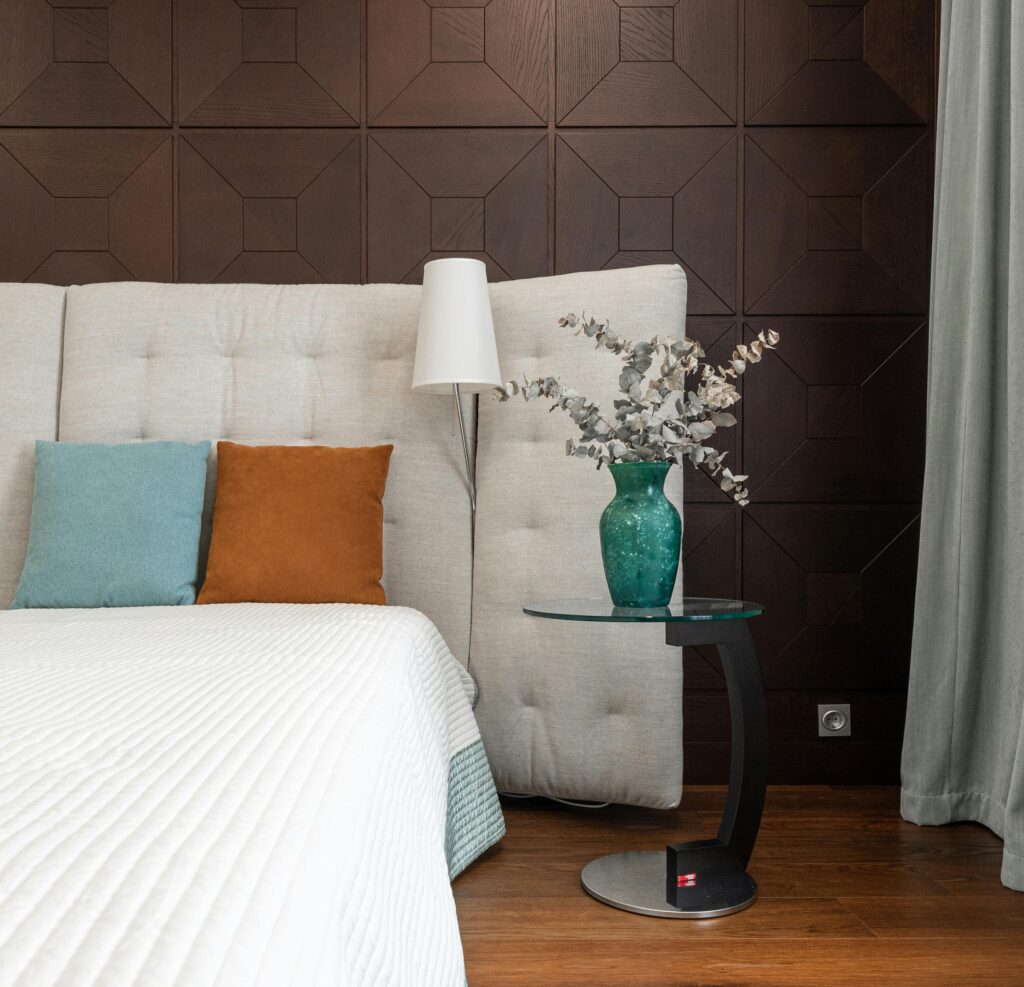
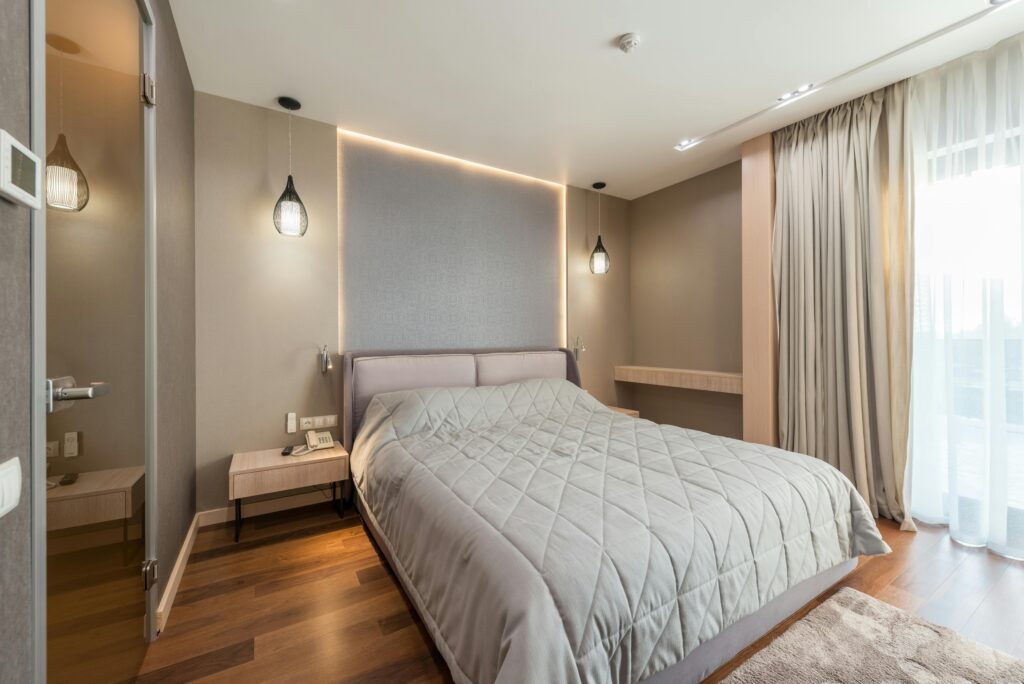
It all started last Tuesday. My cousin, Hania, had just moved into her new place in Gulberg, Lahore. The apartment was lovely—spacious, good light, high ceilings. But there was one problem. Her bedroom. It was a blank, white, lifeless box.
“Bhai, I need help,” she said, throwing herself onto the bare mattress. “I’ve been looking at Pinterest for three hours, and my head is spinning. Everything is either too boring or looks like a hotel in Dubai.”
I laughed. But I understood. In Pakistan, our bedrooms are not just places to sleep. They are sanctuaries. They are where we escape from the honking horns of Suzuki vans, the endless power outages, and the summer heat that feels like a hair dryer left on high. We need our rooms to feel like a hug.
So, I sat down on the floor next to her, pulled out my laptop, and said, “Chal, let me make this article. Let me write down exactly what works for a bedroom in Pakistan.”
After visiting five different houses last month—from a humid Karachi bungalow to a cold, snowy attic in Murree—I have finally cracked the code. Here is the story of those colors.
The Memory of a Mango (Yellow & Cream)
Let me tell you about my Aunt Rubina’s room in Islamabad. She is the kind of woman who grows her own mint on the balcony and makes the best aam ka achaar in the family. Her bedroom smells like sandalwood. And the walls? They are the color of a ripe, sweet mango.
When I walked in, I felt instantly happy. Not hyper, just… cheerful.
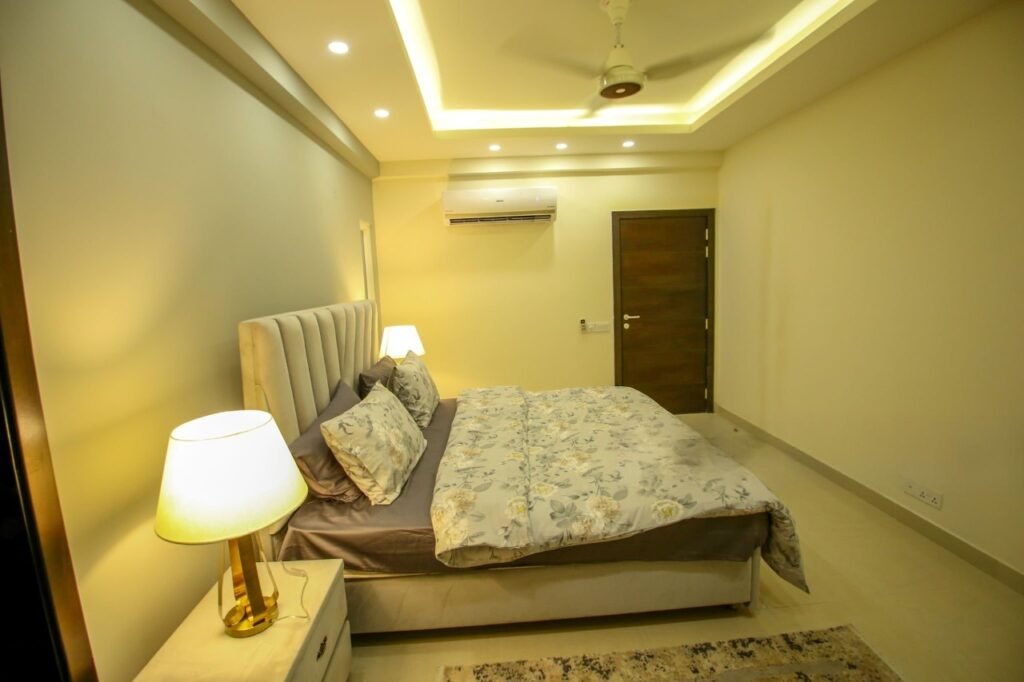
This is the magic of Turmeric Yellow (but light, not the heavy curry color). In Pakistan, we are scared of yellow. We think it is too bold. But trust me, when paired with Cream (not white, white is too harsh), it transforms.
For Hania’s room, I suggested this immediately. The west wall gets the afternoon sun, so painting it a soft Haldi tone makes the room glow. Use cream for the other three walls. Buy a simple charpai-style bed frame in dark sheesham wood. Add a ralli (patchwork quilt) from Hyderabad for the foot of the bed.
Why does this work? Because in Lahore and Karachi, where the sun is brutal, dark colors absorb heat. But this soft mango-cream combination reflects the light. It keeps the room cool visually, and psychologically, it feels like a permanent summer evening. No depression, no gloom. Just zindagi (life).
The Blue That Reminds Me of the North (Slate & Sand)
My younger brother, Ahmed, lives in a tiny flat in Karachi’s DHA. His room faces a neighbor’s wall. No view. Just a gray concrete jungle. He was suffering from something I call “Karachi soul fatigue.”
When I visited him in July (a mistake, the humidity was 90%), his room was painted a sad, hospital green. He looked exhausted. “I can’t sleep,” he whispered. “My mind never shuts up.”
I remembered a trip we took to Hunza three years ago. We stayed in a small guesthouse overlooking Attabad Lake. The lake was the deepest, most honest blue I have ever seen. And the rocks around it were a dusty, warm beige.
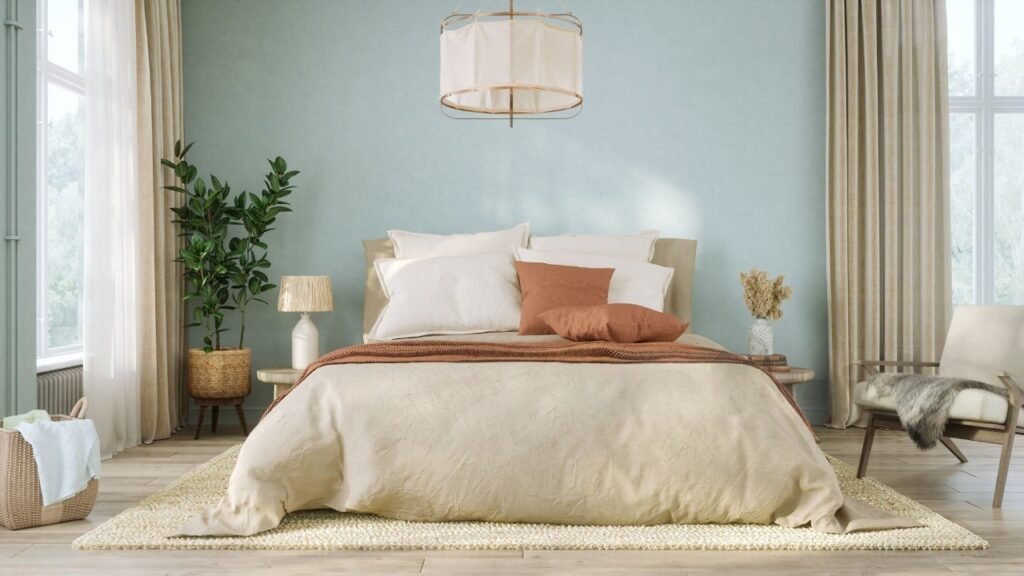
So, we repainted his room. Slate Blue (the color of a night sky in the Northern Areas) on the wall behind the headboard. And Sand Beige (like the cliffs of Passu Cones) on the other walls.
The change was immediate. When Ahmed walks into his room now, he doesn’t see a Karachi back alley. He sees a memory of the mountains. Slate blue is the color of depth. It lowers your blood pressure. It tells your brain, “Relax, bhai. It’s okay to sleep.” The sand beige keeps it warm so it doesn’t feel like a cave.
We hung a simple wooden mirror on the wall and placed two mattis (clay pots) with fake ferns (real ones die in Karachi heat, let’s be honest). Now, he sleeps like a log. Even with the generator noise outside.
The Pink That Isn’t "Larki Wala Pink" (Blush & Chocolate)
This is a controversial one. I visited my friend Sana in Multan. She is a strong woman, a lawyer, who loves heavy metal music and eats sohan halwa for breakfast. She wanted pink. But she was nervous.
“Log kya kahenge?” she asked. “They will say it is a girl’s room. Too soft.”
I told her to forget the log (the people). Pink, in Pakistan, has been ruined by cheap plastic toys and bubblegum. But there is a sophisticated sister to pink: Blush.
![Image 3: A sophisticated bedroom in Multan with blush pink walls, deep chocolate brown velvet curtains, brass accents, and a vintage trunk used as a nightstand.]
We painted her room Blush. It is not bright, not loud. It looks like the inside of a seashell. Or the color of the sky just before sunrise over the Ravi (when the Ravi was clean, a long time ago).
To balance it, you need Deep Chocolate Brown. Not black. Black is too harsh for Pakistani heat. Chocolate is warm. We painted the window frames chocolate. We bought thick, heavy chocolate curtains to block out the blazing Multan sun. And the bed frame? Dark, rustic wood.
The result is a room that is feminine but fierce. It is strong but soft. Like Sana herself. The blush reflects the light, the chocolate absorbs the glare. When she has a bad day at court, she comes home, closes the chocolate curtains, and the room feels like a warm hug. She says it is the only place in Multan where she can truly cry or laugh without judgment.
The Green of a Rainy Day (Sage & Terracotta)
Now, let me take you to a different Pakistan. My Nani (maternal grandmother) lives in a small house in Peshawar. Her room has a veranda that looks out at a tiny garden. She is 82. She has seen wars, power crises, and everything in between.
Her room is painted Sage Green.
If you have never stood in a room painted sage green, you are missing out. It is the color of wild olives. The color of the stems of roses. It is a quiet, humble, wise color.
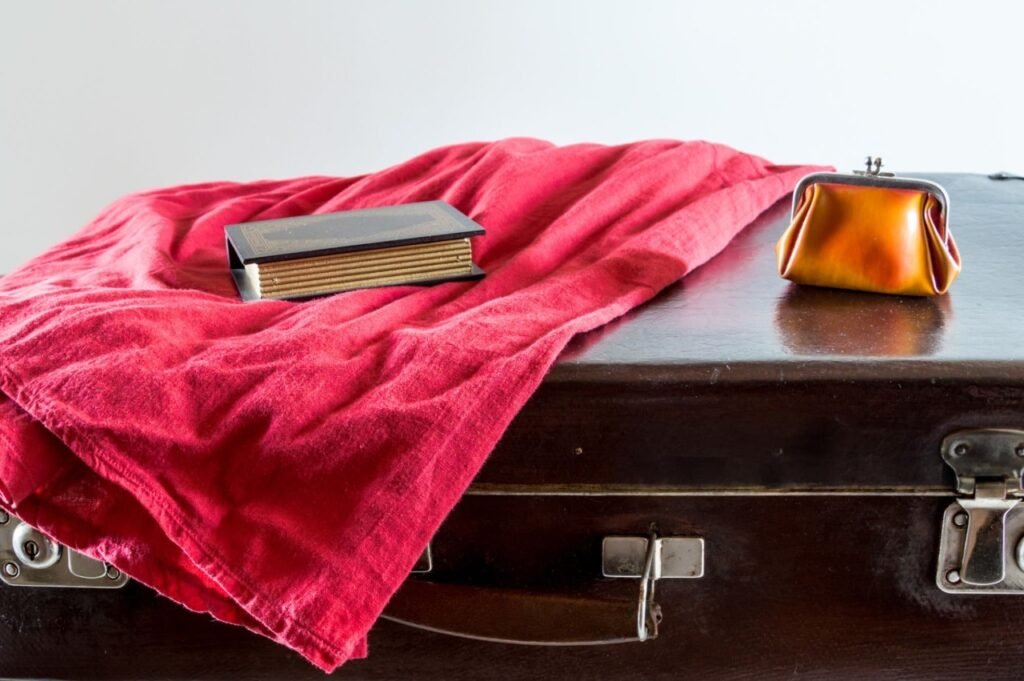
We paired it with Terracotta (the color of the clay pots we use for chai). Terracotta is the color of our earth. Our soil. When you put sage green and terracotta together, you are literally painting the landscape of rural Punjab and Khyber Pakhtunkhwa inside your home.
Nani’s room has a terracotta floor (just simple ceramic tiles) and sage walls. She has white bedsheets (always white, clean, crisp) and terracotta pots with real tulsi (basil) plants on the window sill.
Why is this the best for Peshawar? Because Peshawar is hot and dusty. The green soothes your eyes. It feels like a cold glass of sattu (roasted barley drink) on a hot day. And the terracotta keeps it grounded. It doesn’t feel like a hospital. It feels like a memory of a monsoon rain. Every time I sleep in that room, I sleep for 12 hours straight. No dreams. Just deep, ancient rest.
The White That Is Not Boring (Off-White & Indigo)
Finally, I come back to my own room in Lahore. For years, I kept it white. Bright, stark, paindu white. It felt empty. Like a doctor’s clinic. I hated it.
Then one day, I visited a friend’s farmhouse near Sheikhupura. She had done something brave. She painted everything Off-White (think of old, yellowed paper, or the color of lassi). And then she exploded Indigo (the deep blue of Ajrak prints) everywhere.
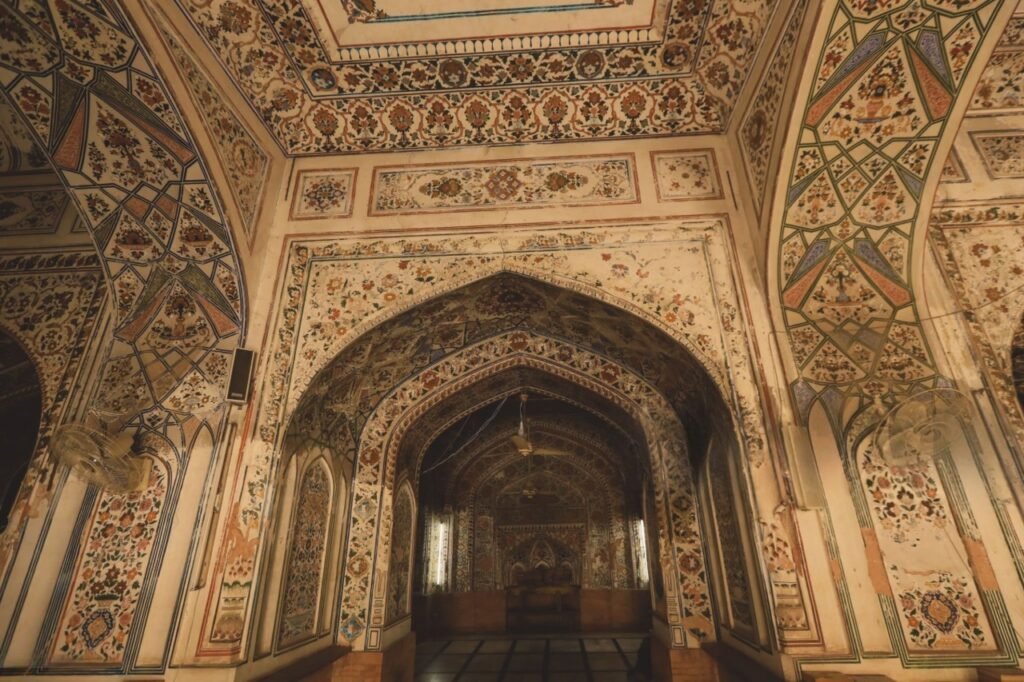
Indigo is our color. It is in our Ajrak, our Sindhi caps, our truck art. It is bold. It is loud. But when you put it on an off-white background, it sings instead of screams.
Here is what I did. I kept my walls off-white. Then I bought a single Indigo dhurrie (cotton rug). I bought Indigo block-print pillowcases from Liberty Market. I hung one large piece of Indigo fabric behind my bed as a tapestry. And I placed a single, bright Multani blue pottery vase on my desk.
The room came alive. The off-white keeps it airy and bright (important for Lahore’s smoggy days). The indigo gives it character, soul, and Pakistaniat (our cultural identity). When I have guests over for chai, they always sit on the floor on the indigo rug. It is a conversation starter. It says, “I am modern, but I know where I come from.”
The Practical Story: Light & Climate
You see, Hania, the reason we cannot simply copy a Swedish or American bedroom blog is because our climate is different. The sun in Sahiwal is not the sun in Seattle.
- For Hot Climates (Karachi, Lahore, Multan, Sialkot): Stick to the lighter end of the spectrum. Mango yellow, blush, sage, off-white. These colors laugh in the face of heat. They reflect, they bounce light, they lie to your brain and tell you it is cooler than it really is.
- For Cold Climates (Murree, Abbottabad, Northern areas, Quetta): You can go darker. Slate blue, chocolate brown, deep indigo. These colors absorb the weak winter sun and hold the heat. They make you want to curl up under a razaai (heavy quilt) and read a novel.
Also, never forget our electrical situation. In Pakistan, we have UPS, generators, and load shedding. A dark maroon room under a yellow emergency light looks like a haunted dungeon. A sage green or blush room under the same low light looks romantic and peaceful.
Three Short FAQs (Because I Know You Will Ask)
1. What if I am renting a flat and cannot paint the walls?
Arre, no tension. Use the wall behind your bed as a canvas. Buy a large piece of fabric in your chosen color (say, slate blue or terracotta) from the local kapra market. Stretch it over a wooden frame, or simply pin it to the wall like a tapestry. Then use bedsheets, curtains, and a rug in the matching scheme. Color is color, whether it is on the wall or on a sheet. I did this for two years in a rented flat in Bahria Town.
2. Won’t lighter colors get dirty quickly in our dust?
Honest answer? Yes. But here is a local secret. Do not use flat matte paint. Use a satin or eggshell finish. It has a slight shine. You can wipe dust off with a damp rag easily. Also, the color “sand beige” and “sage green” are naturally forgiving. Dust just looks like part of the texture. Don’t tell anyone I said that.
3. My husband wants blue, I want green. How do we compromise?
Oh, this is every Pakistani couple’s story. Here is the solution: paint the largest wall (the one behind the bed) in his blue (slate blue). Then paint the other three walls in your green (sage green). Trust me, these two colors are cousins. They sit together beautifully. Then buy a bed spread that has both colors. You will both be happy. And if not, just tell him the green is “imported from Turkey.” That always works.
So, Hania, I closed my laptop. She was smiling. She stopped looking at Pinterest.
“Let’s go to the paint shop,” she said.
We went to the local store in Gulberg. The old painter there, a man named Bashir who has been mixing colors for forty years, looked at my list. He laughed and said, “Beta, yeh to desi rang hain. Yeh kaam karain gay.” (Child, these are native colors. They will work.)
Two days later, Hania sent me a photo. Her room was now the color of a soft mango. The evening light fell on her ralli quilt. She was lying on her bed, a book in her hand, looking peaceful for the first time in months.
And that, my friend, is the whole story. Your bedroom is your fortress. Paint it with the colors of our land—the mangoes, the mountains, the clay, the monsoon, and the indigo night. You will sleep better. You will dream bigger. And you will finally feel at home.
Ab chai banao. (Now make some tea.)